- Company Articles
- Industry articles
- Industry standards
- Thermal Conductivity of 2020 EU Standard Aluminum Profile: Implications for Electronics

Thermal Conductivity of 2020 EU Standard Aluminum Profile: Implications for Electronics
Related Product
2020 EU Standard Aluminum Profile
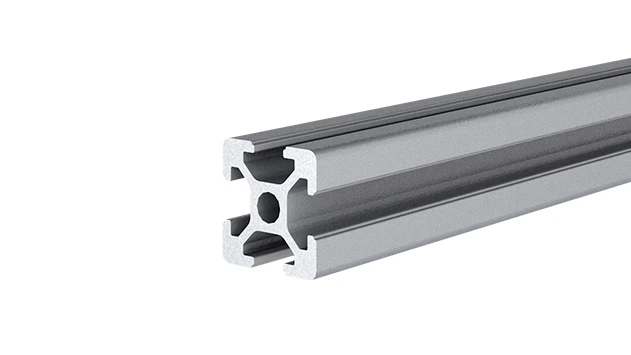
2020 is a 2.00 x 2.00CM fractional 20 series square extrusion T-slot profile with four open T-slots, one on each 2.00 face. The profile has align-a-grooves to assist in aligning connecting profiles.
Picture this: It's a sweltering summer afternoon, and you're trying to finish an important project on your laptop. Within minutes, the bottom of the device feels like a hot plate, your palms start sweating, and suddenly, the cursor lags—your laptop is overheating. We've all been there. What you might not realize is that this tiny, everyday annoyance is a microcosm of a much bigger challenge in the world of electronics manufacturing: managing heat. For factories churning out circuit boards, smartphones, or industrial sensors, heat isn't just a minor inconvenience; it's a silent productivity killer, a threat to product quality, and even a safety hazard. And that's where materials like the 2020 EU standard aluminum profile step in—quietly, reliably, and with a thermal superpower that's changing how we build the electronics we rely on.
Why Heat is the Electronics Industry's Sneakiest Foe
Before we dive into aluminum profiles, let's talk about why heat matters so much. Electronics run on electricity, and where there's electricity, there's resistance—and where there's resistance, there's heat. It's basic physics. A smartphone's processor, for example, can generate enough heat to reach 100°C (212°F) under heavy use. Left unchecked, that heat does more than just make your device uncomfortable to hold: it degrades components over time, slows down performance (your phone's "thermal throttling" feature kicks in to prevent damage), and in extreme cases, can even cause batteries to swell or circuits to short.
In manufacturing settings, the stakes are higher. Imagine an assembly line where workers solder tiny microchips onto circuit boards. The soldering iron itself is hot, but so are the power supplies, testing equipment, and even the ambient air in a crowded factory. Sensitive components like capacitors or semiconductors can be permanently damaged if exposed to prolonged heat. Worse, inconsistent temperatures across a production line can lead to inconsistent product quality—some boards might work perfectly, others might fail prematurely. For manufacturers, that translates to wasted materials, missed deadlines, and unhappy customers.
The solution? It's not just about adding fans or heat sinks (though those help). It starts with the materials we use to build the very infrastructure of electronics production: the workbenches, the enclosures, the frames that hold everything together. And here's where aluminum—specifically, extruded aluminum profiles—shines.
Thermal Conductivity 101: Why Some Materials Cool Better Than Others
Thermal conductivity is a measure of how well a material transfers heat. Think of it as a "heat highway": high conductivity means heat travels quickly through the material, spreading out and dissipating instead of pooling in one spot. The unit of measurement is watts per meter-kelvin (W/m·K). For example, a material with a conductivity of 200 W/m·K will transfer heat twice as efficiently as one with 100 W/m·K.
To put this in perspective, let's compare some common materials used in manufacturing:
| Material | Thermal Conductivity (W/m·K) | Key Trait for Electronics |
|---|---|---|
| Copper | 401 | Excellent conductivity, but heavy and expensive |
| Aluminum (6063 alloy) | 201 | Balances conductivity, weight, and cost |
| Steel | 45 | Strong but poor at dissipating heat |
| Plastic (ABS) | 0.2 | Insulates heat (good for some cases, bad for cooling) |
Copper is the gold standard for conductivity, but it's dense (three times heavier than aluminum) and costly—great for tiny heat sinks on a CPU, but not practical for building large structures like workbenches or equipment frames. Steel is strong, but its low conductivity means heat gets trapped, turning frames into radiators that actually make the problem worse. Plastic? It's cheap and lightweight, but it's an insulator—heat can't escape through it, so it's only useful for parts that need to block heat, not dissipate it.
Aluminum, though, hits the sweet spot. Its conductivity (around 200 W/m·K for alloys like 6063) is half that of copper, but it's a third the weight and significantly cheaper. For large-scale applications—like building a production line's framework—aluminum offers the best balance of thermal performance, structural strength, and affordability. And when we shape aluminum into precise, standardized profiles through extrusion, we unlock even more potential.

Aluminum Extrusion: How We Turn Aluminum Into Thermal Superstars
If aluminum is the hero, then aluminum extrusion profile is its super suit. Extrusion is a manufacturing process that transforms raw aluminum into complex, custom shapes with incredible precision. Here's how it works: a heated aluminum billet (a solid block) is forced through a steel die with a specific cross-sectional shape—say, a square tube, a T-shape, or the distinctive "T-slot" design common in profiles. As the aluminum cools, it retains that shape, resulting in a lightweight, strong, and consistent product.
Why does extrusion matter for thermal conductivity? For starters, extrusion allows us to create profiles with hollow sections, fins, or internal channels—designs that maximize surface area. More surface area means more space for heat to escape into the air. Think of a car radiator: its thin, finned design isn't just for looks; it's engineered to release heat quickly. Similarly, an extruded aluminum profile with a hollow center or external fins can dissipate heat far more efficiently than a solid block of the same material.
Extrusion also ensures uniformity. Unlike casting (pouring molten metal into a mold), extrusion produces profiles with consistent wall thickness and material density. That means heat travels evenly through the profile, with no weak spots where heat might get trapped. For manufacturers, consistency is key—if every profile from a supplier conducts heat the same way, they can design production lines with confidence, knowing their thermal management systems will work as intended.
The 2020 EU Standard Aluminum Profile: Small Size, Big Impact
Now, let's zoom in on the star of the show: the 2020 EU standard aluminum profile . You might be wondering, "What's with the '2020'?" It's simple: the profile measures 20mm by 20mm in cross-section—small enough to be lightweight and versatile, but sturdy enough to support equipment, workbenches, or enclosure frames. The "EU standard" part is equally important. In Europe, manufacturers follow strict guidelines for aluminum profiles, ensuring that dimensions, tolerances, and material quality are consistent across suppliers. That means a 2020 profile from one supplier will fit perfectly with accessories from another—no guesswork, no custom modifications, just plug-and-play efficiency.
But the real magic of the 2020 EU profile lies in its design. Most 2020 profiles feature a "T-slot" along their length—a groove that allows accessories like brackets, panels, or connectors to slide in and lock into place without welding or drilling. This modularity is a game-changer for manufacturers, who can quickly reconfigure workbenches or production lines as needs change. But from a thermal standpoint, the T-slot and hollow core of the 2020 profile are secret weapons. The hollow center acts as a natural air channel, promoting airflow and heat dissipation, while the T-slot allows for easy attachment of additional thermal components—like heat sinks or cooling fans.
Let's talk specs. The 2020 EU standard typically uses 6063 aluminum alloy, a material prized for its excellent thermal conductivity (around 201 W/m·K), corrosion resistance, and workability. The profile's wall thickness is usually 1.5mm to 2mm—thick enough to provide structural support but thin enough to let heat pass through easily. Surface treatments like anodizing (a process that adds a protective oxide layer) can enhance durability without significantly reducing thermal conductivity, making the profile suitable for harsh factory environments.
From Workbench to Widget: How 2020 Profiles Cool Electronics Production
Enough theory—let's get practical. How does the 2020 EU standard aluminum profile actually solve heat problems in electronics manufacturing? Let's take a walk through a typical production line and see where aluminum profiles make a difference.
The Workbench: Where It All Starts
The workbench is the heart of electronics assembly. It's where operators sit to solder components, test circuits, or inspect finished products. A standard workbench might have a soldering station (300–400°C), a power supply, and a magnifying lamp. Over hours of use, the surface and frame of the workbench can absorb heat, turning into a subtle but persistent source of warmth that raises the ambient temperature around sensitive components.
Enter the 2020 aluminum profile workbench. Instead of a solid wood or steel top, the workbench's frame is built from interconnected 2020 profiles. The hollow profiles act like miniature heat pipes, drawing heat away from the work surface and releasing it into the air. Some manufacturers take it a step further by adding aluminum profile accessories like aluminum honeycomb panels to the workbench top. These panels, made from a lightweight honeycomb structure sandwiched between thin aluminum sheets, have an enormous surface area for their weight—perfect for dissipating heat from soldering tools or hot components placed on the bench.
Take, for example, a workbench used to assemble LED circuit boards. LED drivers generate a surprising amount of heat during testing. By building the workbench with 2020 profiles and honeycomb panels, the heat from the drivers is spread out across the bench's surface instead of pooling in one area. Workers stay cooler, components stay within safe temperature ranges, and the bench itself lasts longer because it's not warped by uneven heat.
Enclosures: Protecting Components While Letting Heat Escape
Once components are assembled, they're often housed in enclosures—think of the plastic or metal boxes that protect circuit boards in routers, sensors, or industrial controllers. A poorly designed enclosure can trap heat, turning it into an oven for the components inside. But an enclosure built with 2020 aluminum profiles? It becomes a heat-releasing machine.
Imagine a small enclosure for a smart home sensor. The sensor's circuit board generates heat, but the enclosure's walls—made from 2020 profiles with T-slot covers—conduct that heat outward. If the sensor is mounted in a warm area (like near a light fixture), the aluminum walls act as a passive heat sink, keeping internal temperatures 10–15°C lower than a plastic enclosure. For sensitive components like Wi-Fi modules, which can fail if overheated, that temperature difference is the line between a reliable product and a return-to-sender.
Manufacturers can even customize the enclosure's design using extrusion accessories. Adding external fins to the 2020 profiles increases surface area, while drilling small holes in the hollow cores (or using T-slot vents) promotes airflow. It's a flexible, cost-effective way to balance protection and thermal management.
Material Racks: Keeping Inventory Cool and Ready
It's not just active production areas that need thermal care—storage matters too. Components like lithium-ion batteries or sensitive semiconductors are often stored on racks before assembly. In a warm factory, these racks can act like incubators, slowly degrading components even before they're used.
Racks built with 2020 aluminum profiles address this by conducting ambient heat away from stored components. For example, a three-tier material rack made from 2020 profiles will stay cooler to the touch than a steel rack, and the hollow profiles allow for passive airflow between shelves. Some manufacturers add roller tracks (another common accessory) to these racks, making it easy to slide component trays in and out—all while the aluminum frame quietly dissipates any accumulated heat.
Aluminum Profile Accessories: The Unsung Thermal Heroes
A profile is only as good as the accessories that enhance it. Aluminum profile accessories —things like brackets, end caps, and connectors—don't just make assembly easier; they boost thermal performance too. Let's look at a few standouts:
- Aluminum Honeycomb Panels: As mentioned earlier, these lightweight panels have a honeycomb core that increases surface area, making them excellent for heat dissipation. They're often used as workbench tops or enclosure doors, where they add rigidity without adding weight.
- T-Slot Covers: These plastic or aluminum strips fit into the T-slot of a profile to seal it from dust and debris. But some covers are designed with ventilation holes or heat-conductive materials, allowing heat to escape while keeping the slot clean.
- Corner Connectors: When joining two profiles at a 90° angle, corner connectors ensure a tight, secure fit. But they also act as thermal bridges, allowing heat to flow from one profile to another, preventing hot spots at the joint.
- Heat Sink Attachments: Specialized brackets let manufacturers mount small heat sinks directly to 2020 profiles. For example, a heat sink attached to the frame of an enclosure can draw heat from the inside and release it through the aluminum profile, no fans required.
The beauty of these accessories is their modularity. A manufacturer can start with a basic 2020 profile frame and add thermal upgrades as needed—no need to redesign the entire system.
Real-World Results: How Manufacturers Are Winning With 2020 Profiles
Don't just take my word for it—let's look at a real example. A mid-sized electronics manufacturer in Germany specializing in industrial sensors was struggling with inconsistent product quality. Their assembly line workbenches were made from steel, and workers reported that components felt warm to the touch by the end of a shift. Quality control tests showed that 5% of sensors failed prematurely, a rate well above industry standards.
The company switched to workbenches built with 2020 EU standard aluminum profiles and added aluminum honeycomb panels to the tops. Within three months, the failure rate dropped to 1.2%. Workers noted that the workbenches stayed cooler, even during long shifts, and the ambient temperature around the assembly line decreased by 3°C (5.4°F). The manufacturer estimated saving €40,000 annually in reduced waste and rework—all from a simple material change.
Another example: a smartphone repair shop in the UK was struggling with overheating during motherboard repairs. The shop's steel workbench retained heat from the hot air station, making it hard to handle delicate components. After upgrading to a 2020 aluminum profile workbench with a hollow core, the technician reported that the bench surface stayed cool enough to place components directly on it without damage. Repair times decreased by 15% because there was no need to wait for components to cool down.
Challenges and Myths: Debunking Aluminum Profile Misconceptions
Despite its benefits, some manufacturers are hesitant to switch to aluminum profiles. Let's address a few common myths:
Myth 1: "Aluminum is too expensive." It's true that aluminum profiles cost more upfront than steel or plastic. But aluminum's durability (it resists corrosion and warping) and low maintenance needs mean lower long-term costs. Plus, the savings from reduced product failures and improved efficiency often offset the initial investment within a year.
Myth 2: "Aluminum isn't strong enough for heavy equipment." While aluminum is lighter than steel, alloys like 6063 have impressive strength-to-weight ratios. A 2020 profile with a 2mm wall thickness can support up to 50kg (110 lbs) per linear meter—more than enough for most electronics manufacturing equipment. For heavier loads, manufacturers can use larger profiles (like 40x40mm) or reinforce with cross-bracing.
Myth 3: "Thermal conductivity doesn't matter for workbenches—just use fans." Fans and active cooling have their place, but they're energy-intensive and can fail. Passive cooling through aluminum profiles works 24/7 without electricity, making it a reliable backup (or even replacement) for fans in low-heat areas.
The Future: Smarter, Cooler, More Sustainable
As electronics get smaller and more powerful, heat management will only become more critical. The 2020 EU standard aluminum profile is already evolving to meet these challenges. Some suppliers are experimenting with hybrid profiles—aluminum cores with copper inserts for even better conductivity. Others are adding smart features, like embedded temperature sensors in the T-slot, allowing manufacturers to monitor heat levels in real time and adjust cooling systems as needed.
Sustainability is another trend. Aluminum is 100% recyclable, and recycling it uses just 5% of the energy required to produce new aluminum. For manufacturers aiming to reduce their carbon footprint, aluminum profiles are a greener alternative to steel (which requires more energy to produce) or plastic (which is rarely recycled and contributes to landfill waste).
Conclusion: Cooler Electronics Start With the Right Foundation
The next time you pick up your smartphone or power on your laptop, take a moment to appreciate the invisible battle against heat happening inside. From the microchips to the manufacturing lines that build them, thermal management is the unsung hero of reliable, high-performance electronics. And at the heart of that management system is the humble aluminum profile—specifically, the 2020 EU standard aluminum profile .
With its ideal balance of thermal conductivity, strength, and modularity, this simple extrusion is transforming how we build electronics. It's in the workbenches where circuit boards are born, the enclosures that protect them, and the racks that store the components that make it all possible. Paired with smart aluminum profile accessories , it's not just a material—it's a thermal solution that saves time, money, and headaches for manufacturers.
So the next time your laptop overheats, remember: the solution to better electronics might not be a faster fan or a bigger heat sink. It might just be a better foundation—one made of aluminum, extruded into a profile, and designed to keep the heat where it belongs: far away from the components that power our world.