- Company Articles
- Industry articles
- Industry standards
- Thermal Conductivity of 2040 EU Standard Aluminum Profile: Implications for Industrial Use

Thermal Conductivity of 2040 EU Standard Aluminum Profile: Implications for Industrial Use
Related Product
2040 EU Standard Aluminum Profile
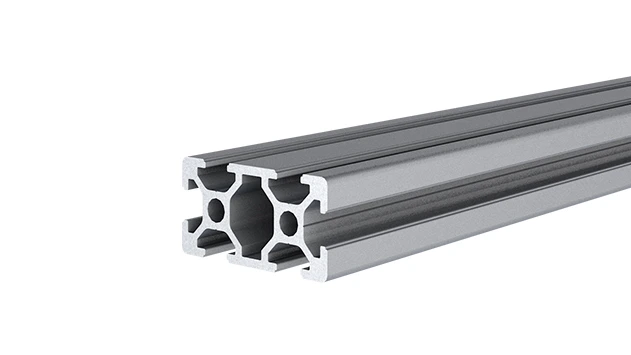
2040 is a 2.00 x 4.00CM fractional 20 series square extrusion T-slot profile with four open T-slots, two side with 2.00cm face, the other side with 4.00cm face. The profile has align-a-grooves to assist in aligning connecting profiles.
In the fast-paced world of manufacturing, where every second and every component counts, the materials we choose quietly shape the efficiency, reliability, and safety of our operations. Among these unsung heroes, aluminum profiles stand out—not just for their strength or versatility, but for a property that often flies under the radar: thermal conductivity. Today, we're diving deep into one specific star of the industrial material lineup: the 2040 EU standard aluminum profile . What makes its thermal conductivity so crucial? How does it impact everything from workbench design to conveyor systems? And why should manufacturers, big and small, care about this seemingly technical detail? Let's unpack it all.
1. Understanding Aluminum Extrusion Profiles: The Backbone of Modern Industry
Before we get into thermal conductivity, let's take a step back and appreciate what aluminum extrusion profiles are—and why they've become indispensable in factories, warehouses, and production lines worldwide. Aluminum extrusion is a process where raw aluminum is heated to a malleable state and then forced through a die, creating long, uniform shapes with specific cross-sections. Think of it like squeezing toothpaste through a tube, but with precision engineering and industrial-grade results.
The result? Profiles that are lightweight, strong, and infinitely customizable. And when we talk about aluminum extrusion profiles like the 2040 EU standard, we're referring to a specific set of dimensions and quality benchmarks. The "2040" in its name tells us the cross-section: 20 millimeters in one direction, 40 millimeters in the other. The "EU standard" tag ensures consistency—whether you're buying from a supplier in Germany, France, or Poland, you know the profile will fit, function, and perform as expected. This standardization is a cornerstone of lean manufacturing, where compatibility and reliability reduce downtime and streamline processes.
But what really sets these profiles apart is their T-slot design. Those grooves running along the length? They're not just for show. They let you attach aluminum profile accessories —brackets, shelves, wheels, you name it—without welding or drilling. It's modularity at its finest, allowing factories to reconfigure workstations, racks, or conveyor systems on the fly. And here's where thermal conductivity starts to matter: when these profiles are part of structures that generate or need to dissipate heat, their ability to transfer thermal energy becomes a make-or-break factor.
2. Thermal Conductivity 101: Why Heat Flow Matters in Manufacturing
Let's keep it simple: thermal conductivity is a material's ability to conduct heat. Think of it as how easily heat "moves" through a substance. Measured in watts per meter-kelvin (W/mK), it tells us, for example, how quickly a metal rod will warm up on one end if you heat the other. For industrial applications, this isn't just a physics lesson—it's a practical concern that affects everything from equipment lifespan to product quality.
Aluminum is already a standout here. With a thermal conductivity of around 200 W/mK (depending on the alloy), it's far more efficient at transferring heat than steel (about 45 W/mK) or plastic (less than 1 W/mK). That's why aluminum is used in heat sinks for computers, radiators in cars, and cooling systems in factories. But not all aluminum profiles are created equal. The 2040 EU standard profile, with its specific alloy (often 6063, a common choice for extrusions) and design, offers a sweet spot of conductivity, strength, and cost-effectiveness.
Why does this matter in a factory? Imagine a workbench where technicians assemble sensitive electronics. If the components generate heat—say, during soldering or testing—that heat needs to go somewhere. A workbench frame made with a low-conductivity material (like steel) might trap that heat, raising the temperature of the work surface and potentially damaging delicate parts. But a 2040 aluminum profile frame? It would draw that heat away, spreading it along the profile and dissipating it into the air, keeping the surface cool and the components safe.
Or consider a conveyor belt in an automotive plant, moving hot parts from one station to the next. The conveyor's frame, if made with aluminum, can help dissipate the residual heat from the parts, preventing the frame itself from warping or weakening over time. In lean manufacturing, where every piece of equipment is expected to perform consistently, this kind of heat management reduces maintenance costs and unplanned downtime—two enemies of efficiency.

3. The 2040 EU Standard Aluminum Profile: Thermal Properties in Focus
Now, let's zoom in on the star of the show: the 2040 EU standard aluminum profile. What makes its thermal conductivity unique, and how does it stack up against other profiles?
First, the alloy. Most 2040 profiles use 6063 aluminum, an alloy known for its excellent extrudability and good thermal conductivity (around 190–205 W/mK). This is slightly lower than pure aluminum (which clocks in at about 237 W/mK), but the tradeoff is worth it: 6063 offers better strength and corrosion resistance, critical in industrial environments where profiles might be exposed to oils, chemicals, or moisture.
Next, the design. The 2040's 20x40mm cross-section is no accident. Its relatively flat, rectangular shape maximizes surface area, which is key for heat dissipation. More surface area means more contact with the surrounding air, allowing heat to escape faster. Compare that to a round pipe of the same material: the flat sides of the 2040 profile give it an edge in cooling efficiency. Plus, the T-slots, while primarily for accessories, can also act as small channels for air flow, subtly enhancing heat transfer.
To put this in perspective, let's compare the 2040 profile to other common EU standard profiles. The table below breaks down thermal conductivity, dimensions, and typical applications:
| Profile Type | Dimensions (mm) | Thermal Conductivity (W/mK) | Key Applications |
|---|---|---|---|
| 2020 EU Standard | 20x20 | 195–205 | Light-duty frames, small workstations, shelving |
| 2040 EU Standard | 20x40 | 190–200 | Workbenches, conveyor frames, material racks, machine guards |
| 3030 EU Standard | 30x30 | 185–195 | Medium-duty structures, assembly lines, tool storage |
| 4040 EU Standard | 40x40 | 180–190 | Heavy-duty frames, industrial machinery, large workbenches |
Notice that as profiles get larger (like the 4040), their thermal conductivity dips slightly. This is due to the increased mass and thicker walls, which can slow heat transfer. The 2040 profile, however, balances size and conductivity perfectly—big enough to support moderate loads, but not so large that it sacrifices heat dissipation. This makes it ideal for applications where both structural support and thermal management are needed, like the workbenches and conveyor systems we mentioned earlier.
4. Industrial Implications: How Thermal Conductivity Drives Lean Manufacturing
Lean manufacturing is all about eliminating waste—whether that's time, materials, or energy. The thermal conductivity of the 2040 profile plays directly into this by reducing two major sources of waste: downtime and defective products. Let's explore how it integrates into key industrial systems.
Workbenches: Keeping Cool Under Pressure
A workbench is more than just a table—it's a command center for production. In electronics manufacturing, for example, technicians might be soldering components that generate localized heat. If the workbench frame can't dissipate that heat, the surface temperature rises, increasing the risk of damaging heat-sensitive parts (like microchips or circuit boards). The 2040 profile, with its high thermal conductivity, acts like a built-in cooling system. Heat from the work surface is drawn into the frame, spread out along its length, and released into the air. This not only protects the products but also keeps the workspace more comfortable for workers, reducing fatigue and errors.
And because the 2040 profile is modular, workbenches can be customized with accessories like aluminum honeycomb panels (which add surface area for even better heat dissipation) or adjustable shelves—all without compromising thermal performance. This flexibility aligns with lean principles, where workstations are tailored to the task at hand, minimizing unnecessary movement and maximizing efficiency.
Conveyor Systems: Smooth Operations, Cool Components
Conveyors are the arteries of a factory, moving materials from point A to point B. But they're also heat generators. Motors, friction between belts and rollers, and even the materials being transported (like freshly painted parts or hot castings) can all raise temperatures. A conveyor frame that traps heat is a ticking time bomb—over time, it can warp, seize, or damage the conveyor's mechanical components.
Enter the 2040 aluminum profile. Used in conveyor frames, it acts as a heat sink, drawing warmth away from motors and hot materials. This not only extends the life of the conveyor but also reduces the need for additional cooling systems (like fans or liquid coolers), cutting energy costs. In food processing, where conveyor systems must maintain strict temperature controls, this is especially valuable—imagine a conveyor moving baked goods: the aluminum frame helps dissipate residual heat, preventing the products from overcooking or sweating as they cool.
Lean Systems: Aligning with Efficiency Goals
At its core, a lean system is about creating value with fewer resources. The 2040 profile's thermal conductivity supports this by: 1) reducing waste from defective products (due to better heat management), 2) lowering maintenance costs (by preventing heat-related equipment failure), and 3) enabling modular, adaptable workspaces (thanks to its T-slot design and lightweight nature). For example, a manufacturer switching from steel to 2040 aluminum profiles for their assembly line frames might see a 15% reduction in maintenance calls related to heat warping—a small change with a big impact on overall efficiency.
5. Choosing the Right Accessories: Enhancing Thermal Performance
A profile is only as good as the accessories that complement it. When it comes to thermal conductivity, the right aluminum profile accessories can either enhance or hinder heat transfer. Here are a few key considerations:
- Connectors and Brackets: Opt for aluminum accessories over steel or plastic. Steel brackets, for example, can act as "thermal barriers," slowing heat flow along the profile. Aluminum brackets, being similarly conductive, let heat pass through unimpeded.
- End Caps and Covers: While end caps protect the profile's ends from debris, they can also trap heat if they're made of non-conductive materials. Look for vented aluminum end caps to allow air circulation inside the profile, aiding in heat dissipation.
- Panels and Shelves: When adding surfaces to a 2040 frame (like a workbench top), choose materials that complement the profile's conductivity. Aluminum honeycomb panels, for instance, are lightweight but have excellent heat-spreading properties, making them ideal for heat-sensitive tasks.
- Casters and Feet: Even something as simple as casters can affect thermal performance. Rubber casters might insulate the profile from the floor, trapping heat, while aluminum or metal casters can help conduct heat downward, into the ground (though this is a minor effect compared to other accessories).
The goal here is to create a "thermal path"—a continuous route for heat to flow from its source (like a hot component) through the profile and into the surrounding environment. By choosing accessories that don't block this path, manufacturers can maximize the 2040 profile's natural conductivity.
6. Real-World Impact: Case Studies in Thermal Management
Numbers and theory are one thing, but real-world examples show the 2040 profile's thermal conductivity in action. Let's look at two case studies:
Case Study 1: Electronics Manufacturing Workbench
A mid-sized electronics manufacturer in Hungary was struggling with defective circuit boards. After investigating, they found that during soldering, heat was building up on the workbench surface, causing components to overheat and fail testing. The workbenches were made with steel frames, which trapped the heat.
The solution? They replaced the steel frames with 2040 EU standard aluminum profiles and added aluminum honeycomb panel tops. Within three months, defect rates dropped by 22%. The aluminum frame dissipated the soldering heat more effectively, keeping the work surface 5–8°C cooler. Workers also reported less fatigue, as the cooler surface was more comfortable to work on for long shifts.
Case Study 2: Automotive Conveyor System
A German automotive supplier was experiencing frequent jams in their conveyor system, which transported hot engine parts from the casting area to the machining line. The steel conveyor frame was warping slightly due to the residual heat from the parts, misaligning the rollers and causing jams. Maintenance teams were spending 10+ hours per week fixing these issues.
Switching to 2040 aluminum profiles for the conveyor frame changed everything. The aluminum's thermal conductivity dissipated the heat, preventing warping. Over six months, maintenance hours dropped by 75%, and the conveyor's uptime increased from 89% to 98%. The company also saved on energy costs, as they were able to reduce the number of cooling fans previously used to keep the steel frame cool.
Conclusion: More Than Just a Profile—A Thermal Advantage
The 2040 EU standard aluminum profile is more than just a building block for factories—it's a thermal management tool that quietly enhances efficiency, reliability, and product quality. Its high thermal conductivity, combined with the flexibility of aluminum extrusion profiles and the practicality of aluminum profile accessories , makes it a standout choice for workbenches, conveyors, and lean systems.
In a world where lean manufacturing and sustainability are no longer optional, the 2040 profile offers a simple, cost-effective way to reduce waste, cut maintenance costs, and create more resilient production lines. So the next time you walk through a factory, take a closer look at those aluminum frames—they're not just holding things together; they're keeping the heat in check, one W/mK at a time.