- Company Articles
- Industry articles
- Industry standards
- Three Way Lean Pipe Joint Across Industries: A Comparative Analysis

Three Way Lean Pipe Joint Across Industries: A Comparative Analysis
Related Product
Three Way Lean Pipe Joint
Three way lean pipe joint for 3 pcs 28MM lean pipe connection in straight angle, which used widely in workbench, flow rack, hand trolley frame connection.
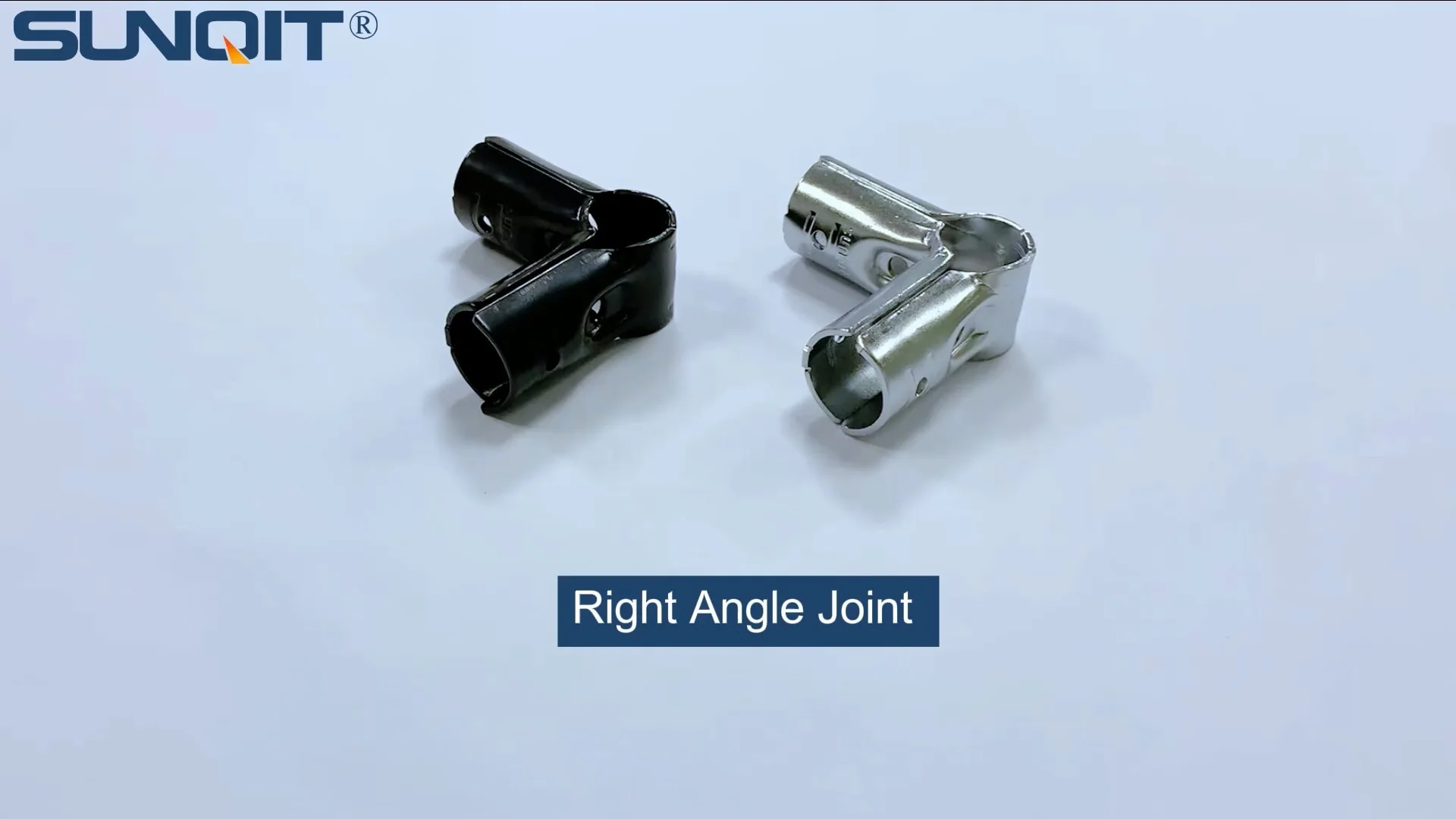
In the bustling world of industrial operations, where efficiency is king and adaptability is queen, there's a silent workhorse that often goes unnoticed: the three way lean pipe joint. It's not flashy, it doesn't make headlines, but without it, the modular structures that keep production lines humming, warehouses organized, and supply chains flowing would simply fall apart. From the assembly lines of automotive plants to the picking stations of e-commerce warehouses, this small but mighty component is the unsung hero holding lean systems together. In this article, we'll dive into what makes the three way lean pipe joint so indispensable, explore its role across key industries, and compare how it performs when tasked with different challenges—proving that even the smallest parts can drive the biggest operational wins.
What Exactly Is a Three Way Lean Pipe Joint?
At its core, a three way lean pipe joint is a connector designed to link three lean pipes (or tubes) at various angles, creating sturdy, customizable structures. Think of it as the industrial equivalent of a universal adapter—simple in concept, but wildly versatile in application. These joints are typically made from materials like die-cast aluminum, plastic-coated steel, or stainless steel, each chosen for specific environments: aluminum for lightweight setups, stainless steel for corrosion resistance, and plastic-coated options for cost-effectiveness and basic durability.
What truly sets the three way lean pipe joint apart is its design. Most models feature internal threading or clamping mechanisms that secure pipes tightly while allowing for rotational adjustment—meaning you can set pipes at 30°, 45°, 90°, or even 180° angles, depending on the joint's specifications. This flexibility is why they're a cornerstone of "lean pipe and accessories" systems, where modularity isn't just a bonus but a requirement. Whether you're building a workbench, a flow rack, or a conveyor support structure, the three way joint acts as the pivot point, turning a bundle of pipes into a functional, reconfigurable tool.
Take, for example, a basic assembly: if you're constructing a material rack, the three way joint might connect vertical support pipes to horizontal shelves, ensuring the structure can bear the weight of boxes or components. If you later need to add a side arm for tools, you can simply loosen the joint, adjust the angle, and tighten it back up—no welding, no specialized tools, just a wrench and a few minutes. That's the beauty of it: it grows with your needs, not against them.
Why Lean Systems Can't Live Without It
Lean manufacturing and operations are all about eliminating waste—whether that's wasted time, space, or resources. To do that, you need systems that can adapt quickly: a production line that retools in hours, not days; a warehouse layout that shifts with seasonal demand; a workstation that adjusts to new product sizes. Enter the three way lean pipe joint. It's the physical embodiment of lean principles, enabling the kind of modularity that makes waste reduction possible.
Consider this: traditional industrial structures (think welded steel racks or fixed conveyor frames) are rigid. If your production needs change—say, you start manufacturing a larger product—you might have to tear down the old structure and build a new one from scratch. That's costly, time-consuming, and generates waste. With three way lean pipe joints, though, you can disassemble, reconfigure, and rebuild. A flow rack that once held small electronic components can be adjusted to accommodate larger boxes by simply repositioning the joints and adding longer pipes. It's "continuous improvement" in action, and it's all thanks to the joint's ability to make change feel effortless.
Another lean principle the three way joint supports is "just-in-time" (JIT) production. In JIT, materials arrive exactly when they're needed, reducing inventory waste. To make this work, you need material handling systems that can keep pace—like conveyors or turnover trolleys built with lean pipes and three way joints. These structures can be extended, shortened, or rerouted as production schedules change, ensuring materials flow to the line without bottlenecks. Without the joint's flexibility, these adjustments would require heavy machinery or custom fabrication, slowing down the very efficiency JIT aims to create.

How It Performs Across Industries: A Deep Dive
The three way lean pipe joint isn't a one-trick pony. Its real strength lies in how it adapts to different industries, each with unique demands. Let's break down its performance in four key sectors: manufacturing, logistics, electronics, and healthcare. We'll focus on real-world applications, pain points it solves, and why it's become a go-to solution.
1. Manufacturing: Building Workbenches That Keep Up With Change
In manufacturing plants—whether automotive, aerospace, or consumer goods—workbenches are the heart of assembly. They need to hold tools, parts, and sometimes heavy equipment, all while being adjustable to worker ergonomics and product specs. This is where the three way lean pipe joint shines. Let's take an automotive parts plant, for example: a workbench used to assemble brake components might need shelves for wrenches, a tray for screws, and a raised platform for a torque gun. Using three way joints, workers can build this bench in hours, with pipes forming the frame and joints connecting the shelves at the exact height needed.
But here's the kicker: when the plant switches to a new brake model with different parts, the workbench doesn't become obsolete. The three way joints allow the team to remove a shelf, add a new crossbar, or adjust the platform height—no need to order a custom bench or wait for maintenance. A study by the Lean Manufacturing Institute found that plants using modular workbenches with three way lean pipe joints reduced retooling time by 62% compared to fixed wooden or steel benches. That's time saved, which translates to more production runs and lower costs.
Durability is another win here. Manufacturing floors are tough: oil spills, heavy tool drops, constant foot traffic. Three way joints made from die-cast aluminum or stainless steel hold up, with most models rated to support 50-100 kg per joint (depending on pipe thickness). Even plastic-coated joints, while less heavy-duty, handle daily wear without cracking or bending—making them a budget-friendly choice for low-to-medium load setups.
2. Logistics: Flow Racks That Keep Warehouses Moving
Warehouses and distribution centers live and die by how quickly they can move goods. Flow racks—those inclined shelves with roller tracks that let boxes glide forward as items are picked—are critical for this, and the three way lean pipe joint is what makes them both functional and adaptable. Let's say a warehouse handles clothing in summer and bulky winter coats in fall. A flow rack built with three way joints can be reangled: in summer, shallow inclines for lightweight boxes; in fall, steeper angles to help heavier coats slide. The joints adjust the roller track height and slope, ensuring gravity does the work, not workers.
Conveyors, too, rely on three way joints for support. In a busy e-commerce fulfillment center, conveyor lines often branch off to different packing stations. The three way joint connects the main conveyor frame to the branching sections, creating stable, vibration-resistant supports. Unlike welded frames, which require cutting and rewelding to reconfigure, joints let teams add or remove branches in a morning, keeping up with holiday rushes or sudden shifts in order volume.
Cost is a big factor here, too. Logistics operations are already tight on margins, so investing in modular flow racks and conveyor supports with three way joints saves money long-term. A typical welded steel flow rack might cost $500 and last 10 years but can't be changed. A lean pipe flow rack with three way joints costs $300 upfront, can be reconfigured 10+ times, and still last 8-10 years—delivering better ROI by adapting to changing needs.
3. Electronics: Precision in Clean, Static-Safe Environments
Electronics manufacturing demands precision and cleanliness. Circuit boards, microchips, and sensors are delicate, and static electricity can fry components instantly. Here, the three way lean pipe joint often takes a stainless steel or ESD (electrostatic discharge) plastic-coated form, ensuring it doesn't generate static and resists dust buildup. Workstations for assembling smartphones, for example, use these joints to build ESD-safe workbenches with grounded pipes, where every shelf, tool holder, and bin is connected via three way joints to maintain a continuous static-dissipative path.
Flexibility is equally important here. Electronics production lines change constantly—new phone models, smaller components, updated testing equipment. A workstation built with three way joints can be modified to add a static-safe mat, a microscope mount, or a bin for tiny screws in minutes. This agility is why companies like Foxconn and Samsung rely heavily on lean pipe systems with three way joints: they can retool a line for a new model in a day, not a week.
Material choice matters, though. In cleanrooms, stainless steel joints are preferred for their smooth surfaces (no crevices for dust to hide) and easy sanitization. For less critical areas, ESD plastic-coated joints work well and cost less—proving the joint's versatility even in hyper-specialized environments.
4. Healthcare: Sterility and Adaptability in Medical Settings
Hospitals and medical labs have unique needs: sterility, mobility, and the ability to adapt to evolving patient care or research demands. Three way lean pipe joints, often in stainless steel, meet these needs by enabling the creation of mobile carts, instrument racks, and specimen storage systems. For example, a surgical instrument cart built with three way joints can be customized with shelves of varying heights to hold scalpels, forceps, and trays—all while being easy to wipe down with disinfectants (stainless steel joints don't rust or degrade when exposed to harsh chemicals).
Mobility is another key factor. Many healthcare structures need to move: medication carts, mobile workstations for nurses, or lab equipment racks. Three way joints connect pipes to casters (wheels), creating stable bases that roll smoothly without wobbling. If a cart needs to be reconfigured—say, adding a shelf for IV bags—the joints allow quick adjustments without compromising stability, ensuring patient safety isn't sacrificed for adaptability.

Three Way Lean Pipe Joint: Industry Performance Comparison
| Industry | Primary Use Case | Top Material Choice | Key Benefit | Typical Load Capacity | Lifespan (Avg.) |
|---|---|---|---|---|---|
| Manufacturing | Workbenches, assembly line structures | Die-cast aluminum | Rapid reconfiguration for new products | 50-100 kg per joint | 8-10 years |
| Logistics | Flow racks, conveyor supports | Plastic-coated steel | Cost-effective adaptability for seasonal demand | 75-120 kg per joint | 6-8 years |
| Electronics | ESD workstations, cleanroom racks | Stainless steel/ESD plastic-coated | Static control and dust resistance | 30-60 kg per joint | 10-12 years |
| Healthcare | Mobile carts, instrument racks | Stainless steel | Sterility and chemical resistance | 40-80 kg per joint | 10-15 years |

Why It Beats Traditional Connectors
To truly appreciate the three way lean pipe joint, it helps to compare it to traditional connectors like welded brackets, bolts, or glue. Welded brackets are strong but permanent—once you weld a pipe, changing its angle means cutting the weld and starting over, which is time-consuming and labor-intensive. Bolts can loosen over time, especially in high-vibration environments like manufacturing floors, and glue is only viable for lightweight, temporary setups.
The three way lean pipe joint solves these issues: it's as strong as a welded bracket (when properly tightened), adjustable like a bolted connection, and reusable indefinitely. It also requires no special skills to install—anyone with a wrench can assemble or reconfigure a structure, reducing reliance on specialized labor (and the costs that come with it). In fact, a survey of manufacturing plant managers found that teams using lean pipe joints reported 40% fewer assembly errors and 35% faster setup times compared to using traditional brackets.
Another advantage is scalability. A small startup might begin with a single workbench built with three way joints; as it grows, that same joint can be used to build more workbenches, flow racks, or conveyors—no need to learn new systems or buy new tools. This consistency reduces training time and ensures operations remain efficient even as the company expands.
What's Next for the Three Way Lean Pipe Joint?
As industries embrace Industry 4.0—smart manufacturing, IoT-connected systems, and AI-driven operations—the three way lean pipe joint is evolving, too. Manufacturers are experimenting with "smart joints" embedded with sensors that monitor load, temperature, or vibration, alerting teams when a joint is loose or overloaded (preventing accidents before they happen). For example, in a logistics warehouse, a sensor-equipped joint on a flow rack could detect when a shelf is overloaded and send an alert to the warehouse management system, avoiding a collapse.
3D printing is also opening new doors. Custom three way joints with unique angles or integrated features (like built-in cable management channels) can now be printed on-demand, making hyper-specialized setups possible without the cost of tooling. And as sustainability becomes a bigger priority, recycled aluminum and biodegradable plastic coatings are being used to make joints greener—aligning with the lean principle of reducing environmental waste.
The Small Joint That Drives Big Results
At the end of the day, the three way lean pipe joint is more than just a connector—it's a symbol of operational agility. It proves that in the world of industry, success often lies in the details: the components that let you adapt, grow, and innovate without being held back by rigid systems. Whether it's holding together a workbench in a smartphone factory, a flow rack in a warehouse, or a medical cart in a hospital, this small joint ensures operations stay lean, efficient, and ready for whatever comes next.
So the next time you walk through a factory, warehouse, or lab, take a moment to look at the structures around you. Chances are, there's a three way lean pipe joint hard at work—quietly, reliably, and tirelessly proving that great things really do come in small packages.