- Company Articles
- Industry articles
- Industry standards
- Three Way Lean Pipe Joint Chrome for Cleanroom Applications: Compliance Standards

Three Way Lean Pipe Joint Chrome for Cleanroom Applications: Compliance Standards
Related Product
Three Way Lean Pipe Joint Chrome
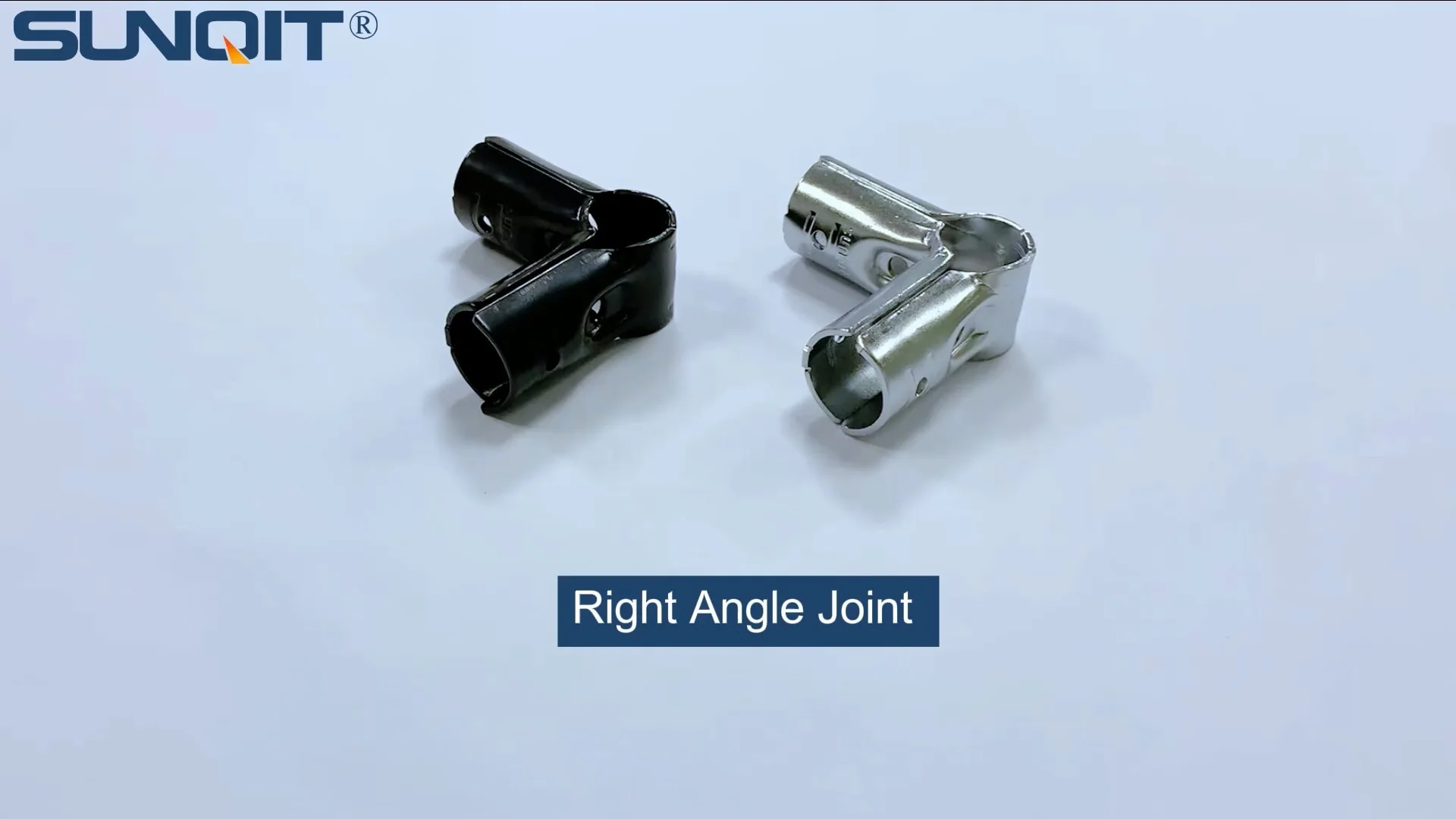
Three way lean pipe joint for 3 pcs 28MM lean pipe connection in straight angle, which used widely in workbench, flow rack, hand trolley frame connection.
In the high-stakes world of cleanroom manufacturing—where a single speck of dust can derail a batch of pharmaceuticals, compromise a semiconductor chip, or invalidate a medical device—every component matters. From air filtration systems to workbench surfaces, every element must adhere to strict compliance standards to maintain the sterile, controlled environments these industries demand. Yet, amid the focus on large-scale systems, there's a humble yet critical player often overlooked: the lean pipe joint. Specifically, the three way lean pipe joint chrome has emerged as a linchpin in building adaptable, compliant cleanroom structures, bridging the gap between lean manufacturing principles and uncompromising cleanliness requirements. Let's dive into why this unassuming component is so vital, how it meets the rigorous standards of cleanroom environments, and why partnering with a trusted lean pipe supplier can make all the difference in operational success.
Cleanrooms 101: Why Compliance Isn't Optional
Before we unpack the role of the three way lean pipe joint chrome, it's essential to understand what makes cleanrooms unique—and why their standards are so stringent. Cleanrooms are controlled environments designed to minimize particulate contamination, airborne microbes, and environmental variables like temperature, humidity, and air pressure. They're ubiquitous in industries such as pharmaceuticals, biotechnology, electronics, and aerospace, where even microscopic impurities can lead to product failures, safety risks, or regulatory penalties.
At the heart of cleanroom compliance are standards set by organizations like the International Organization for Standardization (ISO) and the U.S. Food and Drug Administration (FDA). ISO 14644-1, for example, classifies cleanrooms based on air cleanliness, with ISO Class 1 being the strictest (allowing no more than 10 particles of ≥0.1μm per cubic meter) and ISO Class 9 being the least (permitting up to 35,200,000 particles of ≥0.5μm per cubic meter). For pharmaceutical manufacturers, FDA's Current Good Manufacturing Practices (cGMP) go even further, mandating rigorous documentation, material traceability, and surface compatibility to prevent product adulteration.
These standards aren't just checkboxes—they're lifelines. A single non-compliant component can introduce particles, harbor bacteria, or degrade under sanitization protocols, putting entire production runs at risk. This is where material selection becomes critical. Cleanroom components must be non-porous, corrosion-resistant, easy to clean, and non-shedding. Enter the stainless steel pipe series and chrome-plated lean pipe joints: materials engineered to meet these exact demands.
Lean Systems in Cleanrooms: The Need for Adaptability
Lean manufacturing principles—focused on eliminating waste, streamlining workflows, and maximizing efficiency—have long been a cornerstone of modern production. But in cleanrooms, where rigidity can be a liability, lean takes on a new dimension: adaptability. Cleanroom operations often require frequent reconfiguration to accommodate new products, updated processes, or changing regulatory needs. Traditional fixed structures—welded metal racks, permanent workstations—are not only costly to modify but can disrupt sterile conditions during installation or demolition.
This is where lean pipe systems shine. Built from modular components like pipes, joints, and accessories, these systems allow teams to assemble, disassemble, and reconfigure structures (think workbenches, material racks, or conveyor supports) with minimal downtime. And at the center of this modularity is the lean pipe joint. Among the various joint types—elbows, tees, crosses—the three way lean pipe joint chrome stands out for its versatility, enabling the creation of multi-directional structures that optimize space and workflow in tight cleanroom layouts.
But lean systems in cleanrooms can't just be adaptable—they must also be compliant. A joint that works in a standard factory floor might fail in a cleanroom, where even a small crevice can trap particles or resist sanitization. This is why the chrome plating on three way lean pipe joints is more than a cosmetic choice; it's a compliance feature.

Three Way Lean Pipe Joint Chrome: Design for Compliance
What Makes Chrome-Plated Joints Ideal for Cleanrooms?
The three way lean pipe joint chrome is engineered with cleanroom challenges in mind. Let's break down its key features and how they align with compliance standards:
Smooth, Non-Porous Surface: Chrome plating creates a dense, uniform layer over the underlying metal (often steel or stainless steel from the stainless steel pipe series), eliminating pores and crevices where particles or bacteria could hide. Unlike painted or powder-coated surfaces, which can chip or degrade over time, chrome resists peeling and maintains its smoothness even after repeated cleaning—critical for meeting ISO 14644-1's particle count limits.
Corrosion Resistance: Cleanrooms rely on harsh sanitization agents, from alcohol-based wipes to hydrogen peroxide fogging. Chrome-plated joints stand up to these chemicals without rusting or leaching, ensuring they don't introduce contaminants into the environment. This resistance is especially valuable in humid cleanrooms, where moisture can accelerate corrosion in uncoated metals.
Easy to Clean: The non-stick properties of chrome make cleaning a breeze. A quick wipe with a lint-free cloth and approved disinfectant removes residues, reducing the risk of cross-contamination. This is a game-changer for cGMP compliance, where thorough cleaning validation is required to prove surfaces are free of residues.
Secure, Vibration-Resistant Connections: Loose joints can vibrate during operation, dislodging particles or compromising structural integrity. Three way lean pipe joint chrome designs often include threaded or compression fittings that create tight, stable connections, minimizing vibration and the associated particle shedding. This is particularly important for structures supporting sensitive equipment or materials in motion, like conveyor systems.
Compatibility with Stainless Steel Pipe Series: To maintain compliance, cleanroom structures must use materials that work in harmony. Chrome-plated three way joints are designed to pair seamlessly with stainless steel pipes, creating a unified system that meets the same high standards for cleanliness and durability. This compatibility reduces the risk of material incompatibilities (e.g., galvanic corrosion between dissimilar metals) that could compromise the system over time.

Meeting the Standards: How Three Way Lean Pipe Joint Chrome Checks All the Boxes
Compliance isn't just about material properties—it's about meeting specific regulatory benchmarks. Let's map the features of the three way lean pipe joint chrome to key cleanroom standards:
| Standard | Key Requirement | How Three Way Lean Pipe Joint Chrome Complies |
|---|---|---|
| ISO 14644-1 (Air Cleanliness) | Minimize particle shedding and accumulation | Smooth chrome surface prevents particle trapping; corrosion resistance ensures no flaking or degradation over time. |
| FDA cGMP (Pharmaceuticals) | Surface compatibility with sanitizing agents; no migration of harmful substances | Chrome plating resists chemical attack from disinfectants; non-toxic and inert, with no leachable components. |
| ISO 10993 (Biological Evaluation) | Non-cytotoxic, non-irritating materials (for medical device cleanrooms) | Chrome is biocompatible and meets ISO 10993-5 requirements for cytotoxicity, ensuring no harm to biological materials. |
| SEMATECH (Semiconductor Manufacturing) | Low outgassing to prevent contamination of sensitive electronics | Chrome-plated joints undergo rigorous outgassing testing, releasing minimal volatile organic compounds (VOCs) in controlled environments. |
These aren't just claims—reputable lean pipe suppliers subject their three way lean pipe joint chrome products to third-party testing to verify compliance. Certifications like ISO 9001 (quality management) and material safety data sheets (MSDS) provide traceability, ensuring components can be validated during regulatory audits.
Beyond Compliance: The Operational Benefits of Chrome-Plated Lean Pipe Joints
While compliance is non-negotiable, the three way lean pipe joint chrome offers operational advantages that go beyond meeting standards. For cleanroom managers, these benefits translate to cost savings, flexibility, and peace of mind:
Modularity = Adaptability: Cleanroom layouts change—new equipment is added, production lines are reconfigured, or batch sizes are adjusted. Three way joints allow teams to modify structures on the fly, using simple tools and without welding. This reduces downtime and avoids the need for costly custom fabrication.
Durability = Longevity: Chrome-plated joints have a longer lifespan than plastic or uncoated alternatives, even in harsh cleanroom conditions. This reduces replacement costs and minimizes the frequency of installation-related disruptions.
Weight Savings = Safety: Compared to solid metal joints, lean pipe systems are lightweight yet strong, reducing the risk of structural failure and making reconfiguration safer for staff.
Compatibility = System Integration: Three way lean pipe joint chrome works with a range of lean pipe accessories—from casters for mobile workstations to roller tracks for material flow—enabling end-to-end system design. This integration streamlines workflows and reduces the need for disparate, non-compliant components.
Case Study: A Semiconductor Manufacturer's Compliance Success
Consider a mid-sized semiconductor company facing challenges with its ISO Class 7 cleanroom. The team needed to reconfigure its material handling racks to accommodate a new chip design, but its existing welded steel racks were expensive to modify and left behind particles during installation. After consulting with a lean pipe supplier, they switched to a system built with stainless steel pipes and three way lean pipe joint chrome components.
The results were striking: The modular system was assembled in hours (not days), with no welding required—minimizing downtime and particle generation. Post-installation particle testing showed counts well below ISO Class 7 limits, and the chrome-plated joints withstood weekly hydrogen peroxide cleanings without degradation. A year later, when the company scaled production, they reconfigured the racks again in a single shift, avoiding the need for new equipment purchases. As the facility manager noted, "The three way joints weren't just components—they were the foundation for a cleanroom that could grow with us while staying compliant."
Choosing the Right Lean Pipe Supplier: A Compliance Critical Step
Even the best-designed three way lean pipe joint chrome is only as reliable as the supplier behind it. To ensure compliance, cleanroom operators must partner with suppliers who prioritize quality, testing, and traceability. Here's what to look for:
Certifications: Does the supplier provide documentation proving compliance with ISO 14644, FDA cGMP, and other relevant standards? Ask for test reports on chrome thickness, corrosion resistance, and particle shedding.
Material Traceability: Can they trace raw materials (like stainless steel from the stainless steel pipe series) back to their source? This is critical for cGMP compliance, where material origins must be documented.
Quality Control: What's their quality control process? Look for suppliers with in-house testing labs and strict inspection protocols for every batch of joints.
Technical Support: Do they offer guidance on system design, installation, and maintenance? A good supplier will help you optimize your lean pipe system for both compliance and efficiency.
The Future of Cleanroom Lean Systems
As cleanroom technologies evolve—with trends like miniaturization in electronics and personalized medicine in pharmaceuticals—the demand for adaptable, compliant lean systems will only grow. Three way lean pipe joint chrome is poised to play a central role, thanks to its balance of flexibility, durability, and cleanliness. Innovations like antimicrobial chrome coatings (to further reduce microbial growth) and lightweight, high-strength alloys (to improve ergonomics) are already in development, promising even greater compliance and efficiency.
At the end of the day, cleanroom compliance is a team effort—from air filtration systems to the smallest joint. The three way lean pipe joint chrome may not grab headlines, but it's a silent guardian, ensuring that when regulators walk through the door, your facility isn't just meeting standards—it's exceeding them. And in the world of cleanroom manufacturing, that's the difference between success and costly failure.
Whether you're building a new cleanroom or upgrading an existing one, remember: The right components—like the three way lean pipe joint chrome—and a trusted lean pipe supplier are your first line of defense in the pursuit of compliance. Invest in both, and you'll build a cleanroom that's not just sterile, but smart, adaptable, and ready for whatever the future brings.