- Company Articles
- Industry articles
- Industry standards
- Top 5 Benefits of 3030a EU Standard Aluminum Profile for Lean Manufacturing

Top 5 Benefits of 3030a EU Standard Aluminum Profile for Lean Manufacturing
Related Product
3030A EU Standard Aluminum Profile
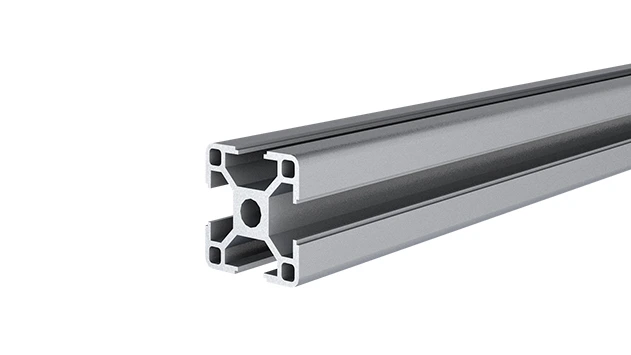
3030 is a 3.00 x 3.00CM fractional 30 series square extrusion T-slot profile with four open T-slots, each side with 3.00cm face. The profile has align-a-grooves to assist in aligning connecting profiles.
Lean manufacturing isn't just a buzzword—it's a mindset. It's about stripping away waste, streamlining workflows, and empowering teams to work smarter, not harder. But here's the catch: even the most well-intentioned lean initiatives can stall if your facility's physical setup is stuck in the past. Rigid steel workbenches that take weeks to reconfigure. Heavy wooden racks that rot or warp after a few years. Clunky conveyor systems that resist adjustments. These are the silent productivity killers that turn "continuous improvement" into "continuous frustration." Enter the 3030a EU Standard Aluminum Profile—a humble yet revolutionary material that's quietly transforming how lean teams build, adapt, and thrive. Let's dive into why this aluminum profile has become the backbone of modern lean systems, and how it can unlock new levels of efficiency in your operation.
1. Unmatched Flexibility: Build, Break Down, and Rebuild—No Welding Required
If there's one thing lean manufacturing teaches us, it's that "good enough" today might be obsolete tomorrow. Customer demands shift, product lines evolve, and process audits reveal new bottlenecks. Your workspace needs to keep up—and that's where the 3030a aluminum profile shines brightest. Unlike traditional steel or wood, this profile is designed for adaptability from the ground up. Its signature T-slot design runs the length of the profile, acting as a built-in "connection hub" for aluminum profile accessories like brackets, hinges, end caps, and even custom components. Need to add a tool holder to a workbench? Slide a bolt into the T-slot, tighten, and you're done. Want to reconfigure a flow rack to accommodate a taller part? Loosen a few joints, adjust the height, and lock it back in place. No welding, no drilling, no waiting for a maintenance crew.
Let's put this in perspective. Imagine your team just finished a kaizen event and realized your assembly line's current workbench layout is causing unnecessary reaching and motion waste. With a traditional steel workbench, fixing this would mean drafting new designs, scheduling a welder, and possibly shutting down the line for a day. With 3030a profiles? You could have the entire team disassemble the old setup, rearrange the aluminum tubes and joints, and have a fully functional, ergonomically optimized workbench ready by lunch. That's not just flexibility—that's agility . It turns "we'll get to it next quarter" into "let's test this new layout tomorrow." And in lean manufacturing, speed to adapt is speed to results.
Real-World Example: A automotive parts supplier in Germany recently switched their production cells to 3030a profiles. When a new client order required smaller batch sizes and more frequent changeovers, their team reconfigured three flow racks and two workbenches in under four hours—without interrupting daily output. Previously, similar changes would have taken 2-3 days of downtime. "We used to avoid process tweaks because the setup cost was too high," said their production manager. "Now, we treat the workspace like a puzzle—we can rearrange it until it fits just right."
2. Durability That Lasts—Without the Backbreaking Weight
There's a common misconception that "flexible" equals "flimsy." Not with 3030a aluminum. This profile is engineered to balance strength and weight in a way that traditional materials can't match. Made from high-grade aluminum alloy, it boasts a tensile strength of 110 MPa—strong enough to support heavy tools, loaded bins, and even small conveyor systems—yet weighs just 2.7 kg per meter. Compare that to steel, which clocks in at 7.8 kg per meter for the same structural integrity. Why does weight matter? For starters, it makes installation and reconfiguration a one-person job instead of a two-person lift. Your team won't waste energy wrestling with heavy steel beams, reducing fatigue and lowering the risk of strains or injuries.
But the durability story doesn't stop at weight. Aluminum is naturally resistant to corrosion, so unlike steel, you won't have to worry about rust eating through your racks or workbenches in humid or dusty environments. Even better, the 3030a's anodized finish adds an extra layer of protection, making it scratch-resistant and easy to clean—perfect for maintaining the "shine" in your 5S program. Over time, this translates to lower maintenance costs (no repainting or rust removal) and a longer lifespan. While a wooden rack might last 3-5 years before warping or rotting, and a steel setup might need replacement after 7-10 years due to corrosion, a well-maintained 3030a aluminum structure can stay in service for 15+ years. That's not just durability—that's an investment that pays dividends.

3. Ergonomics by Design: Build Workspaces That Work With Your Team
Lean manufacturing isn't just about machines and processes—it's about people. A workstation that forces operators into awkward postures or requires constant bending and stretching isn't just uncomfortable; it's a waste of human potential. The 3030a aluminum profile puts ergonomics front and center, letting you tailor every inch of your workspace to the people who use it. Need a workbench that adjusts from 75cm to 90cm to fit operators of different heights? Combine 3030a profiles with height-adjustable legs (another aluminum profile accessory) and a simple crank system. Want a flow rack that tilts slightly to reduce wrist strain when picking parts? Add adjustable angle brackets to the T-slots and dial in the perfect slope.
The beauty here is that ergonomic adjustments aren't a "one-and-done" deal. As your team grows or tasks change, you can tweak heights, angles, and layouts on the fly. For example, a new hire with a taller stature might need their assembly station raised by 5cm—no problem. A process update that requires using heavier tools could mean adding a lower shelf to keep equipment within easy reach—just slide in a few more brackets. This level of customization doesn't just boost comfort; it cuts down on absenteeism, reduces workplace injuries, and keeps morale high. After all, when your team sees that their well-being is built into the workspace, they're more likely to take ownership of keeping it efficient.
4. Sustainability: Lean Manufacturing Meets Green Manufacturing
Today's lean goals don't stop at "reduce waste"—they extend to "reduce environmental impact," too. The 3030a EU Standard Aluminum Profile aligns with both. Aluminum is one of the most recyclable materials on the planet—nearly 75% of all aluminum ever produced is still in use today. When a 3030a structure reaches the end of its lifecycle (which, as we mentioned, is decades down the line), it can be melted down and recast into new profiles with minimal energy loss. Compare that to steel, which requires intensive mining and processing, or wood, which contributes to deforestation. Choosing 3030a isn't just a win for your workflow—it's a win for your sustainability report.
But the eco-friendly benefits don't end with recyclability. The lightweight nature of aluminum also cuts down on transportation costs and carbon emissions. Shipping a batch of 3030a profiles requires fewer trucks than shipping equivalent steel structures, and once on-site, assembling them uses less energy (no welding torches or power tools, in many cases). Even the anodization process for the profile's finish is low-waste, using non-toxic electrolytes that can be recycled. For lean teams aiming to align with circular economy principles, this profile is a no-brainer. It turns your physical workspace into a statement: "We care about efficiency—and the planet."
5. Seamless Integration with Your Lean System
A tool is only as good as how well it plays with others—and the 3030a aluminum profile is the ultimate team player in any lean system. Whether you're building a kanban material rack, a 5S shadow board, or a custom conveyor interface, this profile integrates effortlessly with the tools and processes that make lean work. Its modular design means it can adapt to your existing systems, not the other way around. Need to connect a 3030a flow rack to a steel conveyor? Use a transition bracket (another aluminum profile accessory) to bridge the gap. Want to add ESD protection to a workstation for electronics assembly? Pair the profile with conductive end caps and grounding clips. The possibilities are limited only by your team's creativity.
This integration also extends to training and scalability. Because the profile and its accessories follow EU standards, new team members can quickly learn how to assemble, adjust, and maintain structures with minimal training. There's no need to memorize proprietary parts or complex assembly steps—just a few basic joint types and T-slot principles. And as your operation grows, you can scale your 3030a setup incrementally. Start with a single workbench, then add a flow rack, then expand to a full production cell—all using the same profiles and accessories you already have. No need to overhaul your entire system; just build on what works.
3030a vs. Traditional Materials: The Numbers Speak for Themselves
| Feature | 3030a EU Standard Aluminum Profile | Traditional Steel | Wood |
|---|---|---|---|
| Reconfiguration Time | Hours (no tools required for basic changes) | Days (requires welding/drilling) | Days (risk of damage when disassembling) |
| Weight (per meter) | 2.7 kg | 7.8 kg | Variable (3-5 kg, depending on density) |
| Corrosion Resistance | High (anodized finish) | Low (prone to rust without coating) | Low (moisture causes warping/rot) |
| Recyclability | 95% recyclable, minimal energy loss | Recyclable, but high energy cost to reprocess | Biodegradable, but not recyclable for same use |
| Ergonomic Customization | High (adjustable heights, angles, add-ons) | Low (fixed dimensions post-welding) | Moderate (limited by material strength) |
Final Thoughts: Your Lean Journey Deserves a Foundation That Grows With You
Lean manufacturing is about more than cutting costs—it's about building a culture of continuous improvement. And that culture needs a physical space that supports, not hinders, progress. The 3030a EU Standard Aluminum Profile isn't just a material; it's a enabler. It turns your facility from a static backdrop into an active participant in your lean journey. It lets your team experiment, adapt, and innovate without being held back by rigid structures or outdated tools.
So, if you're tired of watching your lean initiatives stall because "the workspace can't handle it," it's time to make the switch. Invest in a material that's as flexible as your team, as durable as your goals, and as committed to efficiency as you are. The 3030a EU Standard Aluminum Profile isn't just the future of lean manufacturing—it's the foundation.