- Company Articles
- Industry articles
- Industry News
- Trends in 3060 Aluminum Angle Yards Usage for Modern Manufacturing

Trends in 3060 Aluminum Angle Yards Usage for Modern Manufacturing
Related Product
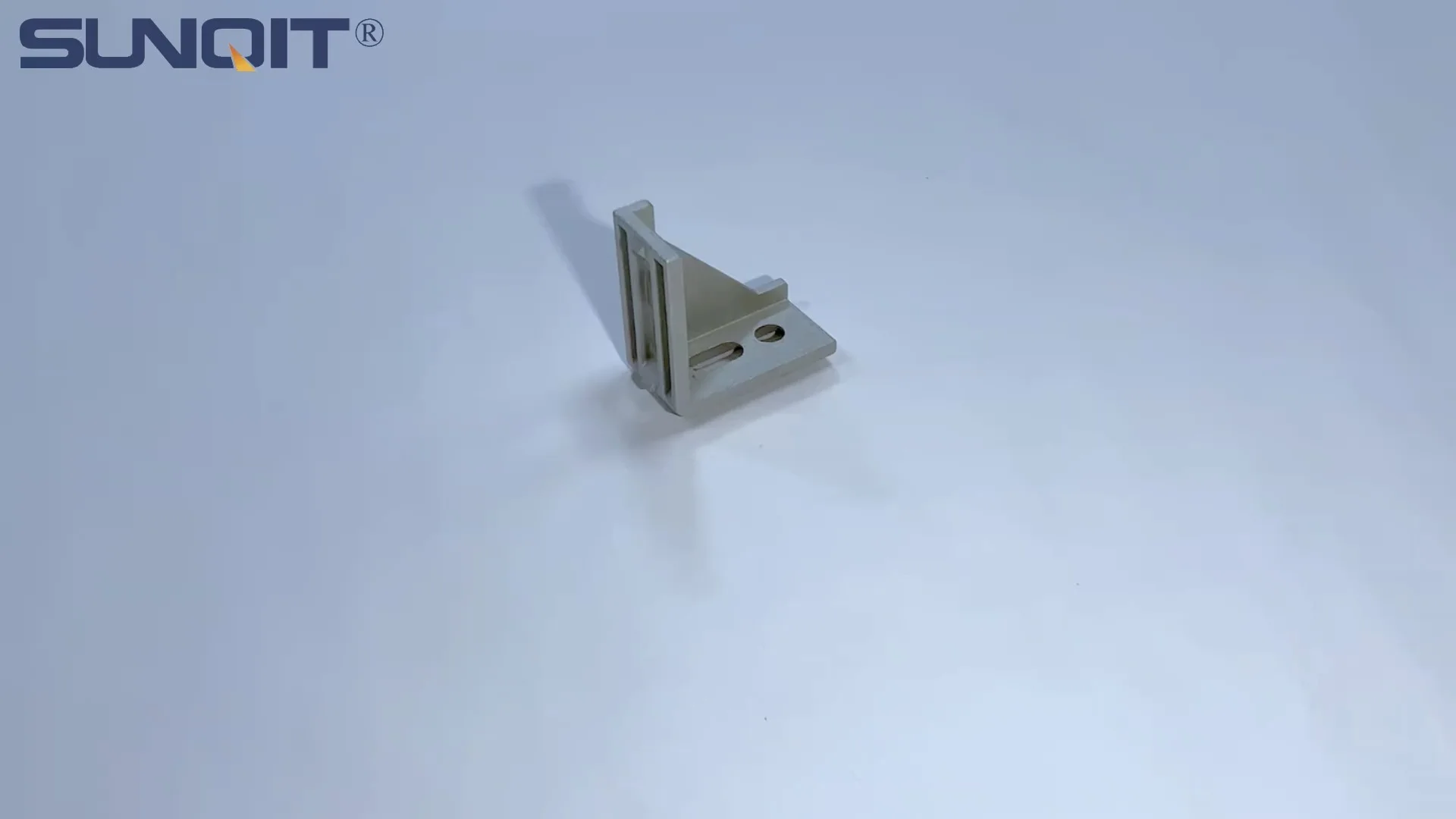
3060 Aluminum Angle Yards
It used for 90° flat connection for 20 series aluminum profile.
In the fast-paced world of modern manufacturing, where agility, efficiency, and sustainability are no longer optional but essential, the tools and materials that form the backbone of production lines are under constant scrutiny. Among these, 3060 aluminum angle yards have emerged as a quiet yet transformative force, reshaping how factories design workspaces, streamline workflows, and adapt to evolving demands. As a key component of aluminum extrusion profiles , these angle yards—paired with innovative aluminum profile accessories —are not just structural elements; they are enablers of the lean, flexible, and future-ready factories of today. Let's dive into the trends driving their growing adoption and how they're redefining manufacturing excellence.
1. Modularity: The Cornerstone of Adaptive Production
Gone are the days of rigid, one-size-fits-all production lines. Modern manufacturers face frequent product launches, shifting consumer preferences, and short production runs—all of which demand spaces that can be reconfigured in days, not months. 3060 aluminum angle yards excel here, thanks to their inherent modularity. As part of the broader family of aluminum extrusion profiles, these angle yards are designed with precision-engineered T-slots that accept a wide range of aluminum profile accessories : brackets, hinges, connectors, and fasteners that lock into place without welding or heavy tools.
Consider a scenario where a electronics manufacturer needs to pivot from assembling smartphones to tablets. With traditional steel frames, this might involve cutting, welding, and repainting—taking weeks and disrupting production. With 3060 angle yards, the process is drastically simplified: workers can loosen a few bolts, reposition the angle yards, and reattach accessories like shelf brackets or tool holders to create a new layout. A recent survey by the Manufacturing Technology Insights found that factories using modular aluminum profiles reduced reconfiguration time by up to 65% compared to those using conventional materials. This speed isn't just convenient; it's a competitive advantage in an industry where time-to-market can make or break success.
The modularity of 3060 angle yards also extends to scalability. Startups with limited floor space can begin with a small setup—a single workbench or material rack—and expand incrementally as demand grows. Larger enterprises, meanwhile, can standardize on these angle yards across multiple facilities, ensuring consistency in design while allowing local teams to customize based on regional needs. It's a "build-as-you-go" approach that aligns perfectly with the lean principle of avoiding over-investment in underutilized assets.
2. Sustainability: Aligning with the Green Manufacturing Revolution
Sustainability is no longer a buzzword but a business imperative, driven by regulatory pressures, consumer expectations, and the bottom line. Aluminum, the material behind 3060 angle yards, is inherently eco-friendly, and this has become a major driver of its adoption. Unlike steel, which requires intensive mining and high energy consumption for production, aluminum is 100% recyclable with no loss in quality. In fact, recycling aluminum uses just 5% of the energy needed to produce it from raw bauxite ore—a statistic that resonates with manufacturers aiming to reduce their carbon footprint.
Beyond recyclability, the lightweight nature of 3060 aluminum angle yards (approximately 1/3 the weight of steel for the same strength) translates to lower transportation costs and reduced energy use during installation. A factory outfitting a 100-meter production line with aluminum angle yards instead of steel can cut shipping emissions by up to 40%, according to the Aluminum Association. Additionally, their corrosion resistance means less frequent replacement, reducing waste over the product lifecycle. For manufacturers pursuing LEED certification or carbon-neutral goals, these benefits are not just ethical—they're measurable, tangible wins.
Sustainability also intersects with cost efficiency here. While the initial cost of aluminum angle yards may be slightly higher than steel, the total cost of ownership (TCO) tells a different story. Lower maintenance, reduced energy bills, and the ability to recycle old components for credit at the end of their life cycle make aluminum a smarter long-term investment. As one plant manager at a leading automotive supplier put it: "We used to replace steel racks every 5 years due to rust. With 3060 aluminum angle yards, we're on year 8, and they still look brand new. The savings in replacement parts and labor alone paid for the upgrade in 3 years."

3. Integration with Lean Systems: Minimizing Waste, Maximizing Value
At the heart of modern manufacturing lies the principles of lean systems —the relentless pursuit of waste reduction in all forms: time, space, materials, and effort. 3060 aluminum angle yards are uniquely positioned to support lean initiatives, acting as the physical framework for organizing workflows that eliminate inefficiencies. Let's break down how:
- Space Optimization: Traditional manufacturing floors are often cluttered with bulky, fixed equipment that wastes valuable square footage. 3060 angle yards, being lightweight and modular, allow for compact, custom-designed workbenches, material racks, and flow racks that fit precisely into available space. For example, a workbench built with 3060 profiles can be tailored to the exact dimensions of the tasks at hand—no more unused gaps or overhangs. This "right-sizing" of workspaces reduces motion waste, as workers no longer need to walk extra steps to access tools or materials.
- Visual Management: Lean systems thrive on transparency, and aluminum extrusion profiles, with their clean lines and customizable colors, support visual cues that keep processes on track. By adding color-coded aluminum profile accessories —like red brackets for high-priority tools or yellow guides for material flow—factories can implement 5S (Sort, Set in Order, Shine, Standardize, Sustain) practices with ease. Workers can quickly identify where items belong, reducing search time and errors.
- Just-In-Time (JIT) Material Handling: JIT production relies on delivering materials exactly when and where they're needed, minimizing inventory waste. 3060 angle yards enable the creation of mobile carts and flow racks that transport components directly to the assembly line. These structures, often equipped with casters (another type of aluminum profile accessory), are lightweight enough for workers to move by hand, yet sturdy enough to hold heavy loads—eliminating the need for forklifts and reducing waiting time.
A case in point is a medical device manufacturer in Europe that redesigned its assembly line using 3060 aluminum angle yards and lean principles. By replacing static steel workbenches with modular aluminum ones, they reduced work-in-progress inventory by 35% and cut production lead times from 14 days to 7. The plant manager noted, "The angle yards let us arrange workstations in a U-shape, so materials flow in a continuous loop—no backtracking, no bottlenecks. It's lean in action, and it wouldn't have been possible with rigid materials."

4. Compatibility with Automation: Building the Factories of the Future
Automation is transforming manufacturing, with robots, cobots, and automated guided vehicles (AGVs) becoming commonplace. For these technologies to work seamlessly, they need stable, precise, and adaptable structures to operate within—and 3060 aluminum angle yards deliver on all fronts. Unlike wood or plastic, aluminum extrusion profiles offer the dimensional accuracy required for automated systems, where even a millimeter of misalignment can disrupt operations.
Consider robot workcells: Robots require rigid frames to minimize vibration, ensuring repeatable precision in tasks like welding or pick-and-place. 3060 angle yards, with their high strength-to-weight ratio, provide the stability needed, even when supporting heavy robot arms. Moreover, their modular design allows engineers to easily modify the cell's dimensions as new robots are added or tasks change. For example, a food packaging plant recently upgraded its robotic palletizing station by extending the 3060 angle yard frame by 2 meters—work that took a single day, compared to a week with steel framing.
Automated conveyors, too, benefit from 3060 angle yards. The profiles can be used to build conveyor supports that are adjustable in height and width, accommodating different belt sizes or roller track configurations. This flexibility is critical as factories adopt mixed-model production, where conveyors must handle varying product sizes. Additionally, aluminum's non-magnetic properties make it ideal for environments with sensitive electronics, such as semiconductor manufacturing, where steel could interfere with equipment.
| Feature | Traditional Materials (Steel/Wood) | 3060 Aluminum Angle Yards |
|---|---|---|
| Weight | Heavy (steel: ~7.8g/cm³; wood: ~0.6g/cm³ but bulkier) | Lightweight (2.7g/cm³), reducing installation and transport costs |
| Assembly Time | Days (requires welding, drilling, painting) | Hours (tool-free with aluminum profile accessories) |
| Recyclability | Steel: recyclable but energy-intensive; wood: biodegradable but limited reuse | 100% recyclable, with 95% energy savings vs. primary production |
| Customization | Limited (requires custom fabrication for changes) | High (easily reconfigurable with T-slots and accessories) |
| Long-Term Cost | Higher (maintenance, replacement, energy use) | Lower (minimal maintenance, recyclable value, energy efficiency) |

5. Ergonomics and Worker Well-Being: Designing for People, Not Just Production
Modern manufacturing recognizes that employee health and satisfaction are directly linked to productivity and retention. Poor ergonomics—awkward postures, heavy lifting, repetitive strain—leads to absenteeism, errors, and high turnover. 3060 aluminum angle yards address this by enabling the creation of workspaces tailored to human needs, not just machine requirements.
Take workbench design, for example. A standard steel workbench often has a fixed height, forcing tall workers to hunch or short workers to stretch. With 3060 aluminum angle yards, workbenches can be adjusted incrementally using height-adjustable legs (another aluminum profile accessory ), ensuring each worker has a surface at elbow height—reducing strain on the back and shoulders. Some factories have even integrated footrests and anti-fatigue mats into these setups, further enhancing comfort.
Beyond adjustability, the lightweight nature of aluminum angle yards reduces the physical effort required to reconfigure workspaces. When a production line needs to be rearranged, workers can disassemble and reassemble the angle yards without heavy machinery, lowering the risk of injury. This is particularly impactful in industries with aging workforces or strict safety regulations, where reducing manual lifting is a priority.
Aesthetically, aluminum extrusion profiles also contribute to a more pleasant work environment. Unlike cold, industrial steel, aluminum has a clean, modern look that brightens up factories—boosting morale. When workers feel their workspace is designed with their well-being in mind, they're more engaged, productive, and loyal. As one HR director at a consumer goods plant noted, "After upgrading to aluminum workbenches, we saw a 20% drop in reported back pain and a 15% increase in employee satisfaction scores. It's a small change with a huge ripple effect."
Future Trends: What's Next for 3060 Aluminum Angle Yards?
As manufacturing continues to evolve, 3060 aluminum angle yards are poised to adapt and innovate. Here are three trends to watch:
- Smart Integration: The rise of Industry 4.0 will see aluminum extrusion profiles embedded with sensors and IoT technology. Imagine 3060 angle yards with built-in weight sensors that alert managers when material racks are overloaded, or temperature sensors that monitor workspace conditions. These "smart" angle yards will feed data into factory management systems, enabling predictive maintenance and real-time process optimization.
- Advanced Coatings and Finishes: To meet specialized needs, manufacturers are developing new coatings for aluminum angle yards—such as anti-microbial finishes for pharmaceutical plants or anti-static coatings for electronics manufacturing. These coatings will expand their use into highly regulated industries where hygiene and safety are paramount.
- Circular Economy Models: As sustainability goals grow more ambitious, suppliers will likely offer "profile-as-a-service" models, where 3060 angle yards are leased, not purchased. At the end of their life, the aluminum is returned, recycled, and remanufactured into new profiles—closing the loop and further reducing environmental impact.
Conclusion: More Than a Material—A Catalyst for Change
3060 aluminum angle yards may not grab headlines like cutting-edge robots or AI-driven software, but their impact on modern manufacturing is undeniable. As a key part of aluminum extrusion profiles , paired with versatile aluminum profile accessories , they embody the trends reshaping the industry: modularity for adaptability, sustainability for a greener future, integration with lean systems for efficiency, compatibility with automation for innovation, and ergonomics for worker well-being. They are not just building blocks—they are the foundation upon which the factories of tomorrow are being built.
For manufacturers looking to stay competitive in a world of constant change, investing in 3060 aluminum angle yards isn't just a choice—it's a strategic imperative. As the data, case studies, and trends show, these unassuming profiles are proving that sometimes, the most transformative innovations are the ones that quietly hold everything together.