- Company Articles
- Industry articles
- Industry standards
- Turning Angle Code 2020 and Environmental Sustainability in Lean Production

Turning Angle Code 2020 and Environmental Sustainability in Lean Production
Related Product
Urning Angle Code 2020
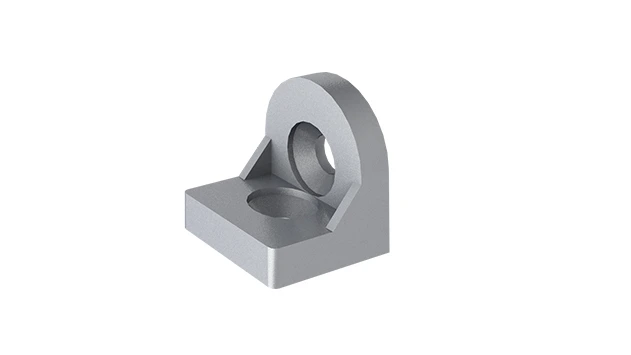
The turning angle aluminum profile connector provides a 90 degree hidden corner connection. 2020 it is means this size is used for 20 series aluminum profile.The corner code comes with set screws that allow for quick, easy connections.
Introduction: Where Lean Meets Green
In the bustling world of manufacturing, two concepts have risen to define the future of production: lean manufacturing and environmental sustainability. Lean, with its focus on eliminating waste and streamlining processes, and sustainability, with its commitment to reducing environmental impact, might seem like separate goals at first glance. But dig deeper, and you'll find they're deeply intertwined. A truly efficient production line isn't just about speed and cost—it's about using resources wisely, minimizing waste, and ensuring that today's productivity doesn't come at tomorrow's expense. And often, the key to unlocking this synergy lies in the smallest components of the production ecosystem: the parts we touch, assemble, and rely on every day without always noticing their quiet impact.
Consider the workbench where an assembler spends hours piecing together electronics, or the roller tracks that glide components from one station to the next, or the modular frames that adapt as production needs change. These elements—often made from materials like aluminum profiles, connected by precise joints like the turning angle code 2020 , and supported by systems like roller tracks —are the unsung heroes of sustainable lean production. They're not just tools for efficiency; they're building blocks for a greener, more resilient manufacturing future. In this article, we'll explore how these components, particularly aluminum profiles, turning angle codes, and roller tracks, bridge the gap between lean principles and environmental responsibility, creating systems that work harder for your team and the planet.
Aluminum Profiles: The Sustainable Backbone of Modern Manufacturing
If lean production is about eliminating waste, then the materials we choose to build our production systems with matter more than we might think. Traditional manufacturing setups often rely on heavy, rigid materials like steel or custom-machined parts—materials that are energy-intensive to produce, difficult to modify, and prone to becoming obsolete when production needs change. Enter aluminum profiles : lightweight, versatile, and inherently aligned with both lean and sustainability goals.
Aluminum's sustainability story starts with its lifecycle. Unlike steel, which requires massive amounts of energy to extract and refine, aluminum is 100% recyclable, and recycling it uses just 5% of the energy needed to produce new aluminum. That's a staggering reduction in carbon footprint right from the start. But it's not just about recycling; aluminum profiles are designed for longevity . Their corrosion resistance, strength-to-weight ratio, and low maintenance needs mean they outlast many traditional materials, reducing the frequency of replacements and the waste that comes with them.
For lean systems, aluminum profiles shine in their modularity. Unlike custom-welded steel frames, which are fixed in place and nearly impossible to reconfigure, aluminum profiles are built to be adjusted, expanded, or repurposed. Need to add a shelf to a workbench? Just slide in a new profile. Want to reposition a material rack? Disassemble the joints, move the profiles, and reassemble—no cutting, welding, or new materials required. This flexibility directly reduces two types of waste lean manufacturing targets: overproduction (no need to build a whole new structure) and defects (no mismatched parts from custom fabrication). It also aligns with sustainability by keeping materials in use longer and minimizing the need for new resource extraction.
Take, for example, a small electronics manufacturer that previously used wooden workbenches. Every time their product line changed, they'd have to build new workbenches from scratch, leading to piles of discarded wood and hours of labor. After switching to aluminum profile workbenches, they've reused the same core profiles for three product generations, only swapping out accessories like shelves or tool holders. Not only has this cut their production setup time by 40%, but it's also reduced their annual waste from workbench replacements by nearly 80%. That's lean efficiency and sustainability working hand in hand.

Turning Angle Code 2020: Precision in Every Connection
If aluminum profiles are the backbone of modular manufacturing, then the joints that hold them together are the spine—quietly ensuring stability, flexibility, and precision. Among these joints, the turning angle code 2020 stands out as a small but mighty component that embodies the spirit of both lean and sustainability. Let's break down why this unassuming piece of hardware matters.
First, what exactly is a turning angle code? In simple terms, it's a connector designed to join two aluminum profiles at a specific angle—often 90 degrees, but configurable for other angles too. The "2020" refers to its size, matching the 20x20mm aluminum profiles commonly used in light to medium-duty applications like workbenches, small material racks, or assembly stations. What makes the 2020 angle code special is its precision. Unlike generic brackets that might require drilling, filing, or force to fit, these codes are engineered to snap into the T-slots of 2020 aluminum profiles, creating a secure, rattle-free connection with minimal effort.
From a lean perspective, this precision translates to time savings . Assembling a workbench with 2020 angle codes takes a fraction of the time it would with traditional fasteners. There's no need for specialized tools, no measuring errors, and no wasted time fixing loose connections. This speed reduces waiting time (a key lean waste) and allows teams to get production lines up and running faster. But the real sustainability win comes from how these angle codes enable reusability .
Because the connections are tool-free and non-destructive, disassembling an aluminum profile structure with 2020 angle codes is as easy as assembling it. A workbench that's no longer needed for its original purpose can be taken apart, and the angle codes and profiles can be repurposed into a material cart, a shelf, or even a new workstation. This circular approach keeps materials in the loop, reducing the need to purchase new components and the waste that comes with discarding old ones. In fact, manufacturers who use modular angle codes report that up to 90% of their aluminum profiles and connectors are reused in new configurations over time—far higher than the reuse rate for fixed, welded structures.
Another sustainability benefit of 2020 angle codes is their material efficiency. These connectors are typically made from high-strength plastic or aluminum, both of which are lightweight and require minimal resources to produce. Unlike heavy steel brackets, they add little extra weight to the structure, which reduces transportation energy costs when shipping components. They also have a low failure rate, meaning fewer replacements and less waste from broken parts. For a lean system, this reliability ensures that production lines run smoothly with fewer interruptions, while for sustainability, it means fewer resources spent on maintaining or replacing connectors.

Roller Tracks: Streamlining Flow, Slashing Environmental Impact
Lean production thrives on the principle of "flow"—the smooth, uninterrupted movement of materials and products through the production process. When flow is disrupted—whether by clunky material handling, manual lifting, or bottlenecks—waste increases, and efficiency plummets. This is where roller tracks come in: simple, unassuming systems that keep materials moving, but their impact on both lean efficiency and sustainability is anything but small.
Roller tracks are exactly what they sound like: tracks fitted with rollers (either steel, aluminum, or plastic) that allow materials, bins, or components to glide from one workstation to the next with minimal effort. They're a staple in just-in-time (JIT) production, where materials arrive exactly when they're needed, and every second of delay can throw off the entire schedule. But beyond their role in lean flow, roller tracks contribute to sustainability in three key ways: energy reduction , material optimization , and longevity .
Let's start with energy. In traditional setups, moving materials often involves manual labor—workers lifting bins, pushing heavy carts, or carrying parts across the factory floor. This isn't just tiring for employees; it's energy-intensive for the business. Every manual lift or push burns calories, which translates to higher operational costs (think: more breaks, higher turnover) and, indirectly, higher energy use (more lighting, heating, or cooling for workers on the floor). Roller tracks eliminate much of this manual effort. A bin that once required two workers to push can now glide along a roller track with a gentle nudge, reducing physical strain and cutting the energy required to move materials by up to 70% in some cases.
Then there's material optimization. Roller tracks are designed to be precise, which means they minimize the space needed for material handling. Unlike wide conveyor belts or bulky carts, roller tracks can be installed close to workstations, reducing the "transportation" waste lean identifies (unnecessary movement of materials). This space efficiency also allows manufacturers to fit more production capacity into the same footprint, delaying or avoiding the need to expand facilities—a major sustainability win, as building new facilities is one of the most carbon-intensive activities a business can undertake.
Durability is another sustainability highlight. High-quality roller tracks, especially those made from aluminum or stainless steel, are built to withstand years of heavy use without degradation. Their simple design—few moving parts, easy-to-replace rollers—means maintenance is minimal, and when parts do wear out, they can be swapped individually rather than replacing the entire track. Compare this to traditional conveyor belts, which often need to be replaced entirely when a section wears out, creating significant waste. One automotive supplier reported that after switching from rubber conveyor belts to aluminum roller tracks, their material handling system maintenance costs dropped by 55%, and their track lifespan increased from 3 years to over 10 years.
Perhaps most importantly, roller tracks integrate seamlessly with other lean and sustainable components like aluminum profiles and turning angle codes. Want to build a gravity-fed roller track between two workbenches? Mount the track to aluminum profiles using 2020 angle codes, adjust the height with a few turns of a leveling foot, and you're done. No need for custom supports or permanent installations. This modularity means roller tracks can be reconfigured as production lines change, keeping them in use longer and reducing waste.
Case Study: Building a Sustainable Workbench with Aluminum Profiles, 2020 Angle Codes, and Roller Tracks
To see how these components work together in practice, let's dive into a real-world example: a mid-sized medical device manufacturer looking to reduce both its operational waste and environmental footprint. Their goal was to redesign their assembly workbenches—a critical part of their production line where workers assemble precision medical tools—to be more efficient, adaptable, and sustainable. Here's how they did it, using aluminum profiles, turning angle code 2020, and roller tracks as their core components.
The Problem: The manufacturer's old workbenches were custom-built from steel, with fixed shelves, no integrated material handling, and a lifespan of about 3 years before they became outdated or damaged. Each new product launch required new workbenches, leading to steel waste, high fabrication costs, and long lead times. Additionally, workers were manually lifting bins of components from the floor to the bench, leading to fatigue and slowdowns—classic examples of "motion" and "waiting" waste in lean terms.
The Solution: The team decided to build new workbenches using aluminum profiles (2020 and 3030 series), turning angle code 2020 connectors, and a built-in aluminum roller track for material delivery. Here's how each component contributed:
- Aluminum Profiles: The main frame of the workbench used 3030 aluminum profiles for stability, with 2020 profiles for shelves and accessories. This combination balanced strength and weight, making the workbench sturdy enough for precision assembly but light enough to reposition if needed.
- Turning Angle Code 2020: These connectors joined the profiles at corners and junctions, allowing tool-free assembly and disassembly. They also made it easy to add or remove accessories like LED task lights, tool holders, or ESD (electrostatic discharge) mats—critical for medical device assembly, where static control is a must.
- Aluminum Roller Track: A 4-foot roller track was mounted along the back of the workbench, connected to a gravity-fed material rack. Components now slide directly from the rack to the bench via the track, eliminating manual lifting and reducing delivery time from 2 minutes per bin to 20 seconds.
The Results: The impact was immediate and measurable. Operationally, the new workbenches cut assembly time per unit by 15% due to faster material delivery and better tool organization. But the sustainability gains were equally impressive. Here's a breakdown of the environmental benefits compared to the old steel workbenches:
| Metric | Traditional Steel Workbench | Aluminum Profile Workbench (with 2020 Angle Codes & Roller Tracks) | Improvement |
|---|---|---|---|
| Material Production Energy Use | High (steel requires 25 MJ/kg to produce) | Low (recycled aluminum uses 0.5 MJ/kg) | 98% reduction in energy for material production |
| Lifespan | 3 years | 10+ years (with component swaps) | 233% longer lifespan |
| Waste from Replacement | 100% of steel frame discarded every 3 years | 5% of components replaced annually (rollers, connectors) | 95% reduction in replacement waste |
| Carbon Footprint (Annual) | 120 kg CO₂e per workbench | 35 kg CO₂e per workbench | 71% reduction in annual carbon footprint |
| Assembly Time | 8 hours (custom welding/fabrication) | 1 hour (tool-free assembly with angle codes) | 87.5% reduction in setup time |
But the benefits didn't stop there. The workbench's modular design meant that when the manufacturer launched a new product line six months later, they didn't need new workbenches. Instead, they added a second roller track, repositioned the shelves using 2020 angle codes, and swapped out the ESD mat for a larger version—all in a single day. This adaptability saved them $12,000 in new workbench costs and kept 800 kg of steel from being discarded.
Workers also reported significant improvements in comfort and efficiency. With components sliding directly to their workstations via the roller track, they spent less time bending, reaching, and lifting, reducing fatigue and cutting down on errors. One assembler noted, "I used to dread the afternoon rush when bins would pile up on the floor. Now the parts just glide over, and I can focus on assembling, not lifting."
Beyond the Workbench: Scaling Sustainability Across the Production Floor
While the workbench case study shows the power of integrating aluminum profiles, 2020 angle codes, and roller tracks on a small scale, the real potential lies in scaling these components across the entire production floor. When these elements are woven into the fabric of a larger lean system, their sustainability impact multiplies—reducing waste, cutting energy use, and creating a more resilient manufacturing ecosystem.
Consider a typical production floor layout: workstations, material racks, assembly lines, and shipping areas, all connected by material handling systems. In traditional setups, each of these elements is often a standalone, fixed structure, designed for a specific purpose and difficult to change. This siloed approach leads to inefficiencies: material racks that are too far from workstations, assembly lines that can't adapt to new product sizes, and shipping areas that become bottlenecks during peak demand. By contrast, a system built with modular components like aluminum profiles and roller tracks can be integrated and adaptable , creating a seamless flow that reduces waste at every step.
Take material racks, for example. A manufacturer using aluminum profile material racks with roller track shelves can design them to feed directly into roller tracks that lead to workstations—eliminating the need for workers to walk to the rack, pick up components, and carry them back. This "milk run" system, where materials are delivered just-in-time via gravity or motorized roller tracks, reduces motion waste and speeds up production. And because the racks are built with aluminum profiles and 2020 angle codes, they can be adjusted to hold different bin sizes or quantities as product demand changes, avoiding overstocking (another lean waste) and keeping inventory levels optimized.
Assembly lines, too, benefit from modularity. Instead of fixed conveyor systems that require major overhauls to reconfigure, aluminum profile-based assembly lines use roller tracks, adjustable workstations, and quick-connect joints to adapt to new product lengths, widths, or assembly steps. One furniture manufacturer, for instance, used aluminum profiles and roller tracks to build a "U-shaped" assembly line that can be reconfigured into a straight line or a smaller loop depending on order volume. During peak seasons, they expand the line by adding more roller track sections and workstations; during slow seasons, they shrink it to save space and energy. This flexibility has cut their energy use for lighting and heating the assembly area by 30% during low-demand months.
Sustainability metrics also improve when these components are scaled. A single aluminum profile workbench might save a few hundred kilograms of CO₂e annually, but an entire production floor of modular systems can save tons. One study by the Lean Sustainability Institute found that manufacturers using modular aluminum systems across 50% or more of their production floor reduced their overall carbon footprint by an average of 22% compared to those using traditional fixed systems. They also reported 35% lower waste disposal costs and 28% faster time-to-market for new products—proof that sustainability and efficiency can go hand in hand.
Another key advantage of scaling modular components is the circular economy potential. When a production line is decommissioned or a facility is renovated, aluminum profiles, angle codes, and roller tracks can be disassembled, inspected, and reused elsewhere—either within the company or sold to other manufacturers. This creates a "closed-loop" system where materials stay in use for decades, rather than being sent to landfills. One automotive parts supplier even created a "component library" where they store and catalog used aluminum profiles and connectors, making it easy for different departments to borrow or reuse them for new projects. This library has saved them over $50,000 in new material costs in just two years.
Future Trends: Smarter Materials, Smarter Sustainability
As manufacturers continue to prioritize both lean efficiency and sustainability, the components we've discussed—aluminum profiles, turning angle code 2020, roller tracks—are evolving to meet even higher standards. New innovations in materials science and design are making these systems more durable, more adaptable, and even more environmentally friendly, pointing to a future where small components play an even bigger role in big sustainability goals.
One emerging trend is the development of recycled aluminum profiles with the same strength and precision as virgin aluminum. Manufacturers are increasingly sourcing profiles made from post-consumer aluminum scrap (like old beverage cans or automotive parts), further reducing the carbon footprint of these materials. Some suppliers now offer "closed-loop" aluminum programs, where they take back old profiles, recycle them, and turn them into new ones—creating a truly circular supply chain.
Another area of innovation is smart connectors , including advanced versions of the turning angle code 2020. These connectors integrate sensors that monitor wear and tear, alerting maintenance teams when a joint needs lubrication or a roller is wearing thin. This predictive maintenance reduces unexpected downtime (a lean waste) and extends the lifespan of components, further cutting waste. Some smart connectors even track how often a structure is reconfigured, providing data to help manufacturers optimize their modular designs for maximum reuse.
Roller tracks are also getting smarter. New materials like carbon fiber-reinforced plastic rollers are making tracks lighter and more durable, while low-friction coatings reduce the energy needed to move materials. Some roller tracks now feature built-in RFID tags that track the movement of bins or components, providing real-time data on material flow and helping identify bottlenecks—combining lean's focus on data-driven improvement with sustainability's goal of resource optimization.
Perhaps most exciting is the integration of these components with circular economy platforms . Online marketplaces for used aluminum profiles, angle codes, and roller tracks are emerging, allowing manufacturers to buy, sell, or trade components they no longer need. This not only keeps materials in use but also makes modular systems more accessible to small and medium-sized manufacturers, who might not have the budget for new components. A startup electronics manufacturer, for example, recently furnished their entire production floor with used aluminum profiles and roller tracks purchased from a larger manufacturer upgrading their systems—saving 60% on setup costs and keeping 2 tons of materials out of landfills.
Conclusion: The Power of Small Components in Big Sustainability Goals
In the grand scheme of manufacturing, it's easy to overlook the small parts—the aluminum profiles, the angle codes, the roller tracks—that hold our production systems together. But as we've explored, these components are far more than just building blocks; they're the bridge between lean production's drive for efficiency and sustainability's commitment to the planet. They're proof that sustainability doesn't have to mean sacrificing productivity—and that lean systems can be even more effective when they're designed with the environment in mind.
Aluminum profiles bring recyclability, longevity, and modularity. Turning angle code 2020 enables tool-free assembly, reconfiguration, and reuse. Roller tracks streamline material flow, reduce energy use, and minimize waste. Together, they create systems that adapt to change, keep materials in use longer, and cut down on the resources we consume—all while making production lines faster, more efficient, and better for workers.
The case study of the medical device manufacturer isn't an anomaly; it's a preview of what's possible when we prioritize these small but mighty components. As more manufacturers adopt modular, sustainable systems, we'll see even greater reductions in waste, energy use, and carbon footprints—all while boosting bottom lines and improving working conditions. In the end, the future of manufacturing isn't just about building better products; it's about building better systems—systems where every component, no matter how small, contributes to a leaner, greener world.
So the next time you walk through a production floor, take a closer look at the workbenches, the material racks, the tracks that move components from station to station. Chances are, you'll see aluminum profiles, angle codes, and roller tracks hard at work—quietly proving that the biggest sustainability wins often come from the smallest parts.