- Company Articles
- Industry articles
- Industry standards
- Turning Angle Code 2020 Compliance Checklist for Lean Tube Workbench E

Turning Angle Code 2020 Compliance Checklist for Lean Tube Workbench E
Related Product
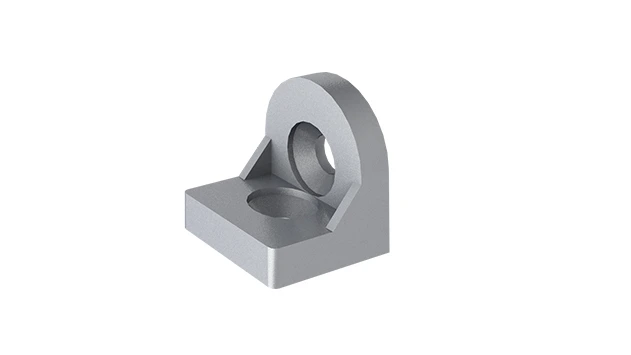
Urning Angle Code 2020
The turning angle aluminum profile connector provides a 90 degree hidden corner connection. 2020 it is means this size is used for 20 series aluminum profile.The corner code comes with set screws that allow for quick, easy connections.
In the fast-paced world of lean manufacturing, every component of your workspace matters. From the flow of materials to the stability of your workstations, (details determine efficiency and safety). Among these critical components, the humble workbench stands as the backbone of daily operations—especially models like the workbench E (single deck-without caster) , a staple in assembly lines and production floors worldwide. But what ensures that this workbench doesn't just "work" but works safely , consistently , and in line with industry standards ? Enter the Turning Angle Code 2020—a set of guidelines designed to standardize the structural integrity, dimensional accuracy, and performance of lean tube workbenches. In this article, we'll walk through a comprehensive compliance checklist tailored for Workbench E, helping you verify that your workstation meets every requirement to support your team's success.
Why Turning Angle Code 2020 Matters for Your Workbench
Before diving into the checklist, let's clarify why compliance with the Turning Angle Code 2020 isn't just a "nice-to-have"—it's a necessity. In lean manufacturing, waste reduction and process optimization are paramount. A non-compliant workbench can introduce hidden waste: wobbling frames slow down assembly, misaligned surfaces cause errors, and weak joints lead to frequent repairs (or worse, accidents). The code addresses these risks by setting strict standards for aluminum profile dimensions, joint angles, and material quality—ensuring that workbenches like Workbench E are built to withstand daily use while maintaining precision.
For Workbench E specifically—with its single-deck design and no caster wheels—stability is even more critical. Without casters to adjust for uneven floors, the workbench relies entirely on the accuracy of its frame and joints. The Turning Angle Code 2020 ensures that every 90-degree angle, every profile cut, and every lean pipe joint is engineered to keep the workbench level, sturdy, and ready for heavy tools, components, and of use.
The Compliance Checklist: Key Areas to Verify
Below is a detailed checklist to confirm your Workbench E meets Turning Angle Code 2020 standards. We've organized it into five critical categories, each with actionable steps to verify compliance.
| Check Category | Key Requirements | How to Verify | Common Red Flags |
|---|---|---|---|
| Structural Integrity | Aluminum profiles must be straight; joints must be secure and aligned to 90° ± 0.5°. | Use a spirit level to check for warping; inspect joints for gaps or looseness with a torque wrench. | Profiles bowing under light pressure; joints that rotate when pushed. |
| Dimensional Accuracy | Turning angles (per code 2020) must match design specs; deck height ± 2mm. | Measure angles with a protractor; use a tape measure for height and width. | Angles off by >1°; deck height varying by >3mm across corners. |
| Material Quality | Aluminum profiles must be 6063-T5 grade; no cracks, dents, or corrosion. | Check material certificates; inspect surfaces for defects under bright light. | Mismatched profile grades; visible scratches deeper than 0.2mm. |
| Accessory Compatibility | Joints and fasteners must fit Workbench E's specific profile grooves (T-slot size). | Test-fit a new joint; compare fastener specs to manufacturer guidelines. | Joints that require force to install; fasteners stripping T-slots. |
| Safety Standards | No sharp edges; load capacity ≥ 200kg (single deck); anti-slip deck surface. | Run a hand along edges; perform a load test with 220kg (10% over max). | Burrs on profile ends; deck flexing >5mm under 200kg load. |
1. Structural Integrity: The Backbone of Your Workbench
The first line of defense against wobbles, sagging, or collapse is the workbench's structural integrity. For Workbench E, this starts with the aluminum profile frame. Aluminum is chosen for its strength-to-weight ratio, but only if the profiles are straight, undamaged, and properly connected. Here's how to dig deeper:
Aluminum Profile Straightness
Lay each profile on a flat surface (like a concrete floor) and check for gaps between the profile and the surface. Even a 1mm gap over a 1-meter length can cause misalignment when assembled. For vertical profiles, use a plumb bob to ensure they're perfectly upright—any lean will throw off the entire frame. Remember: Workbench E has no casters, so there's no "adjustment" later; the profiles must be straight from the start.
Lean Pipe Joint Security
Joints are the glue that holds the frame together, and the Turning Angle Code 2020 is strict about their alignment and tightness. For 90-degree joints (the most common in Workbench E), use a digital protractor to measure the angle—aim for 90° ± 0.5°. Loose joints are often caused by under-tightened fasteners; use a torque wrench to ensure they're tightened to the manufacturer's specs (typically 25-30 Nm for aluminum joints). A quick test: grab two adjacent profiles and try to twist them—there should be zero movement.
2. Dimensional Accuracy: Why Turning Angles Can't Be "Close Enough"
If you've ever tried to fit a square peg into a round hole, you know how frustrating dimensional errors can be. For Workbench E, the Turning Angle Code 2020 sets precise measurements to ensure compatibility with tools, fixtures, and neighboring workstations. Let's break down the key checks:
Turning Angle Code 2020 Specifications
The code defines "turning angles" as the angles between connected profiles, particularly critical for corners and support brackets. For Workbench E's single-deck design, the main frame uses 90-degree angles at the base, corners, and deck supports. Even a 1-degree deviation can cause the deck to sit unevenly, leading to tools rolling off or components sliding. To verify, measure at least three points per angle (top, middle, bottom) and average the results—consistency is key.
Deck Height and Levelness
Workbench E's deck height is typically 800mm (standard for most assembly work), but check your design specs for exact numbers. Measure the height at all four corners—variations should be ≤ 2mm. A spirit level on the deck will reveal any tilting; if the bubble isn't centered, the frame's angles are likely off. This isn't just about comfort—an uneven deck strains workers' wrists and backs over time, defeating lean manufacturing's goal of reducing ergonomic waste.
3. Material Quality: Not All Aluminum Profiles Are Created Equal
The Turning Angle Code 2020 doesn't just care about how the workbench is built—it cares about what it's built with. Low-grade aluminum or subpar joints can corrode, bend, or fail under stress, turning your "lean" workstation into a maintenance headache. Here's what to look for:
Aluminum Profile Grade: 6063-T5 vs. Alternatives
The code specifies 6063-T5 aluminum for structural profiles—a heat-treated alloy known for strength and corrosion resistance. Cheaper alternatives (like 6061 or untreated aluminum) may save money upfront but lack the rigidity needed for a stable workbench. Ask your supplier for material certificates (mill test reports) to confirm the grade. You can also perform a simple scratch test: 6063-T5 resists light scratches from a key, while softer alloys will show marks easily.
Surface Quality and Defects
Even high-grade aluminum can have flaws if mishandled during manufacturing or shipping. Inspect each profile under bright light for cracks, dents, or pitting—these weaken the material and create stress points. Pay extra attention to ends and joints, where damage is most common. For Workbench E, which lacks casters, the base profiles are especially vulnerable to floor impacts; ensure they're free of dents that could throw off levelness.
4. Accessory Compatibility: When Joints and Fasteners Play Well Together
A workbench is only as strong as its weakest connection, and that starts with compatible accessories. The Turning Angle Code 2020 ensures that lean pipe joint s, fasteners, and brackets fit seamlessly with the aluminum profiles, preventing wobbles or slippage. Here's how to confirm compatibility:
T-Slot Size and Joint Fit
Aluminum profiles use T-slots to secure joints and accessories. Workbench E typically uses 20mm or 30mm T-slots (check your specs). A joint that's too loose will slide; too tight will strip the slot. Test-fit a new joint (from the same supplier) into the slot— it should slide smoothly but resist movement when tightened to 25 Nm. If you have to force it, the T-slot dimensions are off.
Fastener Material and Coating
Fasteners (screws, bolts) should be stainless steel or zinc-plated to resist corrosion, especially in humid environments. The code prohibits galvanized fasteners with aluminum profiles (they react chemically, causing corrosion). Check for rust spots or flaking coating—these are signs of low-quality fasteners that will fail prematurely.
5. Safety Standards: Protecting Your Team, One Check at a Time
At the end of the day, compliance is about people. A non-compliant workbench isn't just inefficient—it's dangerous. The Turning Angle Code 2020 includes safety checks to prevent cuts, trips, and strains. Let's cover the essentials:
Sharp Edges and Burrs
Aluminum profiles often have burrs from cutting or extrusion. Run a gloved hand along all edges—any roughness should be sanded smooth. Pay attention to profile ends, where burrs are most common; these can slice through gloves or skin during assembly. The code requires edges to have a radius of ≥ 0.5mm for safety.
Load Capacity Testing
Workbench E's single deck is rated for 200kg, but always test at 110% of the max load (220kg) to account for sudden impacts (like dropping a tool). Place weighted boxes evenly across the deck and leave them for 24 hours—no permanent deformation (like sagging) should occur. If the deck dips more than 5mm, the frame or joints are understrength.
Anti-Slip Deck Surface
The deck should have a textured or rubberized surface to prevent components from sliding. The code requires a coefficient of friction ≥ 0.6 (test by tilting the deck until a 500g weight starts to slide— it should stay put at angles up to 30°). If your deck is smooth aluminum, add a non-slip mat that complies with the code.

Beyond the Checklist: Maintaining Compliance Over Time
Compliance isn't a one-and-done task. Lean manufacturing environments are dynamic, and workbenches take a beating daily. Schedule quarterly inspections using this checklist to catch wear and tear early. Tighten loose joints, replace corroded fasteners, and sand down new burrs. Over time, you'll notice patterns—maybe the front-left joint loosens faster, or the deck surface wears thin in high-use areas. Addressing these proactively keeps your Workbench E compliant, efficient, and safe for years to come.

Final Thoughts: Compliance as a Lean Mindset
The Turning Angle Code 2020 isn't just a list of rules—it's a tool to uphold the principles of lean manufacturing: eliminating waste, improving efficiency, and prioritizing people. By ensuring your workbench E (single deck-without caster) meets these standards, you're not just checking boxes—you're building a workspace that empowers your team to do their best work, safely and consistently. So grab your protractor, torque wrench, and spirit level, and make compliance part of your daily lean routine. Your workbench (and your team) will thank you.