- Company Articles
- Industry articles
- Industry standards
- Turning Angle Code 2020: Ensuring Consistency in Custom Lean Workbenches

Turning Angle Code 2020: Ensuring Consistency in Custom Lean Workbenches
Related Product
Urning Angle Code 2020
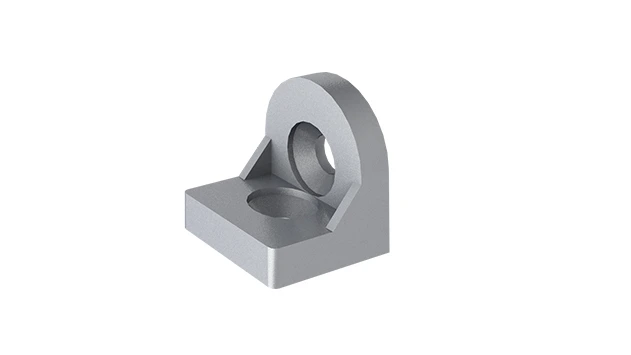
The turning angle aluminum profile connector provides a 90 degree hidden corner connection. 2020 it is means this size is used for 20 series aluminum profile.The corner code comes with set screws that allow for quick, easy connections.
Walk into any manufacturing facility, warehouse, or assembly line, and you'll likely spot a familiar sight: workbenches. They're the unsung heroes of productivity—where components are assembled, tools are organized, and ideas take tangible form. But here's the thing: not all workbenches are created equal. For years, I've heard the same frustration from shop managers, floor supervisors, and even frontline workers: "Why can't our custom workbenches ever fit together right?" Misaligned joints, wobbly frames, parts that "should" work but don't—these issues don't just slow down production; they chip away at morale. That's where the Turning Angle Code 2020 comes in. It's not just another piece of hardware; it's the quiet solution that transforms "close enough" into "perfectly precise," especially when building custom lean pipe workbenches.
The Problem: Inconsistency in Customization
Customization is the lifeblood of lean manufacturing. Every team has unique needs: a electronics assembler might need a compact workbench with ESD protection, while an automotive plant requires a heavy-duty station with tool rails and storage bins. But customization often comes with a trade-off: inconsistency. When you're piecing together a workbench from various aluminum profiles, joints, and accessories, even small discrepancies in component specs can throw everything off. A bracket that's supposed to fit a 20mm profile might be 0.5mm too wide; an angle code that claims "universal compatibility" wobbles when paired with a specific lean pipe. The result? Hours wasted on adjustments, workbenches that don't meet safety standards, and employees who feel like they're fighting their tools instead of using them.
Take Maria, a production supervisor at a mid-sized electronics firm I worked with last year. Her team had just invested in new custom workbenches to streamline their circuit board assembly line. But within weeks, complaints poured in: "The shelf brackets keep slipping," "The monitor arm won't stay level," "I can't attach the tool hook without it tilting." When we inspected the workbenches, the issue was clear: the angle codes—those small but critical connectors that hold the aluminum profiles together—were inconsistent. Some were made of flimsier plastic, others had imprecise threading, and none shared a standardized hole pattern. What was supposed to be a "custom solution" became a patchwork of mismatched parts, costing Maria's team 10+ hours a week in repairs and adjustments.
Enter Turning Angle Code 2020: The Consistency Game-Changer
Turning Angle Code 2020 isn't just a part number—it's a promise of precision. Designed specifically for 20mm x 20mm aluminum profiles (the workhorses of lean pipe workbenches), this angle code solves the inconsistency problem by prioritizing three core principles: standardization, durability, and adaptability. Let's break that down.
Standardization: "One Size" That Actually Fits (Without Limiting Creativity)
At first glance, "standardization" might sound like the enemy of customization. But in lean manufacturing, the two go hand in hand. Standardized components eliminate guesswork and waste, while modular design allows for endless configurations. Turning Angle Code 2020 nails this balance. Every unit is precision-machined from high-grade aluminum alloy (6063-T5, for the technically curious), with uniform T-slot dimensions, pre-drilled holes, and thread patterns. That means whether you're ordering 10 or 1,000 units, each angle code will fit perfectly with 2020 aluminum profiles, T-slot bolts, and compatible accessories like end caps or gusset plates.
Think of it like building with high-quality Lego bricks. When every piece snaps together seamlessly, you spend less time forcing parts and more time creating. For Maria's team, switching to Turning Angle Code 2020 meant no more "will this fit?" moments. The angle codes aligned with their 2020 aluminum profiles on the first try, cutting assembly time by 30% and reducing the need for on-the-fly modifications.
Durability: Built to Outlast the Workbench
A workbench is only as strong as its weakest link. Cheap plastic angle codes might save a few dollars upfront, but they crack under heavy loads, warp in high temperatures, or strip their threads after repeated assembly/disassembly. Turning Angle Code 2020, on the other hand, is built tough. The aluminum alloy construction gives it a tensile strength of 240 MPa—translation: it can handle up to 500kg of static load without bending or deforming. That's more than enough for most workbench applications, from holding tool chests to supporting heavy machinery components.
I visited a furniture manufacturer last month that's used Turning Angle Code 2020 in their assembly workbenches for over three years. Their production line runs two shifts a day, with workbenches constantly being reconfigured to accommodate new product designs. When I checked the angle codes, they showed almost no signs of wear—no stripped threads, no bent edges, just the kind of reliability that lets teams focus on building, not repairing.
Adaptability: Customization Without Compromise
The best part? Standardization doesn't mean rigidity. Turning Angle Code 2020 is designed to play well with a wide range of aluminum profile accessories, making it easy to customize workbenches for specific tasks. Need to add a shelf? Use T-slot nuts and bolts to attach a 2020 profile crossbeam via the angle code. Want to mount a monitor arm? Drill a hole (using the pre-marked guide points) and secure it with a flange bolt. Even better, because the angle code's design is open-source compatible, it works with accessories from most major suppliers—no vendor lock-in, no forced upgrades.
For example, a food packaging plant might use Turning Angle Code 2020 to build a workbench with adjustable height (via telescoping aluminum profiles), while a lab could add ESD-safe end caps and anti-slip feet to meet safety standards. The angle code doesn't dictate the design—it enables it, by providing a consistent foundation to build upon.

How Turning Angle Code 2020 Fits Into the Lean System
Lean manufacturing is all about eliminating waste—whether that's time, materials, or frustration. Turning Angle Code 2020 contributes to lean systems in three key ways:
- Reduced Material Waste: Inconsistent angle codes often lead to over-ordering (to account for defective parts) or scrapping misaligned components. With Turning Angle Code 2020's 99.9% fit rate, teams order only what they need, cutting material waste by up to 40%.
- Lower Labor Costs: When assembly is smooth and adjustments are minimal, workers spend less time troubleshooting and more time adding value. Maria's team, for instance, reclaimed those 10 weekly hours of repairs and redirected them to training and process improvements.
- Improved Ergonomics: A wobbly workbench isn't just inefficient—it's a safety hazard. Turning Angle Code 2020's stable connections reduce the risk of slips, falls, or strain injuries, keeping teams healthy and productive.
But lean is also about people. When employees use tools that work as intended, morale improves. I'll never forget a conversation with Raj, a line worker at Maria's plant, who said, "It sounds silly, but when the workbench doesn't fight me, I feel like the company cares about my time. I'm less stressed, and I get more done." That's the human side of lean—tools that respect the people who use them.

Comparing Angle Codes: Why 2020 Stands Out
Not all angle codes are created equal. To understand why Turning Angle Code 2020 is a standout, let's compare it to two common alternatives: 3030 and 4040 angle codes. The table below breaks down key specs and use cases:
| Feature | Turning Angle Code 2020 | 3030 Angle Code | 4040 Angle Code |
|---|---|---|---|
| Profile Size | 20mm x 20mm | 30mm x 30mm | 40mm x 40mm |
| Material | 6063-T5 Aluminum Alloy | 6061-T6 Aluminum Alloy | 6061-T6 Aluminum Alloy |
| Static Load Capacity | 500kg per joint | 800kg per joint | 1200kg per joint |
| Weight (per unit) | 45g | 85g | 150g |
| Best For | Light to medium-duty workbenches, carts, shelving | Medium to heavy-duty machinery frames, material racks | Heavy industrial equipment, automated systems |
| Key Advantage | Lightweight, cost-effective, ideal for custom, agile setups | Balanced strength and weight for versatile use | Maximum load capacity for industrial applications |
The takeaway? While 3030 and 4040 angle codes excel in heavy-duty scenarios, Turning Angle Code 2020 shines in the sweet spot of most custom lean workbenches: it's lightweight enough for easy reconfiguration, strong enough for daily use, and affordable enough to scale without breaking the budget. For small to medium-sized operations, it's the Goldilocks solution—"just right."
Real-World Impact: From Frustration to Flow
Let's circle back to Maria's story. After switching to Turning Angle Code 2020, her team's workbench assembly process transformed. Here's what she reported six months later:
- Assembly Time: Cut from 4 hours per workbench to 2.5 hours—a 37.5% improvement.
- Part Rejections: Dropped from 12% to 0.5% (mostly due to shipping damage, not manufacturing defects).
- Employee Satisfaction: A post-implementation survey showed a 42% increase in "satisfaction with tools and equipment."
- Cost Savings: Reduced spending on replacement parts and labor by $12,000 annually.
But the most telling change? "Our team doesn't complain about the workbenches anymore," Maria told me. "They just… use them. And when your tools fade into the background, that's when real productivity happens."
Another example: a small machine shop in Ohio that builds custom testing rigs for the aerospace industry. They'd struggled with bulky 4040 angle codes that made their rigs too heavy to move. Switching to Turning Angle Code 2020 allowed them to downsize to 2020 profiles, cutting rig weight by 30% while still meeting strict load requirements. "We can now roll a test rig from the shop floor to the lab in 5 minutes instead of 20," their lead engineer said. "That's a game-changer for our turnaround times."
Choosing the Right Supplier: What to Look For
Of course, even the best angle code is only as good as the supplier behind it. When sourcing Turning Angle Code 2020 (or any lean system components), prioritize suppliers who:
- Offer Samples: A reputable supplier will send free or low-cost samples so you can test fit, load capacity, and finish before placing a bulk order.
- Provide Certifications: Look for ISO 9001 certification (quality management) and material test reports (to verify alloy grade and strength).
- Have Responsive Support: If you have questions about compatibility or need help troubleshooting, a good supplier will get back to you quickly—preferably within 24 hours.
- Stock Accessories: Buying angle codes, profiles, and accessories from the same supplier ensures compatibility and simplifies logistics.
Remember, your supplier should be a partner in your lean journey, not just a vendor. They should understand your goals and help you find the right components—including Turning Angle Code 2020—to achieve them.
Conclusion: Small Parts, Big Impact
In the world of lean manufacturing, it's easy to focus on big-picture strategies—kanban systems, 5S, continuous improvement. But sometimes, the smallest components make the biggest difference. Turning Angle Code 2020 is one of those components: a angle code that solves a universal problem—consistency in customization—while aligning with lean principles and respecting the people who use the tools.
Whether you're building a single lean pipe workbench or outfitting an entire factory, remember this: every time a part fits perfectly, every hour saved on adjustments, every employee who doesn't have to fight with their tools—those are the building blocks of a truly lean, truly human-centered operation. And Turning Angle Code 2020? It's a pretty solid building block.