- Company Articles
- Industry articles
- Industry standards
- Turning Angle Code 2020 Explained: Key Standards for Aluminum Rotational Joints

Turning Angle Code 2020 Explained: Key Standards for Aluminum Rotational Joints
Related Product
Urning Angle Code 2020
The turning angle aluminum profile connector provides a 90 degree hidden corner connection. 2020 it is means this size is used for 20 series aluminum profile.The corner code comes with set screws that allow for quick, easy connections.
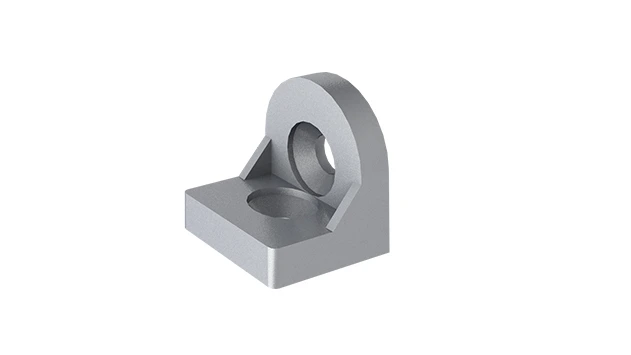
What Exactly Is the Turning Angle Code 2020?
Breaking Down the Key Standards of Turning Angle Code 2020
1. Material Composition: The Foundation of Durability
The code mandates that rotational joints must be made from 6063-T5 aluminum alloy. If you're not familiar with aluminum grades, 6063 is often called "architectural aluminum" for its excellent extrudability (meaning it can be shaped into complex profiles easily) and corrosion resistance. The "T5" designation refers to the heat treatment process—artificially aging the alloy to boost its strength without sacrificing flexibility. Why does this matter? Because a joint made from cheaper, softer aluminum might bend under load, while a brittle alloy could crack when rotated repeatedly. 6063-T5 strikes the perfect balance: strong enough to support 20-30kg per joint (depending on configuration), yet malleable enough to maintain smooth rotation over thousands of adjustments.2. Dimensional Tolerances: Precision in Every Millimeter
Imagine trying to connect two 2020 profiles with a joint that's just 0.5mm too wide. The fit would be loose, leading to (wobbling) and premature wear. The Turning Angle Code 2020 sets strict tolerances: the inner diameter of the joint (where it slides over the 2020 profile) must be 20.2mm ±0.1mm. That tiny 0.1mm margin ensures a snug, rattle-free fit while still allowing for easy assembly—no hammering or force required. The outer dimensions are equally precise, typically 30mm x 30mm for the joint body, ensuring compatibility with T-slot covers, end caps, and other aluminum profile accessories.3. Rotational Range and Locking Mechanism
Not all rotational joints are created equal. Some need to pivot 180 degrees, others only 90. The Turning Angle Code 2020 specifies two common variants: a "full-rotation" joint (capable of 360-degree movement, ideal for adjustable shelves) and a "hinged" joint (limited to 180 degrees, perfect for fold-down work surfaces). Both must include a reliable locking mechanism—usually a hex screw or cam lever—that can secure the joint at any angle without slipping. The code requires that the locking force be at least 25N (newtons), which is roughly the force needed to lift a 2.5kg weight. This ensures that once you set an angle, it stays set, even with tools or materials resting on the surface.4. Load-Bearing Capacity: Safety First
This is where the rubber meets the road (or the joint meets the profile). The code defines two load classes for Turning Angle Code 2020 joints: light-duty (up to 15kg per joint) and medium-duty (up to 30kg per joint). How is this tested? Engineers mount the joint on a 2020 profile, apply a static load at the furthest point from the joint, and measure deflection (how much it bends). For light-duty joints, maximum deflection under load must be less than 1mm; for medium-duty, less than 2mm. This might sound trivial, but in a workspace where precision matters—like assembling electronics or measuring parts—even a 1mm sag can throw off alignment.5. Corrosion Resistance: Longevity in Tough Environments
Manufacturing floors, labs, and warehouses aren't always clean, dry spaces. Oils, coolants, dust, and even humidity can take a toll on metal components. The Turning Angle Code 2020 requires joints to undergo anodization—a process that coats the aluminum with a protective oxide layer. This layer isn't just for looks (though it gives the joints a sleek, uniform finish); it's 10x more corrosion-resistant than raw aluminum. Tests show that anodized joints can withstand 500+ hours of salt spray exposure without pitting or rusting—more than enough for even humid or semi-industrial environments.| Standard Aspect | Turning Angle Code 2020 Requirement | Why It Matters |
|---|---|---|
| Material | 6063-T5 aluminum alloy | Balances strength, flexibility, and corrosion resistance for industrial use. |
| Inner Diameter | 20.2mm ±0.1mm | Ensures a snug, rattle-free fit with 2020 aluminum profiles. |
| Rotational Range | 360° (full-rotation) or 180° (hinged) | Adapts to adjustable workbenches, shelves, and fold-down surfaces. |
| Locking Force | Minimum 25N | Prevents slipping under load, keeping surfaces stable during use. |
| Corrosion Resistance | Anodized finish (≥5μm thickness) | Withstands oils, humidity, and dust in industrial environments. |

Real-World Applications: Where Turning Angle Code 2020 Joints Shine
1. Adjustable Workbenches: The Backbone of Flexible Assembly
Walk into a small electronics repair shop or a startup's prototyping lab, and you'll likely find workbenches that do double duty: flat for soldering in the morning, tilted for inspecting circuit boards in the afternoon, and folded down to save space overnight. These transformations are powered by Turning Angle Code 2020 joints. A typical "workbench E (single deck-without caster)"—a common model in lean system setups—uses two of these joints to connect the tabletop to the frame. The 2020 profiles keep the bench lightweight, while the joints let users adjust the angle from 0° (flat) to 90° (vertical) with a quick twist of the locking lever. No more struggling with heavy, fixed work surfaces—just a smooth, tool-free adjustment that takes seconds.2. Mobile Material Racks: Adapting to Shifting Needs
In warehouses, material storage is never static. One week, you're storing small parts in bins; the next, you need space for larger components. A "material rack B (3 row and 3 floor)"—a popular multi-tiered storage solution—relies on Turning Angle Code 2020 joints to adjust shelf angles. For example, if you're storing cylindrical parts like roller bearings, tilting the shelves slightly (using the joints) prevents them from rolling off. When you switch to boxes, you can flatten the shelves again. The 2020 profiles keep the rack light enough to move with a hand trolley, while the joints ensure each shelf can handle up to 15kg of weight without sagging. It's lean system thinking in action: adaptability without sacrificing strength.3. Ergonomic Workstations: Putting People First
Repetitive strain injuries are a real concern in any workspace, but they're avoidable with ergonomic design. Imagine a lab technician who spends hours pipetting samples—their workspace should let them adjust the height and angle of their equipment to reduce wrist strain. Turning Angle Code 2020 joints make this possible. By mounting tool holders or monitor arms on 2020 profile brackets with rotational joints, workers can position everything at eye level or at a comfortable angle. The joints' smooth rotation means no jarring movements, and the locking mechanism ensures the setup stays in place all day. It's a small change that leads to happier, healthier, and more productive teams.4. Educational and Hobby Spaces: Learning by Building
It's not just industrial settings that benefit. Schools, makerspaces, and DIY workshops love 2020 profiles and Turning Angle Code 2020 joints because they're easy to assemble and reconfigure. Students can build a robot frame one day, a project display stand the next, and a storage shelf the week after—all with the same set of components. The joints' simple locking mechanism is kid-friendly (no power tools needed), and the anodized finish stands up to the inevitable bumps and scrapes of hands-on learning. Plus, since the code ensures consistency, parts from different suppliers work together, so educators don't have to worry about compatibility issues.
Pairing with Aluminum Profile Accessories: A System That Works Together
2020 Aluminum Profile End Caps: Finishing the Look and Protecting Hands
The raw ends of aluminum extrusions can be sharp, so end caps are a must. The "2020 aluminum profile end cap" is a small, plastic or rubber cover that snaps onto the ends of 2020 profiles. Since the Turning Angle Code 2020 joints are sized to fit 2020 profiles perfectly, these end caps fit just as well, creating a clean, safe edge. They also prevent dust and debris from getting inside the profile's T-slots, which can gunk up the joints over time.T-Slot Rubber Seal Covers: Keeping It Smooth
2020 profiles have T-shaped slots along their length for attaching accessories. When a rotational joint is slid into one of these slots, the T-slot rubber seal cover fills the gaps, creating a flush surface. This not only looks better but also prevents tools, screws, or small parts from falling into the slots. The code ensures the joint's width matches the slot size, so the seal cover fits snugly without bulging or slipping.Gusset Plates: Adding Reinforcement Where It's Needed
For heavier loads or high-stress applications (like a workbench that holds a vice), gusset plates—small, triangular brackets—are used to reinforce the joint connections. The Turning Angle Code 2020 specifies the hole positions on the joint body, so these gusset plates (like "gusset alp 2020") line up perfectly with the joint's mounting holes. It's an extra layer of security that turns a good joint into a great one, ensuring stability even under repeated use.Why Compliance Matters: Avoiding the Pitfalls of Cheap Alternatives
1. Premature Failure: A Costly Headache
A joint made from soft aluminum might work for a month or two, but over time, the constant rotation and weight will cause it to wear, bend, or snap. Imagine a mobile cart loaded with parts suddenly collapsing because the joint failed—that's downtime, damaged inventory, and potential injury. Turning Angle Code 2020 joints are tested to withstand 10,000+ rotations under load, ensuring they last for years, not months.2. Inconsistent Fit: The Frustration of Mismatched Parts
Generic joints often have loose tolerances, meaning some will fit your 2020 profiles and others won't. You'll end up with a wobbly shelf here, a stuck hinge there, and a lot of time wasted swapping parts. The Turning Angle Code 2020's strict dimensional standards guarantee that any compliant joint will fit any 2020 profile, no exceptions. It's the difference between a weekend of frustration and a setup that works on the first try.3. Safety Risks: Cutting Corners on Strength
The load-bearing and locking force standards in the Turning Angle Code 2020 aren't just about performance—they're about safety. A joint that slips under load can cause tools or materials to fall, leading to accidents. Non-compliant joints often skimp on locking mechanisms, using cheap plastic levers or weak springs that fail under stress. When you choose code-compliant joints, you're choosing peace of mind for yourself and your team.Choosing the Right Supplier: What to Look For
- Ask for certification: Reputable suppliers will have documentation proving their joints meet the Turning Angle Code 2020 standards. Don't be shy—ask to see test reports or material certificates.
- Check the finish: Anodized joints should have a uniform, matte finish without scratches or discoloration. This is a sign of quality control during manufacturing.
- Test the rotation: If possible, ask for a sample. The joint should rotate smoothly without sticking, and the locking mechanism should engage firmly with a satisfying "click."
- Look for bundled options: The best suppliers sell 2020 profiles, Turning Angle Code 2020 joints, end caps, and other accessories together. This ensures everything is compatible and saves you the hassle of shopping around.