- Company Articles
- Industry articles
- Industry standards
- Turning Angle Code 2020: Impact on Flexible Workstation Design Efficiency

Turning Angle Code 2020: Impact on Flexible Workstation Design Efficiency
Related Product
Urning Angle Code 2020
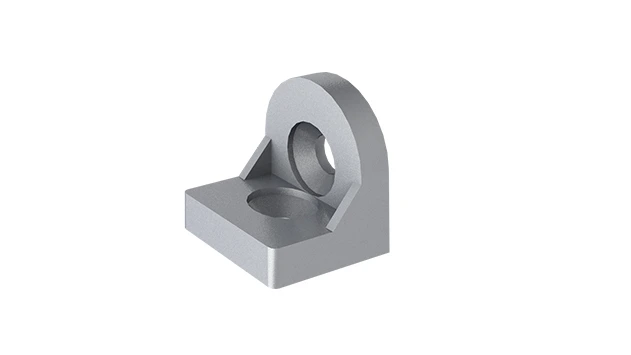
The turning angle aluminum profile connector provides a 90 degree hidden corner connection. 2020 it is means this size is used for 20 series aluminum profile.The corner code comes with set screws that allow for quick, easy connections.
Walk into any modern manufacturing facility, and you'll notice a shift—gone are the days of heavy, immovable workbenches bolted to the floor, or material racks that take a team of engineers to reconfigure. Today's factories thrive on flexibility. Whether it's a sudden order for a new product line, a shift to smaller batch sizes, or the need to adapt to ergonomic updates for workers, the ability to tweak workstations quickly can make or break production efficiency. At the heart of this flexibility lies a quiet hero: modular components that turn rigid structures into adaptable, agile systems. And among these components, one small but mighty part has been making waves in workstation design: the turning angle code 2020 . Let's dive into how this unassuming piece is reshaping the way we build workbenches, flow racks, and entire lean systems—one connection at a time.
The Rise of Flexible Workstations: Why One-Size-Fits-All No Longer Cuts It
Think about the last time you rearranged your home office. Maybe you added a shelf, adjusted your desk height, or swapped out a chair to fit a new workflow. Now imagine doing that, but on an industrial scale—with workbenches that need to support heavy machinery, flow racks that move parts across a factory floor, and assembly lines that must adapt to new products overnight. For manufacturers, rigidity in workstation design isn't just inconvenient; it's costly. Downtime spent disassembling and rebuilding fixed structures, wasted space from oversized racks, and frustrated workers struggling with ill-fitting setups—these are the hidden drains on productivity that keep plant managers up at night.
Enter flexible workstations, built around modular aluminum profile systems. Aluminum profiles are lightweight yet strong, with T-slots that let you attach brackets, shelves, and accessories anywhere along their length. They're like the industrial version of building blocks—versatile, reusable, and infinitely customizable. But here's the catch: even the best aluminum profiles are only as flexible as the connectors that hold them together. Traditional angle brackets, for example, often require drilling, welding, or multiple bolts to secure, turning a "quick reconfiguration" into a half-day project. That's where the turning angle code 2020 comes in. It's not just another connector; it's a design innovation that simplifies how we build, adjust, and repurpose workstations—making flexibility feel less like a buzzword and more like a daily reality.
What Exactly Is the Turning Angle Code 2020?
Let's start with the basics. The term "turning angle code" might sound technical, but it's essentially a specialized bracket designed to join two aluminum profiles at a 90-degree angle (though some versions can handle other angles, too). The "2020" refers to the size of the aluminum profile it's designed for: 20mm x 20mm, a common in modular systems. But what makes the turning angle code 2020 different from older angle brackets? Let's break it down.
Traditional angle codes often rely on external clamps or bolts that require tools and precise alignment. You'd have to hold the bracket in place, drill holes, insert screws, and tighten—all while making sure the profiles stay straight. If you ever wanted to reposition the bracket, you'd have to unscrew everything, patch the holes, and start over. The turning angle code 2020 flips this script. It's designed to slide into the T-slot of the aluminum profile, using a cam lever or quick-release mechanism to lock into place. No drilling, no welding, no fuss. Twist the lever, adjust the position, lock it back down—done. It's like the difference between using a screwdriver to assemble furniture and using click-together connectors; the end result is sturdier than you'd think, and the process is exponentially faster.
But it's not just about speed. The turning angle code 2020 also offers micro-adjustability. Need to tweak the angle by a few degrees to align a shelf perfectly? No problem. The bracket's design allows for small rotations before locking, ensuring that even complex setups (like a workbench with angled tool holders or a flow rack with sloped roller tracks) can be dialed in with precision. And because it's made from high-grade aluminum or reinforced plastic, it's durable enough to handle the daily wear and tear of a manufacturing environment—no more worrying about stripped threads or bent brackets after repeated adjustments.

Aluminum Profiles and the Turning Angle Code 2020: A Match Made in Flexibility Heaven
To truly appreciate the turning angle code 2020, you need to understand its partner in crime: the aluminum profile. Aluminum profiles are the backbone of modular workstations, and for good reason. They're lightweight (about a third the weight of steel), corrosion-resistant, and infinitely configurable. The T-slot design—those grooves running along the length of the profile—lets you attach everything from shelves and monitors to conveyor belts and lighting, all without modifying the profile itself. But without the right connectors, even the most versatile profile becomes just another piece of metal.
Here's where the turning angle code 2020 shines: it leverages the T-slot design to create a connection that's both strong and flexible. Imagine building a workbench frame with 2020 aluminum profiles. With traditional brackets, you'd need at least four bolts per corner, each requiring a wrench to tighten. With the turning angle code 2020, each corner takes seconds to secure—slide the bracket into the T-slot, position the crossbar profile, twist the cam lever, and it's locked. That might not sound like a big deal for a single workbench, but multiply it by 50 workbenches on a factory floor, and the time savings add up fast. What used to take a team of two workers a full day to assemble can now be done by one worker in half the time.
But it's not just about assembly speed. The real magic is in reconfiguration. Let's say your production line switches from assembling small electronics to larger appliances. Suddenly, your workbenches need to be taller, wider, or equipped with additional shelving. With traditional brackets, you'd have to disassemble the entire frame, remove the old brackets, and drill new holes for the new configuration. With the turning angle code 2020? Loosen the cam levers, slide the brackets to the new positions, lock them down, and add the new profiles. It's that simple. No wasted materials, no downtime waiting for maintenance crews, and no compromise on stability—even after multiple reconfigurations.

From Assembly Lines to Bottom Lines: The Efficiency Impact
Efficiency in manufacturing isn't just about working faster—it's about working smarter. The turning angle code 2020 contributes to this in three key ways: reducing assembly time, lowering labor costs, and enhancing adaptability. Let's break down the numbers.
| Metric | Traditional Angle Brackets | Turning Angle Code 2020 | Improvement |
|---|---|---|---|
| Assembly Time per Joint (minutes) | 5-7 minutes (drilling, bolting, aligning) | 30-60 seconds (slide, twist, lock) | 85-90% faster |
| Reconfiguration Time (per workstation) | 2-3 hours (disassemble, patch holes, rebuild) | 15-30 minutes (adjust brackets, reposition profiles) | 90% faster |
| Labor Cost per Workstation (initial assembly) | $40-$60 (2 workers x 2 hours @ $15/hour) | $10-$15 (1 worker x 1 hour @ $15/hour) | 65-75% lower |
| Number of Reconfigurations Before Profile Wear | 2-3 (due to stripped threads/holes) | Unlimited (no permanent modifications) | Infinite improvement |
These numbers tell a clear story: the turning angle code 2020 isn't just a minor upgrade—it's a game-changer for operational efficiency. For example, a mid-sized manufacturer with 100 workbenches could save over $4,500 in labor costs alone during initial assembly. Over time, as reconfigurations are needed (say, twice a year), the savings multiply. And because the aluminum profiles remain unmodified, they can be reused indefinitely, reducing material waste and lowering replacement costs.
Lean System Integration: Aligning with the Principles of "Less Waste, More Value"
If you're familiar with manufacturing, you've probably heard of "lean systems"—the philosophy of minimizing waste while maximizing value. Lean is all about eliminating anything that doesn't add value to the product: excess inventory, unnecessary movement, waiting time, and yes, rigid workstations that can't keep up with demand. The turning angle code 2020 fits perfectly into this framework by addressing two key types of waste: muda (non-value-added activity) and muri (overburden on workers).
Muda is tackled through faster assembly and reconfiguration times. Every minute spent drilling holes or disassembling brackets is a minute not spent producing goods. By cutting assembly time by 85%, the turning angle code 2020 frees up workers to focus on value-added tasks. Muri is addressed through ergonomic benefits: workers no longer have to strain with heavy tools or awkwardly hold brackets in place during assembly. The quick-release mechanism reduces physical fatigue, lowering the risk of injury and improving overall morale.
But lean systems aren't just about the workbench itself—they're about the entire flow of materials. This is where flow racks come into play. Flow racks use gravity or rollers to move materials from the back to the front, ensuring a steady supply to assembly lines. Traditionally, building a flow rack meant painstakingly aligning roller tracks with brackets, often requiring precise measurements and multiple adjustments. With the turning angle code 2020, aligning roller tracks becomes a breeze. The brackets can bed to ensure the perfect slope for material flow, and if product sizes change (e.g., switching from small boxes to larger bins), the angle can be adjusted in minutes, not hours. This seamless integration with flow racks ensures that the entire production line—from workstation to material handling—operates with minimal waste.
Real-World Impact: Case Studies from the Factory Floor
Let's put this into context with a real example. Consider a small electronics manufacturer that produces both smartphones and tablets. Their production lines switch between the two products every two weeks, requiring workstations to be reconfigured for different component sizes and assembly tools. Before adopting the turning angle code 2020, their process looked like this:
- Friday evening: Production ends for smartphones.
- Saturday: Two workers spend 8 hours disassembling 10 workbenches, removing old brackets, and patching holes in aluminum profiles.
- Sunday: Two workers spend another 8 hours reassembling the workbenches with new brackets, adjusting heights, and installing tablet-specific tool holders.
- Monday morning: Production starts 2 hours late due to final adjustments.
Total downtime: 2 days, with 32 labor hours and delayed production. After switching to the turning angle code 2020, their process changed dramatically:
- Friday evening: Production ends for smartphones.
- Saturday morning: One worker spends 4 hours adjusting the turning angle code 2020 brackets on all 10 workbenches—sliding them to new positions, reconfiguring heights, and adding tablet tool holders.
- Saturday afternoon: A quick test run confirms everything is aligned.
- Monday morning: Production starts on time, with zero delays.
The result? Downtime cut by 75%, labor hours reduced by 87.5%, and no more delayed production starts. For a company with tight profit margins, these savings translate directly to the bottom line. Plus, workers report less frustration and physical strain, leading to lower turnover and higher productivity during production hours.
Another example comes from a automotive parts supplier that uses flow racks to feed components to assembly lines. They were struggling with flow racks that couldn't be adjusted for different box sizes, leading to jams and slow material flow. By retrofitting their flow racks with aluminum profiles and turning angle code 2020 brackets, they could adjust the angle of the roller tracks to match the weight and size of each component. This reduced jams by 90% and increased material flow speed by 30%, ensuring assembly lines never ran out of parts.
Beyond the Workbench: Future Innovations in Modular Design
The turning angle code 2020 is just the tip of the iceberg when it comes to modular workstation design. As manufacturers demand even greater flexibility, we're seeing innovations like smart brackets with built-in sensors (to monitor weight loads or alignment) and magnetic connectors for even faster assembly. But for now, the turning angle code 2020 remains a cornerstone of accessible, affordable flexibility—proving that sometimes, the smallest components make the biggest impact.
Looking ahead, the integration of turning angle code 2020 with other modular components (like quick-connect caster wheels or adjustable shelving) will only enhance its versatility. Imagine a workstation that can be reconfigured in minutes for a morning shift assembling small parts, then transformed into a flow rack for afternoon material handling—all with the same base components. This level of adaptability isn't just convenient; it's essential in a manufacturing landscape where change is the only constant.
Conclusion: The Small Bracket That's Big on Efficiency
In the world of manufacturing, efficiency is often measured in inches, seconds, and dollars. The turning angle code 2020 may be small in size, but its impact on these metrics is enormous. By simplifying assembly, reducing downtime, and enhancing adaptability, it's helping manufacturers build workstations that can keep up with the pace of modern production. Whether you're a plant manager looking to cut costs, a lean coordinator aiming to eliminate waste, or a worker tired of wrestling with rigid equipment, the message is clear: the future of workstation design is flexible, and it starts with the right connectors.
So the next time you walk through a factory floor, take a closer look at those aluminum profile workbenches and flow racks. Chances are, the turning angle code 2020 is there, quietly holding things together—one twist, one connection, one efficiency gain at a time.