- Company Articles
- Industry articles
- Industry standards
- Turning Angle Code 2020: Reducing Waste in Flexible Production Processes

Turning Angle Code 2020: Reducing Waste in Flexible Production Processes
Related Product
Urning Angle Code 2020
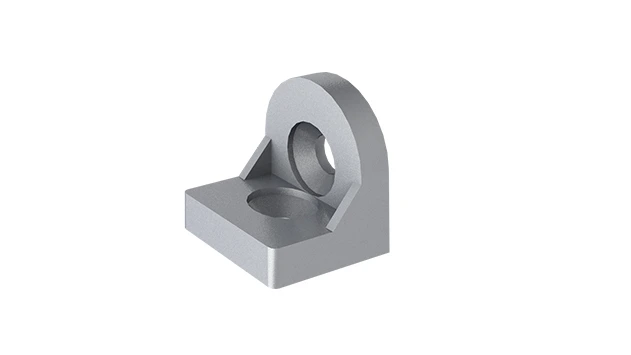
The turning angle aluminum profile connector provides a 90 degree hidden corner connection. 2020 it is means this size is used for 20 series aluminum profile.The corner code comes with set screws that allow for quick, easy connections.
In the fast-paced world of manufacturing and warehousing, the ability to adapt quickly isn't just a luxury—it's a necessity. Production lines shift, product designs evolve, and customer demands fluctuate. Yet for years, many facilities have been stuck with rigid, one-size-fits-all setups: welded steel workbenches that can't be adjusted, fixed racks that collect dust when product lines change, and assembly processes that take days to reconfigure. All of this adds up to one thing: waste. Waste of time, waste of materials, and waste of potential. But what if there was a small component that could unlock a new level of flexibility, cutting through that waste like a well-oiled machine? Enter the Turning Angle Code 2020 —a humble but powerful connector that's quietly revolutionizing how we build and adapt production systems. Let's dive into how this unassuming piece, paired with aluminum profile , lean pipe , and other modular components, is turning rigid workflows into agile, waste-reducing powerhouses.
The Hidden Cost of Rigidity: Why Waste Plagues Traditional Production
Before we get into the solution, let's talk about the problem. In traditional production environments, "waste" isn't just about scraps on the factory floor. It's about the hours spent waiting for a welder to rework a fixed workbench. It's about the money spent on brand-new racks because the old ones can't fit a new product size. It's about the frustration of workers who have to walk extra steps because materials aren't flowing smoothly to their stations. These are the silent drains on productivity that eat into profits and slow down innovation.
Consider a typical scenario: A small electronics manufacturer decides to launch a new smartphone model. Their existing assembly line has workbenches bolted to the floor, with fixed shelving and rigid material racks. To accommodate the new phone's slightly larger components, they need wider work surfaces and taller shelving. The options? Either hire a contractor to cut and weld new steel benches (costing time and money) or with the old setup, leading to cramped workspaces and increased errors. Both choices mean waste—either in capital expenditure or operational inefficiency.
This is where flexibility becomes critical. Flexible production systems adapt to change without major overhauls. They use modular components that can be reconfigured, repurposed, and reused. And at the heart of many of these systems is the Turning Angle Code 2020. But what exactly is it, and how does it fit into the bigger picture?
What Is Turning Angle Code 2020? The Unsung Hero of Modular Design
At first glance, the Turning Angle Code 2020 might look like just another metal bracket. But its design is deceptively clever. Made from durable materials like aluminum or high-grade steel, it's a connector specifically engineered to join aluminum profile —those extruded metal rails with T-slots that have become the backbone of modular systems. The "2020" in its name refers to the profile size it's designed for: 20mm x 20mm, a common (specification) in lean manufacturing for its balance of strength and lightweight versatility.
Unlike traditional connectors that require drilling, welding, or complex tools, the Turning Angle Code 2020 slides into the T-slots of 2020 aluminum profiles and locks into place with a simple bolt or lever. This means you can join two profiles at 90-degree angles (or other angles, depending on the design) in minutes, not hours. No sparks, no specialized labor, no permanent modifications. It's the difference between building with Legos and building with concrete blocks—both sturdy, but one lets you rebuild in seconds.
But its real magic lies in compatibility. The Turning Angle Code 2020 isn't a one-trick pony. It works seamlessly with other modular components: lean pipe (those lightweight, coated steel tubes used in lean systems), roller tracks for material flow, caster wheels for mobility, and even custom workbench surfaces. This interoperability turns individual parts into a cohesive system that can be tailored to almost any task.

How Turning Angle Code 2020 Slashes Waste: Four Key Benefits
Now, let's get to the heart of the matter: how does this small connector actually reduce waste? Let's break it down into four critical areas where the Turning Angle Code 2020 makes a tangible difference.
1. Cutting Setup and Changeover Time (Waste of Waiting)
In manufacturing, "waiting time" is one of the deadliest forms of waste. When a production line needs to switch from Product A to Product B, every minute spent reconfiguring workbenches or racks is a minute of lost output. Traditional setups with welded steel or bolted frames can take days to modify. With the Turning Angle Code 2020, that timeline shrinks to hours—or even minutes.
Imagine a team needs to adjust a workbench height to accommodate taller components. With a traditional wooden or steel bench, this might require sawing legs or adding shims (if possible at all). With a modular bench built using 2020 aluminum profiles and Turning Angle Code 2020 connectors? Loosen the bolts on the angle codes, slide the profiles to the new height, retighten, and you're done. Total time: 15 minutes, start to finish. No waiting for tools, no downtime for the entire line. Multiply that by dozens of changeovers a year, and the time savings add up to hundreds of productive hours.
2. Eliminating Material Waste (Waste of Overproduction)
"Overproduction" waste isn't just about making too many products—it's also about making too many tools for production. How many factories have a corner filled with old, unused workbenches or racks that are no longer needed? These are physical reminders of material waste: resources spent on custom-built equipment that becomes obsolete when needs change.
The Turning Angle Code 2020 flips this script by enabling "build once, reuse forever" systems. Since the connectors allow for easy disassembly, you can take apart an old rack and rebuild it into a new workbench, or reconfigure a production line into a packing station. A 2020 aluminum profile frame that once held circuit boards can, with a few angle code adjustments, become a cart for transporting finished goods. This reduces the need to buy new materials for every project, cutting down on scrap and lowering procurement costs.
3. Reducing Motion Waste (Waste of Movement)
Workers are the lifeblood of any production process, but unnecessary movement—walking to fetch tools, bending to reach materials, or stretching to access equipment—drains their energy and slows them down. This "motion waste" is often overlooked, but it adds up to fatigue, errors, and lost productivity.
Modular systems built with Turning Angle Code 2020 tackle this by putting everything within arm's reach. For example, a lean pipe workbench with aluminum profile legs (connected via angle codes) can be outfitted with roller tracks (another modular component) that slide materials directly to the worker. Add caster wheels (locked in place with, you guessed it, angle code-mounted brackets), and the entire bench can be positioned exactly where it's needed—no more walking to the material station. It's about designing the workspace around the worker, not the other way around.
4. Enhancing Adaptability (Waste of Inflexibility)
Perhaps the biggest waste of all is inflexibility—the inability to pivot when opportunities arise. A toy manufacturer that can't quickly scale up for holiday demand, or a medical device maker that can't retool to produce critical supplies during a crisis, loses more than money; they lose competitive advantage.
The Turning Angle Code 2020 turns adaptability into a superpower. Take a warehouse that needs to switch from storing small parts to large boxes. With traditional shelving, this would require a complete overhaul. With modular racks built using 2020 aluminum profiles and angle codes? Adjust the shelf heights by loosening the connectors, add extra supports where needed, and you're ready. Even better, if the large boxes are only a temporary need, the racks can be reverted back once the season ends. It's production agility in its purest form.
Case Study: How a Furniture Manufacturer Cut Waste by 40% with Modular Systems
Let's put this into context with a real-world example (names changed for privacy). GreenLeaf Furniture, a mid-sized manufacturer of office chairs, was struggling with frequent design changes. Their old production line had fixed steel workbenches, and every time they updated a chair model (which happened 3–4 times a year), they spent $15,000 on new benches and lost 2 weeks of production time reconfiguring.
In 2023, they switched to a modular setup using 2020 aluminum profiles, Turning Angle Code 2020 connectors, lean pipe accessories, and roller track systems. The results were striking:
- Setup Time: Changeovers went from 2 weeks to 2 days. The angle codes allowed workers to adjust bench heights and add/remove roller tracks in hours, not days.
- Material Costs: They stopped buying new benches entirely. Instead, they reused old profiles and angle codes to build new setups, saving $60,000 a year.
- Worker Productivity: Motion waste dropped by 35%—roller tracks delivered parts directly to workers, and mobile benches (on caster wheels) eliminated walking time.
"It's like night and day," said Maria Gonzalez, GreenLeaf's production manager. "We used to dread design changes. Now? We embrace them. The Turning Angle Code 2020 didn't just save us money—it made us more competitive."

Beyond the Angle Code: How Complementary Components Amplify Results
The Turning Angle Code 2020 is a star player, but it doesn't work alone. To truly maximize waste reduction, it needs a supporting cast of modular components. Let's take a closer look at three key partners and how they work together:
Aluminum Profile: The Backbone of Modularity
The 2020 aluminum profile is the canvas to the Turning Angle Code 2020's paintbrush. Made from lightweight, high-strength aluminum, these profiles have T-slots running along their length, which is where the angle codes (and other accessories) lock in. Unlike steel, aluminum is corrosion-resistant, so it holds up in factories with moisture or chemicals. It's also infinitely recyclable, aligning with sustainability goals. When paired with angle codes, 2020 profiles become the building blocks for everything from workbenches to shelving units to material carts.
Lean Pipe: Adding Flexibility to Structures
Lean pipe (also called "flexible pipe") is a coated steel tube used to build lightweight, customizable structures. While aluminum profiles handle the heavy lifting (literally), lean pipe adds versatility. For example, a workbench frame built with 2020 aluminum profiles and Turning Angle Code 2020 can have lean pipe arms extending from it to hold tools or hang cables. Lean pipe connectors work with angle codes, too, so you can mix and match materials based on needs—aluminum for strength, lean pipe for flexibility.
Roller Track: Streamlining Material Flow
Even the most adaptable workbench is only as good as how easily materials reach it. That's where roller track comes in. These tracks, often made of plastic or aluminum, use small wheels to let parts glide smoothly from one station to the next. And yes—they connect to 2020 aluminum profiles using (you guessed it) Turning Angle Code 2020. Mount a roller track along the edge of a modular workbench, and suddenly, parts arrive at the worker's fingertips instead of requiring a trip to the storage area. It's a simple addition that eliminates transportation waste and keeps production flowing.
Caster Wheels: Mobility for Maximum Agility
What good is a modular workbench if it's stuck in one spot? Caster wheels, mounted to aluminum profile frames via angle codes, add mobility. Need to move a bench to a different line? Unlock the casters and roll it—no forklift needed. This is especially useful for small-batch production or temporary setups, where flexibility isn't just about reconfiguration, but about relocation.
Traditional vs. Modular: A Side-by-Side Comparison
Still on the fence about whether modular systems with Turning Angle Code 2020 are worth the investment? Let's compare traditional setups with modular ones across key metrics:
| Metric | Traditional Setup (Welded Steel/ Wood) | Modular Setup (Turning Angle Code 2020 + Aluminum Profile) |
|---|---|---|
| Initial Assembly Time | Days to weeks (requires welding, cutting, drilling) | Hours (tool-free or basic tools; angle codes lock into T-slots) |
| Changeover Time | Weeks (often requires new equipment) | Hours to days (loosen angle codes, reconfigure profiles) |
| Material Waste | High (fixed structures become obsolete; new materials needed) | Low (components are reusable; profiles/angle codes repurposed) |
| Worker Motion Waste | High (fixed positions require walking/fetching) | Low (mobile benches, roller tracks deliver materials to workers) |
| Long-Term Cost | High (repeatedly buying new equipment) | Low (one-time investment in reusable components) |
| Scalability | Limited (hard to expand without major overhauls) | Unlimited (add more profiles/angle codes to grow systems) |
Choosing the Right System: What to Look for in a Modular Setup
If you're ready to make the switch to modular production, here are a few tips to ensure success:
Prioritize Compatibility
Not all angle codes or aluminum profiles are created equal. Look for Turning Angle Code 2020 models that are compatible with standard 2020 T-slot profiles (most major suppliers follow this). Check that they work with lean pipe, roller track, and caster wheel accessories from the same brand or third-party vendors—interoperability is key.
Invest in Quality Materials
Aluminum profiles should be made from high-grade aluminum (6063-T5 is common in manufacturing for its strength). Angle codes should be durable—look for zinc-plated steel or aluminum to resist corrosion. Cheap components might save money upfront, but they'll bend or break during reconfigurations, leading to more waste long-term.
Train Your Team
Modular systems are easy to use, but workers need to know the basics: how to lock/unlock angle codes, how to safely reconfigure profiles, and how to troubleshoot loose connections. A 1-hour training session can turn even skeptical employees into modular system advocates.
The Future of Production: Agility as a Competitive Edge
As manufacturing continues to evolve—with trends like small-batch production, customization, and rapid prototyping—flexibility will only grow more important. The Turning Angle Code 2020, (unassuming) as it may seem, is a cornerstone of this future. It's not just a connector; it's a mindset shift: from "build it once and hope for the best" to "build it to adapt, build it to last, build it to thrive."
So, whether you're a small workshop or a large factory, the question isn't if modular systems can reduce waste—it's when you'll start using them. The Turning Angle Code 2020, paired with aluminum profile, lean pipe, and roller track, isn't just a tool for today's challenges. It's an investment in tomorrow's opportunities. And in a world where waste is the enemy, that's an investment that pays dividends—for your bottom line, your workers, and your ability to stay ahead of the curve.
Ready to start reducing waste? Grab a Turning Angle Code 2020, a length of 2020 aluminum profile, and see for yourself how a small connector can make a world of difference. Your production line (and your profit margin) will thank you.