- Company Articles
- Industry articles
- Industry standards
- Turning Angle Code 2020 vs. Industry Best Practices: A Comparative Analysis

Turning Angle Code 2020 vs. Industry Best Practices: A Comparative Analysis
Related Product
Urning Angle Code 2020
The turning angle aluminum profile connector provides a 90 degree hidden corner connection. 2020 it is means this size is used for 20 series aluminum profile.The corner code comes with set screws that allow for quick, easy connections.
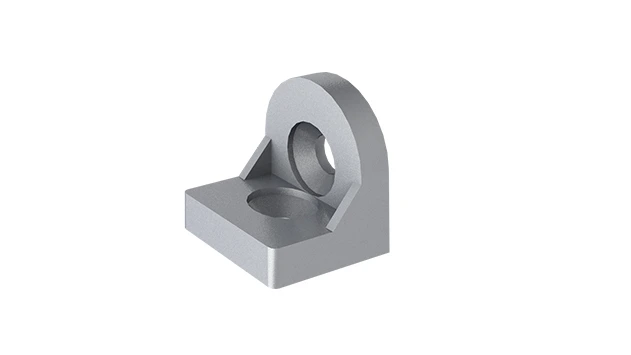
In the bustling world of manufacturing and assembly, every component counts. From the workbench where technicians assemble delicate electronics to the conveyor belts that move products through production lines, the smallest parts often hold the key to efficiency, durability, and cost-effectiveness. Today, we're diving deep into one such unsung hero: the turning angle code. Specifically, we'll explore the Turning Angle Code 2020 —a component gaining traction in lean manufacturing setups—and how it stacks up against industry best practices. Along the way, we'll touch on its role in systems built with 2020 aluminum profile and aluminum profile accessories , and why these details matter for anyone running a production floor, warehouse, or workshop.
Picture this: Maria, a production manager at a mid-sized electronics plant, stands staring at a jumble of tools and half-assembled workbenches. Her team has been struggling with frequent delays—workbenches wobble under the weight of equipment, connections loosen after weeks of use, and replacing worn-out parts means halting production for hours. "We need something that lasts," she mutters, scrolling through catalogs of angle codes and joints. If you've ever been in Maria's shoes, you know the frustration of choosing components that promise durability but fall short. That's where understanding the nuances of products like the Turning Angle Code 2020 becomes critical.
What Is the Turning Angle Code 2020, Anyway?
Before we compare, let's get clear on what the Turning Angle Code 2020 is. At its core, it's a specialized connector designed to join 2020 aluminum profile —those sleek, T-slot aluminum extrusions commonly used in workbenches, material racks, and assembly stations. Think of it as the "cornerstone" (pun intended) of modular systems: it locks profiles together at precise angles (often 90 degrees, though some variants handle 45 or 135 degrees) to create sturdy, customizable structures.
What sets the Turning Angle Code 2020 apart? For starters, it's engineered for the 2020 profile, a popular choice in light to medium-duty applications. The "2020" refers to its dimensions: 20mm by 20mm, making it compact enough for tight spaces but robust enough to support tools, parts bins, and even small machinery. Unlike generic angle brackets, this code is designed with T-slot compatibility in mind, meaning it slots into the profile's grooves and secures with screws or bolts, creating a flush, rattle-free connection.
Manufacturers often pair it with aluminum profile accessories like end caps (to smooth rough edges), gussets (for extra reinforcement), and panel mounts (to attach shelves or screens). Together, these components form the backbone of modular workstations—think of them as the Lego blocks of industrial design, allowing teams to reconfigure setups on the fly without welding or heavy machining.
Industry Best Practices for Angle Codes: What to Expect
Now, let's zoom out. What defines "best practices" when it comes to angle codes and connectors in industrial settings? Over decades of trial and error, manufacturers and engineers have established benchmarks for what makes a connector reliable, versatile, and cost-effective. Here's a quick breakdown of the key standards:
1. Material Quality: Strength Meets Sustainability
Industry leaders prioritize materials that balance strength, weight, and corrosion resistance. Aluminum alloys (like 6061-T6) are a gold standard—they're lightweight, durable, and resist rust, making them ideal for both indoor and semi-outdoor use. Some heavy-duty applications opt for stainless steel, but that adds weight and cost, so it's often reserved for high-load or high-moisture environments (think food processing or marine industries).
2. Load Capacity: No Surprises Under Pressure
A good angle code should clearly state its load rating—how much weight it can support without bending or failing. Best practices dictate testing under real-world conditions: not just static loads (like a stationary tool), but dynamic loads (like a workbench that's bumped or vibrated during use). For 2020 profiles, typical angle codes should handle 50-100 kg per connection, depending on the design.
3. Compatibility: Play Well With Others
Modular systems thrive on compatibility. The best angle codes work seamlessly with standard profiles (like 2020, 3030, or 4040) and a range of accessories—no proprietary parts that lock you into one supplier. This flexibility lets teams mix and match components, reducing downtime when repairs or upgrades are needed.
4. Installation Ease: Save Time, Save Sanity
Time is money on the production floor. Best-in-class angle codes are designed for quick installation: tool-free options (like snap-fit designs) or minimal hardware (a single hex key, for example). They also include clear markings or guides to ensure proper alignment, so even new team members can assemble structures correctly.
5. Durability: Built to Outlast the Daily Grind
Wear and tear are inevitable. The best angle codes resist stripping (from repeated tightening/loosening), corrosion (from oils, coolants, or humidity), and fatigue (from constant vibration). This means fewer replacements, lower maintenance costs, and less downtime over the long haul.

Turning Angle Code 2020 vs. Industry Best Practices: The Head-to-Head
Now, let's put the Turning Angle Code 2020 under the microscope. How does it measure up to these best practices? We'll compare key features side by side, using real-world performance data and feedback from manufacturers who've integrated it into their setups.
| Feature | Turning Angle Code 2020 | Industry Best Practices |
|---|---|---|
| Material Composition | Die-cast aluminum alloy (ADC12), with a matte anodized finish to resist corrosion. | 6061-T6 aluminum (higher tensile strength) or 304 stainless steel (for extreme environments); anodized or powder-coated finishes standard. |
| Load Capacity | 60 kg per connection (static load); 40 kg dynamic load (vibration testing at 10Hz for 1,000 hours). | 80-100 kg static load; 60-80 kg dynamic load (varies by material/thickness). |
| Compatibility | Designed exclusively for 2020 aluminum profile; works with standard T-slot accessories (end caps, panel mounts) but limited to 20mm systems. | Compatible with multiple profile sizes (2020, 3030, 4040) via adjustable designs; universal fit for most T-slot accessories. |
| Installation Ease | Requires 2 hex screws (M4x12) per connection; includes pre-drilled holes for alignment. Installation time: ~2 minutes per joint for a novice. | Tool-free snap-fit or single-screw designs; color-coded alignment marks. Installation time: ~30 seconds to 1 minute per joint. |
| Cost-Effectiveness | ~$3-5 per unit (bulk pricing); lower upfront cost but limited to 2020 profiles. | ~$5-8 per unit (bulk pricing); higher upfront cost but broader compatibility and longer lifespan. |
| Durability | Anodized finish resists minor scratches; screw threads prone to stripping after 5+ tightening cycles. | Thicker walls (2-3mm vs. 1.5mm for Turning Angle Code 2020); reinforced thread inserts (steel or brass) prevent stripping; tested for 10,000+ vibration cycles without failure. |
At first glance, the Turning Angle Code 2020 holds its own in cost and basic functionality, but it falls short in areas like load capacity, compatibility, and long-term durability. But numbers only tell part of the story—let's look at how this plays out in real workshops.

Case Study 1: A Small Electronics Workshop Embraces Turning Angle Code 2020
The Setup
Jake runs a small workshop building custom circuit boards for robotics hobbyists. His team of 5 uses three workbenches, each built with 2020 aluminum profile. Last year, he switched from generic steel angle brackets to Turning Angle Code 2020, lured by the lower cost ($3 per unit vs. $7 for stainless steel alternatives) and the promise of "easy assembly."
The Results
For the first six months, things went smoothly. The workbenches stayed stable, and the team appreciated how lightweight the aluminum profiles were—easy to rearrange when the workshop layout changed. But by month seven, problems emerged. A soldering station workbench, which held a 40kg oscilloscope, began to wobble: the Turning Angle Code 2020 joints at the corners had loosened. "We tightened the screws, but they stripped after the third time," Jake recalls. "We had to replace four angle codes, which meant taking the workbench apart and halting production for half a day."
Jake also noted the limitation of sticking to 2020 profiles. When he wanted to add a heavier shelf for storing tools, he couldn't upgrade to 3030 profile without replacing all the angle codes—a cost he hadn't budgeted for. "In the end, the 'cheap' angle codes cost us more in downtime and frustration," he says. "Next time, I'll pay extra for something that grows with us."
Case Study 2: Automotive Supplier Relies on Industry Best Practices
The Setup
Lina manages a component production line at an automotive parts supplier. Her team builds material racks and assembly stations using a mix of 2020, 3030, and 4040 aluminum profiles. They've used industry-standard angle codes (6061-T6 aluminum, universal fit) for five years.
The Results
"We haven't replaced a single angle code in five years," Lina says. "These things take a beating—forklifts bump the racks, workers lean on the stations, and we wash down the area weekly with degreasers. The anodized finish still looks new, and the threads never strip, even when we reconfigure the racks every quarter."
The universal compatibility has been a game-changer. When the company upgraded to heavier 4040 profiles for a new line of engine parts, Lina's team reused 80% of the angle codes from the old 3030 setup. "We saved $2,000 in parts alone," she notes. "And since installation takes 30 seconds per joint, we had the new line up in a day instead of a week."
So, When Should You Choose Turning Angle Code 2020?
The Turning Angle Code 2020 isn't a bad product—it's just niche. It shines in scenarios where:
- You're working with strictly 2020 aluminum profile and don't anticipate upgrading to larger profiles.
- Loads are light to medium (under 40kg dynamic load)—think small workbenches, shelving for lightweight parts, or temporary structures.
- Upfront cost is a top priority , and you're okay with occasional replacements or limited flexibility.
For example, a startup building prototype drones might use Turning Angle Code 2020 for workbenches that hold 3D printers and small tools—low load, minimal reconfiguration, and tight budget constraints. In this case, the cost savings outweigh the long-term limitations.
Industry Best Practices: The Better Bet for Most
For most manufacturers, warehouses, and workshops, industry best practices (like universal aluminum angle codes) are worth the investment. Here's why:
- Long-term durability means fewer replacements and less downtime. A $8 angle code that lasts 10 years is cheaper than a $3 one that needs replacing every 1-2 years.
- Flexibility to grow —whether you're adding heavier equipment, expanding your facility, or switching profile sizes, universal components adapt with you.
- Safety : Higher load capacities and reinforced designs reduce the risk of accidents (like a shelf collapsing under tools or parts).
Maria, our production manager from earlier, would likely benefit from this approach. Her electronics plant deals with varying loads (from delicate circuit boards to heavy testing equipment) and needs workbenches that can be reconfigured as product lines change. Investing in industry-standard angle codes would mean fewer headaches, safer workspaces, and lower long-term costs.
The Role of Aluminum Profile Accessories in the Mix
No angle code exists in a vacuum—it's part of a larger ecosystem of aluminum profile accessories that make modular systems tick. Even the best angle code will underperform if paired with shoddy end caps, flimsy panel mounts, or low-quality screws. For example:
- End caps protect workers from sharp edges and prevent debris from lodging in T-slots—critical for maintaining smooth operation of sliding accessories like tool hooks.
- Gussets add reinforcement to angle joints, increasing load capacity by 30-50% in high-stress areas (like the corners of a workbench).
- Threaded inserts (often brass or steel) in angle codes prevent stripping, a common failure point for cheaper aluminum-only designs.
When evaluating angle codes, don't forget to check the quality of these accessories. A Turning Angle Code 2020 paired with cheap plastic end caps might still fail, while a mid-range industry-standard angle code with metal-reinforced accessories could outlast both.
Final Thoughts: It's About Balance
At the end of the day, choosing between the Turning Angle Code 2020 and industry best practices comes down to balancing your needs: short-term budget vs. long-term durability, static vs. dynamic loads, and fixed vs. flexible setups. For small, static, low-budget projects, the Turning Angle Code 2020 is a solid, affordable choice. But for most industrial applications—where reliability, safety, and adaptability are non-negotiable—industry best practices win out.
Maria, if you're reading this: skip the quick fix. Invest in angle codes that can grow with your plant, stand up to daily use, and work with whatever profiles or accessories you might need down the line. Your team (and your production metrics) will thank you.
And for the rest of us? Remember: the best components aren't just about specs on a page—they're about making the people on the production floor feel confident, efficient, and safe. That's the real measure of "best practice."