- Company Articles
- Industry articles
- Industry standards
- Turning Angle Code 2020 vs. Legacy Standards: Performance Metrics

Turning Angle Code 2020 vs. Legacy Standards: Performance Metrics
Related Product
Urning Angle Code 2020
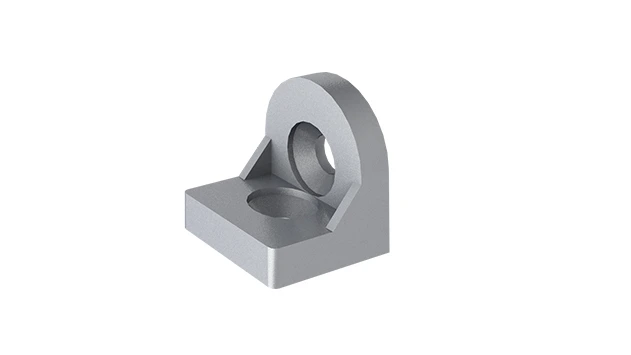
The turning angle aluminum profile connector provides a 90 degree hidden corner connection. 2020 it is means this size is used for 20 series aluminum profile.The corner code comes with set screws that allow for quick, easy connections.
Introduction: The Unsung Hero of Aluminum Profile Systems
Walk into any modern factory, warehouse, or workshop, and you'll likely spot them: sleek, modular structures that seem to adapt and evolve with the needs of the space. Workbenches that shift from assembly stations to packing areas in minutes. Material racks that expand as inventory grows. Conveyor systems that weave through production lines with precision. These workhorses of efficiency are built on a foundation of aluminum profiles—but they wouldn't hold together without a tiny, often overlooked component: the angle code.
Angle codes, those unassuming connectors that link aluminum tubes, panels, and accessories, are the glue of modular manufacturing setups. They determine how sturdy a workbench is, how quickly a rack can be assembled, and how well a system holds up under daily wear and tear. For decades, manufacturers relied on legacy angle code standards—tried, tested, and… well, showing their age. Then came the Turning Angle Code 2020, a newer design built to address the limitations of its predecessors. But is it really worth the switch? Let's dive into the performance metrics that matter.
What Is the Turning Angle Code 2020?
Let's start with the basics. The Turning Angle Code 2020 is a specialized connector designed specifically for use with 2020 aluminum profiles—a popular choice for lightweight, high-precision applications like electronics assembly, lab workstations, and small-scale production lines. Unlike bulkier legacy codes, this angle code is engineered with modern manufacturing in mind: it's compact, corrosion-resistant, and built for quick, tool-free adjustments.
At first glance, it might look similar to older angle codes, but a closer inspection reveals key differences. The 2020 model uses a high-grade aluminum alloy with a smooth anodized finish, which not only resists scratches but also prevents rust in humid or industrial environments. Its design features a unique "turning" mechanism—a rotating joint that allows for (fine adjustments) during assembly, reducing the need to disassemble and rebuild entire sections when alignment is off. And because it's tailored to 2020 aluminum profiles, it fits snugly without the play or wobble that often plagues one-size-fits-all legacy codes.

Legacy Standards: The Old Guard
Before the Turning Angle Code 2020, most manufacturers turned to legacy standards, many of which were designed for heavier profiles like the 3030 aluminum profile. These older angle codes were workhorses in their time—built to handle heavy loads and withstand rough handling. But they came with trade-offs that modern operations can no longer afford.
Take the 3030-compatible angle codes, for example. They're typically made from thicker, heavier steel or lower-grade aluminum, which adds unnecessary weight to structures. Installation often required wrenches, screws, or even welding in some cases—slowing down setup and making reconfiguration a headache. And because they weren't designed for precision, they often left gaps between profiles, leading to instability over time. Worse, their painted or powder-coated finishes were prone to chipping, exposing the metal to corrosion in damp environments.
Then there were the "universal" legacy codes, marketed as fitting multiple profile sizes. While versatile, they sacrificed a tight fit for flexibility. A code that works for both 2020 and 3030 profiles might grip one too loosely or pinch the other, leading to wobbly workbenches or racks that sag under load. For manufacturers prioritizing speed and adaptability, these compromises are becoming deal-breakers.

Performance Metrics: A Head-to-Head Comparison
To truly understand the difference between Turning Angle Code 2020 and legacy standards, we need to look at the metrics that impact daily operations. Let's break down how they stack up in key areas like durability, load capacity, installation time, and more.
| Performance Metric | Turning Angle Code 2020 | Legacy 3030 Angle Code |
|---|---|---|
| Material Composition | High-grade anodized aluminum alloy (6063-T5) | Mild steel or low-grade aluminum (often painted/powder-coated) |
| Load-Bearing Capacity (per joint) | Up to 150 lbs (static load) | Up to 200 lbs (static load), but with higher weight penalty |
| Installation Time (per joint) | 30 seconds (tool-free, snap-and-tighten design) | 2–3 minutes (requires wrench/screwdriver; alignment adjustments common) |
| Compatibility | Optimized for 2020 aluminum profiles; limited cross-compatibility | Designed for 3030 profiles; "universal" versions fit multiple sizes poorly |
| Corrosion Resistance | High (anodized finish resists rust, chemicals, and humidity) | Low to moderate (painted finishes chip; steel prone to rust) |
| Adjustability | 360° rotational (fine adjustments without disassembly) | Fixed angles (requires loosening/tightening hardware for adjustments) |
| Long-Term Durability | 5+ years (minimal wear on joints; anodized finish retains integrity) | 2–3 years (screw threads strip; finish chips; metal fatigues) |
| Cost (per unit) | $3.50–$5.00 (higher upfront, lower long-term replacement cost) | $2.00–$3.00 (lower upfront, higher replacement frequency) |
Breaking Down the Metrics: What Do They Mean for Your Operation?
Numbers on a table tell part of the story, but let's unpack what these metrics mean in real-world scenarios.
Load Capacity vs. Weight: The Efficiency Trade-off
Legacy 3030 angle codes technically have a higher static load capacity—200 lbs vs. the Turning's 150 lbs. But here's the catch: they weigh twice as much. If you're building a lightweight workstation for assembling delicate electronics, that extra weight adds up. A bench using 3030 codes might feel sturdier, but it's harder to move, requires stronger supports, and increases shipping costs. The Turning Angle Code 2020, on the other hand, delivers enough load capacity for most light-to-medium applications (think circuit boards, small tools, or lab equipment) without the bulk. For operations where agility matters, this is a game-changer.
Installation Time: Every Second Counts
Let's do the math: if your team is assembling a material rack with 20 angle code joints, using legacy codes would take 40–60 minutes (2–3 minutes per joint). With the Turning Angle Code 2020? Just 10 minutes (30 seconds per joint). Over a month of building and reconfiguring setups, that time savings adds up to hours—even days—of labor. And because the Turning code allows without tools, you avoid the frustration of misaligned profiles that require disassembling and restarting. For small manufacturers or workshops with limited staff, this efficiency boost alone justifies the switch.
Corrosion Resistance: No More Rusty Joints
In humid environments—like coastal factories or food processing facilities—legacy steel angle codes are a liability. A single scratch in the paint can lead to rust, which spreads quickly and weakens the joint. The Turning's anodized aluminum finish, however, forms a protective oxide layer that's resistant to salt, moisture, and even mild chemicals. One electronics manufacturer in Florida reported replacing legacy codes every 18 months due to rust; after switching to Turning Angle Code 2020, their joints still looked new after three years.
Cost: Short-Term Savings vs. Long-Term Gains
Legacy codes are cheaper upfront—no denying that. But when you factor in replacement costs (every 2–3 years) and labor time for installation and repairs, the Turning code often comes out ahead. Let's say you need 100 angle codes: legacy codes cost $200–$300 upfront, but you'll replace them every 3 years, totaling $600–$900 over 9 years. The Turning codes cost $350–$500 upfront but last 5+ years, totaling $700–$1,000 over the same period—similar costs, but with better performance and less downtime in between.
Aluminum Profile Accessories: How the Turning Code Plays Well with Others
A great angle code is only as good as the aluminum profile accessories it works with—and here, the Turning Angle Code 2020 shines. Its design aligns seamlessly with modern accessories like 2020 aluminum profile end caps, T-slot rubber seals, and lightweight hinges. Unlike legacy codes, which often required custom adapters to fit accessories, the Turning code's standardized dimensions mean you can snap on end caps to protect workers from sharp edges, or add hinges for foldable work surfaces, without guesswork.
Take cable management, for example. Many workshops struggle with tangled wires under workbenches, but the Turning code's slim profile leaves room for T-slot accessories like cable clips and channels. Legacy codes, with their bulky design, often block these slots, forcing workers to drill holes or use zip ties—compromising the profile's integrity. With the Turning code, integrating accessories is intuitive, which means cleaner, safer, and more organized workspaces.
Case Study: A Small Electronics Workshop Upgrades
Let's hear from a real-world user. Maria runs a small electronics assembly workshop in Texas, with 5 workstations and a team of 8. Last year, she was struggling with frequent delays: workbenches built with legacy 3030 angle codes kept wobbling, requiring weekly tightenings. The steel joints were rusting in the humid summer air, and reconfiguring stations for new projects took half a day.
"We switched to 2020 aluminum profiles and Turning Angle Code 2020 on a trial basis," Maria recalls. "The first thing we noticed was how quiet the workshop got—no more clanking when someone leaned on a bench. Installation took a third of the time, and when we needed to rearrange stations for a new circuit board project, we had it done in an hour instead of a day."
Six months later, Maria hasn't replaced a single angle code. "The rust is gone, the benches stay level, and my team can focus on building instead of fixing. The upfront cost was higher, but the time we've saved? Priceless."
Is the Turning Angle Code 2020 Right for You?
It depends on your needs. If you're running a heavy-duty warehouse with 3030 aluminum profile racks holding pallets of goods, legacy codes might still make sense—for now. But if you're in electronics, aerospace, medical device manufacturing, or any industry where precision, agility, and low maintenance matter, the Turning Angle Code 2020 is a no-brainer.
Start small: replace a few legacy codes on a single workstation and track the difference in installation time, stability, and repairs. Chances are, you'll notice the upgrade quickly. And as more manufacturers adopt 2020 profiles and compatible accessories, the ecosystem around the Turning code will only grow stronger—making it easier to scale and adapt your operations for years to come.
Conclusion: The Future of Modular Manufacturing
The Turning Angle Code 2020 isn't just a better connector—it's a sign of where manufacturing is heading: lighter, smarter, and more adaptable. Legacy standards served us well, but in a world where downtime costs money and flexibility is key, they're falling behind. By prioritizing metrics like installation speed, corrosion resistance, and adjustability, the Turning code sets a new bar for what we should expect from our aluminum profile systems.
So, the next time you walk through your workshop, take a closer look at those angle codes. They might be small, but they're holding up your entire operation. Isn't it time they worked as hard as you do?