- Company Articles
- Industry articles
- Industry standards
- Turning Angle Code 2020 update: What Changed for Flexible Production Lines?

Turning Angle Code 2020 update: What Changed for Flexible Production Lines?
Related Product
Urning Angle Code 2020
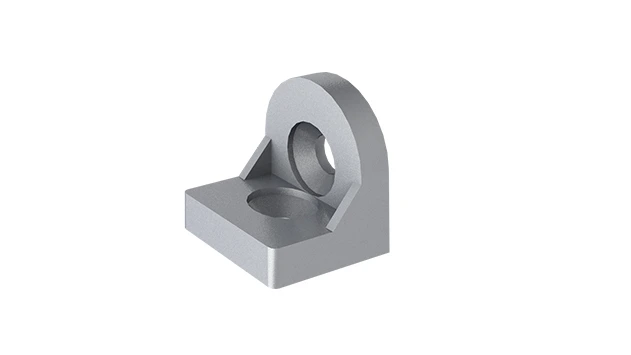
The turning angle aluminum profile connector provides a 90 degree hidden corner connection. 2020 it is means this size is used for 20 series aluminum profile.The corner code comes with set screws that allow for quick, easy connections.
In the fast-paced world of manufacturing, where every second counts and adaptability is key, the tools and components that keep production lines moving often fly under the radar—until they don't. Take, for instance, the humble turning angle code. It's not the flashiest piece of equipment on the factory floor, but for anyone who's ever struggled with a wobbly workbench, a misaligned roller track, or a caster wheel that just won't lock into place, you know: details like angle codes can make or break a day's productivity. That's why the 2020 update to turning angle codes sent ripples through the industry. Suddenly, what was once a niche technical specification became a hot topic in production meetings, as teams scrambled to understand how these changes would impact their flexible production lines. Let's dive into what exactly changed, why it matters, and how it's reshaping the way we build and operate lean systems today.
The Backstory: Why Turning Angle Codes Matter in Flexible Manufacturing
Before we get into the 2020 update, let's take a step back. What even is a turning angle code, and why should you care? Think of it as the "grammar" of production line components. When you're building a workbench, assembling a roller track, or mounting caster wheels to a trolley, angle codes define how parts connect—their angles, tolerances, load capacities, and compatibility with other components. A poorly designed angle code might mean a joint that loosens under vibration, a workbench that sways when you lean on it, or a roller track that jams because the angles are off by just a few degrees. In short, they're the unsung heroes of stability and precision in flexible manufacturing.
For decades, the industry relied on a patchwork of standards. Some manufacturers stuck to older codes that prioritized cost over durability; others adopted proprietary specs that locked customers into their brand. But as lean systems grew more popular—with factories demanding modular setups that could reconfigure in hours, not days—the need for a unified, updated standard became impossible to ignore. Enter the 2020 Turning Angle Code update: a collaborative effort by engineers, manufacturers, and industry bodies to modernize these critical components for the demands of 21st-century production.
Breaking Down the 2020 update: 3 Key Changes You Need to Know
1. Material Shifts: Out with the Old, In with Aluminum Profile
One of the most talked-about changes in the 2020 update is the shift toward aluminum profile as the preferred material for angle codes. Previously, many angle codes were made from low-grade steel or plastic—materials that were cheap but prone to rust, warping, or cracking under heavy loads. While steel is still used in some heavy-duty applications, aluminum profile brings a game-changing combination of strength, lightness, and corrosion resistance. This isn't just about durability; it's about flexibility. Aluminum angle codes are easier to machine, which means they can be precision-engineered to tighter tolerances. They're also lighter, making it easier for teams to reconfigure workbenches or roller tracks without heavy lifting equipment.
Real-World Impact: A mid-sized electronics manufacturer in Ohio recently upgraded their assembly line workbenches to use aluminum profile angle codes. According to their production manager, "We used to have to replace steel angle codes every 6-8 months because they'd rust in our humid environment. Now, with aluminum, we're approaching two years with zero replacements. Plus, when we need to rearrange the line for a new product, the benches are lighter—our team can move them by hand instead of waiting for a forklift."
2. Design Overhaul: Compatibility at the Core
If there's one complaint that unified production managers across industries, it was compatibility. Pre-2020, an angle code from Supplier A might not fit a roller track from Supplier B, or a caster wheel from Brand X might wobble on a workbench from Brand Y. The 2020 update addressed this head-on by introducing universal mounting standards. Now, angle codes are designed to work seamlessly with common components like roller track connectors, caster wheel brackets, and aluminum profile accessories. This "plug-and-play" approach has cut down on assembly time and reduced the need for custom adapters—saving both time and money.
Take, for example, the new parallel aluminum joint A (a type of angle code specified in the 2020 update). It features a standardized slot pattern that aligns with both 2020 and 3030 aluminum profiles, as well as common roller track guide rails. Before, a factory might need three different joint types to connect those components; now, one joint does the job. This standardization has been a boon for small manufacturers, in particular, who can now mix and match parts from different suppliers without fear of incompatibility.
3. Safety and Ergonomics: Caster Wheels and Beyond
The 2020 update didn't just focus on performance—it prioritized people, too. One of the most critical changes is the enhanced safety standards for angle codes used in caster wheel assemblies. Caster wheels are the "feet" of mobile equipment like turnover trolleys and workbenches, and a faulty angle code here can lead to tipping, jamming, or uneven rolling—all serious safety hazards. The new code mandates stricter load capacity testing (up from 200 lbs to 350 lbs for standard caster angle codes) and requires reinforced joints that can withstand sudden stops or impacts, like a trolley hitting a door frame.
Ergonomics also got a boost. Old angle codes often forced workbenches into fixed heights or awkward angles, leading to employee strain. The 2020 specs include adjustable angle codes that let teams tweak the height or tilt of work surfaces by up to 15 degrees, reducing repetitive motion injuries. For workers who spend 8+ hours a day at a bench, this isn't just a comfort upgrade—it's a game-changer for long-term health.

Old vs. New: A Side-by-Side Look at Turning Angle Codes
| Feature | Pre-2020 Codes | 2020 Updated Codes |
|---|---|---|
| Primary Material | Low-grade steel, plastic | Aluminum profile (primary); steel (heavy-duty) |
| Load Capacity (Standard Caster Angle Code) | Up to 200 lbs | Up to 350 lbs |
| Compatibility | Proprietary; limited cross-brand use | Universal mounting standards; works with most roller track, workbench, and caster wheel brands |
| Corrosion Resistance | Poor (steel prone to rust; plastic degrades in UV light) | High (aluminum profile treated with anti-corrosion coating) |
| Ergonomic Adjustability | Fixed angles; minimal adjustability | Adjustable tilt/height (up to 15 degrees for workbenches) |

The Ripple Effect: How the update Strengthens Lean Systems
At first glance, angle codes might seem like a small piece of the puzzle, but their impact on lean systems is huge. Lean manufacturing is all about eliminating waste—whether that's time, materials, or effort. The 2020 update aligns perfectly with this philosophy by reducing downtime (fewer broken angle codes mean fewer production halts), cutting rework (compatible parts mean less trial-and-error assembly), and enabling faster reconfiguration (lighter, more durable components make line changes quicker).
Consider a typical scenario: A factory needs to switch from producing Product A to Product B, which requires moving a roller track and repositioning three workbenches. With pre-2020 angle codes, this might take 4-6 hours: wrestling with heavy steel components, hunting for compatible adapters, and tightening loose joints that vibrated loose during disassembly. With the 2020 update? The same task might take 1-2 hours. The aluminum profile angle codes are lighter, so moving the roller track is a two-person job instead of four. The universal mounting standards mean no more hunting for adapters. And the reinforced joints stay tight, so there's no need to re-tighten bolts mid-shift.
Challenges of Adoption: Navigating the Transition
Of course, no update comes without growing pains. For many manufacturers, the biggest hurdle has been cost. Aluminum profile angle codes are more expensive upfront than their steel or plastic predecessors—though proponents argue the long-term savings (fewer replacements, less downtime) more than make up for it. Smaller factories with tight budgets have had to get creative, often upgrading critical lines first and phasing in updates for less-used equipment.
Another challenge is training. Older technicians who've worked with steel angle codes for decades may resist the switch to aluminum, worried about learning new tools or techniques. To address this, many suppliers now offer free training sessions, walking teams through the differences in handling, installation, and maintenance. "It took about a week for our team to get comfortable with the new aluminum angle codes," says a plant supervisor in Texas. "But once they saw how much easier they were to work with—no more struggling with rusted bolts—they were sold."
Looking Ahead: What's Next for Turning Angle Codes and Flexible Production?
The 2020 update is just the beginning. As factories embrace Industry 4.0—with smart sensors, IoT-connected equipment, and AI-driven predictive maintenance—angle codes are likely to evolve further. Some engineers are already experimenting with "smart angle codes" embedded with microchips that monitor stress, vibration, or temperature, alerting teams to potential failures before they happen. Others are exploring recycled aluminum alloys to reduce the environmental impact of production.
But even without these future innovations, the 2020 update has already left its mark. It's a reminder that in manufacturing, progress often comes from the smallest components. Angle codes may not grab headlines, but they're the foundation on which flexible, efficient, and safe production lines are built. For anyone invested in lean systems—whether you're a production manager, a factory owner, or a frontline technician—understanding these changes isn't just optional. It's essential to staying competitive in a world where adaptability is the name of the game.
Final Thoughts: Why the 2020 Turning Angle Code update Matters for Your Factory
At the end of the day, the 2020 Turning Angle Code update is about more than just better angle codes. It's about empowering factories to do more with less—less time, less effort, less waste. It's about workbenches that stay stable, roller tracks that never jam, and caster wheels that roll smoothly, day in and day out. It's about creating production lines that don't just keep up with change but embrace it.
So, if you're still using pre-2020 angle codes, now's the time to ask: Are your components holding you back? Could upgrading to aluminum profile angle codes reduce your downtime? Would universal compatibility simplify your next line reconfiguration? For most factories, the answer is a resounding yes. The future of flexible manufacturing is here—and it's built on better angle codes.