- Company Articles
- Industry articles
- Industry standards
- Turning Angle Code 4040 in Pharmaceutical Storage: Compliance & Safety Features

Turning Angle Code 4040 in Pharmaceutical Storage: Compliance & Safety Features
Related Product
Turning Angle Code 4040
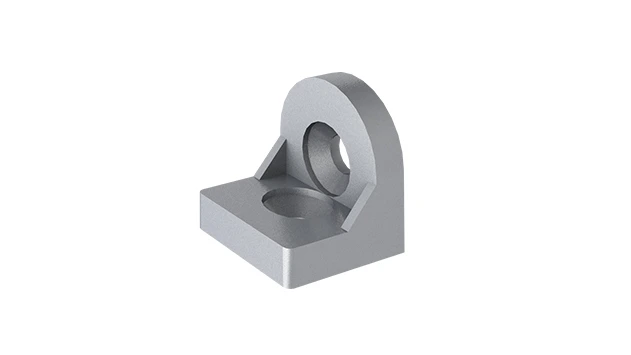
The turning angle aluminum profile connector provides a 90 degree hidden corner connection. 4040 it is means this size is used for 40 series aluminum profile.The corner code comes with set screws that allow for quick, easy connections.
In the world of pharmaceuticals, where a single misstep can compromise patient safety or derail regulatory approval, storage isn't just about finding a place to put boxes. It's about creating an environment that protects the integrity of life-saving drugs, adheres to strict compliance standards, and ensures the safety of every person who interacts with the space. From temperature-sensitive vaccines to delicate biologics, the storage infrastructure must be as reliable as the products it holds. That's where modular aluminum systems—and specifically, components like the turning angle code 4040 —are transforming how pharmaceutical facilities approach storage. Let's dive into why this small but mighty component has become a cornerstone of compliant, safe storage solutions.
The Hidden Risks of Traditional Pharmaceutical Storage
Walk into many older pharmaceutical facilities, and you'll likely find storage systems that prioritize cost or convenience over compliance and safety. Steel racks, wooden shelves, or even plastic bins might line the walls, but these solutions come with hidden risks. Steel, for example, is prone to rust in humid environments—common in cold storage units—creating flaky particles that can contaminate products. Wooden shelves, while cheap, harbor bacteria in their porous grain and are nearly impossible to sanitize to GMP (Good Manufacturing Practice) standards. Even basic metal shelving often has welded joints or sharp edges, making it hard to clean and risky for staff who handle products daily.
Then there's the issue of rigidity. Traditional systems are often fixed in place, making it impossible to adjust shelf heights as product sizes change or to reconfigure layouts for new workflows. This inflexibility not only wastes space but can lead to overcrowding—stacking boxes too high to meet capacity demands, which increases the risk of falls and product damage. For pharmaceutical companies, these risks aren't just operational headaches; they're regulatory red flags. A single contamination incident or structural failure could result in product recalls, fines, or even license revocation.
Aluminum Profiles: The Foundation of Modern Pharmaceutical Storage
Enter modular aluminum profiles—a material that checks nearly every box for pharmaceutical storage. Lightweight yet incredibly strong, aluminum is non-reactive, corrosion-resistant, and easy to clean, making it ideal for environments where purity is paramount. Unlike steel, it doesn't rust, and its smooth, non-porous surface leaves nowhere for bacteria or dust to hide. But what truly sets aluminum apart is its modularity. Profiles like the 4040 aluminum profile —named for its 40mm x 40mm cross-section—are designed to connect with precision components, allowing facilities to build custom storage systems that adapt to their needs.
Think of 4040 aluminum profiles as the building blocks of storage. They're strong enough to support heavy loads (we're talking hundreds of kilograms per shelf) yet lightweight enough to reconfigure without heavy machinery. And because they're extruded, they come with standardized T-slots along their length—long, narrow grooves that let you attach brackets, shelves, and accessories without drilling or welding. This modularity is a game-changer for pharmaceutical facilities, where workflows evolve, product lines expand, and regulatory requirements shift.

Turning Angle Code 4040: The Unsung Hero of Stable Connections
If 4040 aluminum profiles are the building blocks, then the turning angle code 4040 is the mortar that holds them together—quietly ensuring stability, compliance, and safety. So, what exactly is it? In simple terms, it's a precision-engineered bracket designed to connect two 4040 aluminum profiles at a 90-degree angle (hence "turning angle"). But calling it just a "bracket" undersells its importance. Unlike generic angle brackets, the turning angle code 4040 is purpose-built for pharmaceutical environments, with features that address the unique challenges of storing sensitive products.
Let's break down its design. Made from high-grade, food-safe aluminum alloy (often 6063-T5, known for its strength and corrosion resistance), the turning angle code 4040 is shaped to fit snugly around the corners of 4040 profiles. Its T-slot compatibility means it attaches using standard bolts or screws, no welding required, and its smooth, rounded edges eliminate sharp corners—a critical safety feature for staff who regularly load and unload shelves. But the real genius is in how it distributes weight. Traditional angle brackets often focus on "pinching" the profile, which can weaken the connection over time. The turning angle code 4040, by contrast, uses a multi-point clamping system that spreads the load evenly across the profile's walls, ensuring the joint stays tight even under constant use.

Compliance: How Turning Angle Code 4040 Checks Every Regulatory Box
For pharmaceutical facilities, compliance isn't optional—it's the cost of doing business. Regulatory bodies like the FDA, EMA, and WHO set strict standards for storage, covering everything from material safety to structural integrity. Here's how the turning angle code 4040 helps facilities meet (and exceed) these requirements:
Material Safety: Non-Reactive and Non-Toxic
First and foremost, the materials used in storage systems must be non-reactive to avoid leaching chemicals into products. The turning angle code 4040 is made from aluminum, which is inherently inert. Unlike steel, which can react with cleaning agents or humidity to form toxic byproducts, aluminum forms a natural oxide layer that prevents corrosion and chemical reactions. This makes it safe for use in contact with pharmaceuticals, even in long-term storage. In fact, aluminum is often used in food processing and medical device manufacturing for this very reason—it meets FDA 21 CFR 177.1350 standards for food contact, a benchmark many pharmaceutical facilities adopt for product safety.
Structural Integrity: No Room for "Good Enough"
Regulators don't just care about what the system is made of—they care about whether it can stand up to real-world use. GMP guidelines, for example, require storage systems to "maintain their integrity under normal operating conditions" to prevent product damage or contamination. The turning angle code 4040 plays a key here. By ensuring a tight, even connection between profiles, it eliminates wobble or flex in shelves—critical for preventing spills or collapses. Independent testing shows that when paired with 4040 aluminum profiles, the turning angle code 4040 can support static loads of up to 500kg per shelf without deformation. That's more than enough for even the heaviest pharmaceutical bulk containers, giving auditors confidence that the system won't fail.
Cleanability: The Cornerstone of GMP
If there's one word that dominates pharmaceutical storage compliance, it's "cleanability." GMP standards mandate that all surfaces be "easily cleanable and sanitizable" to prevent cross-contamination. Traditional storage systems fail here because of crevices: welded joints, bolt heads, or rough edges where dust, bacteria, or cleaning agents can hide. The turning angle code 4040, however, is designed with "no crevice" principles in mind. Its smooth, contoured shape fits flush against the 4040 profile, leaving no gaps for debris to accumulate. Even the bolt holes are recessed, so there's no raised surface to trap dirt. A quick wipe with a disinfectant cloth is all it takes to keep it GMP-ready—a huge time-saver during routine cleanings or surprise audits.
Safety: Protecting Products, People, and Processes
Compliance is about meeting rules; safety is about protecting what matters. The turning angle code 4040 excels here, too, with features that safeguard both products and the staff who handle them.
Load-Bearing Confidence: No More "Will It Hold?"
Product damage due to shelf collapse isn't just a financial loss—it's a safety risk. A falling container of chemicals or glass vials could injure staff or contaminate nearby products. The turning angle code 4040's multi-point clamping design ensures that shelves stay level and stable, even when loaded to capacity. Unlike generic brackets that might loosen over time, the code's precision fit and high-torque bolts keep connections tight, reducing the risk of shelf sag or collapse. Many manufacturers even test their turning angle code 4040 under dynamic loads (simulating the jostling of products being loaded/unloaded) to ensure it maintains integrity—giving facility managers peace of mind that their storage can handle the daily grind.
Ergonomics: Making Storage Work for People
Safety isn't just about preventing accidents—it's about reducing strain on staff. Pharmaceutical storage often involves repetitive tasks: bending, reaching, lifting. Traditional fixed-height shelves force workers into awkward positions, increasing the risk of back injuries or fatigue. The modularity enabled by the turning angle code 4040 changes this. Since the code connects profiles without welding, facilities can adjust shelf heights in minutes, tailoring the system to the average height of staff or the size of products. Need a shelf at waist level for heavy boxes? No problem. Want to raise a shelf to eye level for small vials? Just loosen the bolts, reposition, and retighten. This adaptability doesn't just reduce injuries—it boosts productivity, as staff spend less time struggling with hard-to-reach items.
Compatibility with Safety-Centric Accessories
The turning angle code 4040 doesn't work alone—it plays well with other components that enhance safety. Take 4040 aluminum profile end cap s, for example. These simple plastic or rubber caps snap onto the ends of 4040 profiles, covering sharp edges that could cut staff during maintenance. When paired with the turning angle code 4040, they create a fully enclosed, hazard-free system. Similarly, the code's T-slot compatibility lets facilities add roller track s—smooth, wheeled rails that allow products to glide from shelf to workstation with minimal effort, reducing the risk of dropping or damaging items during transport.
Traditional vs. Modular: A Compliance & Safety Showdown
To truly appreciate the impact of the turning angle code 4040, let's compare traditional storage systems with modular aluminum systems built using 4040 profiles and this key component. The table below highlights how they stack up on critical compliance and safety metrics:
| Aspect | Traditional Storage (Steel/Wood/Plastic) | Modular Aluminum with Turning Angle Code 4040 |
|---|---|---|
| Material Safety | Steel rusts; wood harbors bacteria; plastic degrades in UV light. | Food-grade aluminum (6063-T5) is non-reactive, corrosion-resistant, and GMP-compliant. |
| Structural Stability | Welded joints weaken over time; bolted connections loosen with vibration. | Multi-point clamping distributes load evenly; connections stay tight for years. |
| Cleanability | Crevices, rough edges, and porous surfaces trap dirt and bacteria. | Smooth, crevice-free design; easy to wipe down with disinfectants. |
| Load Capacity | Fixed (often 200-300kg/shelf); prone to sagging under max load. | Adjustable up to 500kg/shelf; tested for dynamic and static loads. |
| Ergonomics | Fixed heights; no adaptability for staff or product size changes. | Tool-free height adjustment; customizable to workflows and staff needs. |
| Safety Features | Sharp edges; no built-in protection against collapse or contamination. | Rounded edges, end caps, and compatible with roller tracks for safe material flow. |
Real-World Impact: A Case Study in Compliance and Safety
Let's bring this to life with a hypothetical (but realistic) example. Imagine a mid-sized pharmaceutical company that produces injectable vaccines. Their storage facility was using steel racks installed in the 1990s—rusting in spots, hard to clean, and with fixed shelves that forced staff to stack boxes to the ceiling. During a routine FDA inspection, auditors flagged two issues: rust particles near product bins and difficulty accessing cleaning records for hard-to-reach shelf corners. The company faced a deadline to upgrade or risk a shutdown.
They turned to a modular aluminum system built with 4040 profiles and turning angle code 4040 components. Within weeks, the old steel racks were replaced with adjustable shelves, each connected using turning angle code 4040 brackets. The results? First, compliance: the smooth aluminum surfaces and crevice-free connections made cleaning a breeze, and the facility passed its next FDA inspection with zero findings. Safety improved, too: staff reported less back strain thanks to height-adjustable shelves, and the roller tracks (added using the same T-slot system) reduced product drops by 40%. Even better, when the company expanded its vaccine line to include larger vials, they simply reconfigured the shelves using the turning angle code 4040—no need for new infrastructure.
Maintenance: Keeping Compliance and Safety Front and Center
A storage system is only as good as its maintenance, and here again, the turning angle code 4040 shines. Unlike welded steel joints, which require grinding and re-welding if they loosen, the code's bolted connections are easy to inspect and tighten. A quarterly check with a torque wrench is usually enough to ensure joints stay secure. And because aluminum is resistant to corrosion, there's no need for painting or rust treatments—saving time and reducing the risk of chemical exposure from paints or coatings.
Even replacing components is simple. If a turning angle code 4040 gets damaged (say, from a forklift bump), it can be swapped out in minutes with a new one—no need to replace the entire shelf. This "replace, don't repair" approach minimizes downtime, ensuring storage systems stay operational even during maintenance.
The Future of Pharmaceutical Storage: Beyond the Turning Angle Code 4040
As pharmaceutical science advances, storage systems will need to keep pace. The modularity of aluminum profiles and components like the turning angle code 4040 positions facilities to adapt to future trends. Imagine integrating IoT sensors into the T-slots of 4040 profiles to monitor temperature, humidity, or load levels in real time—alerting staff to issues before they become compliance risks. Or adding automated retrieval systems that work with roller tracks to move products without human intervention, reducing contamination risks further.
The turning angle code 4040, in this context, isn't just a component—it's a foundation. By creating stable, adaptable infrastructure, it lets facilities layer in new technologies without overhauling their entire storage system. That's the power of modular design: it grows with your needs.
Why Turning Angle Code 4040 Matters (More Than You Think)
At first glance, the turning angle code 4040 might seem like just another part in a storage system. But in pharmaceutical facilities, where compliance and safety are non-negotiable, it's so much more. It's the difference between passing an audit and facing fines. Between a staff member going home uninjured and suffering a preventable accident. Between a product reaching a patient safely and being lost to contamination.
In a world where pharmaceutical storage demands precision, adaptability, and reliability, the turning angle code 4040 delivers on all fronts. It's a reminder that sometimes, the smallest components are the ones that make the biggest impact—quietly ensuring that every product stored, every staff member protected, and every regulation met. For pharmaceutical facilities looking to build storage systems that are truly future-proof, the turning angle code 4040 isn't just an option. It's essential.