- Company Articles
- Industry articles
- Industry standards
- Turning Angle Code 4040 Industry Standards: ISO Compliance Explained

Turning Angle Code 4040 Industry Standards: ISO Compliance Explained
Related Product
Turning Angle Code 4040
The turning angle aluminum profile connector provides a 90 degree hidden corner connection. 4040 it is means this size is used for 40 series aluminum profile.The corner code comes with set screws that allow for quick, easy connections.
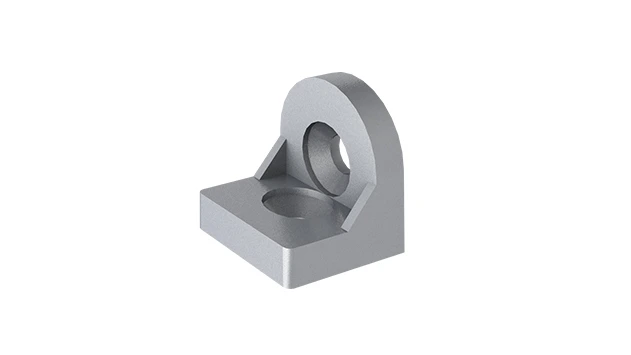
In the world of industrial manufacturing and warehouse setups, there are countless components that often go unnoticed—until something goes wrong. One such unsung hero is the Turning Angle Code 4040. These small, unassuming metal brackets might not grab headlines, but they're the quiet workhorses holding together everything from assembly line workbenches to heavy-duty material racks. Think of them as the "cornerstones" of aluminum profile systems: without them, the sleek, modular structures we rely on daily would simply fall apart. But what makes a high-quality Turning Angle Code 4040? And why does ISO compliance matter so much when it comes to these tiny but critical parts?
What Exactly Is a Turning Angle Code 4040?
Let's start with the basics. A Turning Angle Code 4040 is a specialized connector designed to join two 4040 aluminum profiles at a 90-degree angle. If you've ever walked through a factory floor or a logistics warehouse, you've probably seen 4040 EU standard aluminum profiles in action—they're the silver or black extruded bars that form the frames of workstations, shelving units, and even automated conveyor systems. These profiles have a T-slot design, which allows for easy attachment of accessories like panels, shelves, or wheels. But to build stable, multi-directional structures, you need a way to connect these profiles at corners. That's where the Turning Angle Code 4040 steps in.
Picture building a bookshelf: you have vertical posts and horizontal shelves, and you need brackets to hold them together at the corners. The Turning Angle Code 4040 does the same job, but on an industrial scale. It's typically made of aluminum alloy, machined to precise dimensions to fit snugly into the T-slots of 4040 profiles. Some designs include holes for bolts or screws, ensuring a secure, vibration-resistant connection. Others use a friction-fit system, relying on the profile's slot geometry to stay in place. Either way, the goal is simple: create a joint that's strong enough to withstand daily wear, yet flexible enough to allow for disassembly and reconfiguration—hallmarks of lean manufacturing systems.
Why ISO Compliance Isn't Just a "Nice-to-Have"
When manufacturers talk about "ISO compliance," it's easy to dismiss it as bureaucratic red tape. But in reality, ISO standards are the backbone of consistent quality and safety in industrial components. The International Organization for Standardization (ISO) develops these standards through a global consensus of experts, ensuring they reflect best practices, technological advancements, and safety requirements. For Turning Angle Code 4040, compliance with ISO standards isn't just about meeting a checklist—it's about ensuring that the bracket will perform as expected, even in demanding environments.
Consider this: a non-compliant Turning Angle Code 4040 might have uneven dimensions, weak material, or poor surface treatment. Over time, this could lead to a loose joint, causing a workstation to wobble or a material rack to sag. In a worst-case scenario, a failed bracket could result in equipment damage, product loss, or even workplace injuries. ISO compliance acts as a guarantee that the manufacturer has followed strict guidelines for material selection, manufacturing processes, and testing—giving buyers confidence that the product is reliable.
Key ISO Standards for Turning Angle Code 4040
Several ISO standards directly impact the production and performance of Turning Angle Code 4040. Let's break down the most relevant ones:
| ISO Standard | Title | Key Requirements for Turning Angle Code 4040 |
|---|---|---|
| ISO 9001:2015 | Quality Management Systems | Requires manufacturers to implement a quality management system (QMS) that ensures consistent production, traceability of materials, and continuous improvement. For Turning Angle Code 4040, this means every batch can be tracked from raw material to finished product, and any defects are identified and corrected quickly. |
| ISO 10243:2019 | Fasteners—Acceptance Inspection | Specifies methods for inspecting fasteners (including angle codes) to ensure they meet dimensional and mechanical property requirements. This includes checks for thread accuracy, hardness, and tensile strength—critical for ensuring the bracket can withstand the loads it's designed for. |
| ISO 6892-1:2019 | Metallic Materials—Tensile Testing | Outlines procedures for testing the tensile strength of metals. For Turning Angle Code 4040, this standard ensures the aluminum alloy used doesn't stretch or break under expected stress, such as the weight of a loaded shelf or the vibration of a nearby machine. |
| ISO 1461:2009 | Hot-Dip Galvanized Coatings on Fabricated Iron and Steel Articles | Applies to Turning Angle Code 4040 with protective coatings. It specifies the thickness and adhesion of galvanized layers, which prevent corrosion in humid or chemical-exposed environments (like food processing plants or automotive workshops). |

Material Matters: The Aluminum Behind the Code
Not all Turning Angle Code 4040 brackets are created equal—and a big part of that comes down to the material they're made from. Most high-quality angle codes are crafted from aluminum alloys, specifically 6061 or 6063. Why aluminum? For starters, it's lightweight, which is essential for modular systems that need to be reconfigured or moved. But it's also surprisingly strong, especially when alloyed with elements like magnesium and silicon. 6061 aluminum, for example, has a tensile strength of around 310 MPa (megapascals)—that's strong enough to support the weight of a small car, though your average Turning Angle Code 4040 will never need to handle that kind of load!
ISO standards don't just dictate the type of aluminum, though—they also specify purity and alloy composition. For instance, ISO 2107:2007 sets limits on the amount of impurities like iron or copper in aluminum alloys, as these can weaken the material or cause brittleness. A compliant manufacturer will source aluminum billets that meet these purity standards, then extrude or machine the Turning Angle Code 4040 to precise dimensions. This attention to material quality is why a cheap, non-compliant bracket might bend under moderate stress, while a compliant one will hold firm for years.
Surface Treatments: More Than Just Looks
You might notice that some Turning Angle Code 4040 brackets have a matte finish, while others are shiny or even colored. These surface treatments aren't just for aesthetics—they play a key role in durability and compliance. Anodizing is one common treatment: it involves submerging the aluminum in an electrolyte solution and passing an electric current through it, creating a hard, corrosion-resistant oxide layer on the surface. ISO 10209:2018 specifies the thickness and porosity of anodized coatings, ensuring they provide long-term protection against rust and wear.
Powder coating is another option, especially for brackets used in environments where aesthetics matter (like retail display systems). ISO 12944:2018 covers protective paint systems for metals, including powder coatings. It sets standards for adhesion, thickness, and resistance to chipping or fading. Even something as simple as a clear chromate conversion coating—often used for electrical conductivity—must meet ISO 4520:2017 requirements to ensure it doesn't flake off or lose its protective properties over time.

Manufacturing Processes: Precision in Every Cut
Creating a Turning Angle Code 4040 isn't as simple as cutting a piece of aluminum and drilling a few holes. To meet ISO compliance, manufacturers must follow strict processes from start to finish. Let's walk through a typical production workflow:
1. Material Preparation: The aluminum billet is inspected for alloy composition and purity, per ISO 2107:2007. If it doesn't meet standards, it's rejected.
2. Extrusion or Machining: Depending on the design, the bracket may be extruded (pushed through a die to form the basic shape) or machined from a solid block. For complex geometries, CNC machining is often used, which allows for tolerances as tight as ±0.05mm—critical for ensuring the bracket fits perfectly into 4040 EU standard aluminum profiles.
3. Heat Treatment: After shaping, the aluminum is heat-treated to enhance its strength. For 6061 aluminum, this typically involves solution annealing (heating to 530°C) followed by quenching in water, then artificial aging at 175°C. ISO 9001:2015 requires documentation of these heat treatment parameters to ensure consistency across batches.
4. Surface Treatment: As discussed earlier, anodizing, powder coating, or chromate conversion is applied, with thickness and adhesion tested per ISO standards.
5. Dimensional Inspection: Each bracket is measured using calipers, micrometers, or coordinate measuring machines (CMMs) to check for length, width, hole position, and angle accuracy. ISO 10243:2019 mandates that critical dimensions must be within specified tolerances—for example, the angle between the two arms of the bracket must be 90° ±0.5° to ensure proper alignment with the profiles.
6. Mechanical Testing: Random samples from each batch undergo tensile testing (per ISO 6892-1) and hardness testing (using the Brinell or Rockwell scale) to verify strength. A compliant Turning Angle Code 4040 should withstand a shear force of at least 5 kN (kilonewtons) without deforming—a test that simulates the stress of a fully loaded shelf pulling on the bracket.
Real-World Applications: Where Compliance Counts
It's easy to talk about standards in theory, but let's look at how ISO-compliant Turning Angle Code 4040 brackets perform in real applications. Take a typical automotive assembly line: workstations here are subjected to constant vibration from nearby robots, frequent cleaning with harsh chemicals, and heavy loads (think: engines or transmission parts weighing 50kg or more). A non-compliant bracket might loosen over time due to vibration, causing the workstation to wobble. This isn't just annoying—it could lead to misaligned parts during assembly, resulting in defective products or even worker injuries.
Another example is a cold storage warehouse, where temperatures can drop to -20°C. Aluminum becomes more brittle in cold conditions, so a Turning Angle Code 4040 made from low-quality aluminum might crack under stress. An ISO-compliant bracket, however, uses a ductile alloy that retains its toughness even in extreme temperatures, ensuring the shelving units holding frozen goods stay stable for years.
Even in less demanding settings, like a small electronics workshop, compliance matters. Imagine a workbench built with non-compliant angle codes. Over time, the corners might start to sag, causing the surface to tilt. This could lead to delicate components rolling off or precision tools becoming misaligned, affecting product quality. When paired with other aluminum profile accessories like 4040 aluminum profile end caps (which protect users from sharp edges) and anti-slip leveling feet, a compliant Turning Angle Code 4040 creates a workstation that's not just functional, but safe and reliable.
Common Compliance Pitfalls (and How to Avoid Them)
If ISO compliance is so important, why do some manufacturers cut corners? The answer often comes down to cost. Sourcing high-purity aluminum, investing in precision machining equipment, and conducting rigorous testing all add to production expenses. A non-compliant manufacturer might skip heat treatment, use recycled aluminum with unknown impurities, or skip dimensional inspections to save money. The result? Brackets that look the part but fail when put to the test.
So how can you tell if a Turning Angle Code 4040 is truly compliant? Here are a few red flags to watch for:
- Inconsistent Finishes: A rough or uneven surface treatment could indicate shoddy anodizing or powder coating, which may fail to protect against corrosion.
- Loose Fit: If the bracket wobbles when inserted into a 4040 profile, it's likely out of tolerance. A compliant bracket should fit snugly, with no play.
- Lack of Documentation: Reputable manufacturers will provide certificates of compliance (CoCs) that reference specific ISO standards. If a supplier can't produce a CoC, proceed with caution.
- Unusually Low Prices: If a Turning Angle Code 4040 costs significantly less than competitors, it's probably cutting corners on materials or testing.
The good news is that avoiding these pitfalls is straightforward: work with a trusted supplier who prioritizes ISO compliance. Look for manufacturers who have been audited and certified to ISO 9001:2015, as this demonstrates a commitment to quality management. Don't be afraid to ask for test reports or samples—reputable suppliers will be happy to provide them.
The Future of Turning Angle Code 4040: Innovation Meets Compliance
As manufacturing becomes more automated and modular, the demand for high-quality Turning Angle Code 4040 brackets is only growing. New technologies like 3D printing are even being explored for prototyping custom angle codes, though mass production still relies on traditional machining for consistency. ISO standards will continue to evolve, too—updates to ISO 10243 or ISO 6892 may introduce stricter testing requirements as new materials or manufacturing methods emerge.
One trend to watch is the rise of smart manufacturing, where sensors embedded in brackets could monitor stress, temperature, or vibration in real time. For these "smart" Turning Angle Code 4040 brackets to gain widespread adoption, new ISO standards will need to address sensor accuracy, data security, and interoperability with industrial IoT systems. It's an exciting frontier, but one that will require the same commitment to compliance that has made today's angle codes so reliable.
Final Thoughts: Why the Small Parts Matter Most
At the end of the day, a Turning Angle Code 4040 is more than just a piece of metal—it's a promise. A promise that the workbench a mechanic relies on won't collapse, that the shelf holding medical supplies won't sag, and that the assembly line producing your next car is built on a foundation of quality. ISO compliance isn't about checking boxes; it's about honoring that promise, one bracket at a time.
So the next time you walk through a factory or warehouse, take a moment to look at the corners of the nearest workstation or shelf. Chances are, there's a Turning Angle Code 4040 holding it all together. And if it's ISO-compliant, you can rest easy knowing that behind that unassuming bracket is a legacy of precision, quality, and care—proof that even the smallest parts can make the biggest difference.