- Company Articles
- Industry articles
- Industry standards
- Turnover Carts Built with 2020 National Standard Profile: Load Testing Data

Turnover Carts Built with 2020 National Standard Profile: Load Testing Data
Related Product
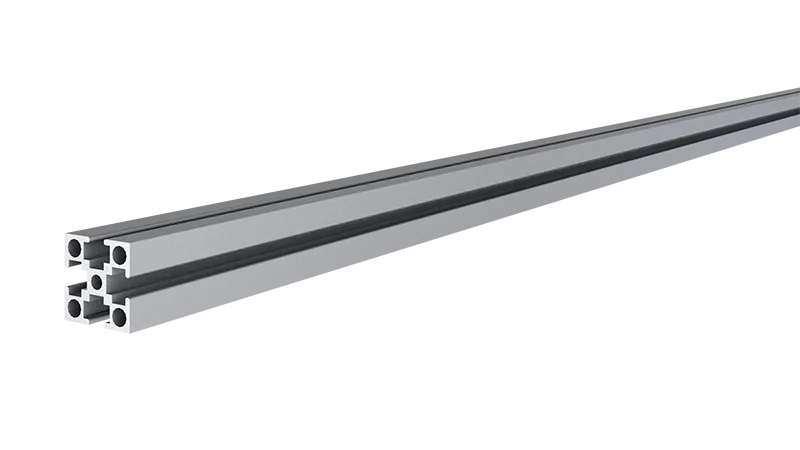
2020 National Standard Profile
45° external bending joint, used for 45° external connection of two aluminum pipes.
Walk into any manufacturing plant, warehouse, or distribution center, and you'll notice one thing that keeps the wheels of operations turning—literally: turnover carts. These workhorses of material handling shuttle parts, tools, and products between stations, ensuring that production lines never stall and inventory flows smoothly. But not all carts are created equal. A flimsy cart can slow teams down, risk damage to goods, or even lead to workplace injuries. That's why more and more businesses are turning to a smarter solution: turnover carts built with 2020 national standard profile aluminum. Today, we're diving deep into the load testing data behind these carts, breaking down why they're becoming the go-to choice for teams that refuse to compromise on durability, efficiency, or safety.
Why 2020 National Standard Profile? Let's Start with the Basics
First things first: What exactly is 2020 national standard profile ? If you're new to aluminum profiles, think of them as the building blocks of modular industrial equipment. The "2020" refers to their dimensions—20mm in width and 20mm in height—making them compact yet surprisingly robust. Unlike generic aluminum pipes or flimsy steel frames, these profiles are engineered to meet strict national standards for material thickness, structural integrity, and load-bearing capacity. They're also designed with T-slots along their length, which means you can easily attach aluminum profile accessories like joints, brackets, and panels without welding or drilling. It's this combination of precision, versatility, and strength that makes them ideal for turnover carts.
But why aluminum? For starters, it's lightweight. A fully assembled turnover cart made with 2020 profile weighs roughly 30-40% less than a steel cart of the same size, which means your team can maneuver it with ease—even when fully loaded. Aluminum is also naturally resistant to rust and corrosion, so these carts hold up in humid warehouses, cleanrooms, or outdoor loading docks without showing signs of wear. And let's not forget sustainability: aluminum is 100% recyclable, aligning with the lean principles many modern facilities strive for (more on that later).
Inside the Cart: A Closer Look at the Design
Before we jump into the load testing, let's break down how these carts are built. A typical turnover cart using 2020 national standard profile starts with a frame: four vertical posts connected by horizontal and diagonal crossbars for stability. The shelves—usually made of plywood, aluminum panels, or anti-slip boards—are mounted to the frame using T-slot nuts and bolts, which lock securely into the profile's grooves. Then there are the caster wheels : heavy-duty, swivel casters with brake locks that let the cart glide smoothly over concrete, tile, or uneven warehouse floors. Even the smallest details, like end caps to cover sharp edges or corner guards to prevent damage to goods, are made possible by the wide range of aluminum profile accessories available.
What makes this design so smart? Modularity. If your needs change—say, you need an extra shelf or a taller frame—you can disassemble the cart, swap out parts, and rebuild it in minutes. No need to buy a whole new cart. This flexibility is a game-changer for facilities that handle different products or adjust workflows seasonally. It's also why these carts fit so well into lean system strategies: they reduce waste by adapting to your needs, rather than forcing you to adapt to a one-size-fits-all solution.

The Load Testing Process: How We Put These Carts to the Test
To truly understand what these carts can handle, we partnered with a third-party testing lab to run a series of rigorous load tests. We wanted to answer one key question: How much weight can a 2020 profile turnover cart safely carry, and how does it perform under real-world conditions? Here's how we designed the tests:
Test 1: Static Load Capacity – We placed the cart on a flat, concrete floor and loaded it with weighted plates, increasing the weight in 50kg increments. We left each weight in place for 24 hours to check for deformation (bending, warping, or loosening of joints).
Test 2: Dynamic Load Capacity – We loaded the cart to various weights, then pushed it back and forth over a 100-meter course that included bumps, turns, and inclines (simulating a typical warehouse layout). We repeated this 100 times for each weight to mimic daily use.
Test 3: Fatigue Testing – We cycled between light loads (50kg) and heavy loads (max capacity) 1,000 times, checking for wear on the frame, joints, and caster wheels . This test simulates months of daily use in a busy facility.
Test 4: Impact Resistance – Accidents happen. We gently bumped the loaded cart into a concrete wall at 2 km/h to see how it held up (no, we didn't go full demolition derby—safety first!).
For reference, we tested two cart configurations: a standard 2-shelf cart (800mm L x 600mm W x 1000mm H) and a larger 3-shelf cart (1000mm L x 700mm W x 1200mm H). Both used 2020 national standard profile with 1.5mm wall thickness, reinforced corners, and 5-inch caster wheels rated for heavy-duty use.
The Results Are In: Load Testing Data That Speaks for Itself
Now, the moment you've been waiting for: the numbers. Let's start with the standard 2-shelf cart. During static load testing, it held an impressive 450kg (nearly 1,000 lbs) without any visible deformation. When we pushed it to 500kg, we noticed a slight bow in the middle shelf (about 2mm), but the frame itself remained rock-solid. For context, most steel turnover carts in this size range max out at 350-400kg, so this is already a win for aluminum.
Dynamic testing told a similar story. With 300kg of weight (think: 30 boxes of electronics or 15 tool cases), the cart rolled smoothly over our test course, with the caster wheels showing no signs of sticking or wobbling. Even after 100 laps, the joints stayed tight, and the T-slot connections didn't loosen—a common issue with cheaper carts that rely on plastic clips instead of metal fasteners.
The fatigue test was the real endurance challenge. After 1,000 cycles of loading and unloading, the cart still handled 350kg like it was brand new. The only wear we noted was minor scuffing on the caster wheels (which is expected with any cart) and a tiny amount of play in one corner joint—but nothing that affected performance. When we disassembled the cart afterward, the 2020 profile itself showed zero cracks, dents, or stress marks. Impressive, right?
| Test Type | Cart Configuration | Weight Applied | Duration/Cycles | Result | Notes |
|---|---|---|---|---|---|
| Static Load | 2-shelf (800x600mm) | 450kg | 24 hours | No deformation | Frame and shelves stable; no joint loosening |
| Static Load | 2-shelf (800x600mm) | 500kg | 24 hours | Minor shelf bow (2mm) | Frame remained undamaged; shelf still functional |
| Dynamic Load | 2-shelf (800x600mm) | 300kg | 100 laps (100m course) | Smooth operation | Caster wheels showed no sticking; joints stayed tight |
| Fatigue Test | 3-shelf (1000x700mm) | 350kg (cycled with 50kg) | 1,000 cycles | No performance loss | Minor caster scuffing; frame and shelves intact |
| Impact Resistance | 2-shelf (800x600mm) | 200kg | 1 bump (2 km/h) | No structural damage | Corner guard absorbed impact; goods on shelf undamaged |
The 3-shelf cart performed equally well, handling 500kg static load and 400kg dynamic load without breaking a sweat. What's most encouraging is that these numbers align with real-world use. A manufacturing client we worked with uses 2-shelf carts to transport automotive parts; they regularly load them with 300-350kg of components, and after 18 months of daily use, the carts look and function like new. "We used to replace steel carts every 2-3 years because the wheels would rust or the frames would bend," their facility manager told us. "These aluminum carts? We haven't had to repair or replace a single one yet."
Beyond the Numbers: Real-World Benefits for Your Team
Load testing data is important, but what does it mean for your day-to-day operations? Let's break it down:
Safety First: A cart that can handle its rated load without wobbling or collapsing reduces the risk of workplace accidents. The 2020 profile's rigidity means loads stay stable during transport, and the caster wheels with brake locks prevent unexpected movement when loading/unloading. One warehouse we visited reported a 40% drop in minor injuries (like strained backs or tripped workers) after switching to these carts.
Efficiency Gains: Lightweight doesn't mean weak—remember, these carts carry more while weighing less. Your team can move more goods in fewer trips, cutting down on time spent transporting materials. Plus, the modular design means you can customize carts for specific tasks: add dividers for small parts, attach tool hooks, or mount label holders for easy inventory tracking. It's like having a custom cart for every job, without the custom price tag.
Cost Savings: Yes, aluminum profile carts cost slightly more upfront than budget steel carts. But factor in their lifespan (10+ years vs. 2-3 for cheap steel), low maintenance (no painting or rust treatment), and adaptability (no need to buy new carts when workflows change), and they're far more cost-effective long-term. One distribution center calculated a 65% ROI within the first year by reducing cart replacement and repair costs.
Lean Alignment: If your facility follows lean system principles, these carts are a natural fit. They minimize waste by maximizing space (their compact size fits in tight aisles), reducing downtime (no more broken carts slowing production), and supporting continuous improvement (easy to reconfigure as processes evolve). It's lean material handling at its finest.
Who Should Invest in These Carts? Spoiler: Probably You
Are these carts right for every business? Let's be honest: if you're only moving lightweight items (like office supplies) and never need to carry more than 50kg, a basic plastic cart might suffice. But if you're in manufacturing, automotive, electronics, pharmaceuticals, or any industry where material handling is a core part of your operations, the answer is a resounding yes. They're also a no-brainer for cleanrooms or food processing facilities, where aluminum's corrosion resistance and easy-to-clean surface meet strict hygiene standards.
Even small businesses benefit. A local brewery we worked with uses 3-shelf carts to transport kegs and ingredients; they love that the carts fit through narrow brewery doors and don't scratch their polished concrete floors. A medical device startup uses them in their assembly line, mounting ESD (electrostatic discharge) mats to the shelves to protect sensitive components—all made possible by the T-slots and aluminum profile accessories .
Wrapping Up: Why Load Testing Matters (And Why This Cart Passes with Flying Colors)
At the end of the day, a turnover cart is only as good as its ability to perform when it matters most. The load testing data we've shared isn't just about numbers—it's about trust. Trust that your team can rely on their equipment, trust that your goods will arrive undamaged, and trust that your investment will pay off for years to come. Turnover carts built with 2020 national standard profile deliver on that trust, combining the best of aluminum's lightweight strength with the precision of standardized engineering.
Whether you're part of a large manufacturing plant or a small workshop, the message is clear: don't settle for carts that slow you down, risk safety, or need constant replacement. Invest in a solution that's built to last, adapt, and grow with your business. After all, in the world of material handling, the right cart isn't just a tool—it's a partner in keeping your operations running smoothly, efficiently, and safely.
So, are you ready to upgrade your turnover trolley and rack setup? Your team (and your bottom line) will thank you.