- Company Articles
- Industry articles
- Industry standards
- Two Way Lean Pipe Joint Chrome in Food Packaging Machinery: Hygiene Standards

Two Way Lean Pipe Joint Chrome in Food Packaging Machinery: Hygiene Standards
Related Product
Two Way Lean Pipe Joint Chrome
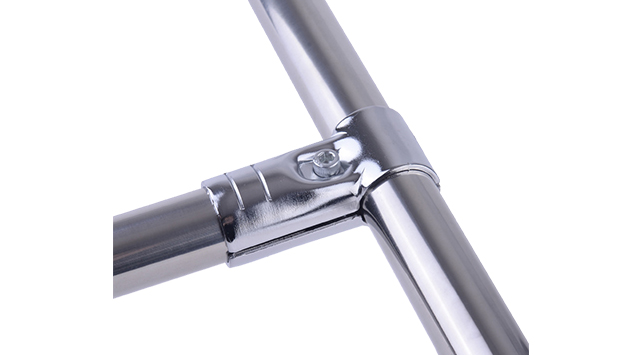
Two way lean pipe joint for 2 pcs 28MM lean pipe connection in straight angle, which used widely in workbench, flow rack, hand trolley frame connection.
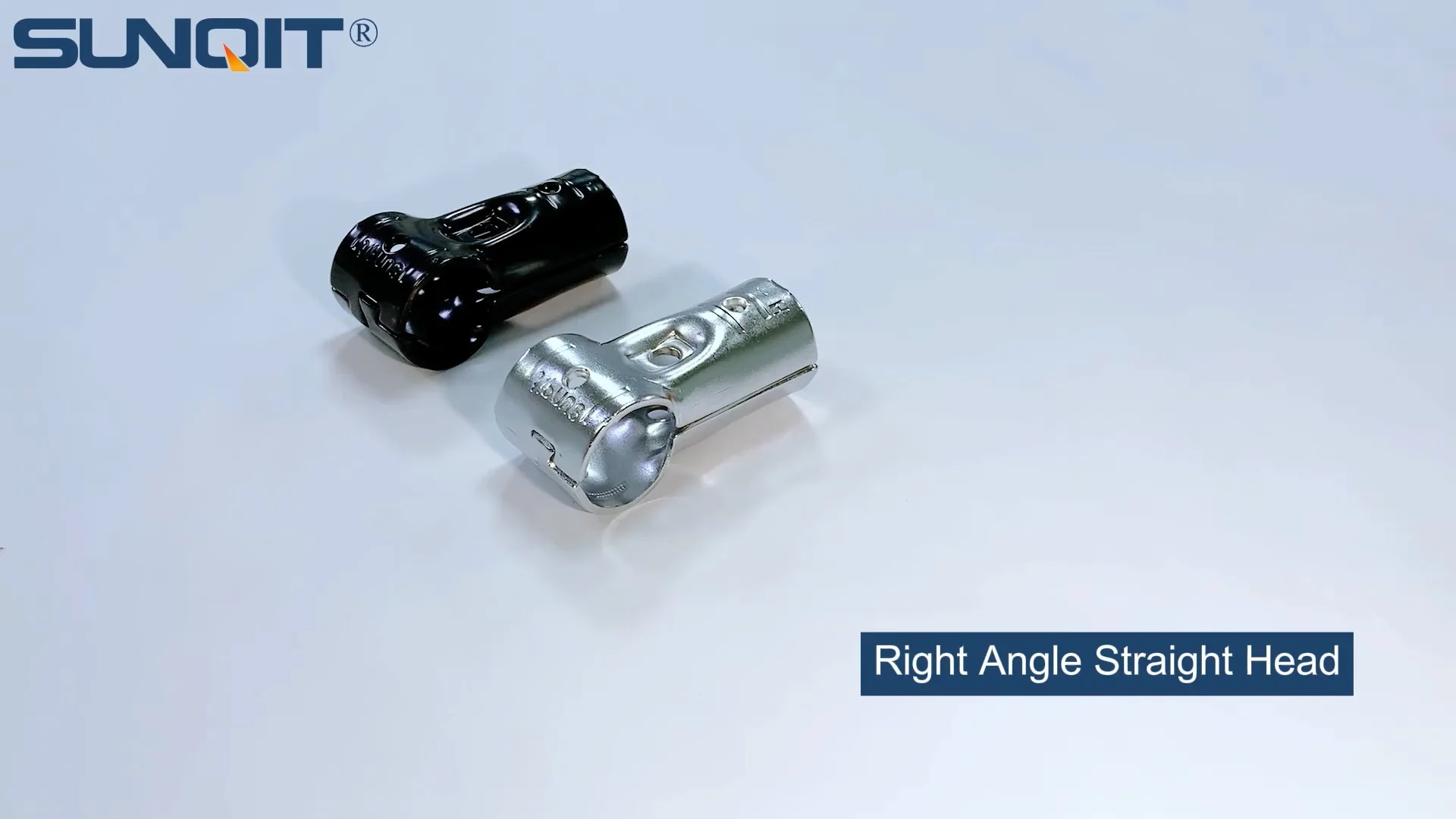
In the fast-paced world of food packaging, where every second counts and consumer safety is non-negotiable, the smallest components can make the biggest difference. From conveyor belts that transport fresh produce to workbenches where snacks are assembled, every part of the machinery must adhere to strict hygiene standards. One such component that often flies under the radar but plays a critical role in maintaining cleanliness is the two way lean pipe joint chrome. This unassuming piece of hardware, when designed and implemented correctly, becomes a cornerstone of hygienic food packaging operations. In this article, we'll dive deep into why hygiene matters in food packaging machinery, how the two way lean pipe joint chrome addresses these needs, and why it's becoming a go-to choice for manufacturers aiming to balance efficiency, compliance, and safety.
Why Hygiene is the Backbone of Food Packaging Machinery
Hygiene in food packaging isn't just a buzzword—it's a legal and ethical imperative. Contaminated food products can lead to widespread illness, costly recalls, and irreparable damage to brand reputation. According to the World Health Organization, over 600 million people fall ill annually from foodborne diseases, with 420,000 losing their lives. Much of this risk stems from machinery that harbors bacteria, mold, or other pathogens, which can transfer to food during packaging.
Food packaging machinery operates in environments where moisture, oils, and food particles are ever-present. Traditional machinery components—like welded joints, rough surfaces, or creviced connections—create ideal breeding grounds for pathogens. A single overlooked crevice in a joint can trap food residue, allowing bacteria like Listeria monocytogenes or Salmonella to multiply. By the time cleaning crews notice, the contamination may have already spread to thousands of products.
Regulators worldwide have responded with stringent standards. In the U.S., the FDA enforces strict guidelines for "food contact surfaces," requiring they be "safe and suitable for their intended use," "cleanable," and "non-absorbent." In Europe, the European Hygienic Engineering & Design Group (EHEDG) goes further, providing detailed specifications for equipment design to prevent microbial harborages. Meeting these standards isn't optional; it's the price of entry for any food packaging operation.
What is a Two Way Lean Pipe Joint Chrome? Breaking Down the Basics
Before we explore its hygiene benefits, let's clarify what a two way lean pipe joint chrome is. At its core, it's a modular connector used in lean pipe systems—frameworks built from pipes and joints to create structures like workbenches, material racks, and conveyor supports. "Two way" refers to its ability to connect two pipes at a fixed angle (often 90 degrees), providing stability while allowing for quick assembly and reconfiguration.
The "chrome" in its name is no afterthought. These joints are typically made from steel (often part of the stainless steel pipe series for added durability) and coated with a thin layer of chromium via electroplating. This chrome plating serves two key purposes: enhancing corrosion resistance and creating an ultra-smooth surface. Unlike uncoated steel or even painted joints, chrome-plated surfaces are non-porous, making them resistant to rust, chemical cleaners, and bacterial adhesion.
What sets this joint apart from traditional connectors (like welded or threaded joints) is its design philosophy: simplicity and cleanliness. There are no rough weld beads, no threaded grooves that trap debris, and no sharp edges. Instead, the two way lean pipe joint chrome features rounded contours and a seamless finish, designed to be both functional and easy to sanitize. It's a small part, but in the context of a lean system—where efficiency and adaptability are prioritized—it becomes a linchpin for maintaining hygiene without sacrificing productivity.
Hygiene by Design: How Two Way Lean Pipe Joint Chrome Solves Critical Problems
The two way lean pipe joint chrome isn't just "hygienic by accident"—it's engineered to address the specific hygiene challenges of food packaging machinery. Let's break down its key design features and how they contribute to a cleaner production environment.
1. Smooth, Crevice-Free Surfaces
Bacteria love hiding places, and traditional joints are full of them. Welded joints often have uneven beads or gaps where food particles and moisture accumulate. Threaded joints have helical grooves that are nearly impossible to fully clean, even with high-pressure washers. The two way lean pipe joint chrome, by contrast, has a mirror-like, crevice-free surface. The chrome plating fills in microscopic imperfections, creating a barrier that leaves nowhere for pathogens to cling. When wiped down with a sanitizing solution, the joint's smoothness ensures that debris slides off, rather than getting trapped.
2. Corrosion Resistance for Wet Environments
Food packaging facilities are wet places. Daily cleaning routines involve hot water, steam, and caustic detergents—all of which can corrode unprotected metal. A corroded joint doesn't just weaken structurally; it develops pitted surfaces that become new breeding grounds for bacteria. Chrome plating acts as a sacrificial layer, protecting the underlying steel (often from the stainless steel pipe series) from corrosion. Even after years of exposure to moisture and chemicals, a well-maintained chrome joint retains its smooth finish, ensuring long-term hygiene.
3. Tool-Free Disassembly for Deep Cleaning
In many food packaging operations, "cleaning" means a quick wipe-down of visible surfaces. But hidden areas—like the inside of joints or connections—often go unaddressed. Two way lean pipe joint chrome solves this with its modular design. Unlike welded joints, which are permanent, these chrome joints can be disassembled by hand (or with basic tools) in minutes. This allows cleaning crews to separate pipes and joints, inspect every surface, and sanitize even hard-to-reach areas. In a lean system, where downtime is costly, this quick disassembly means cleaning doesn't cut into production hours—it enhances it by reducing the risk of contamination-related shutdowns.

Lean Systems and Hygiene: A Perfect Partnership
Lean manufacturing principles—focused on minimizing waste, maximizing efficiency, and continuous improvement—have long been a staple in food packaging. But lean systems and hygiene don't always go hand in hand. Traditional lean structures, built with non-sanitary components, can create waste in the form of contamination risks, lengthy cleaning times, and compliance violations. The two way lean pipe joint chrome bridges this gap, aligning lean efficiency with strict hygiene standards.
Consider a typical food packaging line: workbenches where operators assemble packages, material racks holding ingredients, and roller tracks transporting products to sealing machines. In a lean system, these structures need to be reconfigurable to adapt to changing production needs (e.g., switching from packaging cereal to snacks). But reconfiguring traditional welded structures is time-consuming and often requires cutting and rewelding—processes that introduce new hygiene risks (like metal shavings or weld debris).
Two way lean pipe joint chrome eliminates this conflict. Its modular design allows teams to disassemble and reassemble workbenches or racks in hours, not days. And because the joints are pre-engineered for cleanliness, there's no trade-off between adaptability and hygiene. For example, a bakery that switches from packaging bagels to muffins can reconfigure its workbench layout using chrome joints, then sanitize each component in minutes before restarting production. This reduces downtime, minimizes waste, and ensures the new setup meets all hygiene requirements—all core lean objectives.
Another lean benefit: reduced maintenance costs. Chrome-plated joints resist corrosion and wear, meaning they need fewer replacements over time. And when components do need upgrading, the modular design allows for targeted replacements (e.g., swapping out a single joint) rather than rebuilding an entire structure. This not only saves money but also reduces the risk of introducing new hygiene issues during repairs.
Meeting Regulatory Standards: How Two Way Lean Pipe Joint Chrome Stacks Up
For food packaging facilities, regulatory compliance isn't just about avoiding fines—it's about protecting consumers. The two way lean pipe joint chrome is designed to meet or exceed the strictest global standards for food contact surfaces. Let's examine how it aligns with key regulations:
FDA Requirements
The U.S. Food and Drug Administration (FDA) mandates that all food contact surfaces be "safe and suitable," "easily cleanable," and "non-absorbent." Two way lean pipe joint chrome checks all these boxes. Its chrome plating is inert and non-toxic, meaning it won't leach chemicals into food. The smooth surface is "easily cleanable" with standard detergents, and its non-porous nature ensures it doesn't absorb food particles or moisture.
EHEDG Guidelines
The European Hygienic Engineering & Design Group (EHEDG) goes further, publishing detailed criteria for equipment design. EHEDG requires that surfaces have a roughness average (Ra) of ≤ 0.8 μm to prevent bacterial adhesion; chrome-plated joints typically achieve an Ra of ≤ 0.2 μm, far exceeding this standard. EHEDG also prohibits "dead spaces" (crevices where debris accumulates), a requirement the two way lean pipe joint chrome meets with its seamless, rounded design.
3-A Sanitary Standards
For dairy, beverage, and other high-risk food sectors, 3-A Sanitary Standards set the gold standard. These standards specify everything from material composition to joint angles. Two way lean pipe joint chrome, when made with 304 or 316 stainless steel (common in the stainless steel pipe series), meets 3-A's material requirements. Its smooth welds (if any) and crevice-free design also align with 3-A's strict geometry guidelines, making it suitable for even the most sensitive applications.
Traditional Joints vs. Two Way Lean Pipe Joint Chrome: A Hygiene Comparison
To truly appreciate the hygiene benefits of two way lean pipe joint chrome, it helps to compare it to traditional connectors. Below is a side-by-side look at how it stacks up against welded joints and uncoated steel joints in key hygiene categories:
| Feature | Traditional Welded Joints | Uncoated Steel Joints | Two Way Lean Pipe Joint Chrome |
|---|---|---|---|
| Surface Finish | Rough, with weld beads and uneven edges | Moderately smooth but porous; prone to oxidation | Mirror-smooth, non-porous chrome plating (Ra ≤ 0.2 μm) |
| Crevices/Dead Spaces | Common (between weld and pipe; under beads) | Few, but threading or seams may trap debris | None; rounded contours eliminate hiding spots |
| Corrosion Resistance | Low (prone to rust in wet environments) | Moderate (rusts without regular maintenance) | High (chrome plating resists rust and chemical cleaners) |
| Cleaning Time | 30–60 minutes (requires scrubbing welds and crevices) | 15–25 minutes (needs frequent polishing to prevent oxidation) | 5–10 minutes (quick wipe-down with sanitizer; disassembly for deep cleans) |
| Regulatory Compliance | Often fails FDA/EHEDG due to crevices | May meet basic FDA standards but fails EHEDG's surface finish requirements | Meets or exceeds FDA, EHEDG, and 3-A Sanitary Standards |
Real-World Impact: A Bakery's Journey to Better Hygiene
To illustrate the difference two way lean pipe joint chrome can make, let's look at a real-world example. A mid-sized bakery in the Midwest, specializing in frozen pastries, was struggling with recurring contamination scares. Their packaging line's support structures—built with welded steel joints—required 45 minutes of daily cleaning, and despite rigorous efforts, Listeria was detected twice in six months, leading to production halts and product recalls.
The bakery's lean team recommended upgrading to a lean pipe system using two way lean pipe joint chrome. Within a week, they replaced the welded workbenches and material racks with modular structures built from stainless steel pipes and chrome joints. The results were striking:
- Cleaning time dropped from 45 minutes to 10 minutes per day, freeing up staff for other tasks.
- No Listeria or other pathogens were detected in follow-up tests over 12 months.
- Reconfiguring the line for seasonal products (e.g., holiday pastries) now took 2 hours instead of 2 days, reducing downtime by 90%.
- Maintenance costs fell by 35%, as the chrome joints showed no signs of corrosion or wear.
The bakery's quality manager summed it up: "We used to dread cleaning days—now, it's a quick wipe and we're back to production. The chrome joints don't just look clean; they stay clean. It's been a game-changer for our team and our customers."
Future Trends: Where Hygienic Lean Joints Are Headed
As food safety regulations grow stricter and consumer expectations rise, the two way lean pipe joint chrome is evolving to meet new challenges. Here are three trends shaping its future:
1. Antimicrobial Chrome Coatings
Manufacturers are experimenting with adding antimicrobial agents (like silver ions) to chrome plating. These agents actively kill bacteria on contact, providing an extra layer of protection beyond just surface smoothness. Early tests show these coatings can reduce bacterial growth by up to 99% compared to standard chrome, making them ideal for high-risk environments like meat or seafood packaging.
2. Smart Monitoring Features
Imagine a joint that alerts you when it needs cleaning. Emerging technologies are integrating sensors into chrome joints to detect moisture, temperature, or bacterial growth. These sensors send real-time data to facility management systems, ensuring cleaning happens before contamination occurs, not after.
3. Sustainable Materials
While chrome plating is durable, it has environmental impacts. Suppliers are developing chrome-free alternatives, like ceramic coatings or electroless nickel plating, that offer similar hygiene benefits with lower toxicity. These alternatives are still in testing but could become mainstream as sustainability becomes a bigger priority for food brands.
Conclusion: Small Joints, Big Impact on Food Safety
In the complex ecosystem of food packaging machinery, the two way lean pipe joint chrome is a quiet hero. Its smooth, corrosion-resistant design addresses the critical hygiene challenges of modern production, while its modularity aligns with lean principles of efficiency and adaptability. For food packaging facilities, it's more than a component—it's an investment in consumer trust, regulatory compliance, and long-term success.
As we've seen, the difference between a contaminated product and a safe one often lies in the details: the smoothness of a joint, the absence of crevices, the speed of cleaning. Two way lean pipe joint chrome excels in these details, proving that even the smallest parts can have the biggest impact on food safety. For manufacturers looking to build a cleaner, more efficient future, this joint isn't just an option—it's a necessity.