- Company Articles
- Industry articles
- Industry standards
- Understanding CE Certification for 4040A EU Standard Aluminum Profile

Understanding CE Certification for 4040A EU Standard Aluminum Profile
Related Product
4040A EU Standard Aluminum Profile
4040A is a 4.00x4.00 CM fractional 40 series square extrusion T-slot profile with four open T-slots, each side with 4.00cm face.
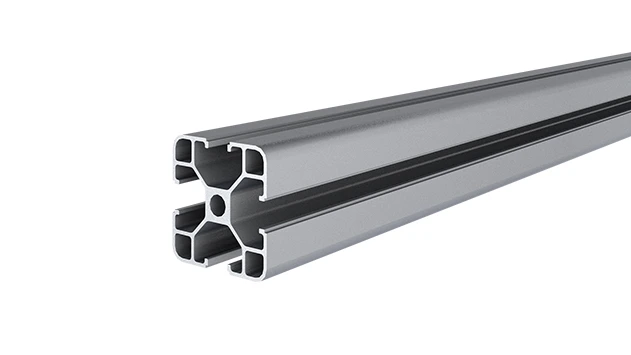
For manufacturers and suppliers of aluminum extrusion profiles, a familiar scenario often arises when engaging with European clients: a request for documentation that goes beyond material specs or pricing. "Does your 4040A EU standard aluminum profile come with CE certification?" This question isn't just a formality—it's a make-or-break detail that can determine whether a deal moves forward. In the competitive landscape of industrial components, the 4040A profile stands out as a workhorse, used in everything from factory workbenches and material racks to lean manufacturing systems. But to sell this profile in the EU, CE certification isn't optional. It's the legal gateway to a market of over 450 million consumers and countless industrial buyers. So, what exactly is CE certification, why does it matter for the 4040A EU standard aluminum profile, and how do manufacturers ensure compliance? Let's explore these questions in depth, breaking down the complexities into actionable insights.
What is CE Certification, and Why Does It Matter?
At its core, CE certification is a declaration by the manufacturer that a product meets all relevant EU health, safety, and environmental protection requirements. The mark itself—"CE" (short for Conformité Européenne , or "European Conformity")—is not a quality seal, but rather a legal requirement for products sold within the European Economic Area (EEA). For industrial components like the 4040A EU standard aluminum profile, this certification signals to buyers, regulators, and end-users that the product has undergone rigorous testing and meets strict safety benchmarks. Without it, selling the profile in the EU is not just risky—it's illegal.
The importance of CE certification extends beyond legal compliance. In a market where buyers are inundated with options, the CE mark acts as a universal trust signal. When a German automotive supplier sources 4040A profiles for their assembly line workbenches, or a French electronics firm uses them for ESD workstation frames, they need assurance that the profiles won't fail under stress, corrode prematurely, or compromise the safety of their operations. CE certification provides that assurance, reducing the buyer's risk and simplifying their purchasing decision. For manufacturers, this translates to increased market access, stronger customer loyalty, and a competitive edge over non-certified suppliers.
The 4040A EU Standard Aluminum Profile: A Closer Look
Before diving into certification specifics, let's clarify what makes the 4040A EU standard aluminum profile so widely used. As an aluminum extrusion profile, it's created by forcing heated aluminum alloy through a die to form a consistent cross-sectional shape—in this case, a square tube with nominal dimensions of 40mm x 40mm (hence "4040"). The "A" designation refers to its specific tolerances and design under EU standards, which differ slightly from other variants like the 4040B or 4040C. Typically made from 6063 aluminum alloy (a common choice for extrusions due to its excellent formability and corrosion resistance), the 4040A profile balances strength, lightweight properties, and cost-effectiveness, making it ideal for structural applications in industrial settings.
Common uses of the 4040A profile include: workbenches (such as the "Workbench E (Single Deck-Without Caster)" often paired with aluminum profile accessories), material racks (like "Material Rack B (3 Row and 3 Floor)"), conveyor frames, and lean manufacturing systems. Its versatility stems from its compatibility with a range of aluminum profile accessories—end caps, connectors, fixings, and brackets—that allow for modular assembly. For example, a 90° aluminum profile connector can join two 4040A profiles at a right angle, while aluminum profile fixings (like T-slot nuts and bolts) secure panels or shelves to the profile's internal grooves. This modularity is why the 4040A is a staple for lean pipe suppliers and manufacturers aiming to build flexible, customizable industrial solutions.

Key EU Standards for 4040A Aluminum Profile Certification
CE certification for the 4040A EU standard aluminum profile is rooted in compliance with specific harmonized standards—technical documents developed by European standardization bodies (like CEN or CENELEC) that outline safety and performance requirements. For aluminum extrusion profiles, the primary standard is EN 12020-2:2001 : "Aluminium and aluminium alloys—Extruded profiles—Part 2: Technical conditions for inspection and delivery." This standard sets the bar for everything from chemical composition and mechanical properties to dimensional tolerances and surface quality.
Let's break down the critical requirements of EN 12020-2 as they apply to the 4040A profile:
- Chemical Composition: The aluminum alloy must meet strict limits for alloying elements (e.g., magnesium, silicon, iron) to ensure consistency and performance. For 6063 alloy, EN 12020-2 specifies maximum iron content of 0.35% and magnesium-silicon ratios that promote heat treatability.
- Mechanical Properties: Tensile strength, yield strength, and elongation are key metrics. For 6063-T6 (the most common temper for structural profiles), EN 12020-2 requires a minimum tensile strength of 110 MPa, yield strength of 80 MPa, and elongation (after fracture) of 8%.
- Dimensional Tolerances: The profile's cross-sectional dimensions (width, height, wall thickness) must fall within tight ranges to ensure compatibility with accessories. For 4040A, EN 12020-2 specifies tolerances of ±0.3mm for width/height and ±0.2mm for wall thickness.
- Surface Quality: The profile's surface must be free of defects like cracks, dents, or excessive oxidation. Anodized or painted finishes (if applied) must adhere uniformly and meet corrosion resistance standards.
In addition to EN 12020-2, the 4040A profile may fall under other EU directives depending on its end use. For example, if integrated into a machine (like a conveyor system), it must comply with the Machinery Directive (2006/42/EC), which sets safety requirements for machinery design. If used in construction (e.g., as part of a material rack in a warehouse), it may need to align with the Construction Products Regulation (CPR), which covers performance under load, fire resistance, and durability. A knowledgeable lean pipe supplier will work with manufacturers to identify all applicable directives, ensuring no regulatory gaps.
The CE Certification Process for 4040A Aluminum Profiles
Obtaining CE certification for 4040A EU standard aluminum profiles is a structured process that involves several steps, from initial design to ongoing compliance. While the specifics may vary based on the manufacturer's location, product complexity, and applicable directives, the general workflow is as follows:
Step 1: Identify Applicable Directives and Standards
The first step is to determine which EU directives and harmonized standards apply to the 4040A profile. As noted earlier, EN 12020-2 is foundational for aluminum extrusions, but additional directives (e.g., Machinery, CPR) may apply based on use cases. Manufacturers often consult with notified bodies (accredited organizations authorized by EU member states to assess compliance) to confirm the scope.
Step 2: Design and Manufacture to Compliance
With standards identified, the manufacturer must design and produce the 4040A profile to meet those requirements. This includes selecting the right alloy (e.g., 6063), controlling extrusion parameters (temperature, speed, die design) to ensure dimensional accuracy, and implementing quality control measures for surface finish and mechanical properties. For example, during extrusion, operators may use laser measurement tools to check that the profile's width stays within the ±0.3mm tolerance specified by EN 12020-2.
Step 3: Conduct Testing and Documentation
Testing is a cornerstone of CE certification. Manufacturers must either perform in-house tests (if accredited) or a third-party laboratory to verify compliance with EN 12020-2 and other standards. Common tests include:
- Tensile Testing: Samples of the 4040A profile are pulled until fracture to measure tensile strength, yield strength, and elongation.
- Chemical Analysis: Spectroscopy or wet chemistry tests confirm the alloy's composition meets EN 12020-2 limits.
- Dimensional Inspection: Calipers, micrometers, and coordinate measuring machines (CMMs) verify cross-sectional dimensions and tolerances.
- Surface Finish Testing: Visual inspections and adhesion tests (for coated profiles) ensure no defects or delamination.
All test results, along with design drawings, manufacturing processes, and quality control procedures, are compiled into a technical file—a comprehensive document that demonstrates compliance. This file must be kept for at least 10 years after the product is placed on the market, as EU authorities may request it for inspection.
Step 4: Issue the EC Declaration of Conformity (DoC)
Once testing and documentation are complete, the manufacturer issues an EC Declaration of Conformity. This legal document, signed by a company representative, states that the 4040A profile meets all applicable EU requirements. The DoC includes details like the manufacturer's name and address, product model (e.g., "4040A EU Standard Aluminum Profile"), applicable standards (e.g., EN 12020-2), and test report references.
Step 5: Affix the CE Mark and Launch
Finally, the CE mark is affixed to the 4040A profile or its packaging. The mark must be visible, legible, and indelible—often applied via laser engraving or adhesive labels during production. With the mark in place, the profile is legally permitted for sale in the EEA. But compliance doesn't end here: manufacturers must maintain ongoing quality control, update technical files if standards change, and report any safety issues to EU authorities.
Aluminum Profile Accessories and CE Compliance
While the focus of this article is the 4040A profile itself, it's important to note that aluminum profile accessories—components like end caps, connectors, and fixings—play a role in overall system compliance. For example, a 4040A profile certified to EN 12020-2 is only as reliable as the aluminum profile fixings used to assemble it. If a T-slot nut fails under load, the entire workbench or rack could collapse, even if the profile itself meets standards. For this reason, many manufacturers of 4040A profiles also ensure their accessories comply with relevant standards, or partner with suppliers who do.
Take the 4040 aluminum profile end cap, a simple accessory designed to cover the ends of the profile, preventing dust accumulation and reducing sharp edges. While small, end caps must be tested for durability (e.g., resistance to impact or temperature changes) if they're considered part of the product's safety features. Similarly, 90° aluminum profile connectors, which join profiles at right angles, must meet mechanical strength requirements to ensure the assembly can withstand operational loads. For lean pipe suppliers offering turnkey solutions (profile + accessories), ensuring all components are CE-compliant simplifies the buying process for clients, who can trust the entire system meets EU standards.
Challenges in CE Certification for 4040A Profiles
While CE certification offers clear benefits, the process isn't without challenges—especially for manufacturers new to EU markets. One common hurdle is keeping up with evolving standards. Harmonized standards like EN 12020-2 are periodically updated to reflect new research or safety insights, and manufacturers must ensure their products remain compliant with the latest version. For example, a revision to EN 12020-2 in 2021 tightened tolerances for wall thickness, requiring some manufacturers to adjust their extrusion dies or invest in new measurement equipment.
Cost is another barrier. Third-party testing, notified body fees, and documentation can add up, particularly for small to mid-sized manufacturers. However, many find that the return on investment—access to the EU market—justifies the expense. Additionally, some manufacturers mitigate costs by integrating compliance into existing quality control processes, rather than treating it as a separate step.
A third challenge is navigating the complexity of multiple directives. A 4040A profile used in a conveyor system may need to comply with both EN 12020-2 and the Machinery Directive, each with its own testing and documentation requirements. Without expert guidance, manufacturers may overlook critical steps, risking non-compliance. This is where partnering with a notified body or consultant specializing in industrial components can prove invaluable.
EU Standard Aluminum Profiles: A Comparison
To better understand how the 4040A fits into the broader landscape of EU standard aluminum profiles, let's compare it to two other common variants: the 4040B and 3030A. This table highlights key differences in dimensions, applications, and CE standards—insights that can help buyers and manufacturers alike make informed decisions.
| Profile Type | Nominal Dimensions | Common Alloy | Key Applications | Primary CE Standards | Typical Accessories |
|---|---|---|---|---|---|
| 4040A EU Standard | 40mm x 40mm, wall thickness 1.5–2.0mm | 6063 | Workbenches, material racks, conveyor frames | EN 12020-2, Machinery Directive (if used in machinery) | 4040 end caps, 90° connectors, T-slot nuts |
| 4040B EU Standard | 40mm x 40mm, wall thickness 2.0–3.0mm | 6082 (higher strength) | Heavy-duty racks, industrial shelving | EN 12020-2, CPR (if used in construction) | Reinforced corner brackets, heavy-duty fixings |
| 3030A EU Standard | 30mm x 30mm, wall thickness 1.2–1.5mm | 6063 | Light-duty workstations, display racks | EN 12020-2 | 3030 end caps, lightweight hinges, plastic connectors |
As the table shows, while all three profiles share the EU standard designation, their design, alloy, and applications vary—underscoring why CE certification requirements can differ based on use case. For example, the 4040B, with its thicker walls and higher-strength alloy, is often used in construction, making the CPR a key standard, whereas the 3030A, used for lighter applications, may only need to comply with EN 12020-2.
The Future of CE Certification for Aluminum Extrusion Profiles
Looking ahead, CE certification for aluminum extrusion profiles like the 4040A is likely to become even more critical as the EU strengthens its focus on product safety and sustainability. Recent trends, such as the EU's "Circular Economy Action Plan," are pushing manufacturers to design products that are recyclable, energy-efficient, and free of hazardous substances. For 4040A profiles, this could mean future updates to EN 12020-2 that include requirements for recycled content or reduced carbon footprints during production.
Additionally, digitalization is transforming compliance. Technologies like blockchain are being explored to create tamper-proof records of test results and certification, giving regulators and buyers real-time access to a product's compliance history. For manufacturers, this could streamline documentation and reduce the risk of fraud, further enhancing trust in the CE mark.
Conclusion: CE Certification as a Strategic Investment
For manufacturers and suppliers of the 4040A EU standard aluminum profile, CE certification is more than a legal requirement—it's a strategic investment in market access, customer trust, and long-term growth. By ensuring compliance with EN 12020-2 and other relevant directives, manufacturers open doors to the EU's vast industrial market, differentiate themselves from competitors, and demonstrate a commitment to safety and quality. While the process may involve challenges—cost, evolving standards, complexity— the rewards are clear: stronger partnerships, increased sales, and a reputation as a reliable supplier.
As the global demand for aluminum extrusion profiles continues to grow, driven by industries like automotive, electronics, and logistics, the 4040A EU standard aluminum profile will remain a staple. And for those who prioritize CE certification, it will be more than just a product—it will be a key to unlocking new opportunities in the world's most regulated and competitive markets. So, the next time a European client asks, "Do your 4040A profiles have CE certification?" the answer should be a confident "Yes."