- Company Articles
- Industry articles
- Industry standards
- Understanding Material Composition of 2020 EU Standard Aluminum Profile

Understanding Material Composition of 2020 EU Standard Aluminum Profile
Related Product
2020 EU Standard Aluminum Profile
2020 is a 2.00 x 2.00CM fractional 20 series square extrusion T-slot profile with four open T-slots, one on each 2.00 face. The profile has align-a-grooves to assist in aligning connecting profiles.
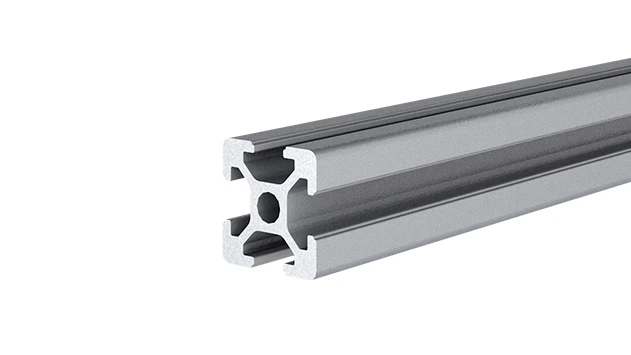
When we walk through a busy factory, a well-organized warehouse, or even a modern office, we rarely stop to think about the unsung heroes holding everything together. Aluminum profiles—those sleek, modular metal structures—are everywhere, quietly supporting assembly lines, shelving units, workbenches, and more. But not all aluminum profiles are created equal. The 2020 EU Standard Aluminum Profile, in particular, has become a gold standard in industries worldwide, thanks to its meticulous material composition and compliance with European quality norms. In this article, we'll pull back the curtain on what makes this profile so reliable, durable, and versatile—starting with the very materials that give it life.
What is the 2020 EU Standard Aluminum Profile, Anyway?
First things first: let's clarify what "2020 EU Standard Aluminum Profile" actually means. The "2020" refers to its cross-sectional dimensions—typically 20mm by 20mm, though slight variations exist based on specific applications. The "EU Standard" part is crucial: it means the profile adheres to strict manufacturing and material guidelines set by European regulatory bodies, ensuring consistency, safety, and performance across the board. Unlike generic aluminum extrusions, which might cut corners on alloy quality or thickness, the 2020 EU profile is engineered for precision. This makes it a favorite for industries where reliability isn't just a preference—it's a requirement.
But why does the material composition matter so much here? Imagine building a house with subpar bricks: no matter how well you design the layout, the structure will crack under pressure. The same logic applies to aluminum profiles. The metals, alloys, and treatments that go into making a 2020 EU profile determine everything from how much weight it can hold to how resistant it is to corrosion, and even how easy it is to customize with accessories like end caps or rubber strips. Let's dive into those materials.
The Core of the Profile: Alloy Composition
At its heart, the 2020 EU Standard Aluminum Profile is made from aluminum alloy—a mixture of pure aluminum and other elements that enhance its properties. Pure aluminum is soft and malleable, which is great for shaping but not so great for supporting heavy loads. By adding specific alloys, manufacturers transform it into a material that's both strong and workable. The most common alloy used in 2020 EU profiles is 6063, a magnesium-silicon alloy known for its excellent extrudability and surface finish. Let's break down its key components:
| Element | Percentage Range (in 6063 Alloy) | Role in the Profile |
|---|---|---|
| Aluminum (Al) | 97.5% – 99.0% | Base material; provides lightweight properties and corrosion resistance. |
| Magnesium (Mg) | 0.45% – 0.9% | Strengthens the alloy by forming Mg₂Si precipitates, boosting tensile and yield strength. |
| Silicon (Si) | 0.2% – 0.6% | Works with magnesium to create Mg₂Si, improving strength and fluidity during extrusion (critical for shaping the profile's precise 20x20mm cross-section). |
| Iron (Fe) | Max 0.35% | Minimized to avoid brittleness; small amounts act as a grain refiner, improving structural uniformity. |
| Copper (Cu) | Max 0.1% | Trace amounts only; higher levels can reduce corrosion resistance. |
| Manganese (Mn) | Max 0.1% | Enhances strength and workability without compromising ductility. |
This blend is no accident. The 6063 alloy is chosen for 2020 EU profiles because it strikes a perfect balance: it's strong enough to support industrial loads, yet malleable enough to be extruded into the precise T-slot shapes that make the profile so modular. Speaking of extrusion…

From Billet to Profile: The Aluminum Extrusion Process
To understand the 2020 EU profile's material story, we need to talk about how it's made. The process, called aluminum extrusion, is what gives the profile its signature shape—and it's deeply connected to its material composition. Here's a quick overview:
First, the 6063 alloy is melted down and cast into cylindrical billets. These billets are then heated to around 500°C (932°F)—hot enough to make the aluminum pliable but not so hot that it loses its structural integrity. The heated billet is then pushed (or "extruded") through a steel die with a 20x20mm cross-section, complete with the T-slots that run along the profile's length. These T-slots are what allow the profile to connect with accessories like brackets, shelves, or 2020 aluminum profile end caps, making it infinitely customizable.
The extrusion process is where the 6063 alloy's silicon content really shines. Silicon improves the alloy's "flowability," meaning it can fill the die's intricate details (like the T-slot edges) without cracking or forming defects. This results in a profile with sharp, consistent corners and smooth surfaces—qualities that are hard to achieve with cheaper alloys or lower manufacturing standards. After extrusion, the profile undergoes heat treatment (often "T5" or "T6" tempering) to strengthen the Mg₂Si precipitates, further boosting its mechanical properties.
Mechanical Properties: How Material Composition Translates to Performance
Let's get practical: what do these material choices mean for how the 2020 EU profile actually performs? Let's break down its key mechanical properties, all of which are dictated by its alloy composition and extrusion process:
- Tensile Strength: This is the maximum stress the profile can handle before breaking. Thanks to the magnesium-silicon alloy, 2020 EU profiles typically have a tensile strength of 180-220 MPa (megapascals). For context, that means a single 1-meter length of 20x20mm profile can support around 300-400kg of weight before failing—more than enough for most shelving or workbench applications.
- Yield Strength: This is the stress at which the profile will start to deform permanently. 2020 EU profiles usually hit 110-160 MPa here. Why does this matter? If you overload a shelf, you want it to bend gradually (giving you a warning) rather than snap suddenly. The alloy's yield strength ensures that.
- Elongation: This measures how much the profile can stretch before breaking, expressed as a percentage. 2020 EU profiles typically have 8-12% elongation. Higher elongation means better impact resistance—useful in busy factories where tools or materials might accidentally bump into the profile.
- Corrosion Resistance: Pure aluminum naturally forms a thin oxide layer that protects it from rust, but the 6063 alloy enhances this. The low copper content and high aluminum purity mean the profile holds up well in humid or industrial environments, unlike steel, which would require constant painting or coating.
These properties aren't just numbers on a spec sheet. They're the reason a 2020 EU profile workbench can withstand years of heavy tool use, or why a conveyor system built with these profiles doesn't warp under the weight of daily shipments. It all comes back to the careful balance of alloys.
The Unsung Heroes: Aluminum Profile Accessories
A profile is only as good as the accessories that bring it to life. The 2020 EU Standard Aluminum Profile's design—with its T-slots and precise dimensions—works hand-in-hand with specialized accessories, many of which are engineered to match the profile's material quality. Let's highlight a few key ones:
2020 Aluminum Profile End Cap: These small plastic or metal caps snap onto the profile's ends, and they're far more important than they look. Without them, the raw aluminum edges could be sharp, posing a safety risk to workers. They also seal the ends, preventing dust, water, or debris from getting inside the profile and weakening it over time. Most end caps are made from durable plastics like polypropylene, chosen for their flexibility and resistance to impact—perfect for absorbing minor bumps in busy workspaces.
Aluminum Profile Rubber Strip: Slide one of these into the T-slot, and suddenly the profile becomes quieter, safer, and more versatile. Rubber strips (often EPDM or silicone) cushion the contact between the profile and accessories like shelves or brackets, reducing noise when items are placed on the rack. They also create a tighter seal, making the profile suitable for use in environments where dust or moisture control is important, like electronics manufacturing cleanrooms. Plus, they add a non-slip surface, preventing tools or materials from sliding off workbenches.
Connectors and Brackets: These are the "glue" that turns individual 2020 profiles into complex structures like workbenches or conveyor frames. Made from high-strength steel or aluminum, they lock into the T-slots using bolts or spring-loaded clips. Because the 2020 EU profile's T-slots are standardized, these accessories work seamlessly across brands—a huge advantage for businesses that need to expand or reconfigure their setups quickly.
Where You'll Find 2020 EU Standard Aluminum Profiles in Action
Now that we understand what goes into making a 2020 EU profile, let's look at where it's actually used. Its versatility, strength, and compliance with EU safety standards make it a staple in:
Manufacturing: Assembly lines, workbenches, and material racks often rely on 2020 profiles. For example, a car parts manufacturer might use them to build custom workstations where workers assemble components—adjustable in height, with built-in tool holders and storage, all thanks to the profile's modular design.
Logistics and Warehousing: Lightweight yet strong, 2020 profiles are ideal for conveyor systems and storage racks. A warehouse might use them to build flow racks, where products slide along roller tracks (another accessory!) from the back to the front, ensuring easy access and reducing worker strain.
Retail and Display: Pop-up shops, trade show booths, and retail displays often use 2020 profiles because they're easy to transport and assemble. A clothing store, for instance, could build a custom rack with adjustable shelves and hanging rods, all from 2020 profiles and accessories.
DIY and Prototyping: Makers and engineers love 2020 profiles for prototyping. Whether building a 3D printer frame, a robotics platform, or a custom shelf, the modular design lets them iterate quickly without needing specialized tools.
Why EU Standards Make a Difference for Buyers
At this point, you might be wondering: "Can't I just buy a cheaper, non-EU standard 20x20mm profile?" The short answer is yes—but you'll likely regret it. EU standards aren't just red tape; they're a guarantee that the profile has been tested for safety, durability, and consistency. Here's why that matters for businesses and consumers:
Safety First: EU standards mandate strict testing for things like load capacity and impact resistance. A non-compliant profile might claim to hold 500kg, but in reality, it could fail at 300kg—putting workers at risk of injury or damage to expensive equipment.
Long-Term Cost Savings: Cheaper profiles often use lower-quality alloys or thinner walls, which wear out faster. A 2020 EU profile, with its high-grade 6063 alloy and precise extrusion, will last years longer, reducing the need for frequent replacements.
Interoperability: EU standards ensure that T-slots, accessory sizes, and mounting points are consistent across brands. This means you can mix and match accessories from different suppliers without worrying about compatibility—a huge plus for businesses that need flexibility.
Sustainability: European regulations often prioritize eco-friendly manufacturing. Aluminum itself is 100% recyclable, and EU-compliant producers typically use energy-efficient extrusion processes and recycled aluminum content, reducing the profile's carbon footprint.
Conclusion: The Material Story Behind the Profile
The 2020 EU Standard Aluminum Profile is more than just a piece of metal. It's a carefully engineered product, born from decades of material science and manufacturing expertise. From the magnesium and silicon that strengthen its alloy to the extrusion process that shapes its T-slots, every detail is designed to deliver strength, versatility, and reliability. And let's not forget the little things—the 2020 aluminum profile end cap that protects workers, the rubber strip that reduces noise, the connectors that turn it into a workbench or a rack. Together, these elements make the 2020 EU profile a cornerstone of modern industry.
So the next time you walk past a factory workbench or a warehouse rack, take a closer look. Chances are, you're seeing the result of precise material composition and strict EU standards in action. And if you're in the market for aluminum profiles yourself, remember: the right materials aren't just an upgrade—they're an investment in safety, durability, and peace of mind.