- Company Articles
- Industry articles
- Industry standards
- Understanding the Groove Dimensions of 4040F EU Standard Aluminum Profile

Understanding the Groove Dimensions of 4040F EU Standard Aluminum Profile
Related Product
4040F EU Standard Aluminum Profile
4040F is a 4.00x4.00 CM fractional 40 series square extrusion T-slot profile with four side open T-slots, each side with 4.00cm face. The profile has align-a-grooves to assist in aligning connecting profiles.
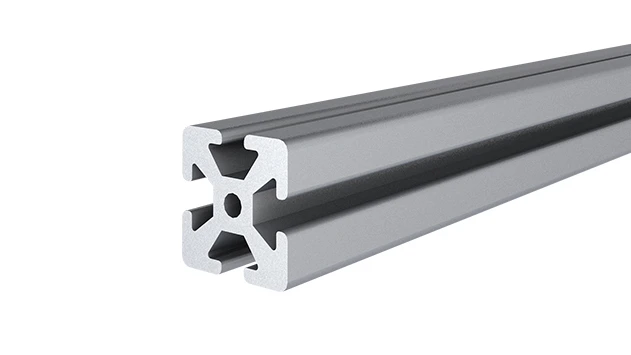
Walk into any modern manufacturing facility, warehouse, or even a tech startup's workshop, and you'll likely spot a silent workhorse holding everything together: aluminum profiles. These sleek, modular structures form the backbone of workbenches, material racks, conveyor systems, and assembly lines, quietly enabling the efficiency and flexibility that define today's production environments. Among the countless aluminum profiles available, the 4040F EU standard aluminum profile stands out as a staple in lean manufacturing and industrial setups. But what makes it so reliable? Much of its appeal lies in a tiny, often overlooked detail: its groove dimensions. In this article, we'll dive deep into the world of 4040F aluminum profiles, unpacking why groove dimensions matter, how they're measured, and why they're critical for anyone working with aluminum extrusion profiles and their accessories.
What is the 4040F EU Standard Aluminum Profile?
Before we get to grooves, let's start with the basics: what exactly is a 4040F EU standard aluminum profile? The name itself gives away key details. "4040" refers to its cross-sectional dimensions: 40mm in width and 40mm in height, making it a square profile. The "F" denotes a specific variation within the 4040 series, designed to meet EU (European union) standards for industrial aluminum profiles. These standards ensure consistency in dimensions, material quality, and performance across manufacturers, so a 4040F profile from one supplier should match another—at least in theory.
EU standard profiles like the 4040F are made from aluminum extrusion profile, a process where molten aluminum is pushed through a die to create a specific cross-sectional shape. This method allows for precise, repeatable dimensions, including the all-important grooves (or "T-slots") that run along the length of the profile. The 4040F is typically crafted from 6063-T5 aluminum alloy, prized for its balance of strength, lightweight properties, and corrosion resistance—ideal for both indoor and light outdoor use.
But why "F"? Within the 4040 series, you'll find other variants like 4040A, 4040B, or 4040C, each with slight differences in design. The 4040F, in particular, is known for its robust groove design, which we'll explore next. For now, think of it as the "workhorse" of the 4040 family: versatile enough for light-duty tasks like shelving and heavy-duty applications like machine frames.
The Role of Groove Dimensions: More Than Just a Slot
At first glance, the grooves (or T-slots) on an aluminum profile might seem like simple indentations. In reality, they're engineering marvels—precision-crafted channels that turn a basic aluminum bar into a modular building block. Grooves allow you to attach accessories, brackets, panels, and other components without welding or drilling, making assembly fast, reversible, and adaptable. But for this to work, the grooves must be exactly the right size. That's where groove dimensions come in.
Groove dimensions refer to three key measurements: groove width (the distance between the inner walls of the groove), groove depth (how far the groove recesses into the profile), and groove radius (the curvature of the groove's corners). These might sound trivial, but even a 1mm difference in width can mean the difference between a tight, secure fit and a loose, wobbly joint—especially when using aluminum profile accessories like T-slot nuts, brackets, or guide rails.
Let's break down each dimension:
- Groove Width: This is the most critical measurement. For the 4040F, the standard groove width is 8mm. Why 8mm? It's wide enough to accommodate larger T-slot nuts and bolts (like M8 screws), which are essential for securing heavier accessories or loads. Narrower grooves (like the 6mm width found in some 4040A profiles) limit you to smaller hardware, reducing the profile's weight capacity.
- Groove Depth: The depth of the 4040F's groove is typically 6mm. This depth ensures that T-slot nuts sit flush with the profile's surface when tightened, preventing them from protruding and interfering with other components. It also provides enough thread engagement for bolts to grip securely—shallow grooves risk stripping threads under stress.
- Groove Radius: The corners of the groove aren't sharp; they're rounded with a radius of 1.5mm. This curvature reduces stress concentration in the aluminum, preventing cracks or deformation when the profile is under load. It also makes inserting T-slot nuts smoother, as there's no sharp edge to catch on the nut's threads.
These dimensions aren't arbitrary. They're the result of decades of engineering trial and error, optimized to balance strength, versatility, and compatibility with the vast ecosystem of aluminum profile accessories on the market.

How 4040F Groove Dimensions Compare to Other 4040 Variants
To truly appreciate the 4040F's groove design, it helps to compare it to other 4040 EU standard profiles. Let's take a look at how its groove dimensions stack up against common alternatives like the 4040A, 4040B, and 4040C:
| Profile Type | Groove Width (mm) | Groove Depth (mm) | Groove Radius (mm) | Best For |
|---|---|---|---|---|
| 4040F EU Standard | 8 | 6 | 1.5 | Heavy-duty applications, large accessories, M8 hardware |
| 4040A EU Standard | 6 | 5 | 1.0 | Light-duty shelving, small brackets, M6 hardware |
| 4040B EU Standard | 8 | 5 | 1.5 | Medium loads, where depth is less critical than width |
| 4040C EU Standard | 10 | 7 | 2.0 | Extra-heavy loads, industrial machinery frames |
As the table shows, the 4040F strikes a balance between the narrow, shallow 4040A and the wider, deeper 4040C. Its 8mm width makes it suitable for most industrial tasks without overcomplicating things, while the 6mm depth ensures stability. For many manufacturers, this "Goldilocks" sizing is why the 4040F is their go-to choice.
Why Groove Dimensions Matter for Aluminum Profile Accessories
Now, let's get practical: how do groove dimensions affect your day-to-day work with aluminum profiles? The answer lies in aluminum profile accessories—the nuts, bolts, brackets, panels, and rails that turn a basic profile into a functional system. Every accessory is designed to fit a specific groove size, and using the wrong one can lead to frustration, wasted time, and even safety risks.
Take T-slot nuts, for example. These small, cylindrical nuts slide into the groove and rotate to lock in place, providing a secure anchor for bolts. A T-slot nut designed for an 8mm groove (like the 4040F's) won't fit into a 6mm groove (like the 4040A's)—it'll be too wide. Conversely, a 6mm nut in an 8mm groove will rattle around, never tightening properly. The same goes for brackets: an aluminum guide rail A, designed to mount onto 4040F profiles, relies on the groove's width and depth to align its mounting holes with the T-slot nuts. If the groove is too narrow, the rail won't sit flush; if too shallow, the bolts might not reach the nuts.
Consider a common scenario: building a workbench using 4040F profiles. The tabletop needs to be attached to the frame with angle brackets. Each bracket has slots that align with the profile's grooves. If the groove width is off by even 0.5mm, the bracket might not slide into place, forcing you to drill new holes or sand down the bracket—both time-consuming fixes. A reliable lean system supplier will ensure their 4040F profiles have precise groove dimensions, so your accessories work as intended right out of the box.
Another example is roller tracks, used to move materials along assembly lines. Many roller track systems mount to aluminum profiles via brackets that clip into the grooves. If the groove depth is too shallow, the bracket might pop out under the weight of the materials, causing jams or spills. The 4040F's 6mm depth ensures these brackets stay locked in, even with constant use.
Measuring Groove Dimensions: How to Ensure You're Getting What You Paid For
So, you've ordered 4040F profiles from a supplier, but how do you verify the groove dimensions are correct? While reputable suppliers will provide certification, it's always smart to check for yourself—especially if you're working on a critical project. Here's how:
Tools You'll Need: A digital caliper (preferred for precision), a ruler (for rough checks), and a radius gauge (to measure corner curvature). Digital calipers are worth the investment; they can measure width and depth to the nearest 0.01mm, catching small discrepancies that a ruler might miss.
Measuring Width: Open the caliper jaws and place them inside the groove, ensuring they're parallel to the profile's length. Gently close the jaws until they touch the inner walls of the groove. The reading should be 8.0mm ± 0.1mm (EU standards allow for minor tolerance). If it's 7.8mm or 8.2mm, the profile is out of spec.
Measuring Depth: Zero the caliper with the depth rod resting on the profile's surface. Lower the rod into the groove until it touches the bottom, then read the depth. It should be 6.0mm ± 0.1mm. Shallow depths (5.5mm or less) are a red flag.
Checking Radius: Use a radius gauge (a set of curved metal pieces marked with radius sizes) to match the groove's corner curvature. The 4040F's radius should be 1.5mm, so the gauge should fit snugly into the corner without gaps.
Why does this matter? Even small deviations can add up. If you're building a 10-meter conveyor system with 20 4040F profiles, each with a groove width 0.2mm too narrow, the cumulative effect could mean your aluminum guide rail A doesn't fit at all. Investing 5 minutes per profile to check dimensions can save hours of frustration later.
The 4040F in Lean Systems: Why It's a Favorite Among Manufacturers
Lean manufacturing is all about eliminating waste—whether it's time, materials, or space. The 4040F's groove dimensions make it a perfect fit for lean systems, thanks to its modularity and adaptability. Here's how:
Quick Reconfiguration: In lean environments, production lines often need to change to meet new demands. With 4040F profiles, you can easily add or remove accessories by sliding T-slot nuts into the grooves and tightening bolts. No welding, no drilling—just quick adjustments. For example, a material rack B (3 row and 3 floor) can be reconfigured into a single-row rack by removing a few brackets, all without altering the core 4040F frame.
Reduced Inventory: Because 4040F profiles are standardized, you can stock one type of profile and use it for multiple projects—workbenches, carts, racks—by changing the accessories. This reduces the need to store different profile sizes, cutting inventory costs.
Improved Safety: Precise groove dimensions mean accessories fit securely, reducing the risk of loose components or collapsing structures. In a busy factory, this isn't just about efficiency—it's about keeping workers safe.
Lean system suppliers often recommend 4040F profiles for these reasons. They know that when groove dimensions are consistent, their customers can focus on optimizing workflows, not fixing assembly issues.
Troubleshooting Common Groove-Related Issues
Even with the best profiles, things can go wrong. Here are some common groove-related problems and how to fix them:
Loose Joints: If accessories feel wobbly, the groove width might be too large, or the T-slot nuts are worn. Try switching to thicker nuts or using thread-locking adhesive to secure bolts.
Accessories Won't Slide: This could mean the groove width is too small (due to manufacturing errors) or debris is blocking the groove. Clean the groove with a brush or compressed air, and check the width with a caliper.
Groove Deformation: Over-tightening bolts can crush the groove walls, narrowing the width. Always use a torque wrench to tighten bolts to the recommended setting (typically 8-10 Nm for M8 bolts in 4040F profiles).
Corrosion in Grooves: Aluminum is corrosion-resistant, but grooves can trap moisture and dirt, leading to pitting. Regularly clean grooves with a mild detergent and dry thoroughly to prevent this.
Conclusion: Groove Dimensions—The Unsung Hero of 4040F Profiles
At first glance, the grooves on a 4040F EU standard aluminum profile might seem like an afterthought. But as we've explored, they're the secret to its versatility, strength, and compatibility with aluminum profile accessories. From T-slot nuts to aluminum guide rail A, every component relies on precise groove dimensions to work seamlessly. For manufacturers, warehouse managers, and DIY enthusiasts alike, understanding these dimensions isn't just technical knowledge—it's the key to building systems that are efficient, reliable, and adaptable.
When choosing a 4040F profile, always prioritize suppliers who guarantee EU standard compliance and can provide documentation on groove dimensions. A reputable lean system supplier won't just sell you aluminum extrusion profiles—they'll ensure those profiles work with the accessories you need, saving you time, money, and headaches down the line.
So, the next time you look at a 4040F profile, take a moment to appreciate the grooves. They might be small, but they're the reason this unassuming aluminum bar can transform into a workbench, a conveyor, or a material rack—whatever your project demands. In the world of industrial aluminum, the details truly make all the difference.