- Company Articles
- Industry articles
- Industry standards
- Vertical Lean Pipe Joints in Aerospace Component Manufacturing: Precision Requirements

Vertical Lean Pipe Joints in Aerospace Component Manufacturing: Precision Requirements
Related Product
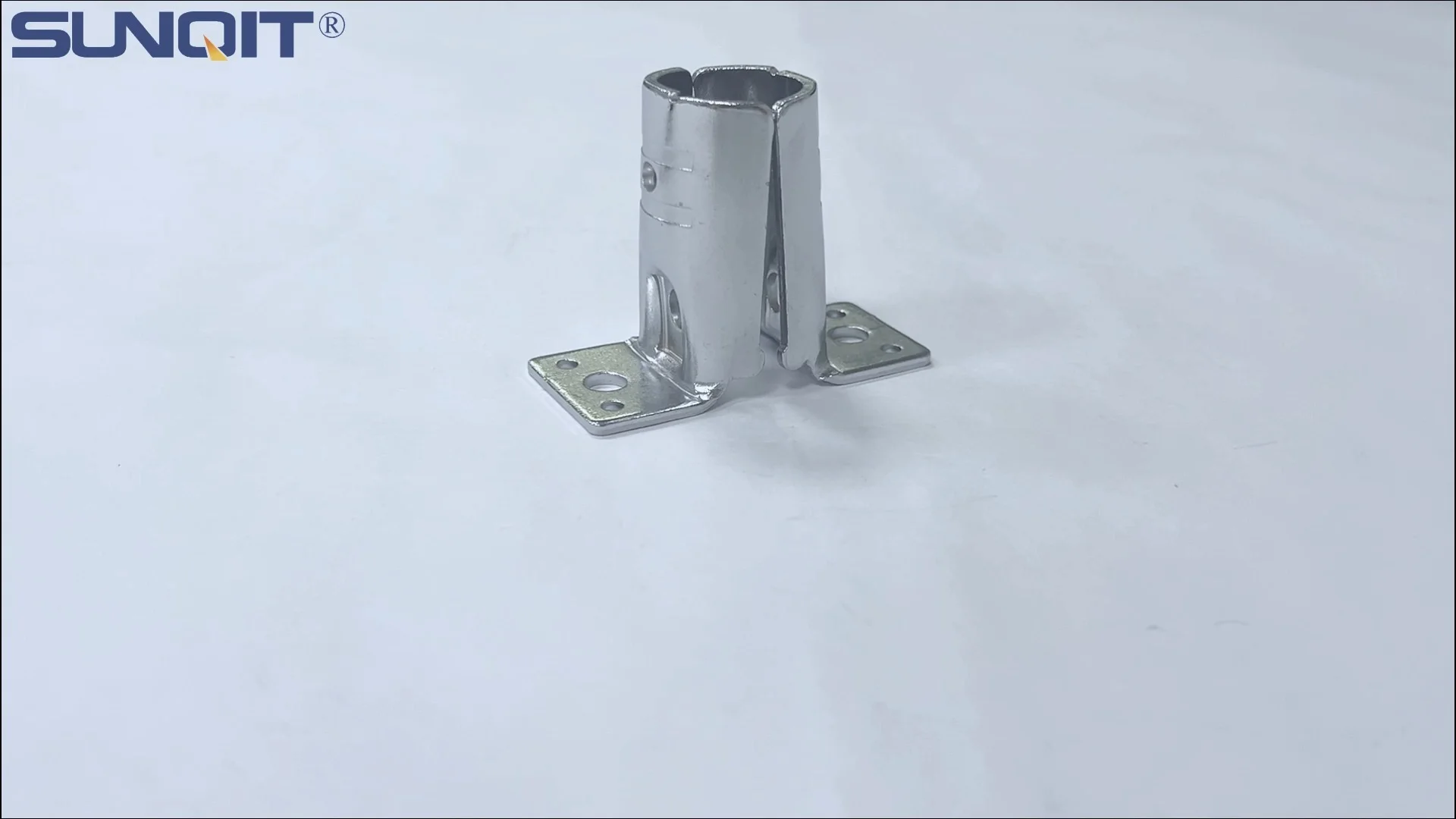
Vertical Lean Pipe Joint
Vertical lean pipe joint is used for 28mm lean pipe fixed on ground and keep it stable.
The aerospace manufacturing floor is a symphony of precision. Walk through any facility—whether it's building jet engine turbines, satellite components, or rocket fuel systems—and you'll notice a quiet intensity. Engineers in crisp cleanroom suits huddle over workbenches, their movements deliberate. Machinery hums at a steady, controlled pace. Every tool, every part, every connection exists to answer one critical question: Can this component survive the extremes of space, or the unforgiving forces of flight? In this world, "close enough" isn't just unacceptable—it's dangerous. And that's where the unsung heroes of lean manufacturing come into play: lean pipe joints . Specifically, vertical lean pipe joints, which form the backbone of the workbenches, flow racks, and material handling systems that keep aerospace production both efficient and precise.
Aerospace manufacturing isn't just about building big machines; it's about mastering the smallest details. A jet engine blade, for example, must withstand temperatures exceeding 2,000°F and pressures that could crush a car. The tolerance for error? Often measured in microns—about the width of a human hair. To achieve this, manufacturers rely on lean systems: modular, flexible setups that reduce waste, streamline workflows, and ensure consistency. And at the heart of these systems are lean pipe joints—simple yet ingenious connectors that hold together aluminum or steel pipes to form structures like workbenches, flow racks, and conveyor systems. Among these, vertical lean pipe joints stand out. They don't just connect pipes vertically; they provide the stability and alignment needed to keep precision components exactly where they need to be, even when the stakes are sky-high.
The Role of Lean Systems in Aerospace: More Than Just Efficiency
Before diving into vertical lean pipe joints, let's step back and understand why lean systems matter in aerospace. Lean manufacturing, born from Toyota's production philosophy, is often associated with "cutting waste." But in aerospace, it's about much more than that. It's about creating environments where precision is built into the process. When you're assembling a component that will orbit the Earth or carry passengers at 500 mph, you can't afford disorganization. Tools must be within arm's reach on a workbench. Parts must flow smoothly from one station to the next on a flow rack. And every structure holding these parts must be stable enough to prevent even the slightest vibration-induced misalignment.
Lean systems solve this by being modular. Unlike rigid, custom-built workstations, lean setups use standardized pipes and joints that can be reconfigured as production needs change. Need to adjust a workbench height to accommodate a taller engineer? Swap out a vertical joint for a longer pipe. Redesigning a flow rack to hold larger satellite components? Add a few extra vertical supports. This flexibility is crucial in aerospace, where production runs are often small-batch and highly specialized. But flexibility doesn't mean sacrificing precision. In fact, the best lean systems enhance it—and vertical lean pipe joints are key to that balance.
What Are Vertical Lean Pipe Joints, Anyway?
At first glance, a lean pipe joint might look like a simple plastic or metal connector. But in reality, it's a feat of engineering miniaturization. A vertical lean pipe joint is designed to connect two or more pipes along a vertical axis, creating structures that stand upright—think the legs of a workbench, the upright supports of a flow rack, or the vertical beams of a material storage system. What makes them unique is their ability to maintain alignment under load. In aerospace, where a workbench might hold a 50-pound titanium component, or a flow rack might support dozens of delicate circuit boards, vertical joints must not just "hold" the weight—they must hold it without flexing . Even a 0.5mm bend in a vertical support could throw off the alignment of a part being assembled, leading to gaps, stress points, or failed inspections.
These joints come in various designs, but most share a few key features. They're typically made from durable materials like reinforced plastic, aluminum, or stainless steel (often part of a stainless steel pipe series for corrosion resistance in cleanrooms). They use clamping mechanisms—screws, bolts, or friction fits—to grip pipes tightly, preventing slippage. And they're engineered with precise tolerances: the hole where the pipe inserts might be machined to within ±0.05mm of the pipe's diameter, ensuring a snug, wobble-free fit. For vertical joints, this precision is even more critical. Unlike horizontal joints, which primarily resist shear forces (side-to-side movement), vertical joints must withstand compressive forces (weight pushing down) and tensile forces (weight pulling up, such as when lifting a heavy part off a workbench). A poorly designed vertical joint could compress under load, shortening the structure, or loosen over time, creating dangerous instability.

Why Vertical Joints Matter More in Aerospace Than You Think
Let's take a concrete example: a workbench used to assemble avionics— the electronic brains of an aircraft. This workbench isn't just a table. It's a controlled environment. The surface must be level to within 0.1mm/m to ensure circuit boards lie flat during soldering. The tools hung from overhead racks (supported by vertical joints) must stay in place so engineers don't waste time searching for them. The shelves below, holding component bins, must not sag under the weight of hundreds of tiny resistors and capacitors. Every vertical joint in that workbench's frame is responsible for maintaining that levelness, that stability, that precision.
Or consider a flow rack used to transport turbine blades from machining to inspection. These blades are aerodynamically shaped to within thousandths of an inch; even a minor bump during transport could nick an edge, rendering the blade useless. The flow rack's roller tracks are mounted on vertical supports, which must be perfectly parallel and vertical to ensure the blades glide smoothly, without tilting or jamming. If a vertical joint is misaligned by just 1°, the roller track might slope slightly, causing the blade to slide too fast—or get stuck. Either way, the part is at risk. Vertical joints here aren't just connectors—they're precision alignment tools.

Materials Matter: Choosing the Right Vertical Joint for Aerospace Needs
In aerospace, material selection is never arbitrary. The same goes for vertical lean pipe joints. The choice between plastic, aluminum, or stainless steel depends on the environment and the load. Let's break it down:
Aluminum: Lightweight Precision
Aluminum profile joints are a favorite in many aerospace facilities. Aluminum is lightweight, which reduces the overall weight of workbenches and flow racks—important for mobile systems (like carts used to move parts between stations). It's also resistant to corrosion, a must in cleanrooms where harsh cleaning agents are used. But what really makes aluminum ideal is its machinability. Aluminum joints can be precision-machined to incredibly tight tolerances, ensuring a consistent fit across thousands of units. For example, an aluminum vertical joint might have a pipe insertion hole with a tolerance of ±0.02mm, meaning every joint fits the pipe exactly the same way. This consistency is critical for building modular systems where parts are interchangeable.
Stainless Steel: Durability in Harsh Environments
In environments where moisture, chemicals, or extreme temperatures are present—think rocket engine test facilities or satellite component assembly lines—stainless steel pipe series joints shine. Stainless steel is inherently corrosion-resistant, and its high tensile strength makes it ideal for heavy loads. A vertical stainless steel joint can support hundreds of pounds without deforming, making it perfect for flow racks holding large engine components or workbenches used for assembling structural parts. The downside? Stainless steel is heavier than aluminum, so it's often reserved for stationary systems where weight isn't a concern.
Reinforced Plastic: Cost-Effective Flexibility
For lighter loads—like small electronic components or tools—reinforced plastic joints are a cost-effective option. They're easy to install (often using snap-fit or hand-tightened screws) and resistant to scratches, which helps maintain cleanroom standards. However, in aerospace, plastic joints are typically used for non-critical structures, as they can flex under heavy loads or degrade over time when exposed to UV light or chemicals.

Precision Requirements: The Numbers Behind the Joints
In aerospace, precision isn't just a buzzword—it's a set of numbers. Let's look at the key precision metrics that define a high-quality vertical lean pipe joint:
Tolerance: How "Perfect" Does It Need to Be?
Tolerance refers to the allowable variation in a dimension. For vertical lean pipe joints, the most critical tolerance is the diameter of the pipe insertion hole. If the hole is too loose, the pipe will wobble; too tight, and the joint can crack when tightened. In aerospace, this tolerance is typically ±0.05mm for aluminum joints and ±0.08mm for stainless steel. To put that in perspective, a human hair is about 0.08mm thick—so the allowable error is thinner than a hair. This level of precision ensures that when you build a workbench with four vertical legs, all four stand exactly perpendicular to the floor, within 0.1° of verticality. Why? Because even a 0.2° tilt in a 1-meter tall leg would result in the top being 3.5mm off-center—enough to misalign a circuit board during assembly.
Load-Bearing Capacity: How Much Can It Hold?
A vertical joint's load-bearing capacity is measured in both static (stationary) and dynamic (moving) loads. In aerospace, static load is the primary concern—for example, a workbench holding a 100-pound component. A typical aluminum vertical joint can handle 200-300 pounds static load, while stainless steel joints can exceed 500 pounds. But it's not just about the maximum load; it's about how the joint distributes that load. A well-designed vertical joint spreads the weight evenly across the pipe and the joint's clamping mechanism, preventing stress concentrations that could lead to failure over time.
Fatigue Resistance: Longevity Under Stress
Aerospace components aren't built to last a few months—they're built to last decades. The same goes for the manufacturing equipment. Vertical lean pipe joints must withstand thousands of cycles of loading and unloading (e.g., parts being placed on and off a flow rack) without degrading. Engineers test joints for fatigue by subjecting them to repeated load cycles—often 100,000 or more—and measuring for signs of wear, like loosening screws or cracks in the material. In aerospace, a joint that fails after 50,000 cycles is a liability; the best joints can handle 500,000+ cycles with minimal degradation.
Corrosion Resistance: Staying Strong in Harsh Spaces
Cleanrooms, chemical storage areas, and outdoor test facilities expose joints to corrosive elements. For aluminum joints, this means anodization—a process that coats the surface with a protective oxide layer, preventing rust. Stainless steel joints rely on their chromium content to form a passive protective layer. Both materials must meet strict industry standards, like ASTM B117 (salt spray testing) for corrosion resistance. In aerospace, a joint that rusts or degrades could contaminate sensitive parts, so corrosion resistance isn't just about durability—it's about quality control.
Comparing Vertical Lean Pipe Joints to Other Joint Types
To truly appreciate the precision of vertical lean pipe joints, it helps to compare them to other common joint types used in lean systems. Below is a breakdown of how vertical joints stack up against horizontal, swivel, and 90° fixed joints in key precision metrics:
| Joint Type | Primary Function | Tolerance Range | Typical Material | Max Static Load (lbs) | Aerospace Application |
|---|---|---|---|---|---|
| Vertical Lean Pipe Joint | Vertical support, alignment | ±0.02–0.05mm | Aluminum, Stainless Steel | 200–500+ | Workbench legs, flow rack uprights |
| Horizontal Lean Pipe Joint | Horizontal bracing, shelving | ±0.05–0.1mm | Aluminum, Plastic | 100–300 | Shelving, cross-beams on workbenches |
| Swivel Joint | Rotating connections (e.g., adjustable shelves) | ±0.1–0.2mm | Aluminum, Plastic | 50–150 | Adjustable tool holders, tilting work surfaces |
| 90° Fixed Joint | Right-angle connections (e.g., corners) | ±0.05mm | Aluminum, Stainless Steel | 150–400 | Workbench corners, flow rack frames |
As the table shows, vertical joints have the tightest tolerance ranges and among the highest load capacities, making them indispensable for precision aerospace applications. Their ability to maintain alignment under load is unmatched, which is why they're the go-to choice for structures where vertical stability is non-negotiable.
Real-World Impact: How Vertical Joints Solve Aerospace Challenges
To understand the real impact of vertical lean pipe joints, let's look at a case study from a leading aerospace manufacturer. A few years ago, this company was struggling with a bottleneck in their satellite antenna assembly line. The workbench used to mount delicate antenna dishes was prone to slight wobbling, causing misalignment during soldering. Engineers traced the issue to the vertical joints supporting the workbench legs—over time, the plastic joints were flexing under the weight of the antenna (about 75 pounds), leading to a 0.3mm tilt in the work surface.
The solution? Switching to aluminum profile vertical joints with stainless steel clamping hardware. The new joints had a tolerance of ±0.03mm and a static load capacity of 300 pounds—more than enough to support the antenna. Within a week of installation, the wobble disappeared. Alignment errors dropped by 90%, and the assembly line's rejection rate fell from 8% to less than 1%. The engineers also noted that the aluminum joints were easier to adjust, allowing them to fine-tune the workbench height for different operators, further boosting productivity.
Another example comes from a jet engine manufacturer using flow racks to transport turbine blades. The original flow rack used plastic vertical joints, which began to crack after six months of daily use, causing the roller tracks to sag. This led to blades getting stuck, delaying production. By upgrading to stainless steel pipe series vertical joints, the company eliminated sagging entirely. The new joints, designed to handle 500+ pounds, have now been in use for three years with zero failures.
Challenges and Innovations in Vertical Lean Pipe Joint Design
Despite their importance, vertical lean pipe joints aren't without challenges. One of the biggest is thermal expansion. In aerospace facilities, temperatures can fluctuate—even slightly—as heating/cooling systems cycle or machinery generates heat. Metals like aluminum and steel expand and contract with temperature changes. A vertical joint that's perfectly aligned at 70°F might develop a 0.01mm gap at 85°F, which could throw off precision. To combat this, manufacturers are developing joints with built-in compensation mechanisms, like spring-loaded clamps that adjust for thermal movement without loosening.
Another challenge is compatibility. Aerospace facilities often use a mix of legacy and new equipment, so vertical joints must work with existing pipes, regardless of age or manufacturer. This has led to the adoption of industry standards for pipe diameters and joint dimensions, ensuring that a vertical joint from Supplier A fits a pipe from Supplier B. For example, most aerospace facilities now use 28mm or 42mm diameter pipes, with joints designed to these exact sizes.
Innovation is also driving change. Some manufacturers are integrating smart sensors into vertical joints, which monitor alignment, load, and temperature in real-time. These sensors send data to a central dashboard, alerting maintenance teams if a joint is loosening or deforming. In one trial at a satellite manufacturing plant, these "smart joints" reduced unplanned downtime by 40% by predicting failures before they occurred.
The Future of Vertical Lean Pipe Joints in Aerospace
As aerospace manufacturing evolves—with the rise of electric aircraft, reusable rockets, and miniaturized satellites—the demand for precision in lean systems will only grow. Vertical lean pipe joints are poised to play a bigger role, thanks to advancements in materials and design. Here's what we can expect:
3D Printing for Custom Precision
3D printing (additive manufacturing) is revolutionizing aerospace, and it's starting to impact lean pipe joints. With 3D printing, manufacturers can create custom vertical joints with complex internal structures—like reinforced ribs or integrated sensor housings—that would be impossible with traditional machining. For example, a 3D-printed aluminum vertical joint could be optimized to distribute load more evenly, reducing weight by 20% while maintaining strength. Early tests show these joints meet or exceed aerospace tolerance requirements, opening the door to more flexible, application-specific designs.
Composite Materials
Carbon fiber composites, already used in aircraft wings and satellite structures, are being explored for lean pipe joints. Composites offer the strength of steel with the weight of aluminum, making them ideal for mobile systems. A composite vertical joint could support heavy loads while keeping workbenches or carts lightweight enough for easy maneuvering. The challenge? Cost. Composite joints are currently more expensive than aluminum or steel, but as production scales, prices are expected to drop.
Integration with Digital Twins
Digital twins—virtual replicas of physical systems—are becoming standard in aerospace. In the future, vertical lean pipe joints could have digital twins that simulate their performance under different loads, temperatures, and conditions. Engineers could test how a joint would behave in a rocket assembly facility vs. a satellite cleanroom, or predict its lifespan based on usage data. This "digital-first" approach would reduce the need for physical testing, speeding up the design process and ensuring joints are optimized for their specific environment.
Conclusion: The Quiet Precision of Vertical Lean Pipe Joints
In the grand scheme of aerospace manufacturing, vertical lean pipe joints might seem small. They don't have the glamour of a jet engine or the complexity of a satellite's guidance system. But without them, the precision that defines aerospace would fall apart. Every workbench that holds a circuit board, every flow rack that carries a turbine blade, every material handling system that moves parts through the factory—all of it relies on vertical joints that do their job, silently and perfectly, thousands of times a day.
As aerospace pushes the boundaries of what's possible—reaching Mars, building hypersonic planes, launching mega-constellations of satellites—the demand for precision will only intensify. And in that future, vertical lean pipe joints will be right there, evolving alongside the industry, ensuring that even the smallest connections are up to the challenge. Because in aerospace, precision isn't just about the big things. It's about the joints that hold it all together.