- Company Articles
- Industry articles
- Industry standards
- Warehouse Flow Racks: Optimizing with 2020r EU Standard Aluminum Profile

Warehouse Flow Racks: Optimizing with 2020r EU Standard Aluminum Profile
Related Product
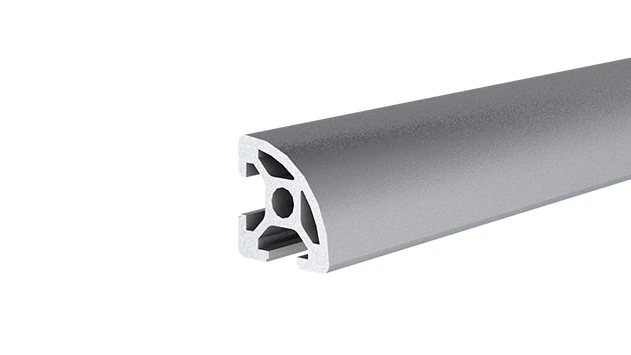
2020R EU Standard Aluminum Profile
2020R is a 2.00 x 2.00CM fractional 20 series square extrusion T-slot profile with four open T-slots, two side with 2.00cm face, the other side with round face. The profile has align-a-grooves to assist in aligning connecting profiles.
Let's start with a scenario we've all heard (or lived) before: A warehouse floor where boxes pile up in the wrong places, pickers spend extra minutes hunting for parts, and reconfiguring storage feels like solving a puzzle with missing pieces. Sound familiar? For many operations managers, these daily headaches aren't just frustrating—they're costly. Every delayed order, every inefficient step, eats into profits and team morale. But what if there was a way to turn that chaos into a smooth, self-sustaining rhythm? Enter flow racks: the unsung heroes of warehouse organization. And today, we're diving into how one specific component—2020r EU standard aluminum profile—can take these racks from "good enough" to "game-changing."
What Are Flow Racks, Anyway?
If you're new to warehouse lingo, flow racks (sometimes called gravity flow racks) are exactly what they sound like: storage systems where products "flow" from the back to the front, thanks to a slight incline and roller tracks. Think of them as the warehouse equivalent of a well-organized pantry shelf—items at the front get picked first, and as they're removed, the ones behind slide forward automatically. No more digging to the back of a shelf or rearranging stacks by hand. It's a simple idea, but it's revolutionized how warehouses handle everything from small parts to bulky cartons.
But here's the catch: Not all flow racks are created equal. Traditional versions often rely on heavy steel frames or clunky wooden structures. They're sturdy, sure, but try moving them when your storage needs change. Or swapping out a damaged roller track. Or scaling up as your business grows. Suddenly, that "sturdy" design becomes a liability. This is where materials matter—and why more and more warehouses are turning to aluminum profiles to build their flow racks.
Aluminum Profiles: The Backbone of Modern Flow Racks
Aluminum has been a staple in manufacturing for decades, and for good reason. It's lightweight but surprisingly strong, resistant to rust, and easy to work with. But when we talk about aluminum profiles for flow racks, we're not just talking about any old aluminum. We're talking about precision-engineered, standardized profiles—like the 2020r EU standard aluminum profile—that are designed to click together, adapt, and grow with your needs.
Let's break down why aluminum profiles make such a difference. First, weight. A steel flow rack might require a forklift or two people to move; an aluminum one? You could probably shift it with a coworker (and maybe a coffee break afterward). That mobility is a big deal when you need to reconfigure your warehouse layout for a seasonal rush or a new product line. Second, customization. Aluminum profiles come with T-slots—those handy grooves running along their length—that let you attach accessories like roller tracks, shelves, or dividers without drilling holes or welding. Need to add a new level to your rack? Just slide in a new bracket. Damaged a roller? Swap it out in minutes. No special tools, no downtime, no stress.

Spotlight: 2020r EU Standard Aluminum Profile
Now, let's zoom in on the star of the show: the 2020r EU standard aluminum profile. You might be wondering, "What's with the '2020r'?" The numbers refer to the profile's dimensions: 20mm by 20mm (about the width of a credit card). The "r" stands for "rounded," meaning the edges are curved—no sharp corners to catch on boxes or scrape hands during assembly. It's a small detail, but anyone who's spent hours building racks will tell you: rounded edges make a big difference in safety and ease of use.
The "EU standard" part is just as important. These profiles aren't cobbled together from random parts; they're made to strict European union standards for quality, consistency, and compatibility. That means if you buy a 2020r profile from one supplier and aluminum profile accessories from another, they'll still fit together perfectly. No more guessing if a connector will work or if a bracket is the right size. It's like buying Legos—every piece is designed to click into the next, no matter where you get them.
But why 20mm x 20mm? For flow racks, this size hits the sweet spot between strength and versatility. It's small enough to build compact, space-saving racks for tight warehouses, but strong enough to hold up to 50kg per linear meter (depending on the design). That makes it ideal for everything from electronics components to small automotive parts. And because it's lightweight, you can stack multiple levels without worrying about overloading your warehouse floor—another win for safety and space efficiency.
How 2020r Profiles Transform Flow Racks (With a Little Help From Roller Tracks)
A flow rack is only as good as its roller track—the system of wheels or rollers that lets products glide forward. And here's where 2020r aluminum profiles really shine: they're built to integrate seamlessly with roller tracks, turning a basic rack into a high-performance storage solution.
Let's say you're setting up a flow rack for small plastic bins of screws and bolts. You start with 2020r vertical profiles as the frame. Then, using T-slot nuts and bolts (common aluminum profile accessories), you attach horizontal supports. On top of those supports, you mount roller tracks—maybe 38 aluminum roller track yellow, with small, smooth wheels that let the bins slide easily. The incline is adjustable, so you can tweak it based on the weight of your bins: steeper for heavier items, gentler for lighter ones. And if you need to change the roller track later—say, switching to a black ESD (electrostatic discharge) version to protect sensitive electronics? Just loosen the bolts, swap the track, and you're done. No cutting, no welding, no calling in a contractor.
This flexibility isn't just convenient—it's cost-effective. Traditional steel racks often require custom fabrication for even small changes. With 2020r profiles and compatible roller tracks, you can adapt on the fly. Seasonal products? Add a few extra levels in a morning. A sudden surge in orders? Rearrange the racks to create a dedicated picking zone. It's warehouse agility at its finest.
Traditional vs. 2020r Aluminum Flow Racks: A Side-by-Side Look
| Feature | Traditional Steel/Wood Flow Racks | 2020r Aluminum Profile Flow Racks |
|---|---|---|
| Weight | Heavy (often requires machinery to move) | Lightweight (easily repositioned by hand) |
| Customization | Limited; requires cutting/welding for changes | Highly customizable via T-slots and accessories |
| Durability | Prone to rust (steel) or warping (wood) | Corrosion-resistant; withstands humidity and wear |
| Assembly Time | Long (hours to days, depending on size) | Fast (modular design; assembled in hours) |
| Cost Over Time | Higher (replacement parts, labor for changes) | Lower (reusable parts, easy DIY adjustments) |
Real-World Impact: A Small Warehouse's Lean Journey
The Challenge: Stagnant Picking Speeds and Wasted Space
Let's meet Maria, the operations manager at a small electronics manufacturing plant. Her team was struggling with two big issues: picking speeds were stuck at 25 orders per hour, and their warehouse felt cramped, even though they weren't using all their vertical space. Their old steel flow racks were bolted to the floor, so rearranging was impossible. And when a roller track broke, they had to wait a week for a custom replacement part. "It felt like we were treading water," Maria told me. "Every time we tried to improve, the racks held us back."
The Solution: 2020r Aluminum Flow Racks with Roller Tracks
Maria's team decided to invest in 2020r EU standard aluminum profile flow racks, paired with 38 aluminum roller track black ESD (to protect their sensitive circuit boards). The transformation was almost immediate. First, they could finally adjust the rack heights to use vertical space, freeing up floor area for a new packing station. Second, the lightweight racks were easy to reposition, so they created a "U-shaped" picking path that cut down on walking time. And when a roller track needed replacing? Maria's maintenance tech grabbed a spare from the supply closet and swapped it in 15 minutes.
The Result: Leaner, Faster, Happier
Within three months, picking speeds jumped to 40 orders per hour—a 60% improvement. Employee satisfaction went up too: "No one likes wrestling with heavy racks or waiting for parts," Maria said. "Now, the team feels like they have tools that work with them, not against them." And because the aluminum racks are reusable, Maria's team has already repurposed them twice—once for a seasonal order spike and once to test a new product line. "It's not just a storage solution," she told me. "It's a lean solution. We're wasting less time, less space, and less money."
Beyond Flow Racks: 2020r Profiles as a Lean System Building Block
Here's the best part: 2020r EU standard aluminum profiles aren't just for flow racks. They're part of a larger lean system—a toolkit for building everything from workbenches to material carts to assembly lines. That means you can create a cohesive, standardized warehouse where every component works together.
For example, Maria's team didn't stop at flow racks. They used the same 2020r profiles to build workbenches next to the racks, so pickers could assemble orders right where the parts are stored. The workbenches have built-in tool holders (attached via T-slots) and adjustable heights, reducing strain on employees. They even added small turnover trolleys—also made with 2020r profiles—to move completed orders to shipping. It's a closed-loop system where everything connects, and nothing is wasted.
This kind of integration is at the heart of lean manufacturing principles: eliminate waste, streamline processes, and empower teams to work smarter. And with 2020r aluminum profiles, it's accessible to businesses of all sizes—not just large corporations with big budgets. You don't need to overhaul your entire warehouse at once. Start with a single flow rack, see how it transforms your workflow, and expand from there.
Why This Matters for Your Warehouse (Yes, Yours)
Maybe you're thinking, "My warehouse isn't that big. Do I really need fancy aluminum profiles?" Let me ask you this: Do you ever wish your storage was easier to adjust? Do your employees spend time searching for parts or moving heavy racks? Have you ever had to turn down a rush order because your layout couldn't handle it? If you answered "yes" to any of these, 2020r aluminum flow racks might be the solution you didn't know you needed.
At the end of the day, a warehouse isn't just a place to store stuff. It's the engine of your business—the place where products become orders, and orders become happy customers. When that engine runs smoothly, everything else follows: lower costs, faster delivery times, and a team that feels proud of their work. 2020r EU standard aluminum profiles and flow racks aren't just about metal and rollers. They're about creating a warehouse that works for you, adapts with you, and grows with you.
Wrapping Up: The Future of Warehouse Storage Is Flexible
Traditional flow racks served us well, but the future belongs to systems that can keep up with the pace of modern business. 2020r EU standard aluminum profiles, paired with roller tracks and aluminum profile accessories, offer that flexibility. They're lightweight, customizable, and built to last—turning static storage into dynamic, lean solutions that drive efficiency and growth.
So, whether you're running a small workshop or a large distribution center, it's time to ask: Is your current storage system holding you back? Or is it helping you move forward? With 2020r aluminum flow racks, the answer can be the latter. After all, in warehousing, as in life, the best solutions are the ones that adapt—and keep flowing.