- Company Articles
- Industry articles
- Industry standards
- Warehouse Logistics: 2020r EU Standard Aluminum Profile for Material Racks & Conveyors

Warehouse Logistics: 2020r EU Standard Aluminum Profile for Material Racks & Conveyors
Related Product
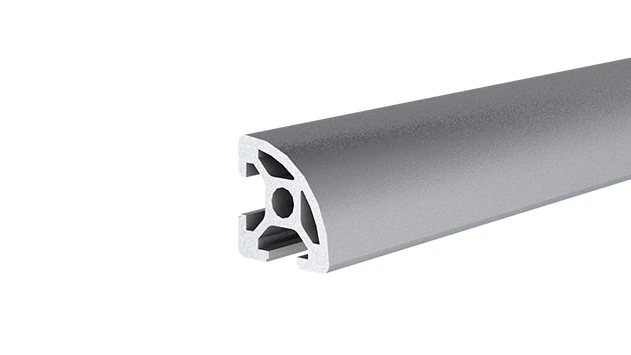
2020R EU Standard Aluminum Profile
2020R is a 2.00 x 2.00CM fractional 20 series square extrusion T-slot profile with four open T-slots, two side with 2.00cm face, the other side with round face. The profile has align-a-grooves to assist in aligning connecting profiles.
Warehouse Logistics: 2020r EU Standard Aluminum Profile for Material Racks & Conveyors
In the world of warehouse logistics, every second counts. From the moment a truck unloads goods to the final step of shipping out orders, the efficiency of material handling can make or break a business's bottom line. At the heart of this efficiency lies a quiet workhorse: the equipment that moves, stores, and organizes materials. Today, we're diving into a component that's transforming how warehouses operate— 2020r EU Standard Aluminum Profile . This unassuming yet versatile material is redefining what's possible with material racks, conveyors, and beyond. Let's explore why it's become a go-to choice for logistics managers and how it integrates seamlessly with essential tools like roller track , material racks , and aluminum profile accessories .
What Exactly Is 2020r EU Standard Aluminum Profile?
Before we jump into its applications, let's break down what makes this aluminum profile unique. The name itself gives away key details: "2020" refers to its dimensions—20mm in width and 20mm in height—making it compact enough for tight spaces but robust enough for heavy-duty tasks. The "r" stands for "rounded," a design tweak that reduces sharp edges, minimizing the risk of scratches on goods or injuries to workers. And "EU Standard" ensures it meets strict European regulations for quality, safety, and environmental sustainability.
Crafted from high-grade aluminum alloy (typically 6063-T5, a popular choice for its strength-to-weight ratio), the 2020r profile is manufactured using an extrusion process. This method pushes molten aluminum through a die, creating a consistent, precision-engineered shape with internal T-slot channels —the secret to its versatility. These slots run the length of the profile, allowing accessories like brackets, connectors, and panels to slide in and lock securely without welding. It's like building with a modular toy set, but for grown-ups solving real-world logistics challenges.
Why Aluminum Profiles Are a Game-Changer for Warehouses
Warehouses have relied on steel, wood, and plastic for decades, but aluminum profiles bring a unique set of advantages that address modern logistics needs:
- Lightweight yet tough: Aluminum is about 1/3 the weight of steel, making racks and conveyors easier to install, reposition, and transport. Don't let the lightness fool you, though—2020r profiles can handle loads up to 50kg per linear meter (depending on the setup), enough for most small to medium-sized goods like electronics components, pharmaceuticals, or retail products.
- Corrosion-resistant: Unlike steel, aluminum naturally forms a protective oxide layer, so it won't rust in humid warehouses or when exposed to spills. This longevity reduces replacement costs and keeps equipment looking professional.
- Modular by design: Need to add a shelf to a material rack? Extend a conveyor line? With T-slot accessories, you can reconfigure systems in hours, not days. No welding, no drilling—just slide, lock, and go. This flexibility is a lifesaver for warehouses adapting to seasonal demand spikes or new product lines.
- Eco-friendly: Aluminum is 100% recyclable, and recycling it uses just 5% of the energy needed to produce new aluminum. For companies aiming to reduce their carbon footprint, this is a significant win.
Building Better Material Racks with 2020r Aluminum Profile
Material racks are the backbone of warehouse storage, and 2020r profiles are elevating their functionality. Let's take a common example: material rack B (3 row and 3 floor) , a staple in warehouses storing small to medium parts. Traditionally built with steel or wood, these racks often suffer from being too heavy to move, difficult to adjust, or prone to damage from moisture.
With 2020r profiles, constructing rack B becomes a breeze. The vertical supports are made from cut-to-length 2020r profiles, connected at the base with floor flanges for stability. Horizontal beams slide into the T-slots, and adjustable shelf brackets let you set the height of each "floor" to fit different box sizes—no more wasted space between shelves. Add aluminum profile accessories like side guards (to prevent items from falling) or label holders (for quick inventory checks), and you've got a rack that's both functional and customizable.
What if your warehouse needs change? Maybe you switch from storing small boxes to larger components. With aluminum profiles, you don't need to buy a new rack. Simply loosen the brackets, reposition the beams, and add extra supports if needed. This adaptability is why logistics managers love it—investing in 2020r racks isn't a one-time cost; it's a long-term solution that grows with your business.
| Component | Dimensions | Material | Key Role in 2020r Systems |
|---|---|---|---|
| 2020r Aluminum Profile | 20mm x 20mm (W x H) | 6063-T5 Aluminum Alloy | Main structural frame for racks, conveyors, and workbenches |
| Internal Straight Aluminum Joint | 20mm x 20mm (fits T-slot) | Aluminum Alloy | Connects two 2020r profiles at straight angles without welding |
| Plastic Roller Track Guide Rail (Yellow) | 1.2m length, 25mm width | High-Density Polyethylene (HDPE) | Guides items along roller tracks, reducing friction |
| Aluminum End Cap (2020) | 20mm x 20mm | Aluminum Alloy | Covers profile ends to prevent dust buildup and injuries |
| Caster Wheel with Brake | 50mm diameter | Rubber wheel, steel bracket | Adds mobility to racks and workbenches; brake locks position |
Conveyors: Smooth Movement with 2020r and Roller Track
If material racks are the "storage" heroes, conveyors are the "movement" champions. They eliminate manual lifting, speed up workflows, and ensure goods flow consistently from point A to B. Here's where roller track and 2020r aluminum profiles team up to create a winning combo.
Imagine a busy e-commerce warehouse during peak season. Orders are flying in, and workers need to get products from storage racks to packing stations quickly. A gravity-fed roller conveyor—powered by nothing but gravity—can do the job, and 2020r profiles form its sturdy frame. The conveyor's side rails are made from 2020r profiles, with plastic roller track guide rails (yellow or grey) attached via T-slot brackets. These guide rails keep items centered on the rollers, preventing jams. The rollers themselves? They're mounted on axles connected to the 2020r frame, ensuring smooth rotation even with heavy boxes.
What makes this setup special is its adaptability. Need to adjust the conveyor's angle for steeper inclines? Swap out the legs (also 2020r profiles) for longer ones. Want to add a curve to navigate around a pillar? Use 90-degree aluminum joints to bend the frame. Even better, if you need to relocate the conveyor to a new area, you can disassemble it into manageable pieces and reassemble in minutes—no heavy machinery required.
For motorized conveyors, 2020r profiles still shine. They provide a lightweight base for mounting motors, belts, and control panels, reducing the overall weight of the system and lowering energy costs. And because aluminum conducts heat well, it helps dissipate heat from motors, extending their lifespan.
The Unsung Heroes: Aluminum Profile Accessories
A 2020r aluminum profile is only as good as the accessories that bring it to life. These small but mighty components turn basic frames into fully functional systems. Let's highlight a few that make a big difference in warehouse settings:
Internal Straight Aluminum Joints: These compact connectors slide into the T-slots of two 2020r profiles, locking them together at straight angles. They're reusable, so you can take apart and rebuild systems as needed—perfect for trial-and-error setups.
Aluminum End Caps: Simple but essential, these caps snap onto the ends of profiles to cover sharp edges, keep out dust, and give the system a polished look. In busy warehouses, even small details like this reduce wear and tear on both equipment and goods.
Caster Wheels with Brakes: Attach these to the bottom of a material rack or workbench, and suddenly you've got a mobile unit. Need to move a rack of tools to a new assembly line? Unlock the brakes, roll it over, and lock again—no heavy lifting required. It's a game-changer for flexibility.
Plastic Roller Track Guide Rails: Available in yellow (high visibility) or grey (subtle), these rails line the edges of roller conveyors, ensuring items glide smoothly without slipping off. Made from durable HDPE, they're resistant to impact and chemicals, so they hold up in tough warehouse environments.
Real-World Impact: How 2020r Profiles Solve Common Warehouse Headaches
Let's ground this in a real scenario. Consider a small electronics manufacturer struggling with disorganized storage and slow assembly lines. Their old steel racks were heavy and hard to adjust, so workers wasted time searching for parts. Their conveyors were rigid, making it hard to reconfigure lines when launching new products. Then they switched to 2020r aluminum profiles.
First, they replaced steel racks with custom material racks built from 2020r profiles. Using internal straight joints and adjustable shelves, they created racks tailored to their smallest components (resistors, capacitors) and largest circuit boards. Labels clipped into T-slot holders made inventory checks a breeze. Next, they installed a gravity roller conveyor with 2020r frame and yellow guide rails, connecting the storage area to assembly workbenches (also built with 2020r profiles). Workers now slide parts along the conveyor instead of carrying them, cutting down on fatigue and errors.
The result? A 30% reduction in time spent searching for parts, a 25% increase in assembly line speed, and happier workers who no longer dread moving heavy loads. And when the company launched a new product line, they reconfigured the racks and conveyor in a day—no contractor needed. That's the power of 2020r EU Standard Aluminum Profile: it doesn't just store and move materials; it adapts to your business's evolving needs.
Why Sustainability Matters in Warehouse Design
Today's logistics leaders aren't just focused on efficiency—they're also prioritizing sustainability. Aluminum profiles align perfectly with this goal. Aluminum is 100% recyclable, and recycling it uses 95% less energy than producing new aluminum. When a 2020r system reaches the end of its life (which, with proper care, could be decades), it can be melted down and repurposed into new profiles or other products. Compare that to steel, which is also recyclable but heavier to transport, or wood, which may end up in landfills if not properly treated.
Additionally, the modular design of 2020r systems reduces waste. Instead of buying a new rack or conveyor when needs change, you can reuse existing profiles and accessories. This "build once, adapt often" approach minimizes the need for new materials, lowering your warehouse's carbon footprint.
Is 2020r Right for Your Warehouse?
If you're wondering whether 2020r EU Standard Aluminum Profile is a good fit, ask yourself these questions: Do you need equipment that's easy to reconfigure? Are you looking to reduce weight without sacrificing strength? Do you value sustainability and long-term cost savings? If you answered "yes" to any of these, 2020r is worth considering.
It's particularly ideal for small to medium-sized warehouses, electronics or pharmaceutical facilities (where cleanliness and corrosion resistance matter), and businesses with frequently changing product lines. Even large warehouses can benefit by using 2020r for specialized areas like picking stations or workbenches, complementing their larger steel systems.
Final Thoughts: More Than a Material, a Logistics Partner
2020r EU Standard Aluminum Profile may seem like just another building material, but it's so much more. It's a tool that empowers warehouses to be agile, efficient, and sustainable. When paired with roller track , material racks , and the right aluminum profile accessories , it transforms chaotic storage areas into organized hubs and slow workflows into streamlined processes.
In a world where logistics efficiency is a competitive advantage, 2020r profiles offer a simple yet powerful solution: build smart, adapt fast, and keep moving forward. Whether you're running a small local warehouse or a large distribution center, this unassuming aluminum profile might just be the upgrade your logistics operations have been waiting for.