- Company Articles
- Industry articles
- Industry standards
- Warehouse Logistics: 2040 EU Standard Aluminum Profile in Flow Rack Systems

Warehouse Logistics: 2040 EU Standard Aluminum Profile in Flow Rack Systems
Related Product
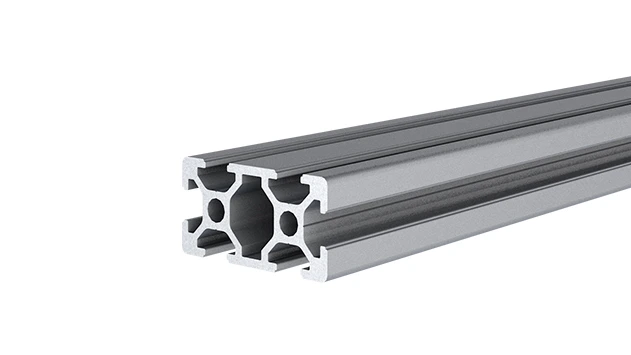
2040 EU Standard Aluminum Profile
2040 is a 2.00 x 4.00CM fractional 20 series square extrusion T-slot profile with four open T-slots, two side with 2.00cm face, the other side with 4.00cm face. The profile has align-a-grooves to assist in aligning connecting profiles.
Walk into any modern warehouse, and you'll immediately sense the rhythm of efficiency. Pallets glide smoothly along conveyor belts, workers retrieve items with precision, and every square foot of space feels intentionally utilized. Behind this orchestration lies a critical component: flow rack systems. These structures aren't just metal frames—they're the circulatory system of logistics, ensuring materials move from storage to shipping with minimal friction. And in recent years, one material has redefined what flow racks can achieve: the 2040 EU Standard Aluminum Profile. Let's dive into why this unassuming piece of aluminum is becoming the backbone of smarter, leaner warehouse operations.
The Evolution of Flow Rack Systems: From Steel to Aluminum
Flow racks have been around for decades, but their design has evolved dramatically. Early systems relied heavily on steel—sturdy, yes, but often bulky and rigid. Warehouses back then prioritized durability over adaptability; once a steel rack was welded into place, reconfiguring it meant cutting, welding, and essentially rebuilding from scratch. As supply chains grew more dynamic—think e-commerce's "same-day delivery" demands or manufacturing's just-in-time production—this rigidity became a liability. Warehouses needed systems that could evolve with shifting inventory sizes, seasonal peaks, and new product lines.
Enter aluminum. Lightweight yet surprisingly strong, aluminum offered a new path. But not all aluminum profiles are created equal. The 2040 EU Standard Aluminum Profile emerged as a game-changer, blending precision engineering with compliance to strict European quality standards. It's not just about being "lightweight"—it's about creating a system that's modular, corrosion-resistant, and built for the way warehouses actually operate today.
What Is the 2040 EU Standard Aluminum Profile?
Let's start with the basics: the "2040" in its name refers to its dimensions. In EU standard terminology, this means the profile has a width of 40mm and a height of 20mm—though exact measurements can vary slightly by manufacturer, all adhere to EU guidelines for consistency. This specific sizing isn't arbitrary; it strikes a balance between structural stability and versatility. The profile itself is extruded, a process that creates a uniform cross-section with internal T-slots—those grooves you'll see running along its length. These slots are where the magic happens: they allow accessories like brackets, connectors, and roller tracks to be attached without welding, using simple bolts or T-slot nuts.
Compliance with EU standards is another key selling point. The 2040 profile meets strict regulations for material purity, load-bearing capacity, and even environmental impact (many suppliers use recycled aluminum in production). For warehouses operating across Europe or trading with EU partners, this compliance eliminates headaches around safety certifications or import restrictions. It's a profile built not just for function, but for peace of mind.

Why 2040 Aluminum Stands Out in Flow Rack Design
So, what makes this profile ideal for flow racks? Let's break down the benefits:
Lightweight Strength : Aluminum is about 30% the weight of steel, which transforms installation and reconfiguration. A single worker can carry and assemble 2040 profiles without heavy machinery, cutting down setup time from days to hours. Yet, despite its lightness, it's remarkably strong. The extruded T-slot design distributes weight evenly, allowing a 2040 profile to support up to 80kg per linear meter—more than enough for most warehouse applications, from small electronic components to medium-sized cartons.
Modularity at Its Core : Flow racks thrive on modularity. With 2040 profiles, you're not locked into a fixed design. Need to add an extra shelf? Attach a bracket to the T-slot. Want to adjust the angle of a roller track for faster product flow? Swap out a connector. This flexibility is a lifesaver during peak seasons, like Black Friday, when warehouses might need to reconfigure racks to handle a surge in small-package orders.
Corrosion Resistance : Warehouses are tough environments. Humidity, spills, and even chemical exposure (in manufacturing settings) can take a toll on metal. Aluminum naturally forms a protective oxide layer, resisting rust and corrosion. Unlike steel, which often requires painting or coating, 2040 aluminum profiles maintain their integrity with minimal maintenance—perfect for cold storage facilities or warehouses near coastal areas with salty air.
Sustainability : As companies prioritize eco-friendly operations, aluminum's recyclability becomes a major plus. Over 75% of all aluminum ever produced is still in use today, thanks to its ability to be recycled repeatedly without losing quality. For warehouses aiming to reduce their carbon footprint, choosing 2040 aluminum profiles over steel (which is energy-intensive to produce and recycle) is a tangible step forward.
Aluminum Profile Accessories: The Glue That Holds It All Together
A profile is only as good as the accessories that bring it to life. Aluminum profile accessories are the unsung heroes here, turning basic 2040 rails into fully functional flow racks. Let's look at the essentials:
Connectors and Brackets : These are the building blocks of modularity. 90° connectors join profiles at right angles, creating the vertical and horizontal frames of the rack. 45° connectors add angled support for sloped flow lanes, while T-joints split a single profile into two directions. Many of these connectors are designed for tool-free assembly—simply slide them into the T-slot and tighten a screw. For heavier loads, reinforced brackets distribute weight across multiple profiles, ensuring stability even under stress.
End Caps and Covers : Safety matters in warehouses, and exposed profile ends can be sharp or catch on packaging. End caps snap into place, covering raw edges and giving the rack a polished look. T-slot rubber seal covers are another small but impactful accessory: they fill the T-slots when not in use, preventing dust buildup and keeping the slots clean for future accessory additions.
Mounting Hardware : T-slot nuts, bolts, and washers might seem trivial, but they're critical for a secure build. These components are designed to lock into the T-slot, creating a tight fit that won't loosen over time—even with the constant vibration of products rolling down flow lanes.
The beauty of these accessories is their universality. Because 2040 profiles adhere to EU standards, accessories from different suppliers are often interchangeable. This means warehouses aren't tied to a single brand; they can mix and match components to suit their specific needs, whether that's a heavy-duty bracket from one supplier or a specialized connector from another.
Integrating Roller Tracks: The Backbone of Flow
Flow racks rely on gravity (or gentle mechanical assist) to move products from the "load" end to the "pick" end. At the heart of this movement is the roller track—a series of wheels or rollers mounted along a rail. And 2040 aluminum profiles are the perfect foundation for these tracks.
Roller tracks come in various designs: steel wheels for heavy loads, plastic wheels for delicate items (like electronics), or even ball transfer units for omnidirectional movement. The key is how they attach to the 2040 profile. Most roller track systems use "placon mounts"—small brackets that slide into the T-slot and secure the track in place. For example, a "roller track placon mount for aluminum profile flat" sits flush against the profile, keeping the track stable even as products glide over it. This setup allows for easy angle adjustments: tilt the track slightly, and gravity takes over, moving products toward the pick face with zero manual pushing.
Compatibility is seamless. A 40mm-wide roller track fits perfectly alongside a 40mm-wide 2040 profile, creating a continuous flow lane. And because the track is mounted via T-slots, it's simple to add or remove sections. Need to extend a lane by 2 meters? Just add another profile segment and attach the roller track—no welding, no drilling, no downtime.
Workbench Integration: Creating Cohesive Workstations
Flow racks rarely operate in isolation. They're part of a larger ecosystem that includes workbenches, where workers sort, assemble, or pack items. Here again, the 2040 profile shines, allowing warehouses to build workstations that integrate seamlessly with flow racks.
Imagine a picking station: a flow rack loaded with small parts sits adjacent to a workbench. The workbench, built from 2040 profiles, is the same height as the flow rack's pick face, so the worker can slide items directly from the rack onto the bench without bending or reaching. The bench top might be an aluminum honeycomb panel—lightweight but sturdy enough to support tools or a laptop for inventory checks. Underneath, shelves (also made from 2040 profiles) hold packing materials or bins for rejected items. It's a cohesive unit, designed to minimize movement and maximize focus.
Ergonomics play a big role here. 2040 profiles are easy to cut to custom lengths, so workbenches can be adjusted to the average height of the warehouse team, reducing strain on backs and shoulders. Add a few casters (another accessory!) to the bench, and it can be rolled aside during deep cleaning or repositioned to align with a new flow rack layout. This level of integration turns disjointed "storage" and "work" zones into a single, efficient workflow.
Aligning with Lean System Principles
Lean manufacturing and logistics are all about eliminating waste—whether that's wasted time, space, or labor. The 2040 EU Standard Aluminum Profile is practically a poster child for lean principles. Let's see how:
Waste Reduction : Traditional steel racks often lead to "over-processing" waste—spending hours welding or modifying a rack that's no longer needed. With 2040 profiles, reconfiguration is quick and tool-light, turning a day-long project into a morning task. The lightweight design also reduces "motion waste": workers no longer need forklifts to move sections of the rack; two people can carry a 2-meter profile with ease.
Flexibility for Continuous Improvement : Lean systems thrive on iteration—testing a new layout, measuring its success, and tweaking it further. 2040 profiles make this possible. For example, a warehouse might start with a 3-lane flow rack, then realize a 4-lane design would reduce picking time. With aluminum, adding that fourth lane is as simple as inserting new profiles and connectors. No need to buy an entirely new rack—just adapt what's already there.
Space Optimization : Aluminum's slim profile (remember, 20mm height) means more storage in less space. A steel rack might require 10cm of vertical clearance between levels; with aluminum, that shrinks to 5cm, allowing an extra shelf in the same footprint. In warehouses where space is a premium, those extra centimeters add up to hundreds of additional storage positions.
Traditional vs. 2040 Aluminum Flow Racks: A Comparison
| Feature | Traditional Steel Flow Racks | 2040 EU Standard Aluminum Flow Racks |
|---|---|---|
| Weight (per linear meter) | 45–55kg | 12–15kg |
| Assembly Time (10ft rack) | 3–4 hours (requires welding/heavy tools) | 45–60 minutes (tool-free with T-slot accessories) |
| Reconfiguration Ease | Low (requires cutting/welding; often irreversible) | High (modular; reconfigurable with basic tools) |
| Corrosion Resistance | Low (prone to rust; requires regular painting) | High (natural oxide layer; no painting needed) |
| Long-Term Cost | Higher (maintenance, replacement, labor for reconfigurations) | Lower (minimal maintenance, reusable components, energy-efficient) |
| Sustainability | Low (high energy to produce; difficult to recycle) | High (recyclable, often made with recycled materials) |
Practical Applications: Where 2040 Aluminum Shines
Let's ground this in real-world scenarios. Take e-commerce fulfillment centers, where SKU counts can exceed 100,000 and order volumes spike during holidays. A 2040 aluminum flow rack system allows these centers to:
- Adapt to seasonal changes : In Q4, add extra flow lanes for holiday inventory; in Q1, shrink them back for slower-moving items.
- Reduce picking errors : Clear, modular flow lanes make it easier to organize products by category, so workers spend less time searching.
- Speed up training : New hires can learn to load/unload the racks quickly, thanks to intuitive, tool-free accessories.
In manufacturing, 2040 profiles support just-in-time production. A car parts supplier, for example, might use flow racks to feed components directly to the assembly line. The lightweight design means the racks can be positioned inches from the line, reducing the distance workers walk to retrieve parts. And if the production line retools for a new model, the racks can be reconfigured overnight to accommodate different part sizes.
Maintenance and Longevity: Built to Last
A common misconception about aluminum is that it's "weaker" than steel and prone to bending. In reality, when properly designed (like the 2040 EU Standard), aluminum profiles are remarkably durable. The extruded structure resists warping, even under constant load, and the corrosion resistance means they hold up in damp or dusty environments. Maintenance is equally straightforward: a quick wipe with a damp cloth removes dust, and loose accessories can be tightened with a simple Allen wrench. Unlike steel, there's no need for repainting or rust treatment—saving hours of upkeep each year.
Long-term, this durability translates to cost savings. A steel rack might last 10 years with heavy maintenance; a 2040 aluminum rack can easily hit 15–20 years with minimal upkeep. And when it does reach the end of its life, it can be recycled, often fetching a higher scrap value than steel. It's an investment that pays dividends long after the initial setup.
The Future of Warehouse Logistics
As warehouses embrace automation—think robotic pickers or AI-driven inventory management—the need for flexible infrastructure will only grow. Robots work best with consistent, modular layouts, and 2040 aluminum profiles provide that consistency. They're also compatible with smart technologies: sensors can be mounted in the T-slots to track inventory levels in real time, or LED lights can indicate when a flow lane needs restocking. The 2040 profile isn't just adapting to today's logistics challenges; it's ready for tomorrow's.
In the end, the 2040 EU Standard Aluminum Profile is more than a material choice—it's a mindset shift. Warehouses are no longer static storage spaces; they're dynamic ecosystems that need to evolve. By choosing aluminum, they're choosing agility, sustainability, and a future where "good enough" is replaced with "constantly better." And in a world where supply chains never stop moving, that's not just an advantage—it's essential.