- Company Articles
- Industry articles
- Industry standards
- Warehouse Logistics: 4040r EU Standard Aluminum Profile for Flow Racks

Warehouse Logistics: 4040r EU Standard Aluminum Profile for Flow Racks
Related Product
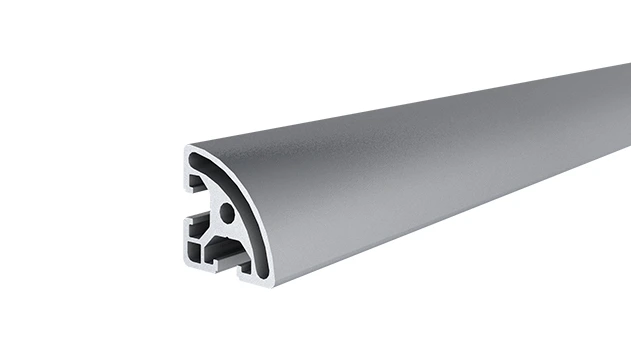
4040R EU Standard Aluminum Profile
4040R is a 4.00x4.00 CM fractional 40 series square extrusion T-slot profile with two side open T-slots, each side with 4.00cm face,the other side is round face. The profile has align-a-grooves to assist in aligning connecting profiles.
Walk into any busy warehouse these days, and you'll notice a quiet revolution unfolding. Pallets glide smoothly along tracks, workers move with purpose, and every square foot feels optimized for speed—no more bottlenecks, no more wasted time hunting for misplaced parts. But behind that seamless flow often lies a critical, yet underappreciated, component: the material handling infrastructure that holds it all together. For many warehouse managers, the struggle to balance durability, flexibility, and cost in flow racks and storage systems is all too real. Traditional steel racks are sturdy but heavy and hard to reconfigure; plastic options lack longevity; and makeshift solutions? They rarely stand up to the daily grind of a high-volume facility. That's where the 4040r EU Standard Aluminum Profile comes in—a game-changer that's quietly transforming how warehouses build, adapt, and thrive. In this article, we'll dive into why this unassuming aluminum extrusion has become a cornerstone of modern lean logistics, how it elevates flow rack performance, and why partnering with the right lean system supplier matters more than you might think.
What Even Is the 4040r EU Standard Aluminum Profile?
Let's start with the basics. If you're not deep into warehouse design, terms like "4040r EU standard aluminum profile" might sound like industry jargon. But break it down, and it's surprisingly straightforward. The "4040" refers to its dimensions: 40mm by 40mm, a sweet spot for balance between strength and versatility. The "r" stands for "rounded," a subtle but important detail—those smooth, curved edges reduce the risk of snags when loading materials, protect workers from sharp corners, and even extend the life of packaging sliding across the rack. And "EU standard"? That's your guarantee of quality. EU standards for aluminum extrusions are strict, ensuring consistent wall thickness, precise tolerances, and material purity—so you know every piece you receive will fit, function, and last as promised.
But what really sets this profile apart is its construction. Made from high-grade aluminum alloy, it's lightweight (about a third the weight of steel) but deceptively strong. Think of it as the "Swiss Army knife" of warehouse materials: rigid enough to support heavy loads (we're talking hundreds of pounds per linear foot), yet malleable enough to be cut, drilled, and assembled without specialized tools. Unlike steel, it won't rust or corrode, even in damp environments—a huge plus for warehouses near coastal areas or those handling moisture-sensitive goods. And because it's an extrusion (shaped by forcing molten aluminum through a die), each profile has uniform strength and a clean, professional finish that adds a polished look to even the busiest facilities.
Another detail that wins over warehouse teams? The T-slots. Running along all four sides of the 4040r profile, these grooves are like built-in attachment points for accessories—no welding or drilling required. Need to add a shelf? Slide in a bracket. Want to mount a roller track? Snap on a connector. This modularity is where the magic happens. In a world where consumer demands shift overnight and production lines retool in weeks, the ability to reconfigure a flow rack from holding small electronics one month to bulky automotive parts the next isn't just a luxury—it's survival. And the 4040r profile makes that adaptability possible without calling in a crew of contractors.
Why Flow Racks Love the 4040r Profile (And Your Warehouse Will Too)
Flow racks are the unsung heroes of warehouse logistics. Designed to keep materials moving—typically using gravity to feed items from the back to the front (FIFO, or "first in, first out")—they eliminate the need for workers to reach, bend, or search for stock. But traditional flow racks often come with trade-offs. Steel versions are tough but heavy, making them hard to move or adjust. Wood racks warp over time, and their fixed designs mean you're stuck with the same layout until you tear them down and rebuild. Enter the 4040r aluminum profile: it solves these pain points and adds a few bonuses you might not have considered.
First, let's talk about weight. A typical 4040r aluminum profile weighs around 1.8 kg per meter, compared to 5.3 kg per meter for a similar steel profile. That might not sound like much, but multiply it by the length of a flow rack (say, 3 meters) and the number of racks in a warehouse (dozens, maybe hundreds), and the difference adds up fast. Lighter racks are easier to install—no need for forklifts or heavy lifting equipment during setup. They also put less strain on warehouse floors, which is a big deal for older facilities or those with weight restrictions. And if you ever need to relocate a rack? Two people can handle it, no problem. That flexibility alone has made 4040r a favorite among warehouses that frequently rearrange their layouts to match seasonal demand or new product lines.
Then there's durability. Aluminum naturally resists corrosion, so even in humid warehouses or those near the ocean, the 4040r profile won't rust or degrade. That's a stark contrast to steel, which requires regular painting or coating to stay intact. Over time, that translates to lower maintenance costs—no more sanding rust spots or replacing corroded sections. Plus, aluminum's inherent strength means the 4040r profile can handle the daily wear and tear of heavy boxes, metal parts, and constant loading/unloading without bending or warping. We've seen facilities use the same 4040r-based flow racks for over a decade, reconfiguring them multiple times, and they still look and perform like new.
But perhaps the biggest win is cost-effectiveness—both upfront and long-term. While aluminum profiles might have a slightly higher initial price tag than steel or wood, their modularity and longevity erase that gap quickly. Need to add a shelf? Buy a few brackets and aluminum profile accessories, not a whole new rack. Moving to a smaller space? Disassemble the racks, take the parts with you, and rebuild. And because aluminum is 100% recyclable, if you ever do retire a system, you can recoup some of the cost by selling the scrap. It's a sustainable choice that also makes financial sense—a rare win-win in logistics.
| Feature | Traditional Steel Flow Racks | 4040r EU Standard Aluminum Profile Flow Racks |
|---|---|---|
| Weight (per meter) | 5.3 kg | 1.8 kg |
| Corrosion Resistance | Low (requires coating) | High (no coating needed) |
| Reconfigurability | Low (welding/drilling required) | High (modular with T-slot accessories) |
| Installation Time | Long (needs heavy tools/equipment) | Short (hand tools only, lightweight parts) |
| Long-Term Cost | Higher (maintenance, replacement) | Lower (durable, recyclable, adaptable) |

Roller Track and Accessories: The Perfect Partners for 4040r Flow Racks
A flow rack is only as good as the materials that move along it. Even the sturdiest rack will fail if boxes get stuck, parts jam, or the track itself wears out. That's why pairing 4040r aluminum profiles with high-quality roller track and aluminum profile accessories is non-negotiable. The right track system turns a static rack into a dynamic, self-feeding machine—and when combined with the 4040r's T-slots, the possibilities are endless.
Let's start with roller track basics. Most flow racks use either steel or aluminum rollers, but for 4040r-based systems, aluminum roller track is the natural choice. It's lightweight, corrosion-resistant, and designed to integrate seamlessly with the profile's T-slots. Take, for example, the 38 aluminum roller track—a common option for medium-weight loads. Its wheels are precision-engineered to reduce friction, so boxes glide smoothly without sticking, even when loaded with up to 50 kg per linear meter. And because it's aluminum, it matches the 4040r profile's durability, ensuring the track and rack age at the same rate (no more replacing tracks while the rack is still good, or vice versa).
But the real magic is in the accessories. Aluminum profile accessories like plastic roller track guide rails (available in yellow or grey, depending on your warehouse's color-coding system) keep items centered on the track, preventing spills or misalignment. End supports with stops add a safety buffer, ensuring boxes don't slide off the end of the rack. And for more complex layouts, roller track placon mounts—brackets that attach the track to the 4040r profile—come in "flat" or "drop high" designs, letting you adjust the track height to match other systems (like conveyor belts or workbenches) for a seamless flow. These small parts might seem trivial, but they're the difference between a rack that works "okay" and one that works effortlessly .
What about customization? Let's say your warehouse handles both small, fragile electronics and larger, heavier automotive parts. With 4040r profiles and compatible accessories, you can build a flow rack that does both. For the electronics, swap in 0.5-inch swivel roller balls for gentle, precise movement; for automotive parts, switch to 1-inch stainless steel swivel roller balls that can handle the weight. And if you need to add a curve to the track to navigate around a pillar? No problem—aluminum guide rails and flexible connectors make it possible. That level of adaptability is why lean system suppliers often recommend 4040r profiles as the backbone of any flow rack system: they grow with your needs, rather than limiting them.
Case Study: How a Mid-Sized Electronics Warehouse Boosted Throughput by 30% with 4040r Flow Racks
To understand the real impact of 4040r aluminum profiles, let's look at a real-world example. Last year, we worked with a mid-sized electronics manufacturer in Germany that was struggling to keep up with demand. Their warehouse, filled with aging steel flow racks, was plagued by two issues: first, the racks were so heavy that reconfiguring them to accommodate new product sizes took days (and a team of contractors), and second, the steel tracks were prone to rust, which left small, damaging particles on circuit boards—a costly problem in an industry where even a speck of dust can ruin a component.
Their solution? A complete overhaul using 4040r EU standard aluminum profiles, paired with aluminum roller track and ESD-safe accessories (critical for electronics, where static electricity can fry sensitive parts). The transformation was dramatic. First, installation took just two days instead of the projected week—thanks to the lightweight profiles and tool-free T-slot connections. Workers could even help assemble the racks, freeing up the contractor team for other tasks. Second, the aluminum tracks eliminated rust entirely, reducing product defects by 15% in the first month alone.
But the biggest win was throughput. By reconfiguring the flow racks to better align with their assembly lines (something they could do in-house, without contractors), the warehouse cut the time it took to move parts from storage to the production floor by 25%. Workers no longer had to walk extra distances to retrieve items, and the smoother roller track reduced the time spent pushing or pulling boxes. All told, the facility saw a 30% increase in daily throughput—all from upgrading their flow rack infrastructure. "We used to see the racks as just 'storage,'" said the warehouse manager, "but now we realize they're part of our production line. The 4040r profiles turned them from a bottleneck into a competitive advantage."
Why Choosing the Right Lean System Supplier Matters
So, you're sold on the 4040r EU standard aluminum profile. You've mapped out your flow rack layout, picked out the roller track and accessories, and can't wait to boost your warehouse's efficiency. But before you hit "buy" on the first online listing, there's one more critical step: choosing a reliable lean system supplier. This isn't just about getting the lowest price—it's about partnering with a company that understands your warehouse's unique needs and can support you long after the initial installation.
First, look for a supplier that specializes in aluminum profiles and lean logistics, not just general industrial supplies. A good lean system supplier will take the time to learn about your workflow: What products do you handle? What are your peak hours? What pain points keep you up at night? They'll then recommend not just the 4040r profile, but the right combination of roller track, accessories, and even complementary systems (like workbenches or turnover trolleys) to create a cohesive solution. For example, if your warehouse uses ESD-sensitive materials, they'll point you toward ESD-safe aluminum roller track or conductive casters—details a generic supplier might miss.
Quality is another non-negotiable. EU standard 4040r profiles are only as good as their manufacturing, so ask about certifications. Reputable suppliers will provide documentation proving their profiles meet EU standards for material strength, tolerances, and safety. They'll also stand behind their products with warranties (look for at least 5 years) and responsive customer service. Imagine installing a flow rack only to find the roller track doesn't fit the profile—you need a supplier that will send replacements quickly, not leave you waiting for weeks.
Finally, think about long-term support. A great lean system supplier doesn't just sell you parts; they help you get the most out of them. That might mean offering design support for custom layouts, training your team on how to reconfigure racks, or even providing spare parts kits for quick repairs. When the electronics warehouse we mentioned earlier needed to add a new section to their flow racks six months after installation, their supplier sent a technician to walk the team through the process—free of charge. That's the kind of partnership that turns a one-time purchase into a long-term asset.
Conclusion: The 4040r Profile—Small Part, Big Impact
In the world of warehouse logistics, it's easy to get caught up in flashy technologies: automated robots, AI-powered inventory systems, high-speed conveyors. But sometimes, the most transformative solutions are the ones you can hold in your hand—a simple, well-designed aluminum profile that makes everything else work better. The 4040r EU Standard Aluminum Profile is exactly that: a quiet workhorse that elevates flow racks from static storage to dynamic, adaptable tools that drive efficiency. Its lightweight strength, modular design, and compatibility with roller track and accessories make it ideal for warehouses of all sizes, whether you're a small local distributor or a global manufacturing giant.
But remember, the profile itself is just the starting point. To truly unlock its potential, partner with a lean system supplier that understands your goals, prioritizes quality, and supports you every step of the way. Together, you'll build a warehouse that doesn't just keep up with the chaos of modern logistics— it thrives in it. So the next time you walk through your warehouse, take a closer look at your flow racks. Are they holding you back, or lifting you up? With 4040r aluminum profiles, the answer can be the latter.