- Company Articles
- Industry articles
- Industry standards
- Warehouse Logistics: 4080B EU Standard Aluminum Profile for Conveyor Systems

Warehouse Logistics: 4080B EU Standard Aluminum Profile for Conveyor Systems
Related Product
4080B EU Standard Aluminum Profile
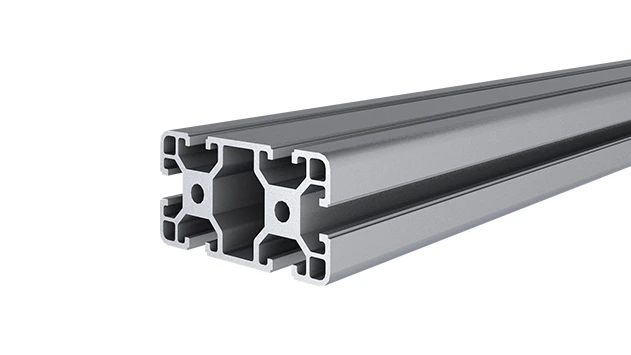
4080B is a 4.00x8.00 CM fractional 40 series square extrusion T-slot profile with two side open T-slots, each side with 4.00cm face, two side with 8.00cm face. The profile has align-a-grooves to assist in aligning connecting profiles.
Walk into any modern warehouse, and you'll feel the hum of activity: pallets gliding across floors, workers coordinating shipments, and conveyor belts steadily moving goods from point A to point B. In this fast-paced environment, efficiency isn't just a goal—it's the lifeblood of operations. Every component, from the smallest wheel to the largest frame, plays a role in keeping the workflow smooth. Among these components, conveyor systems stand out as the backbone of material handling, and at the heart of many high-performing conveyor systems lies a quiet hero: the 4080B EU standard aluminum profile.
But what makes this specific aluminum profile so essential? Why do warehouse managers and logistics engineers choose it over other materials or profiles? In this article, we'll dive into the world of 4080B aluminum profiles, exploring their design, benefits, and real-world impact on conveyor systems and warehouse logistics. We'll also touch on how they integrate with key components like roller tracks and flow racks, and why their modularity makes them a game-changer for businesses aiming to stay agile in a competitive market.
What Is the 4080B EU Standard Aluminum Profile?
First things first: let's break down the name. The "4080B" refers to the profile's dimensions—40 millimeters in width and 80 millimeters in height—while "EU standard" indicates it adheres to strict European manufacturing and quality guidelines. This profile is created through an extrusion process, where aluminum alloy is forced through a die to form its distinct shape, resulting in a consistent, high-strength structure.
At first glance, you might notice its sleek, rectangular cross-section with a series of T-shaped slots running along its length. These T-slots are more than just a design quirk; they're the secret to the profile's versatility. Think of them as built-in connection points: they allow bolts, brackets, and accessories to slide into place and lock securely, eliminating the need for welding or drilling. This simple feature transforms the 4080B from a static piece of metal into a building block for endless configurations.
But the 4080B isn't just about convenience. It's crafted from high-grade aluminum alloy (typically 6063-T5), known for its excellent balance of strength, lightweight properties, and corrosion resistance. This alloy undergoes heat treatment to enhance its durability, making it capable of supporting heavy loads without bending or warping—critical for conveyor systems that operate around the clock.
Key Features of 4080B Aluminum Profile: Why It Stands Out
To understand why the 4080B is a favorite in warehouse logistics, let's unpack its core features:
1. Strength Meets Lightweight Design : Steel has long been a go-to for industrial frames, but it comes with a downside: weight. A 4080B aluminum profile, by contrast, weighs roughly 2.5 kg per meter—significantly less than a steel profile of similar dimensions. This lightness makes installation easier (no need for heavy machinery to move sections) and reduces stress on conveyor motors, extending their lifespan. Yet, don't let the weight fool you: the 4080B can handle impressive loads, with a typical maximum load capacity of 300-500 kg per linear meter (depending on support spacing). That's more than enough for most warehouse conveyor tasks, from moving cartons to small pallets.
2. Corrosion Resistance for Longevity : Warehouses are tough environments. Humidity, spills, and even cleaning chemicals can take a toll on metal components. Aluminum's natural oxide layer acts as a barrier against corrosion, meaning the 4080B won't rust or degrade over time—unlike steel, which requires regular painting or coating. This resistance translates to lower maintenance costs and a longer service life, often 10-15 years with proper care.
3. Modularity and Customization : The T-slot design isn't just for easy assembly; it's for adaptability. Need to add a side rail to your conveyor? Slide a bracket into the T-slot. Want to adjust the height of a flow rack? Swap out a connector. This modularity means systems built with 4080B can be reconfigured in hours, not days. For warehouses that frequently update their layouts (to accommodate new products, seasonal demand, or automation tools), this flexibility is invaluable.
4. Precision Engineering : EU standards ensure tight tolerances, so every 4080B profile fits seamlessly with compatible accessories. Whether you're connecting two profiles at a 90° angle or attaching a roller track, you can trust that parts will align perfectly, reducing assembly time and minimizing errors.

4080B in Conveyor Systems: A Match Made in Logistics Heaven
Conveyor systems are the arteries of a warehouse, transporting goods efficiently between storage, packing, and shipping areas. Their frames need to be sturdy enough to support moving loads, lightweight enough to keep energy costs low, and flexible enough to adapt to changing needs. Enter the 4080B aluminum profile.
In conveyor design, the 4080B often serves as the main structural frame, providing support for roller tracks, belts, and motors. Let's take roller track conveyors as an example. Roller tracks—those sets of small wheels that allow items to glide forward with minimal friction—need a stable base to operate smoothly. The 4080B's rigid structure ensures the roller track stays level, preventing jams or uneven movement of goods. And because of the T-slots, attaching roller track brackets or guides is a breeze. You can slide a bracket into the slot, tighten a bolt, and the roller track is secured—no welding, no drilling, no hassle.
But it's not just about supporting the roller track itself. Conveyors often need to navigate turns, inclines, or drops. The 4080B's compatibility with aluminum profile accessories—like 90° connectors, hinges, or adjustable feet—makes it easy to build these complex configurations. For a 180° turn, you might use a swivel joint; for an incline, adjustable legs to set the perfect angle. This adaptability ensures the conveyor system fits the warehouse's unique layout, rather than forcing the warehouse to adapt to a one-size-fits-all conveyor.
Another advantage? Vibration resistance. Conveyors generate constant motion, which can loosen bolts or weaken structures over time. The 4080B's tight T-slot connections and rigid alloy minimize this risk, keeping the system stable even during high-speed operation. This stability translates to fewer breakdowns, less downtime, and safer working conditions for employees.
Beyond Conveyors: 4080B in Flow Racks and Material Handling
While conveyor systems are a primary application, the 4080B's utility extends far beyond them. One area where it shines is in flow racks—storage systems that use gravity to move goods from the back to the front, ideal for "first-in, first-out" (FIFO) inventory management. Flow racks need to be strong enough to hold stacked boxes or totes, yet angled precisely to ensure smooth, controlled movement of items.
Here, the 4080B provides the perfect balance of strength and adjustability. Its 80mm height gives it the vertical stability to support multiple levels of flow rack shelves, while its lightweight design makes it easy to adjust the angle of the shelves (typically 5-10° for optimal gravity flow). And again, the T-slots simplify attaching roller tracks or skate wheels to the shelves, ensuring items glide forward without getting stuck.
Imagine a warehouse that stocks electronics components. Their flow racks, built with 4080B profiles, can be customized to hold small totes on the top level, medium boxes in the middle, and larger cartons on the bottom—all by adjusting the shelf height and adding dividers via T-slot brackets. If the product mix changes next quarter, the same racks can be reconfigured in a morning, without calling in a construction crew. That's the power of modularity.
Aluminum Profile Accessories: The Unsung Partners of 4080B
A profile is only as good as the accessories that complement it, and the 4080B benefits from a wide range of aluminum profile accessories designed to enhance its functionality. Let's take a closer look at some key players:
Connectors : These are the glue that holds the system together. From simple straight connectors for extending a conveyor to 135° joints for tight corners, connectors ensure profiles join securely. Many are designed to lock into T-slots with a simple twist of a hex key, making assembly quick and tool-friendly.
End Caps : These small, often-overlooked pieces snap onto the ends of the profile, covering sharp edges and preventing dust or debris from entering the T-slots. They're a small detail, but they safety and keep the system looking professional.
Leveling Feet : Warehouses rarely have perfectly flat floors. Leveling feet, which screw into the bottom of 4080B profiles, let you adjust the height of conveyor frames or flow racks to compensate for uneven surfaces, ensuring stability and proper alignment.
Panel Holders : Need to add a work surface or a protective barrier to your conveyor? Panel holders slide into the T-slots, allowing you to attach plywood, acrylic, or aluminum panels quickly. This is especially useful for workstations built into conveyor systems, where employees pack or label items as they move by.
These accessories aren't just add-ons; they're what make the 4080B a modular system. Instead of buying a new conveyor when your needs change, you can buy a few new connectors or brackets and reconfigure the existing one. This not only saves money but also reduces waste—a win for both your budget and sustainability goals.
4080B vs. Other Profiles: How Does It Compare?
You might be wondering: why 4080B and not another aluminum profile, like the 4040A or 3030 EU standard? The answer depends on your specific needs, but the 4080B often stands out for medium to heavy-duty applications. Let's compare it to two common alternatives in a quick table:
| Feature | 4080B EU Standard | 4040A EU Standard | 3030 EU Standard |
|---|---|---|---|
| Dimensions (WxH) | 40mm x 80mm | 40mm x 40mm | 30mm x 30mm |
| Typical Material Thickness | 2.0-3.0mm | 1.5-2.0mm | 1.2-1.5mm |
| Max Load Capacity (per linear meter) | 300-500 kg | 150-300 kg | 50-150 kg |
| Common Applications | Conveyor frames, flow racks, heavy-duty workbenches | Light conveyor sections, shelving, small workstations | Light shelving, machine guards, small carts |
| Weight per Meter | 2.5-3.0 kg | 1.8-2.2 kg | 1.0-1.3 kg |
As the table shows, the 4080B's larger size and thicker material give it a higher load capacity, making it ideal for conveyor systems that handle medium to heavy items (think 20-50 kg per unit). The 4040A is lighter and better for lighter loads, while the 3030 is best for small-scale applications. For warehouses running a mix of products, the 4080B often strikes the perfect balance between strength and weight, avoiding the overkill (and cost) of a larger steel profile while offering more durability than smaller aluminum options.
Real-World Impact: A Warehouse's Journey with 4080B
To put this all in perspective, let's consider a hypothetical (but realistic) scenario: a mid-sized e-commerce warehouse that was struggling with its outdated conveyor system. Their old system used steel frames, which were heavy, hard to adjust, and prone to rust in the humid warehouse environment. Breakdowns were frequent, and when they needed to expand the system to handle holiday demand, the process took weeks and required hiring a welding crew.
After consulting with a logistics engineer, they decided to switch to a 4080B aluminum profile conveyor system. The results were striking:
Faster Installation : The new system was assembled in 3 days instead of 2 weeks, thanks to the T-slot connections and modular accessories. No welding meant less noise, less mess, and no need to shut down other operations during installation.
Lower Maintenance Costs : The aluminum profiles didn't rust, and the T-slot connections stayed tight even with constant use. Maintenance visits dropped by 60%, and when parts did need replacing (like a worn roller track bracket), they could be swapped out in 10 minutes.
Flexibility for Growth : When holiday demand spiked, they added two new conveyor sections in a day by purchasing extra 4080B profiles and connectors. No need for custom steel fabrication—just bolt on the new sections and adjust the roller tracks.
Safer Work Environment : The lighter system put less strain on the warehouse floor, and the end caps on the 4080B profiles eliminated sharp edges, reducing the risk of employee injuries.
Over a year, the warehouse saw a 25% increase in throughput and a 30% reduction in downtime—all thanks in large part to the switch to 4080B aluminum profiles.
Installation and Maintenance Tips for 4080B Systems
If you're considering integrating 4080B profiles into your warehouse, here are a few tips to ensure success:
Plan for Future Growth : When designing your conveyor or flow rack, leave extra T-slots open for future additions. You never know when you might need to add a shelf, a new roller track section, or a workbench.
Use the Right Tools : A hex key set and a rubber mallet are usually all you need for assembly. Avoid over-tightening connectors—snug is enough to keep them secure without damaging the T-slots.
Clean Regularly : Wipe down profiles and T-slots with a dry cloth to remove dust or debris, which can interfere with accessory installation. For stubborn grime, use a mild detergent and water—avoid harsh chemicals that might damage the aluminum's finish.
Inspect Connections Monthly : Check that connectors are tight and roller tracks are aligned. Catching a loose bracket early can prevent a breakdown later.
The Future of Warehouse Logistics: Why 4080B Fits the Bill
Warehouses are evolving. Automation, robotics, and IoT (Internet of Things) are becoming more common, and systems need to keep up. The 4080B's modular design makes it a perfect fit for this future. Want to add sensors to track conveyor speed? Mount them using T-slot brackets. Need to integrate a robotic arm to load items onto the conveyor? The 4080B frame can support the arm's weight and be repositioned as needed.
Sustainability is also a growing concern. Aluminum is 100% recyclable, and the 4080B's long lifespan means less waste from frequent replacements. Plus, its lightweight design reduces energy consumption—conveyor motors don't have to work as hard to move a lighter frame, cutting down on electricity use.
Conclusion: The 4080B—A Foundation for Efficient, Adaptable Warehouses
In the world of warehouse logistics, where efficiency and flexibility are everything, the 4080B EU standard aluminum profile stands out as a reliable, versatile solution. Its strength, lightweight design, and modularity make it ideal for conveyor systems, flow racks, and beyond. Whether you're building a new warehouse from scratch or upgrading an existing setup, the 4080B offers a level of adaptability that steel or smaller aluminum profiles can't match.
From supporting roller tracks to enabling quick reconfigurations, from reducing maintenance costs to enhancing safety, the 4080B isn't just a piece of metal—it's a tool for transformation. It's the kind of component that doesn't just meet today's needs but grows with them, ensuring your warehouse stays efficient, productive, and ready for whatever the future brings.
So, the next time you walk through a smoothly operating warehouse, take a closer look at the conveyor frames or flow racks. Chances are, you'll spot the 4080B aluminum profile—quietly working behind the scenes, making logistics look easy.