- Company Articles
- Industry articles
- Industry standards
- Warehousing Logistics: 2020 EU Standard Aluminum Profile for Material Flow Optimization

Warehousing Logistics: 2020 EU Standard Aluminum Profile for Material Flow Optimization
Related Product
2020 EU Standard Aluminum Profile
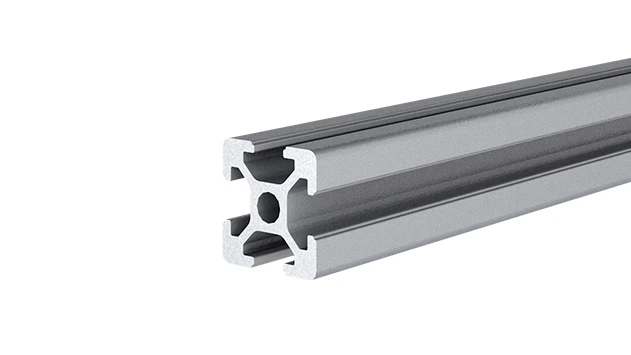
2020 is a 2.00 x 2.00CM fractional 20 series square extrusion T-slot profile with four open T-slots, one on each 2.00 face. The profile has align-a-grooves to assist in aligning connecting profiles.
In the fast-paced world of warehousing and logistics, where every second counts and efficiency is the bottom line, the tools and systems we rely on can make or break operations. Picture this: a small manufacturing warehouse in Berlin, where workers spend 20 minutes each morning rearranging heavy steel racks to accommodate a new batch of parts. Or a distribution center in Madrid, where a clunky wooden workbench wobbles under the weight of tools, slowing down assembly line workers. These aren't just hypothetical scenarios—they're daily realities for many facilities stuck with rigid, outdated material handling systems. But what if there was a solution that could turn these frustrations into smooth, seamless workflows? Enter the 2020 EU Standard Aluminum Profile: a game-changer in material flow optimization that's redefining how warehouses, factories, and distribution centers operate.
The Pain Points of Traditional Material Handling Systems
Before diving into the benefits of the 2020 EU Standard Aluminum Profile, let's talk about the problems it solves. For decades, warehouses and production facilities have leaned on materials like steel, wood, or generic plastic for racks, workbenches, and conveyors. While these materials have their merits, they often come with significant drawbacks:
Rigidity: Steel racks, for example, are durable but fixed in place. If your workflow changes—say, you need to expand a production line or reconfigure a storage area—modifying steel structures requires welding, heavy tools, and downtime. Wood, on the other hand, warps over time, especially in humid environments, leading to unstable work surfaces and safety risks.
Weight: Steel is heavy. Moving a steel workbench or adjusting a steel flow rack isn't a one-person job; it requires teams, forklifts, and careful planning. This not only wastes time but also increases the risk of workplace injuries from lifting or shifting heavy objects.
Cost Over Time: While wood might seem cheap upfront, it needs frequent replacement due to wear, rot, or damage. Steel, though long-lasting, corrodes in damp conditions, leading to costly repairs or replacements. And let's not forget the hidden costs: lost productivity from inefficient layouts, worker fatigue from awkwardly positioned tools, and the opportunity cost of not being able to adapt quickly to market changes.
These pain points hit small and medium-sized enterprises (SMEs) the hardest. With limited budgets and smaller teams, they can't afford the luxury of overhauls every few years. They need systems that are flexible, durable, and cost-effective—exactly what the 2020 EU Standard Aluminum Profile delivers.
What Makes 2020 EU Standard Aluminum Profile Stand Out?
At first glance, aluminum might seem like just another metal, but the 2020 EU Standard Aluminum Profile is far from ordinary. Designed with the specific needs of modern logistics in mind, it's a lightweight, modular, and highly customizable solution that ticks all the boxes for material flow optimization. Let's break down its key features:
Lightweight Yet Strong: Aluminum is about 30% the weight of steel, making it easy to handle and reconfigure without heavy machinery. But don't let its lightness fool you—this profile is engineered to withstand heavy loads, thanks to its high-strength aluminum alloy composition. A 2020 EU Standard Aluminum Profile workbench, for example, can support up to 300 kg of weight while remaining easy for two workers to move or adjust.
Modularity at Its Core: Unlike fixed steel or wood structures, the 2020 EU Standard Aluminum Profile is built on a modular system. It uses T-slot grooves (a signature feature of EU standard profiles) that allow for quick, tool-free assembly. Need to add a shelf to a flow rack? Just slide in an aluminum profile accessory like a bracket or connector. Want to adjust the height of a workbench? Loosen a few bolts, reposition the legs, and tighten—done. This modularity means your system can grow and change with your business, without the need for expensive overhauls.
Corrosion Resistance: Aluminum naturally forms a protective oxide layer, making it resistant to rust and corrosion. This is a game-changer for facilities in humid climates or those handling liquids (like food processing or pharmaceutical warehouses). Unlike steel, which needs regular painting or coating to prevent rust, aluminum profiles stay looking and performing like new for years with minimal maintenance.
Compliance and Safety: The "2020 EU Standard" label isn't just a marketing term—it means the profile meets strict European union regulations for safety, durability, and environmental impact. From load-bearing capacity to fire resistance, every aspect is tested to ensure it meets EN (European Norm) standards. For warehouse managers, this compliance translates to peace of mind: you're not just investing in a tool, but in a system that prioritizes worker safety and regulatory adherence.

Aluminum Profile Accessories: The Building Blocks of Flexibility
A profile is only as good as its accessories, and the 2020 EU Standard Aluminum Profile doesn't disappoint. The range of aluminum profile accessories available turns this single component into a versatile toolkit for building everything from workbenches to conveyor systems. Let's take a closer look at some must-have accessories and how they enhance material flow:
Connectors and Brackets: These are the "glue" that holds the system together. From 90° angle brackets for sturdy corners to swivel connectors for adjustable shelves, these accessories make it possible to create custom configurations in minutes. For example, a 90° aluminum profile connector can turn two straight profiles into a stable L-shaped workbench frame, while a 135° connector is perfect for angled flow racks that guide materials around corners.
Panels and Shelves: Made from lightweight aluminum or composite materials, these accessories transform bare profiles into functional surfaces. A honeycomb aluminum panel, for instance, adds a flat, durable top to a workbench, while perforated panels allow for easy tool hanging. The best part? They're interchangeable—swap a solid panel for a wire mesh shelf if you need better ventilation, or add a drawer unit for tool storage.
Casters and Leveling Feet: Mobility is key in dynamic environments, and casters (often paired with leveling feet) make it possible. Lockable casters let you move a workbench or turnover trolley with ease, then lock it in place for stability. Leveling feet, on the other hand, ensure that even on uneven warehouse floors, your racks and workbenches stay steady—no more wobbling surfaces or jamming conveyor tracks.
Guides and Rails: For conveyor systems and flow racks, guides and rails keep materials moving smoothly. Plastic roller track guide rails (available in yellow or grey, depending on your facility's color-coding needs) reduce friction, allowing boxes or parts to glide from one workstation to the next with minimal effort. Aluminum guide rails, meanwhile, add durability for heavier loads, ensuring that even metal components move without getting stuck.
The beauty of these accessories is that they're designed to work seamlessly with the 2020 EU Standard Aluminum Profile. No more hunting for compatible parts or dealing with mismatched sizes—everything clicks together, literally and figuratively.
Comparing Materials: Why 2020 EU Standard Aluminum Profile Beats Traditional Options
Still on the fence about switching from steel, wood, or generic aluminum? Let's put it all together with a side-by-side comparison:
| Feature | Traditional Steel | Wood | 2020 EU Standard Aluminum Profile |
|---|---|---|---|
| Weight (per meter) | 8-10 kg | 4-6 kg (varies by wood type) | 2-3 kg |
| Load Capacity | High (but heavy to move) | Medium (prone to warping) | High (300+ kg per shelf) |
| Customization Flexibility | Low (requires welding/tools) | Low (permanent cuts/assemblies) | High (tool-free, modular adjustments) |
| Corrosion Resistance | Low (needs coating) | Low (prone to rot/mold) | High (natural oxide layer) |
| Maintenance Cost | High (painting, rust repairs) | High (replacement due to wear) | Low (occasional cleaning) |
| Lead Time for Reconfiguration | Days (welding, labor) | Days (cutting, reassembly) | Hours (modular adjustments) |
The data speaks for itself: the 2020 EU Standard Aluminum Profile outperforms traditional materials in flexibility, durability, and cost-effectiveness over time. But numbers only tell part of the story—let's look at real-world applications where this profile shines.
Real-World Applications: From Workbenches to Flow Racks
The 2020 EU Standard Aluminum Profile isn't just a theoretical improvement—it's making a tangible difference in facilities across Europe. Let's explore three key applications where it's optimizing material flow:
1. Workbenches: Ergonomic, Adaptable, and Built to Last
Workbenches are the heart of any production or assembly area. A poorly designed workbench can lead to worker fatigue, errors, and even injuries. The 2020 EU Standard Aluminum Profile is revolutionizing workbench design by prioritizing ergonomics and adaptability.
Take the example of a electronics manufacturing plant in Prague. Before switching to aluminum profile workbenches, their workers used fixed-height wooden benches that forced taller employees to hunch and shorter ones to stretch. The result? Increased back pain and a 15% higher error rate on delicate component assembly. After installing 2020 EU Standard Aluminum Profile workbenches with adjustable legs (an aluminum profile accessory), they could tailor each bench to the worker's height. Within three months, error rates dropped by 12%, and employee feedback surveys showed a 40% improvement in comfort.
But it's not just about height adjustment. These workbenches can be customized with tool holders, LED light strips (powered via T-slot wiring channels), and even ESD (Electrostatic Discharge) surfaces for sensitive electronics. For a small repair shop in Lisbon, adding ESD mats and grounding clips to their aluminum workbench eliminated static-related damage to circuit boards, saving them €5,000 in replacement parts in the first year alone.
2. Flow Racks: Streamlining Material Movement
In warehouses, the goal is to get materials from point A to point B with minimal human intervention. Flow racks—tilted racks with roller tracks—are designed to do just that, using gravity to move items forward as the front ones are removed. But traditional steel flow racks are heavy, hard to adjust, and prone to jamming if not perfectly aligned. The 2020 EU Standard Aluminum Profile changes the game here, too.
Consider a food distribution center in Paris that handles perishable goods. Their old steel flow racks were fixed at a single angle, which meant some items (like heavy cartons of juice) moved too fast, risking spills, while lighter items (like snack packets) moved too slowly, requiring workers to push them forward. By switching to aluminum flow racks built with 2020 EU Standard Aluminum Profile and adjustable roller track guides (another aluminum profile accessory), they could fine-tune the angle for each product type. The result? A 25% reduction in product damage and a 30% faster picking rate, as workers no longer wasted time unjamming or pushing items.
The modularity of the aluminum profile also allows for easy expansion. When the distribution center added a new product line, they simply added extra sections to their existing flow racks using aluminum connectors—no need to buy entirely new units. This saved them €10,000 in equipment costs and kept operations running without downtime.
3. Conveyors: Smooth, Silent, and Customizable
Conveyors are the backbone of automated material flow, but traditional belt or roller conveyors can be noisy, rigid, and expensive to modify. The 2020 EU Standard Aluminum Profile offers a lightweight, customizable alternative that integrates seamlessly with existing systems.
A automotive parts manufacturer in Munich recently replaced their old steel roller conveyors with aluminum profile conveyors. The difference was immediate: the aluminum system was 40% quieter, reducing noise pollution on the factory floor from 85 dB to 70 dB (below EU noise regulations). The T-slot design also allowed them to add sensors and guides (using aluminum profile accessories) to sort parts by size mid-conveyor, eliminating the need for manual sorting stations. This not only saved 10 hours of labor per week but also reduced sorting errors by 90%.
What's more, the aluminum conveyor's lightweight design made it possible to install it on mezzanines and elevated platforms—something their heavy steel conveyors couldn't do without reinforcing the floor. This freed up valuable ground space for additional storage, increasing the facility's capacity by 15%.
Case Study: How a Small Warehouse in Barcelona Boosted Efficiency by 40% with 2020 EU Standard Aluminum Profile
The Challenge: A family-owned cosmetics warehouse in Barcelona was struggling with inefficiency. Their 500 sq.m facility used a mix of wooden shelves, steel workbenches, and manual carts. Workers spent 3 hours daily just moving materials between stations, and order fulfillment times were inconsistent (ranging from 2 to 5 hours per order).
The Solution: The warehouse invested in a complete 2020 EU Standard Aluminum Profile system, including flow racks, adjustable workbenches, and a small aluminum roller conveyor. They also added aluminum profile accessories like casters for mobility and dividers for better organization.
The Results: Within 60 days, material movement time dropped to 1 hour daily, and order fulfillment times stabilized at 2 hours per order. The modular flow racks reduced picking errors by 35%, and the adjustable workbenches cut down on worker fatigue, leading to a 20% decrease in sick days. "We used to dread peak seasons," said Maria, the warehouse manager. "Now, with the aluminum system, we can scale up quickly—last month, we added two more flow rack sections in an afternoon, and it was business as usual."
The Future of Material Flow: Sustainability and Smart Integration
The 2020 EU Standard Aluminum Profile isn't just solving today's problems—it's preparing facilities for tomorrow's challenges. One of its biggest advantages is its sustainability. Aluminum is 100% recyclable, and the production of EU standard profiles uses 95% less energy than producing new aluminum from raw materials. For companies aiming to meet EU carbon neutrality goals, this is a significant step forward.
Looking ahead, we're also seeing integration with smart technologies. The T-slot grooves in the 2020 EU Standard Aluminum Profile are perfect for mounting IoT sensors, barcode scanners, or even small robots. Imagine a flow rack that automatically alerts managers when stock is low, or a workbench with built-in sensors that track tool usage and order replacements before they run out. This "smart factory" integration is already happening in larger facilities, and the modularity of the aluminum profile makes it accessible to SMEs, too.
Is the 2020 EU Standard Aluminum Profile Right for Your Facility?
If you're still unsure whether to make the switch, ask yourself these questions:
- Do we frequently need to reconfigure workspaces or storage areas?
- Are our current systems causing worker fatigue or inefficiency?
- Do we spend too much time or money on maintenance and repairs?
- Are we looking to reduce our environmental footprint?
If you answered "yes" to any of these, the 2020 EU Standard Aluminum Profile is worth exploring. It's not just a material—it's an investment in your facility's future flexibility, efficiency, and sustainability.
Conclusion: From Frustration to Flow
At the end of the day, warehousing and logistics are about people: the workers who move materials, the managers who optimize processes, and the customers who rely on timely deliveries. The 2020 EU Standard Aluminum Profile puts people first by eliminating the frustrations of rigid systems and empowering teams to work smarter, not harder. Whether you're running a small workshop or a large distribution center, this profile and its aluminum profile accessories offer a path to smoother material flow, lower costs, and a more adaptable business.
So, the next time you walk through your facility and notice a bottleneck—a workbench that's too low, a flow rack that's hard to reach, a conveyor that jams—remember: there's a better way. The 2020 EU Standard Aluminum Profile isn't just changing material handling; it's changing how we think about what's possible in our workspaces. And that's a change worth making.