- Company Articles
- Industry articles
- Industry standards
- Waste Reduction: How 2040 EU Standard Aluminum Profile Minimizes Material Scrap

Waste Reduction: How 2040 EU Standard Aluminum Profile Minimizes Material Scrap
Related Product
2040 EU Standard Aluminum Profile
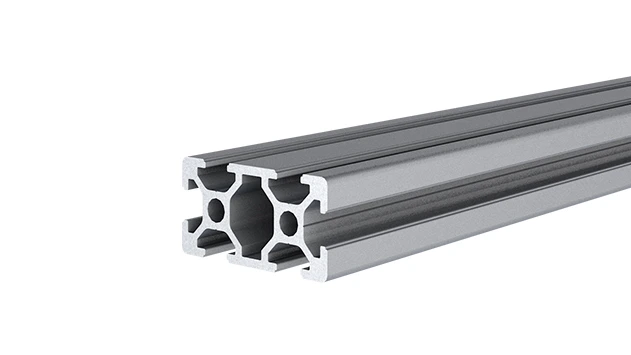
2040 is a 2.00 x 4.00CM fractional 20 series square extrusion T-slot profile with four open T-slots, two side with 2.00cm face, the other side with 4.00cm face. The profile has align-a-grooves to assist in aligning connecting profiles.
Let's set the scene: It's a Tuesday afternoon at a mid-sized electronics assembly plant. Juan, the floor manager, is hunched over a clipboard, frowning at the weekly waste report. "82 kilograms of scrap metal this week alone," he mutters, tapping his pen against the paper. Nearby, a pile of cut steel rods and misfit wooden planks grows taller—leftovers from building new workbenches and material racks. "This isn't just metal and wood," he sighs to his assistant. "That's money in the trash. And we can't keep up with the recycler's schedule." Sound familiar? For manufacturers everywhere, material scrap is the silent budget drainer, eating into profits and cluttering shop floors. But what if there was a way to build the tools and structures your team needs without generating mountains of waste? Enter the 2040 EU standard aluminum profile—a quiet game-changer that's redefining how factories approach efficiency, one precise extrusion at a time.
The Hidden Cost of "Just a Little Scrap"
Before we dive into how the 2040 EU standard aluminum profile solves the scrap problem, let's talk about why scrap matters. It's easy to dismiss a few offcuts as "part of the job," but those small pieces add up. Imagine a factory that produces 50 custom workbenches a month. With traditional materials like steel or plywood, each bench might generate 2-3kg of scrap—whether from a miscalculated cut, a warped plank, or a welded joint that didn't quite fit. Over a year, that's 1,200-1,800kg of waste. Multiply that by racks, trolleys, and conveyor systems, and suddenly "just a little scrap" becomes a major expense.
But the cost isn't just financial. Scrap takes time to sort, haul, and dispose of. Workers spend hours cleaning up instead of building. Recyclable materials like steel often lose value when contaminated with other waste, and non-recyclables end up in landfills, hurting sustainability goals. worst of all, traditional materials like wood or untreated steel are prone to irreparable mistakes—cut a steel beam 1cm too short, and it's useless. No second chances, no repurposing—just another piece for the scrap heap.
What Makes the 2040 EU Standard Aluminum Profile Different?
At first glance, the 2040 EU standard aluminum profile might look like any other metal bar. It's sleek, silver, and shaped like a rectangle with T-slots running along its length. But beneath that simple exterior lies decades of engineering focused on one goal: precision. Let's break it down.
First, it's an aluminum extrusion profile. That means it's made by pushing molten aluminum through a custom die, which shapes it into a consistent, uniform cross-section. Unlike steel, which is often cut or bent into shape (leading to inconsistencies), aluminum extrusion ensures every 2040 profile is identical—same width (40mm), same height (20mm), same T-slot spacing. This precision is a game-changer. When every piece fits perfectly the first time, there's no need for "fudge factors" or rework, which are major sources of scrap.
Second, it's built to EU standards. That might sound like bureaucratic jargon, but it translates to strict tolerances. The 2040 profile's dimensions vary by no more than ±0.1mm—about the thickness of a human hair. For workers on the shop floor, that means when they grab two profiles from different batches, they'll align perfectly. No gaps, no forced fits, no broken connectors. And when parts fit right, you don't end up with a pile of "almost good enough" pieces that get tossed.

Modularity: The Secret to Less Scrap
Here's where it gets even smarter: the 2040 profile isn't meant to stand alone. It's part of a ecosystem of aluminum profile accessories designed to work together seamlessly. Think of it like building with high-quality Lego bricks—each piece is made to connect with the others, so you rarely need to cut or modify them.
Let's say you need to build a material rack to hold circuit boards. With traditional steel, you'd measure the space, cut beams to length, weld on brackets, and pray the measurements are perfect. If the rack needs to be 10cm taller next month? You'd have to start over, cutting new beams and scrapping the old ones. But with the 2040 profile and its accessories? You grab pre-cut 2040 profiles (available in standard lengths like 1m, 2m, or 3m), then use 90° aluminum profile connectors to join them at the corners. Need extra height? Add another 1m profile section with a few more connectors. No cutting, no welding, no scrap.
Even better, the T-slots along the profile's length let you attach accessories without drilling or cutting. Need a shelf? Slide a T-nut into the slot, bolt on a bracket, and you're done. Want to add a light bar? Clip it into the slot. If you rearrange the rack later, just unbolt the accessories and reuse them elsewhere. The profile itself stays intact—no nicks, no holes, no damage. That reusability is key: instead of scrapping old parts, you repurpose them, turning "waste" into "future inventory."
Fitting Into the Lean System: Waste Reduction by Design
If your factory follows lean manufacturing principles—focused on minimizing waste (muda) and maximizing value—you'll love how the 2040 profile aligns with your goals. Lean systems thrive on flexibility and efficiency, and this profile was practically built for them.
Take "just-in-time" production, for example. With traditional materials, you might over-order steel or wood to avoid delays from scrap. ("Better to have extra than run short!") But that leads to excess inventory—another form of waste. The 2040 profile's consistency eliminates that need. Since you know every piece will fit, you can order exactly what you need, when you need it. No overstock, no storage clutter, and no leftover materials gathering dust (and eventually becoming scrap).
Then there's "kaizen" (continuous improvement). Factories are always evolving—new products, new workflows, new space constraints. With rigid materials like welded steel, adapting means tearing down and rebuilding, which generates tons of scrap. The 2040 profile, though, is modular by nature. Last month's assembly line workbench can become next month's packing station trolley with a few quick adjustments. No need to cut new parts; just disassemble, reconfigure, and reuse. It's lean manufacturing in action—waste isn't just reduced; it's prevented .
From the Shop Floor: A Workbench That Doesn't Waste
Let's ground this in a real-world example: building a workbench. It's a common task, and one that's historically generated heaps of scrap. Let's walk through how the 2040 EU standard aluminum profile changes the game.
Traditional Approach: You start with a plywood top (120cm x 60cm). Cut it too small? Scrap. The legs are steel pipes; weld them to the frame, but one leg is 5mm shorter than the others? The bench wobbles, so you cut new legs—scrap. Add a shelf halfway up, but the brackets don't align with the legs? Drill new holes, weaken the metal, and eventually, the shelf sags—more scrap. Total waste: 3-4kg, not counting time lost to rework.
2040 Profile Approach: You order four 100cm 2040 profiles for legs, two 120cm profiles for the top frame, and two 60cm profiles for the depth. Using 90° aluminum profile connectors, you assemble the frame in 20 minutes—no measuring, no cutting, just clicking pieces together. The plywood top? It drops into the T-slots, secured with T-nuts (no drilling). Need a shelf? Grab two more 60cm profiles and a few parallel aluminum joint a connectors—slide them into the T-slots at the desired height. If the bench needs to be taller next month? Swap the 100cm legs for 120cm ones—no tools, no waste. Total scrap: zero . The only "waste" is the packaging the profiles came in, which is recyclable.
Maria, a production supervisor at a medical device plant, put it best: "We used to spend a day building one workbench, and half that day cleaning up scrap. Now, with 2040 profiles, two workers build three benches in a day—and there's nothing to clean up. The scrap bin's been empty for weeks. It's like magic, but better—it's just good engineering."
How Does It Compare? The Numbers Speak for Themselves
Still skeptical? Let's put the 2040 EU standard aluminum profile head-to-head with traditional materials. The table below breaks down key metrics like scrap rate, recyclability, and long-term value:
| Material | Average Scrap Rate per Project | Recyclability | Reusability | Long-Term Cost Impact |
|---|---|---|---|---|
| Steel (Welded) | 8-12% of total material used | High, but contaminated scrap loses value | Low—welded joints are permanent; modifications require cutting (more scrap) | High: scrap disposal + frequent replacement |
| Plywood/Wood | 10-15% (due to warping, splintering, and imprecise cuts) | Low—often contaminated with nails or glue | Very low—prone to rot, bending, and damage | Very high: frequent replacement + high scrap volume |
| 2040 EU Standard Aluminum Profile | 0.5-1% (mostly packaging waste) | Very high—aluminum retains 95% of its value when recycled | Extremely high—modular design allows infinite reconfiguration | Low: initial investment offsets by zero scrap and long lifespan |
The data is clear: the 2040 profile isn't just "better" at reducing scrap—it's in a league of its own. And when you factor in reusability, the savings multiply. A single 2040 profile piece might be used in a workbench today, a trolley tomorrow, and a material rack next year. Traditional materials rarely get that second (or third, or fourth) life.
Beyond Scrap: Sustainability and the Bottom Line
Let's talk about the bigger picture: sustainability. Today's consumers and regulators demand eco-friendly practices, and reducing scrap is a huge part of that. Aluminum is one of the most recyclable materials on the planet—recycling it uses 95% less energy than producing new aluminum, and it can be recycled infinitely without losing quality. Since the 2040 profile generates almost no scrap, what little waste there is (like damaged pieces) can be recycled for top dollar, closing the loop on sustainability.
And let's not forget the bottom line. While 2040 profiles might have a slightly higher upfront cost than, say, untreated steel, the savings add up fast. No more paying for scrap disposal, no more reordering materials due to mistakes, and no more labor hours lost to cleanup. A mid-sized factory switching to 2040 profiles for workbenches and racks typically sees a return on investment within 6-8 months—all while creating a cleaner, quieter, more efficient shop floor.
Ready to Ditch the Scrap Heap?
Material scrap doesn't have to be "just part of the job." The 2040 EU standard aluminum profile proves that with the right tools, factories can build smarter, not harder—minimizing waste, maximizing efficiency, and keeping more money in the business. Whether you're building workbenches, racks, or entire production lines, this profile and its ecosystem of aluminum profile accessories are designed to work with your team, not against them.
So, the next time you walk past that growing scrap pile, ask yourself: What could my team accomplish if they spent less time cleaning up and more time creating? With the 2040 EU standard aluminum profile, you might just find out.