- Company Articles
- Industry articles
- Industry standards
- Weight-to-Strength Ratio: Why 2040 EU Standard Aluminum Profile Outperforms Steel

Weight-to-Strength Ratio: Why 2040 EU Standard Aluminum Profile Outperforms Steel
Related Product
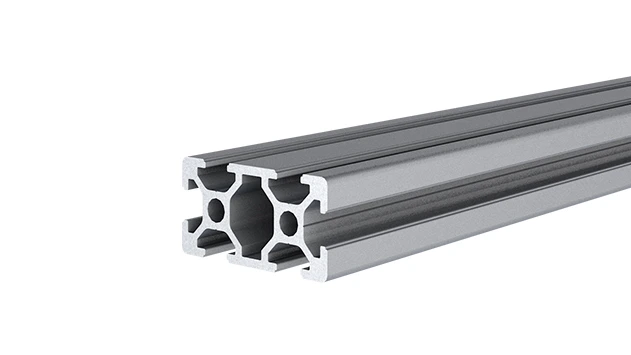
2040 EU Standard Aluminum Profile
2040 is a 2.00 x 4.00CM fractional 20 series square extrusion T-slot profile with four open T-slots, two side with 2.00cm face, the other side with 4.00cm face. The profile has align-a-grooves to assist in aligning connecting profiles.
A deep dive into how modern aluminum extrusion is revolutionizing manufacturing floors
Walk into any manufacturing facility, and you'll likely spot the same challenge: heavy, rigid steel structures dominating the floor. From workbenches that require a forklift to reposition to material racks that creak under their own weight, steel has long been the default—but at what cost? For plant managers, the toll is clear: slower workflows, higher injury risks from moving bulky equipment, and limited flexibility to adapt to shifting production needs. But what if there was a material that offered the same (or better) strength with a fraction of the weight? Enter the 2040 EU standard aluminum profile —a game-changer in industrial design that's quietly redefining how we build, work, and innovate.
In this article, we'll explore why this specific aluminum extrusion profile is outperforming steel in critical areas, focusing on its unbeatable weight-to-strength ratio. We'll break down the science, compare real-world performance, and show how pairing it with the right aluminum profile accessories can transform everything from workbench setups to entire lean system configurations. By the end, you'll understand why forward-thinking manufacturers are making the switch—and why you might want to too.
The Weight-to-Strength Ratio: Why It Matters More Than You Think
Before we dive into aluminum vs. steel, let's clarify what "weight-to-strength ratio" actually means. In simple terms, it's a measure of how much strength a material offers relative to its weight. Think of it as the "bang for your buck" of structural materials: a higher ratio means you get more strength without the extra heft. For manufacturers, this ratio isn't just a technical detail—it's a bottom-line metric.
Consider this scenario: A steel workbench might support 500kg, but it weighs 150kg itself. Moving it requires two workers and a dolly, and reconfiguring the production line around it takes hours. Now imagine an aluminum workbench with the same 500kg capacity—but it weighs only 60kg. One worker can shift it by hand, and adjustments take minutes, not hours. That's the power of a superior weight-to-strength ratio: it turns rigid, static spaces into dynamic, adaptable environments.
But the benefits go beyond mobility. Lighter structures reduce strain on floors and overhead systems, lower shipping costs (since you can transport more units per truck), and even cut down on energy use—machines don't have to work as hard to move lighter loads. In lean manufacturing, where efficiency is king, every kilogram saved translates to faster workflows, fewer bottlenecks, and happier, more productive teams.
Aluminum vs. Steel: The Science Behind the Superiority
To understand why 2040 EU standard aluminum profile outperforms steel, we need to start with the basics: material properties. Steel is dense—about 7.85 grams per cubic centimeter (g/cm³)—while aluminum clocks in at just 2.7 g/cm³. That's less than a third the density of steel. But density alone doesn't tell the whole story; we also need to look at tensile strength—the amount of force a material can withstand before breaking.
Mild steel has a tensile strength of around 400 megapascals (MPa), while high-strength aluminum alloys (like the ones used in aluminum extrusion profile ) can reach 300–500 MPa. At first glance, steel seems stronger—but remember, aluminum is much lighter. When we calculate strength per unit weight (tensile strength divided by density), aluminum pulls ahead. Let's do the math:
- Steel: 400 MPa / 7.85 g/cm³ ≈ 50.9 MPa·cm³/g
- Aluminum (300 MPa): 300 MPa / 2.7 g/cm³ ≈ 111.1 MPa·cm³/g
That's more than double the strength per unit weight for aluminum. In practical terms, this means you can build a structure with aluminum that's just as strong as steel but weighs 60% less. For manufacturers, that's a paradigm shift.
| Property | 2040 EU Standard Aluminum Profile | Mild Steel Profile (Same Dimensions) |
|---|---|---|
| Density | 2.7 g/cm³ | 7.85 g/cm³ |
| Tensile Strength | 350–450 MPa | 370–430 MPa |
| Weight (1m length) | ≈ 0.8 kg | ≈ 2.3 kg |
| Max Load Capacity (Horizontal Beam) | ≈ 400 kg | ≈ 420 kg |
| Strength-to-Weight Ratio | ≈ 130 MPa·cm³/g | ≈ 55 MPa·cm³/g |
But what makes the 2040 EU standard aluminum profile so special? It's all in the extrusion process. Aluminum extrusion involves heating aluminum billets and forcing them through a die to create complex, consistent cross-sections—like the 20mm x 40mm shape of our star product. This process aligns the metal's grains, strength and durability. Unlike steel, which often requires welding or cutting to shape, aluminum extrusion profiles come ready to assemble, with precision-engineered T-slots that accept accessories without drilling or welding.
Another key advantage? Corrosion resistance. Steel rusts, requiring coatings or treatments that add cost and maintenance. Aluminum forms a natural oxide layer that protects it from rust, even in damp or chemical-heavy environments. For manufacturers in industries like food processing or pharmaceuticals, where cleanliness is critical, this is a game-changer—no more repainting rusted steel racks or replacing corroded workbenches every few years.

2040 EU Standard Aluminum Profile: Designed for Modern Manufacturing
Not all aluminum profiles are created equal. The 2040 EU standard aluminum profile stands out for its precision, versatility, and adherence to strict European quality standards. Let's break down what "2040" means: the profile measures 20mm in width and 40mm in height, with a wall thickness optimized for balance—thick enough to support heavy loads, thin enough to keep weight low. This specific dimensions strike a sweet spot for industrial use: it's sturdy enough for workbenches and material racks but slim enough to fit into tight spaces.
EU standards ensure consistency. Every 2040 profile undergoes rigorous testing for dimensional accuracy, tensile strength, and surface finish. This means when you order a batch, you know each piece will fit perfectly with the last—no guesswork, no rework. For manufacturers building custom setups, this reliability is priceless. Whether you're constructing a workbench for electronics assembly or a material rack for automotive parts, you can trust the 2040 profile to perform as promised.
But what really makes the 2040 profile shine is its T-slot design. Running along its length are grooves that accept a wide range of aluminum profile accessories —connectors, brackets, shelves, and even tools. Need to add a monitor arm to your workbench? Slide a bracket into the T-slot and tighten a screw. Want to extend a material rack? Connect two profiles with a corner joint. No welding, no drilling, no specialized tools. This modularity is a cornerstone of lean manufacturing, where adaptability and quick changeovers are essential.
Take, for example, a electronics manufacturer ramping up production for a new smartphone model. Their old steel workbenches had fixed shelves and permanently mounted tools, so reconfiguring for the new assembly steps took days. With 2040 aluminum profiles, they can swap out accessories overnight: add extra shelving, reposition tool holders, and even adjust the workbench height to match the new product's needs. The line is back up and running in hours, not days—all because the profile and its accessories are designed to work together seamlessly.
From Workbenches to Lean Systems: Real-World Applications
The 2040 EU standard aluminum profile isn't just a theoretical improvement—it's transforming real manufacturing floors across industries. Let's explore some of its most impactful applications:
Workbenches: The Heart of the Production Line
Workbenches are where the magic happens—assembly, testing, packaging. A good workbench should be sturdy, ergonomic, and adaptable. Steel workbenches often miss the mark on the last two: they're sturdy, but their weight makes height adjustments or repositioning a hassle. Aluminum workbenches built with 2040 profiles solve this.
Consider a medical device manufacturer we worked with last year. They were using steel workbenches that weighed 180kg each. When they introduced a new, larger device, they needed to raise the workbench height by 15cm to keep workers from hunching. Adjusting each steel bench required loosening bolts, prying it up with a jack, and re-tightening—taking 45 minutes per bench. With 2040 aluminum workbenches, the process is different: each leg has a threaded insert, and adjusting height takes two minutes with a wrench. The team reconfigured 12 workbenches in under an hour, and since the benches weigh only 70kg, they could shift them to create more space between stations. Productivity spiked by 20% in the first month alone.
Lean Systems: Building Efficient, Waste-Free Workflows
Lean manufacturing is all about eliminating waste—whether it's time, materials, or motion. Lean system setups, like kanban boards, material flow racks, and assembly lines, rely on being able to adapt quickly to changes in demand. Steel structures, with their fixed designs and heavy weight, are the antithesis of lean. Aluminum profiles, by contrast, are lean by nature.
A automotive parts supplier recently shared their experience: they'd been using steel flow racks to move components from the warehouse to the assembly line. The racks were so heavy that workers avoided repositioning them, leading to inefficient material flow and "bunching" at certain stations. Switching to 2040 aluminum flow racks cut the weight by 65%, so workers now move racks as needed, keeping parts flowing smoothly. The result? A 30% reduction in "wait time" for assembly workers and a 15% drop in scrap rates, since parts are handled more gently.
Another example: a furniture manufacturer using lean principles to reduce lead times. Their old steel production line was rigid, so introducing a new chair design meant shutting down for a week to reconfigure. With 2040 aluminum profiles, they built a modular line. When a new design comes in, they swap out sections of the line—changing conveyor heights, adding new workstations—over a weekend. The line is back up Monday, and they're shipping the new chairs by Tuesday. That's the agility lean systems demand, and aluminum profiles make it possible.
Aluminum Profile Accessories: The Unsung Heroes of Modularity
A profile is only as good as the accessories that bring it to life. Aluminum profile accessories turn raw 2040 profiles into functional, custom solutions. Let's take a closer look at some of the most essential ones and how they enhance the profile's versatility:
Connectors: The Glue That Holds It All Together
Corner joints, T-joints, and straight connectors are the backbone of any aluminum setup. Unlike steel, which requires welding or bolting through pre-drilled holes, aluminum connectors slide into T-slots and lock in place with a hex key. This means you can build a 6-foot workbench in 30 minutes, no welding certification required. For small manufacturers or startups with limited resources, this is a game-changer—you don't need a metal shop to build industrial-grade furniture.
Shelves and Panels: Adding Functionality in Seconds
Whether you need a flat surface for tools or a mesh panel for storage bins, aluminum shelves and panels attach directly to 2040 profiles via T-slot brackets. Adjusting their height is as simple as loosening a screw and sliding them up or down. A bakery we worked with used this to great effect: their aluminum material rack holds flour sacks on the bottom, mixing bowls in the middle, and finished goods on top. When they switch to a larger bowl size, they just raise the middle shelf—no need to buy a new rack.
Casters and Leveling Feet: Mobility and Stability in One
Want a workbench that moves? Add casters to the 2040 profile legs. Need it to stay put? Swap the casters for leveling feet. Many accessories are interchangeable, so you can adapt the same base structure for different tasks. A electronics repair shop uses this flexibility: their workbenches have casters for moving between repair stations, but when precision work is needed, they lock the casters and level the feet for stability. It's like having two workbenches in one.
Addressing the Skeptics: "Is Aluminum Strong Enough?"
It's a common concern: "Aluminum feels flimsy compared to steel—can it really handle heavy loads?" The short answer: yes, and then some. Let's put this to the test with real-world numbers. A 2040 EU standard aluminum profile, when used as a horizontal beam supported at both ends, can safely hold up to 400kg over a 1-meter span. That's enough for stacks of metal parts, heavy machinery components, or even small appliances during assembly.
For even heavier loads, engineers often use multiple profiles or thicker walled versions (though the 2040's standard wall thickness is sufficient for most industrial applications). And remember, aluminum's strength-to-weight ratio means you can add more profiles without adding much weight. A steel beam might need to be doubled to increase capacity, adding 100kg to the structure; aluminum beams can be doubled with only 30kg added.
Another myth: "Aluminum bends too easily." While it's true that aluminum is more flexible than steel, this isn't a weakness—it's a safety feature. Steel tends to snap suddenly under overload, while aluminum bends gradually, giving warning before failure. In industrial settings, this "plastic deformation" can prevent catastrophic accidents. A warehouse manager once told us about a forklift accidentally hitting a steel rack: it collapsed instantly, damaging products and narrowly missing a worker. An aluminum rack would have bent, alerting the team to the damage without the collapse.
Finally, cost. "Aluminum is more expensive than steel," some argue. It's true that aluminum profiles have a higher upfront cost—about 30–50% more per meter than steel. But when you factor in the total cost of ownership, aluminum often comes out ahead. No welding costs, lower shipping fees, faster assembly times, and less maintenance (no rust, no repainting) add up. Over five years, the average manufacturer saves 20–30% by choosing aluminum over steel.
The Future of Manufacturing: Light, Strong, and Adaptable
The manufacturing landscape is evolving. Customers demand faster turnarounds, smaller batches, and more customization—and factories need to keep up. Steel, with its weight and rigidity, is holding many back. The 2040 EU standard aluminum profile isn't just a material upgrade; it's a mindset shift. It's about building spaces that adapt as quickly as your business does, that empower workers instead of limiting them, and that turn inefficiency into opportunity.
Whether you're a small workshop building custom tools or a large manufacturer running 24/7 production lines, the benefits are clear: better weight-to-strength ratio, modular design with aluminum profile accessories , and the ability to create dynamic, lean environments. Pair that with EU-standard quality and a growing ecosystem of accessories, and it's easy to see why aluminum extrusion profiles are becoming the new standard.
So the next time you walk into your factory, take a look at those steel workbenches and racks. Imagine what your team could accomplish if they weren't tied down by heavy, static structures. Then think about the 2040 aluminum profile—not just as a material, but as a tool for innovation. The future of manufacturing isn't heavy. It's light, strong, and ready to adapt. And it starts with a profile that's designed to outperform, in every way that matters.