- Company Articles
- Industry articles
- Industry standards
- What Engineers Need to Know About Turning Angle Code 2020 for Aluminum Joints

What Engineers Need to Know About Turning Angle Code 2020 for Aluminum Joints
Related Product
Urning Angle Code 2020
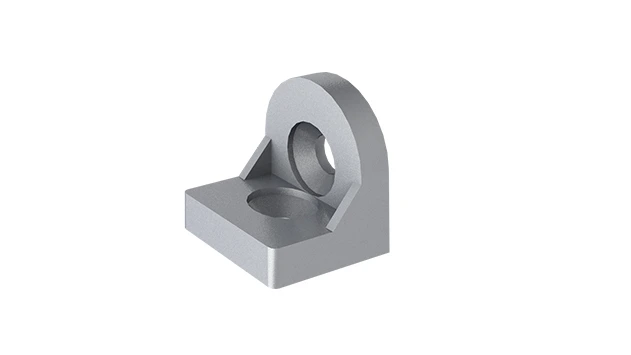
The turning angle aluminum profile connector provides a 90 degree hidden corner connection. 2020 it is means this size is used for 20 series aluminum profile.The corner code comes with set screws that allow for quick, easy connections.
If you've ever stood in a manufacturing plant, warehouse, or even a small workshop and wondered how those sleek, modular workbenches, material racks, or conveyor systems hold together so seamlessly, you're not alone. Behind the clean lines and functional design of these structures lies a world of precision components—none more critical than the humble yet mighty angle code. For engineers working with aluminum profiles, one component that consistently proves its worth is the turning angle code 2020 . It's not the flashiest part of the setup, but get its application wrong, and the entire structure could wobble, fail under load, or worse. Let's dive into what makes this small but essential piece a cornerstone of aluminum joint design, and why every engineer should have it on their radar.
1. Understanding the Basics: What Is Turning Angle Code 2020?
First things first: let's demystify the name. "Turning angle code 2020" refers to a specific type of connector used to join aluminum profiles at angles—most commonly 90 degrees, though some designs accommodate slight adjustments. The "2020" denotes its compatibility with 20x20mm aluminum profiles, a standard size in modular systems. Think of it as the glue (but way more mechanical) that holds two perpendicular or angled profiles together, distributing stress and ensuring stability.
At first glance, it might look like a simple metal bracket, but its design is anything but basic. Most turning angle code 2020 components are made from high-grade aluminum alloy (often 6063-T5, known for its strength and corrosion resistance). This material choice isn't arbitrary: aluminum offers the perfect balance of lightweight durability, making it ideal for structures that need to be both sturdy and movable—like a workbench that might need repositioning or a material rack that holds heavy inventory.
The physical design typically features two flanges (the "angle" part) with pre-drilled holes, allowing it to bolt directly into the T-slots of 2020 aluminum profiles. Some variants include reinforcing ribs to boost load capacity, while others have rounded edges to reduce the risk of snagging on tools or materials. Dimensions vary slightly by manufacturer, but a standard turning angle code 2020 might measure around 30mm in length per flange, with a thickness of 2-3mm—small enough to stay unobtrusive but thick enough to handle the demands of industrial use.
Real-World Context: Imagine a production line where workers assemble small electronic components on a modular workbench E (single deck-without caster) . The frame of that workbench? It's likely held together by turning angle code 2020 connectors at each corner. Without these, the bench might flex when tools or parts are placed on it, leading to misalignment during assembly—a costly mistake in precision work.
2. Why It Matters: The Role of Turning Angle Code 2020 in Aluminum Joints
So, why not just weld the profiles together or use a generic bracket? The answer lies in modularity, precision, and adaptability—three pillars of modern manufacturing. Aluminum profile systems thrive on their ability to be reconfigured, expanded, or repurposed as needs change. Welding is permanent, and generic brackets often lack the precision to align with T-slots, leading to weak joints or uneven weight distribution.
Turning angle code 2020 solves these issues by acting as a bridge between profiles. When properly installed, it:
- Distributes Load Evenly: By spanning the T-slots of two connected profiles, it spreads the weight of the structure (and whatever it holds) across both profiles, reducing stress on individual bolts or slots.
- Maintains Alignment: The pre-drilled holes and tight fit with 2020 profiles ensure that the joint stays square over time, preventing the structure from "racking" (twisting) under dynamic loads—like when a turnover trolley hits a bump in the floor.
- Enables Quick Assembly/Disassembly: Unlike welding, which requires specialized tools and skills, angle codes can be installed with basic hand tools (hex keys, wrenches). This is a game-changer for engineers who need to prototype designs or modify structures on the fly.
Perhaps most importantly, turning angle code 2020 is part of a larger ecosystem of aluminum profile accessories . It works seamlessly with T-slot nuts, socket head cap screws, and end caps, creating a unified system where every component complements the others. For example, using a T-slot nut to secure the angle code into the profile's slot ensures a tight, vibration-resistant fit—critical in environments where machinery is running 24/7.

3. Comparing Turning Angle Code 2020 to Other Angle Codes
Not all angle codes are created equal. Engineers often work with larger profiles (3030, 4040, etc.) and their corresponding angle codes, so how does the 2020 variant stack up? Let's break it down with a quick comparison:
| Feature | Turning Angle Code 2020 | Turning Angle Code 3030 | Turning Angle Code 4040 |
|---|---|---|---|
| Profile Compatibility | 20x20mm aluminum profiles | 30x30mm aluminum profiles | 40x40mm aluminum profiles |
| Typical Load Capacity (Static) | Up to 150kg per joint | Up to 300kg per joint | Up to 500kg per joint |
| Weight (Per Unit) | ~30-40g | ~60-80g | ~100-120g |
| Common Applications | Small workbenches, light shelving, electronics racks | Medium workbenches, material racks, conveyor frames | Heavy-duty machinery frames, industrial shelving |
The key takeaway? Turning angle code 2020 is the go-to for lightweight to medium-duty applications where space and weight are at a premium. It's perfect for projects like a benchtop assembly station, a small parts storage rack, or a mobile cart for tool transport. For heavier loads—say, a material rack B (3 row and 3 floor) stocked with metal parts—you'd opt for 3030 or 4040 angle codes. But for the 2020 sweet spot, this component is unmatched in balancing strength and efficiency.

4. Applications: Where Turning Angle Code 2020 Shines
Now that we know what it is and why it works, let's explore where engineers actually use turning angle code 2020. Its versatility makes it a staple in several industries:
4.1 Workbenches and Assembly Stations
Modular workbenches are the backbone of many workshops, and 2020 profiles are a favorite for their compact size. A typical setup might use four vertical 2020 profiles for legs, connected at the top and bottom by horizontal profiles—all joined with turning angle code 2020 at the corners. Add a plywood or aluminum honeycomb panel top, and you've got a sturdy, customizable workspace. What's more, if the team needs to add a shelf or tool rail later, the T-slots (and compatible angle codes) make retrofitting a breeze.
4.2 Light-Duty Material Racks
Warehouses and distribution centers often need temporary or adjustable storage for small parts, documents, or lightweight inventory. A 2020-based rack, built with turning angle code 2020 joints, can be assembled in hours and reconfigured as stock levels change. For example, a three-tier rack might use vertical profiles every 60cm, with horizontal beams connected via angle codes. Each tier can hold bins of screws, washers, or other small components without bowing or sagging.
4.3 Electronics and Lab Equipment Frames
In electronics manufacturing or lab settings, precision is non-negotiable. Test rigs, PCB assembly stations, or instrument enclosures often rely on 2020 profiles for their clean, non-conductive (when anodized) properties. Turning angle code 2020 ensures that these frames stay rigid, preventing vibrations from throwing off sensitive measurements. Plus, aluminum's lightweight nature makes it easy to mount these frames on casters for mobility—another win for adaptability.
4.4 Retail and Display Fixtures
It's not just industrial settings. Retailers use modular aluminum systems for product displays, pop-up shops, or trade show booths. Turning angle code 2020 allows for quick assembly of sleek, modern-looking shelves or racks that can be broken down and transported. Since these structures are often visible to customers, the clean lines of the angle code (no messy welds!) are a bonus for aesthetics.
5. Installation Best Practices: Getting It Right the First Time
Even the best components fail if installed poorly. For turning angle code 2020, proper installation is key to maximizing its performance. Here's a step-by-step guide engineers swear by:
5.1 Prep the Profiles
Start by cutting your 2020 aluminum profiles to the desired length, ensuring clean, square ends. Deburr the edges with a file or sandpaper to avoid sharp edges that could damage T-slot nuts or injure installers. If your design requires custom hole positions (beyond the standard T-slot spacing), use a drill press to create precise holes—misaligned holes are a common culprit for weak joints.
5.2 Choose the Right Fasteners
Turning angle code 2020 relies on bolts and T-slot nuts to secure it to the profiles. For 2020 systems, M4 or M5 bolts are standard. Opt for socket head cap screws (SHCS) for a low-profile finish, and pair them with matching T-slot nuts (nylon or metal—nylon is better for vibration resistance). Avoid using overly long bolts, as they can protrude through the profile and cause snags.
5.3 Align and Clamp
Before tightening, use a square tool to ensure the profiles meet at a perfect 90-degree angle (unless your design calls for a different angle). Clamp the profiles and angle code together temporarily to hold everything in place. This step might seem tedious, but a misaligned joint will weaken the entire structure over time—especially under dynamic loads.
5.4 Torque to Spec
Over-tightening is just as bad as under-tightening. Use a torque wrench to tighten the bolts to the manufacturer's specs—typically 2-3 Nm for M4 bolts in aluminum profiles. Too much torque can strip the T-slots or warp the angle code; too little, and the joint will loosen with vibration. Pro tip: Mark the bolt heads with a marker after torquing—this makes it easy to spot loose bolts during inspections.
5.5 Test and Inspect
Once the joint is installed, give it a gentle shake or apply light pressure to check for movement. If it wobbles, double-check the alignment and torque. For critical applications (like a workbench holding expensive equipment), consider adding a gusset plate or reinforcing rib for extra stability—though with proper installation, turning angle code 2020 usually handles the load on its own.
6. Common Pitfalls to Avoid
Even seasoned engineers can slip up when working with modular components. Here are three mistakes to watch for with turning angle code 2020:
Mistake #1: Using the Wrong Profile Size. This might sound obvious, but it's easy to grab a 3030 profile by mistake and try to force a 2020 angle code onto it. The result? A loose, unstable joint that will fail quickly. Always double-check profile dimensions before ordering components.
Mistake #2: Ignoring Corrosion Resistance. If your structure will be used in a humid or corrosive environment (like a food processing plant or outdoor setting), opt for anodized turning angle code 2020. Standard aluminum can oxidize over time, weakening the material. Anodization adds a protective layer that keeps rust at bay.
Mistake #3: Overlooking Thermal Expansion. Aluminum expands and contracts with temperature changes. In extreme environments (like a warehouse with unregulated heating), this can cause joints to loosen. To mitigate, leave a tiny gap (0.1-0.2mm) between the angle code and profile when installing, or use spring washers to maintain tension as temperatures fluctuate.
7. The Future of Modular Aluminum Systems and Angle Codes
As manufacturing trends shift toward automation, sustainability, and rapid prototyping, modular aluminum systems (and components like turning angle code 2020) are only growing in importance. Engineers are increasingly using 3D modeling software to design structures with 2020 profiles, simulating load conditions and optimizing angle code placement before a single bolt is tightened. Some manufacturers are even integrating smart features—like RFID tags in angle codes—to track component usage or alert teams when maintenance is due.
Sustainability is another driver. Aluminum is 100% recyclable, and modular systems reduce waste by allowing components to be reused across projects. A turning angle code 2020 from a disassembled workbench can find new life in a material rack, cutting down on raw material use and costs.
Final Thoughts: Why Turning Angle Code 2020 Deserves Your Attention
At the end of the day, engineering is about solving problems—whether that's building a better workbench, optimizing a warehouse layout, or creating a reliable test rig. Turning angle code 2020 might not be the star of the show, but it's the kind of component that makes those solutions possible. Its precision, versatility, and reliability make it a must-have for any engineer working with 2020 aluminum profiles.
So, the next time you're drafting a design or troubleshooting a wobbly structure, take a closer look at the joints. Chances are, a well-chosen, properly installed turning angle code 2020 is all that stands between a good design and a great one. And in engineering, the difference between good and great is often in the details.