- Company Articles
- Industry articles
- Industry News
- What Industries Benefit Most from Corrugated Aluminum Pipe? Top 5 Sectors

What Industries Benefit Most from Corrugated Aluminum Pipe? Top 5 Sectors
Related Product
Corrugated Aluminum Pipe
Product Description The slot side is 10mm which can work with a T sliding block for connection accessories Quick Detail Product name Corrugated Aluminum pipe model GLT28-T-3010A Material Science 6005-T6 thickness 1.7mm surface treatment anodic oxidat
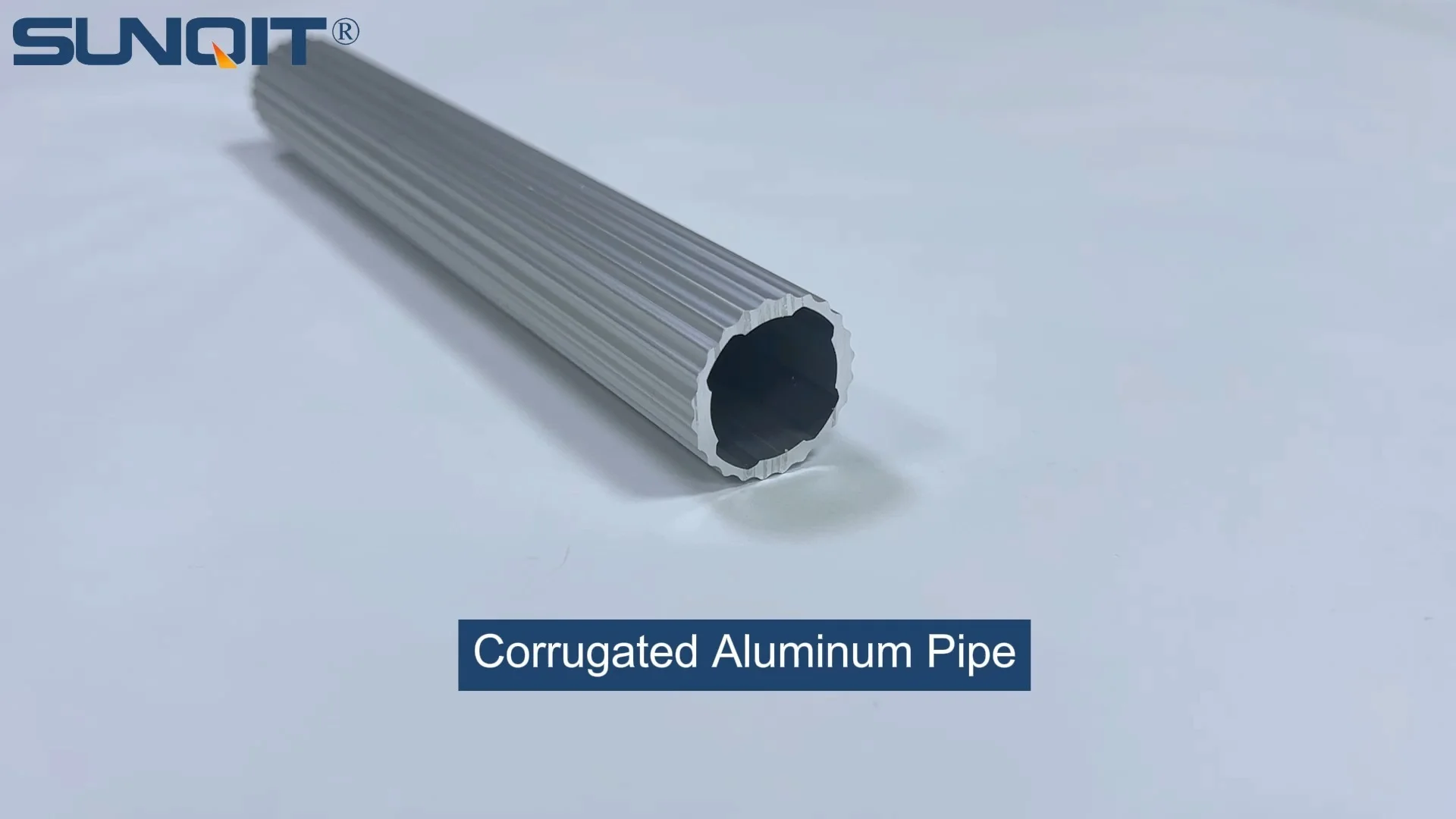
In the world of industrial materials, innovation often happens quietly—behind the scenes, in the components that keep factories running, warehouses organized, and construction sites efficient. One such unsung hero? Corrugated aluminum pipe. With its unique wave-like structure, this material blends strength, flexibility, and lightweight design in a way that's reshaping how industries approach everything from manufacturing to aerospace. But which sectors stand to gain the most from its versatility? Let's dive into the top five industries where corrugated aluminum pipe isn't just a tool, but a game-changer—solving old problems, cutting costs, and unlocking new levels of efficiency.
1. Manufacturing: Building Leaner, More Adaptive Workspaces
The manufacturing sector thrives on precision, speed, and adaptability. In an era where lean systems dominate—prioritizing waste reduction and continuous improvement—factories need tools that can keep up with shifting production lines, custom workstations, and evolving product designs. This is where corrugated aluminum pipe shines. Unlike rigid steel or bulky plastic, its corrugated design offers a rare combination of structural integrity and flexibility, making it ideal for the modular, ever-changing needs of modern manufacturing.
Consider the backbone of any production floor: workbenches, turnover trolleys, and flow racks. Traditional steel frames are heavy, hard to reconfigure, and prone to rust in humid environments. Corrugated aluminum pipe, by contrast, is lightweight enough for workers to adjust without heavy machinery, yet strong enough to support tools, components, and finished products. Its smooth, corrosion-resistant surface also makes it easy to clean—critical in industries like food processing or electronics, where hygiene and ESD (electrostatic discharge) protection are non-negotiable.
Take, for example, a automotive parts manufacturer that recently revamped its assembly line. By replacing steel workbench frames with corrugated aluminum pipe, they reduced the weight of each workstation by 45% while maintaining the same load capacity. This didn't just make manual adjustments faster (cutting changeover time between product models by 25%); it also lowered the risk of worker strain, a common issue with heavy steel setups. Plus, since aluminum is naturally ESD-safe, they eliminated the need for costly anti-static coatings on their electronics assembly tables—a small change that added up to significant annual savings.
Another area where corrugated aluminum pipe excels is in lean system accessories, such as roller tracks and material handling carts. Its modular design pairs seamlessly with aluminum extrusion profiles, allowing factories to build custom flow racks or conveyor systems that adapt to new products or higher throughput. A furniture manufacturer, for instance, used corrugated aluminum pipe to build adjustable roller tracks for their upholstery department. By tweaking the angle and spacing of the pipes, they could now handle both small chair cushions and large sofa frames on the same line—no need for separate, dedicated equipment.
At the heart of it, manufacturing's biggest challenge is staying agile. Corrugated aluminum pipe doesn't just meet that need—it amplifies it. By combining strength, lightness, and modularity, it turns static production floors into dynamic, responsive spaces where change is not a disruption, but a opportunity.
2. Construction: Building Smarter, Not Heavier
Construction is an industry defined by trade-offs: strength vs. weight, durability vs. cost, speed vs. sustainability. For decades, steel and concrete have been the go-to materials, but they come with downsides: steel rusts, concrete is heavy and energy-intensive to produce, and both require heavy machinery to transport and install. Corrugated aluminum pipe is rewriting these rules, offering a greener, lighter, and more efficient alternative for everything from temporary structures to permanent infrastructure.
The secret lies in its corrugated shape. Those alternating peaks and valleys aren't just for show—they distribute stress evenly, giving the pipe remarkable strength without adding excess material. This high strength-to-weight ratio is a game-changer for construction projects where weight is a constraint, such as high-rise buildings, bridges, or renovation work on historic structures with load limits.
Take HVAC (heating, ventilation, and air conditioning) systems, a staple in commercial construction. Traditional steel ducting is heavy, rigid, and tricky to route around obstacles like beams or wiring. Corrugated aluminum pipe, with its flexible, lightweight design, bends and twists to fit tight spaces, reducing the need for custom-cut elbows and joints. A recent office building project in Chicago swapped steel ducting for corrugated aluminum in its upper floors, cutting installation time by 30% and slashing the number of support brackets needed by half. The result? Lower labor costs and a lighter load on the building's structure.
Sustainability is another key driver. Aluminum is 100% recyclable, and recycling it uses just 5% of the energy required to produce new aluminum—making corrugated aluminum pipe a favorite for green building projects aiming for LEED certification. In temporary construction, too—like scaffolding or event stages—its light weight reduces fuel consumption during transport, and its durability means it can be reused across multiple projects, minimizing waste.
Even in structural applications, corrugated aluminum pipe is making inroads. Engineers are increasingly using it in modular housing, where prefabricated panels with corrugated aluminum frames are shipped to sites and assembled in days, not weeks. A modular home builder in Colorado reported that switching to aluminum frames reduced their carbon footprint by 22% and cut on-site construction time by 40% compared to wood framing. And because aluminum doesn't warp or rot, these homes require less maintenance over time—a win for both builders and homeowners.

3. Logistics & Warehousing: Streamlining the Flow of Goods
In logistics and warehousing, every square foot, every second, and every ounce of effort counts. Fulfillment centers, distribution hubs, and storage facilities are under constant pressure to move goods faster, store more inventory, and reduce the physical strain on workers. Enter corrugated aluminum pipe: a material that's quietly revolutionizing how warehouses design flow racks, picking carts, and conveyor systems.
Flow racks, which use gravity to slide products toward pickers, are a cornerstone of efficient warehousing. But traditional steel flow racks are heavy, expensive to ship, and hard to adjust for different product sizes. Corrugated aluminum pipe solves all three issues. Its lightweight design makes it easy to ship in bulk (cutting transportation costs by up to 30% compared to steel), and its modularity allows managers to reconfigure rack heights or widths in minutes—no welding or specialized tools required. For a third-party logistics provider handling seasonal spikes in inventory, this adaptability is priceless: they can expand flow rack capacity in October for holiday orders and shrink it back in January without wasting space.
Then there are the workhorses of the warehouse: turnover trolleys and picking carts. Workers push these carts for miles daily, so reducing weight directly reduces fatigue and injury risk. A corrugated aluminum pipe cart weighs up to 50% less than a steel equivalent, yet can still carry heavy loads like bulk electronics or automotive parts. One large retailer tested this in their distribution center and found that cart-related worker compensation claims dropped by 25% within six months of the switch. Plus, the carts' smooth aluminum surfaces are easy to sanitize—critical in food and pharmaceutical warehousing, where cleanliness standards are strict.
Conveyor systems, too, benefit from corrugated aluminum pipe's durability and flexibility. In automated warehouses, conveyor frames must withstand constant vibration and heavy loads, but they also need to be precise to keep products moving smoothly. Corrugated aluminum pipe's rigid-yet-light structure minimizes vibration, reducing wear on motors and rollers. A beverage distributor recently upgraded their bottle conveyor system with aluminum frames, extending the equipment's lifespan by an estimated 3 years and cutting maintenance costs by 18% annually.
In logistics, efficiency isn't just about speed—it's about resilience. Corrugated aluminum pipe gives warehouses the strength to handle daily chaos, the flexibility to adapt to change, and the lightness to keep workers moving without burnout. It's not just a material; it's a tool for building warehouses that work smarter, not harder.
4. Automotive: Driving Innovation in Assembly Lines
The automotive industry is a juggernaut of innovation, but its assembly lines are where the rubber truly meets the road. With production volumes in the millions and (chēxíng—vehicle models) changing yearly, car manufacturers need assembly equipment that's durable, adaptable, and cost-effective. Corrugated aluminum pipe has emerged as a key player here, addressing two of the industry's biggest pain points: downtime from reconfiguration and the high cost of custom tooling.
Consider the complexity of a modern car factory: hundreds of workstations, each tailored to a specific task—installing dashboards, mounting tires, testing electronics. When a new model launches, these workstations often need to be redesigned to fit new part sizes or assembly steps. Traditional steel setups require cutting, welding, or replacing entire frames, leading to days of downtime. Corrugated aluminum pipe, with its snap-together joints and lightweight sections, eliminates this hassle. Workers can disassemble and rebuild a workstation in hours, not days, using basic hand tools. For a major automaker producing 500,000 vehicles yearly, even a single day of downtime costs millions—so this speed-to-reconfigure is a game-changer.
ESD protection is another critical factor, especially in electric vehicle (EV) manufacturing. EV batteries and sensitive electronics are (jí yì shòu jìngdiàn yǐngxiǎng—highly susceptible to static electricity), so workstations must be ESD-safe to prevent damage. Corrugated aluminum pipe, being a conductor, naturally dissipates static charges, eliminating the need for expensive coatings or separate grounding systems. A battery manufacturer in Michigan switched to aluminum pipe workbenches and saw a 90% reduction in static-related component failures, saving an estimated $2 million annually in wasted parts.
Durability is equally important. Automotive assembly lines run 24/7, with tools, robots, and workers putting constant stress on equipment. Corrugated aluminum pipe's corrugated structure resists bending and warping, even under the weight of heavy power tools or robotic arms. A German automaker tested this by installing aluminum pipe roller tracks in their door assembly line; after two years of continuous use, the tracks showed no signs of deformation, outlasting the steel tracks they replaced by 18 months.
Finally, cost efficiency can't be overlooked. Aluminum is more expensive than steel upfront, but its longer lifespan, lower maintenance needs, and recyclability make it cheaper over time. When a factory upgrades, old aluminum pipe can be melted down and reused, offsetting material costs. One mid-sized automaker calculated that while aluminum pipe cost 20% more initially, the total cost of ownership over five years was 15% lower than steel—thanks to fewer replacements, less downtime, and recycling credits.
In automotive manufacturing, where every second and every cent counts, corrugated aluminum pipe isn't just a material upgrade. It's a strategic investment in speed, reliability, and innovation—helping build the cars of tomorrow, today.
5. Aerospace: Lightweighting for the Skies
The aerospace industry operates in a world where every pound matters. From commercial airliners to military jets, reducing weight directly translates to lower fuel costs, longer range, and fewer emissions. On the ground, too—airport ground support equipment, maintenance platforms, and cargo handling systems—lightweight yet strong materials are critical for efficiency and safety. Corrugated aluminum pipe, with its unbeatable strength-to-weight ratio, is soaring in this sector, proving that even the skies benefit from its innovative design.
Let's start with ground support equipment (GSE)—the vehicles and tools that service aircraft, from luggage loaders to engine maintenance stands. Traditional steel GSE is heavy, requiring large engines to move and increasing fuel consumption. Corrugated aluminum pipe, however, cuts weight without sacrificing strength. A luggage loader with an aluminum pipe frame weighs 35% less than a steel one, allowing it to use a smaller, more fuel-efficient engine. Over a fleet of 50 loaders, this reduces annual fuel costs by hundreds of thousands of dollars for an airline.
Maintenance platforms are another area where corrugated aluminum pipe shines. Mechanics need stable, adjustable platforms to reach every part of an aircraft, but those platforms must also be lightweight enough to maneuver in tight hangar spaces. Aluminum's lightness makes it easy to roll platforms into position, while its corrugated structure ensures the platform doesn't flex under a mechanic's weight. A major airline reported that switching to aluminum pipe maintenance stands reduced the time to position stands by 40%, speeding up aircraft turnaround times.
Even in aircraft components, corrugated aluminum pipe plays a role—though often behind the scenes. Its flexibility makes it ideal for ducting systems that route air, fuel, or hydraulic fluid through tight spaces in the airframe. Unlike rigid plastic or steel ducts, corrugated aluminum can bend slightly to fit around wiring harnesses or structural beams, simplifying installation and reducing the need for custom-fitted parts. This not only cuts manufacturing time but also makes repairs easier: a damaged section can be replaced in minutes, rather than hours.
Sustainability is another aerospace priority, with airlines and manufacturers aiming for net-zero emissions by 2050. Aluminum's recyclability aligns perfectly with this goal. When an aircraft or GSE reaches the end of its life, corrugated aluminum pipe can be recycled with minimal energy input, reducing waste and lowering the industry's carbon footprint. For a sector under pressure to decarbonize, this is more than a bonus—it's a necessity.
In aerospace, the margin for error is tiny, and the stakes are high. Corrugated aluminum pipe meets those demands with a blend of strength, lightness, and reliability that's hard to match. It's not just helping planes fly—it's helping them fly greener, farther, and more efficiently than ever before.
| Industry | Key Challenge | Corrugated Aluminum Pipe Benefit | Top Applications | Notable Outcome |
|---|---|---|---|---|
| Manufacturing | Need for adaptable, lean workspaces | Lightweight, modular, corrosion-resistant | Workbenches, flow racks, turnover trolleys | 30% faster production line reconfiguration |
| Construction | Weight restrictions, sustainability goals | High strength-to-weight ratio, recyclable | HVAC ducting, temporary structures, cladding | 25% reduction in installation time for ducting |
| Automotive | Downtime from assembly line reconfigurations | Quick to adjust, ESD-safe, durable | Workstations, roller tracks, ESD workbenches | 90% reduction in static-related component failures |
| Logistics & Warehousing | Worker fatigue, seasonal inventory changes | Lightweight carts, modular flow racks | Flow racks, picking carts, conveyor systems | 25% drop in cart-related worker injuries |
| Aerospace | Fuel efficiency, maintenance speed | High strength-to-weight ratio, recyclable | Ground support equipment, maintenance platforms | 35% lighter GSE, reducing fuel costs |
Conclusion: A Material for the Future
Corrugated aluminum pipe may not grab headlines like AI or renewable energy, but its impact on industry is undeniable. From the factory floor to the runway, it's solving real-world problems: cutting costs, reducing downtime, and making workplaces safer and more sustainable. What makes it so versatile? Its corrugated design—a simple engineering trick that turns a basic material into a powerhouse of strength and flexibility.
As industries continue to evolve—pushing for greener practices, faster innovation, and more human-centered workspaces—corrugated aluminum pipe will only grow in importance. It's not just a pipe; it's a building block for the future of manufacturing, construction, automotive, logistics, and aerospace. And for businesses willing to embrace it, the benefits are clear: lower costs, happier workers, and a competitive edge that lasts.
So the next time you walk through a factory, warehouse, or airport, take a closer look. Chances are, you'll spot the wave-like curves of corrugated aluminum pipe—quietly working behind the scenes, making the world of industry a little smarter, lighter, and more efficient.