- Company Articles
- Industry articles
- Industry News
- What Industries Use Aluminum Side Guards the Most? Top Sectors & Applications

What Industries Use Aluminum Side Guards the Most? Top Sectors & Applications
Related Product
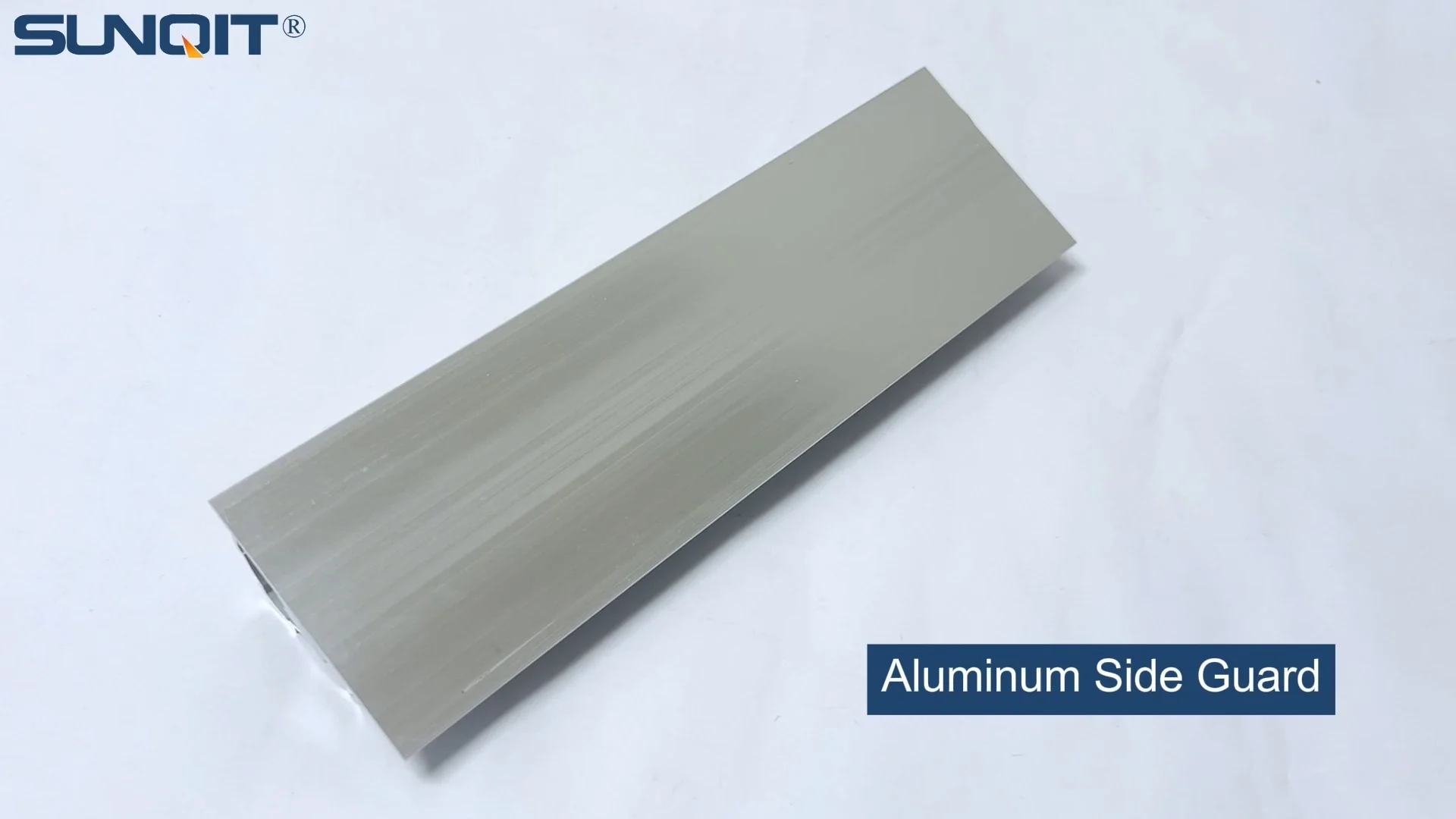
Aluminum Side Guard
Aluminum side guard, it works with a aluminum pipe or a roller track as side guard to prevent material drop,or move to wrong direction.
Walk into any busy factory, warehouse, or assembly line, and you'll notice small but crucial details that keep operations running smoothly. One such detail—often overlooked but indispensable—is the aluminum side guard. These unassuming barriers, typically made from lightweight yet durable aluminum extrusion profile, line conveyor belts, frame workbenches, and edge material racks, silently preventing spills, slips, and collisions. But what makes aluminum side guards so widely used? And which industries rely on them the most? Let's dive into the world of these unsung heroes, exploring their key benefits and the sectors that can't function without them.
First, let's clarify what aluminum side guards are. Crafted from aluminum profile—specifically, aluminum extrusion profile, which is shaped by forcing molten aluminum through a die to create consistent, customizable cross-sections—these guards are designed to form protective edges. They're often paired with aluminum profile accessories like brackets, connectors, or mounting clips to attach to workbenches, racks, or conveyor systems. Unlike heavy steel guards or flimsy plastic alternatives, aluminum side guards strike a perfect balance: they're lightweight for easy installation and reconfiguration, corrosion-resistant to withstand harsh environments, and strong enough to handle daily wear and tear. Plus, their smooth, clean finish makes them easy to sanitize—critical for industries like food processing or electronics manufacturing.
Why Aluminum Side Guards Stand Out
Before we jump into specific industries, let's break down why aluminum side guards have become the go-to choice across sectors. It's not just about being "lightweight"—though that's a big part of it. Here's what makes them indispensable:
- Safety First: Their primary job is to prevent accidents. Whether it's stopping tools from rolling off a workbench or keeping boxes from sliding off a material rack, they create a physical barrier that reduces workplace injuries.
- Durability Without the Weight: Aluminum is naturally resistant to rust and corrosion, even in humid or chemical-exposed environments. Unlike steel, it won't add unnecessary bulk, making it easy to install on mobile equipment like trolleys or adjustable workbenches.
- Customization at Its Best: Thanks to aluminum extrusion profile manufacturing, side guards can be cut to any length, bent into specific angles, or even powder-coated in colors that match a facility's branding or safety codes (think bright yellows for high-visibility areas). They also integrate seamlessly with aluminum profile accessories, from simple clamps to complex joint systems, allowing for quick adjustments as needs change.
- Cost-Effective Long-Term: While the upfront cost might be slightly higher than plastic, aluminum side guards last longer and require less maintenance. They don't crack, warp, or fade, meaning fewer replacements over time—a win for budget-conscious operations.
Top Industries Relying on Aluminum Side Guards
Now, let's explore the sectors where aluminum side guards aren't just helpful—they're essential. From manufacturing floors to logistics hubs, these industries depend on their unique blend of strength, flexibility, and safety.
1. Manufacturing: The Backbone of Assembly Lines
Manufacturing facilities are chaos by design—fast-moving parts, heavy machinery, and workers operating in tight spaces. Here, aluminum side guards are everywhere, turning potential chaos into controlled efficiency. Take the average workbench, for example: a central hub where workers assemble electronics, package goods, or test products. Without side guards, screwdrivers, small components, or even finished items could easily slide off the edge, leading to lost parts, damaged goods, or trips and falls. Aluminum side guards, mounted along the edges of these workbenches (often built from aluminum profile frames), create a raised lip that keeps tools and materials in place. They're especially valuable in industries like automotive manufacturing, where even a single lost screw can halt an entire production line.
But it's not just workbenches. Conveyor systems, the arteries of manufacturing, rely heavily on aluminum side guards. Imagine a conveyor belt transporting fragile glass panels or delicate circuit boards—one sudden jolt, and everything could shift off-track. Side guards made from aluminum extrusion profile line these belts, guiding items smoothly from one station to the next. Their low friction ensures items glide without catching, while their rigidity prevents bending under the weight of heavier loads. And because aluminum is easy to cut, guards can be tailored to fit conveyor curves or merge points, ensuring no gaps where items might slip through.
Another manufacturing staple: modular assembly cells. These flexible workstations, built with aluminum profile frames, often include rotating tables, overhead shelving, and tool hooks. Aluminum side guards here serve dual purposes: protecting workers from moving parts (like rotating components) and securing tools or (work-in-progress items) within the cell. Plus, when production needs change—say, reconfiguring the line for a new product—aluminum side guards can be quickly unclipped, cut to new lengths, and reattached using simple aluminum profile accessories, saving time and minimizing downtime.
2. Logistics & Warehousing: Keeping Inventory Secure
Warehouses and distribution centers are all about movement—pallets being lifted, boxes being sorted, and inventory constantly shifting. In this high-stakes environment, aluminum side guards are the silent sentinels preventing costly losses. Nowhere is this more evident than on material racks. A standard material rack, stacked with boxes or bulk items, might look stable, but vibrations from forklifts, accidental bumps, or even uneven flooring can cause items to shift. Aluminum side guards, mounted vertically along the rack's edges, act as a "safety net," stopping boxes from tumbling off and onto the floor (or worse, onto workers below).
What makes aluminum ideal for material racks? Unlike steel guards, which add weight and make racks harder to reposition, aluminum keeps the structure lightweight—critical for mobile racks or those mounted on casters. It also resists dents, so even if a forklift grazes the guard, it won't bend out of shape or need immediate replacement. And because aluminum extrusion profile is available in various thicknesses, warehouses can choose guards that match their load requirements: thinner profiles for lightweight items like clothing or electronics, thicker ones for heavy machinery parts.
Beyond material racks, aluminum side guards shine on picking stations and order fulfillment lines. In e-commerce warehouses, where workers race to pack orders, conveyor belts carry packages of all shapes and sizes. Side guards here ensure that irregularly shaped items—like bulky toys or awkwardly wrapped boxes—stay centered, reducing jams and delays. They're also used on "pick-to-light" shelving, where small bins holding SKUs are tilted for easy access; side guards prevent bins from sliding out when workers grab items, keeping inventory organized and reducing the risk of misplaced products.
3. Automotive Manufacturing: Precision and Safety in Tandem
The automotive industry is a masterclass in precision and speed. Every second counts on the assembly line, and any disruption—whether from a dropped tool or a misaligned part—can cost thousands of dollars. Aluminum side guards play a starring role here, ensuring that both workers and components stay protected. Let's start with the obvious: workbenches where mechanics assemble small parts like wiring harnesses or dashboard components. These workbenches are often cluttered with tiny screws, clips, and connectors; a single slip could send a critical part bouncing onto the floor, leading to delays or quality issues. Aluminum side guards, mounted along the edges, create a contained workspace, keeping even the smallest items within reach.
But automotive plants go beyond basic workbenches. They use specialized equipment like "skid lines," where car bodies are transported on wheeled platforms. These platforms are surrounded by aluminum side guards to prevent tools or debris from falling into the path of moving vehicles. Similarly, robotic welding stations—where precision is non-negotiable—use side guards to create physical boundaries between humans and machines, reducing the risk of accidental contact while still allowing visibility for operators.
Another automotive-specific application? Paint shops. These environments require strict cleanliness to avoid dust or contaminants ruining fresh paint jobs. Aluminum side guards are easy to wipe down and resistant to the harsh solvents used in painting, making them a hygienic choice. They also won't rust, ensuring they maintain their smooth finish even in the humid conditions of paint booths.
4. Electronics & Semiconductor: Protecting the Fragile
The electronics industry deals with components so small, a single speck of dust can render them useless. Think microchips, circuit boards, or delicate sensors—these items demand ultra-clean, controlled environments. Aluminum side guards fit right in, offering protection without introducing contamination risks. Take ESD (Electrostatic Discharge) workstations, where static electricity can fry sensitive electronics. These workstations are often built with aluminum profile frames, and side guards made from conductive aluminum help dissipate static, keeping components safe. Unlike plastic guards, which can generate static, aluminum ensures a grounded, secure workspace.
Beyond ESD workstations, aluminum side guards are used in "clean rooms," where air quality is strictly regulated. Their smooth, non-porous surface doesn't trap dust or bacteria, making them easy to sanitize with alcohol wipes or specialized cleaners. They also resist chemical corrosion, a must in facilities where solvents or cleaning agents are regularly used. In semiconductor manufacturing, where wafers are handled with extreme care, side guards line transfer stations and storage racks, preventing accidental bumps that could scratch or damage these multi-thousand-dollar components.
Customization is another key factor here. Electronics production lines often change rapidly to keep up with new device models. Aluminum side guards, cut to precise lengths and paired with aluminum profile accessories like quick-release brackets, can be reconfigured in hours, not days. This flexibility allows manufacturers to adapt to new product sizes or workflows without overhauling entire systems—a critical advantage in an industry where innovation never stops.
5. Aerospace: Where Precision Meets Strength
Aerospace manufacturing is a world of extremes: parts must be lightweight enough to fly but strong enough to withstand atmospheric pressure and turbulence. Aluminum side guards, themselves a product of high-precision aluminum extrusion profile manufacturing, fit this ethos perfectly. In facilities building airplane wings, engine components, or satellite parts, side guards are used to secure tools, blueprints, and during assembly. Their low weight ensures they don't add unnecessary load to movable work platforms, while their rigidity keeps items stable even when the platform is elevated or in motion.
Aerospace also demands strict compliance with safety standards. Aluminum side guards, often tested to meet aerospace-grade specifications, provide consistent performance in extreme temperatures—from freezing cold storage areas to high-heat curing ovens. They're also non-magnetic, a critical feature when working with sensitive avionics that could be disrupted by magnetic materials. In research labs, where prototypes are tested under stress, side guards line testing equipment to contain debris in case of failure, protecting researchers and expensive machinery alike.

Industry Spotlight: How Aluminum Side Guards Solve Key Challenges
| Industry | Key Challenge | How Aluminum Side Guards Help | Top Application |
|---|---|---|---|
| Manufacturing | Preventing tool/part loss on busy assembly lines | Creates contained workspaces on workbenches and conveyors | Aluminum profile workbenches with integrated side guards |
| Logistics & Warehousing | Reducing box spills from material racks | Lightweight, corrosion-resistant barriers on rack edges | Multi-tier material racks with custom-cut side guards |
| Automotive | Maintaining cleanliness in paint shops | Easy-to-clean, solvent-resistant surfaces | Skid line platforms with high-visibility yellow guards |
| Electronics | ESD protection for sensitive components | Conductive aluminum dissipates static charge | ESD workstations with grounded side guards |
| Aerospace | Balancing strength and weight in assembly | High-strength aluminum extrusion profile with low mass | Movable work platforms for wing assembly |

Aluminum vs. the Alternatives: Why It's the Clear Winner
You might be wondering: Why not use steel, plastic, or wood for side guards? Let's break down the competition to see why aluminum comes out on top for most industries.
Steel Guards
Steel is strong, but it's heavy—making installation and reconfiguration a hassle. It also rusts, requiring regular painting or coating to maintain. In industries like food processing or electronics, where cleanliness is key, steel's porous surface can trap bacteria. For most applications, the extra weight and maintenance needs make steel overkill compared to aluminum.
Plastic Guards
Plastic is cheap and lightweight, but it lacks durability. It can crack under heavy loads, warp in high temperatures, or fade in sunlight. In industrial settings, plastic guards often need replacement every 6–12 months, adding long-term costs. They also don't integrate well with aluminum profile systems, limiting customization.
Wood Guards
Wood is natural and affordable, but it's porous, absorbs moisture, and can splinter. It's also flammable—a major risk in manufacturing or warehouse environments with machinery. Wood guards are rarely used in modern industrial settings due to these safety and maintenance issues.
Aluminum Guards
Aluminum hits the sweet spot: lightweight for easy handling, strong enough to withstand daily use, corrosion-resistant for longevity, and customizable for any application. When paired with aluminum extrusion profile and aluminum profile accessories, it becomes a versatile solution that adapts to changing needs—making it the top choice for industries prioritizing efficiency, safety, and cost-effectiveness.
The Future of Aluminum Side Guards: What's Next?
As industries evolve—embracing automation, sustainability, and smarter workflows—aluminum side guards are evolving too. Here's what to watch for:
- Sustainability Focus: Aluminum is 100% recyclable, and manufacturers are increasingly using recycled aluminum in extrusion profiles. This reduces carbon footprints, aligning with global efforts to cut emissions. Expect to see more "green-certified" side guards in the coming years.
- Smart Integration: With the rise of Industry 4.0, some side guards may soon include sensors to detect damage, monitor load levels, or even alert workers to potential spills. Imagine a conveyor system where the side guard itself sends a notification if a box is leaning dangerously—preventing accidents before they happen.
- Advanced Coatings: Beyond standard powder coating, new finishes like anti-microbial coatings (for healthcare or food processing) or self-healing coatings (to repair minor scratches) are in development. These will extend guard lifespans and expand their use in specialized environments.
- Modular Ecosystems: Aluminum profile manufacturers are creating more integrated systems, where side guards, workbenches, racks, and conveyor components all snap together using universal aluminum profile accessories. This "one-system-fits-all" approach will make facility design faster and more cost-effective.
Final Thoughts: The Unsung Hero of Efficient Workspaces
Aluminum side guards may not grab headlines, but they're the backbone of safe, efficient workspaces across manufacturing, logistics, automotive, electronics, and aerospace. By combining the strength of aluminum extrusion profile with the flexibility of aluminum profile accessories, they solve critical challenges—from preventing spills on material racks to protecting delicate electronics on ESD workbenches. They're lightweight yet durable, customizable yet cost-effective, and they're only getting smarter as industries evolve.
So the next time you walk through a factory or warehouse, take a moment to notice those aluminum edges. They're more than just barriers—they're a testament to how small, thoughtful design choices can make a big difference in keeping operations running smoothly, workers safe, and businesses thriving. And as industries continue to push for better, faster, and safer workflows, aluminum side guards will be right there with them, proving that sometimes the most essential tools are the ones we notice the least.