- Company Articles
- Industry articles
- Industry standards
- What is 2020 EU Standard Aluminum Profile? Key Definitions for Manufacturers

What is 2020 EU Standard Aluminum Profile? Key Definitions for Manufacturers
Related Product
2020 EU Standard Aluminum Profile
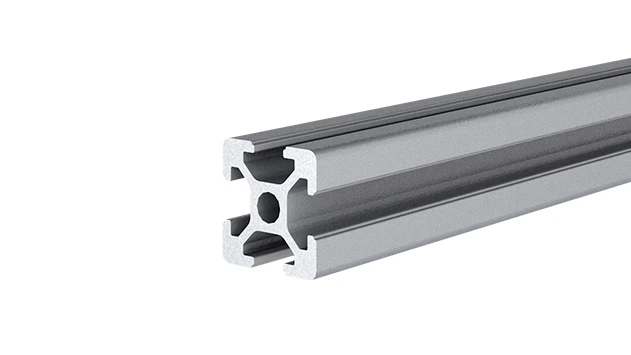
2020 is a 2.00 x 2.00CM fractional 20 series square extrusion T-slot profile with four open T-slots, one on each 2.00 face. The profile has align-a-grooves to assist in aligning connecting profiles.
If you've ever stepped into a modern manufacturing facility, a bustling workshop, or even a high-tech laboratory, you've likely encountered the unsung heroes of industrial design: aluminum profiles. These sleek, modular metal beams form the backbone of workbenches, assembly lines, material racks, and countless other structures that keep production moving. But not all aluminum profiles are created equal. Among the most versatile and widely used options in Europe and beyond is the 2020 EU Standard Aluminum Profile—a compact, standardized solution that has become a go-to for manufacturers seeking precision, flexibility, and compliance. In this article, we'll break down what makes this profile unique, why it matters for your operations, and how it can transform the way you build and adapt your workspace.
Defining the 2020 EU Standard Aluminum Profile: More Than Just a "Size"
At first glance, the name "2020" might seem like a simple reference to dimensions—and in part, it is. The 2020 EU Standard Aluminum Profile is defined by its cross-sectional dimensions: 20 millimeters in width and 20 millimeters in height, forming a square or rectangular shape (though square is most common). But reducing it to just "20x20mm" would be a disservice. What truly sets this profile apart is the "EU Standard" label, which encompasses a suite of strict guidelines for material quality, manufacturing precision, safety, and sustainability. These standards ensure that whether you source the profile from a supplier in Germany, Italy, or Poland, you're getting a product that performs consistently, integrates seamlessly with accessories, and meets the rigorous regulatory requirements of the European union.
Let's start with the basics: the material. Most 2020 EU Standard Aluminum Profiles are made from 6063-T5 aluminum alloy, a popular choice for extrusion due to its excellent balance of strength, corrosion resistance, and workability. The "T5" designation refers to the tempering process—artificial aging at high temperatures—which gives the profile its rigidity without sacrificing ductility. This makes it ideal for lightweight, load-bearing applications where durability is key, such as small workbenches or machine guards.
Key Specifications: What Makes It "Standard"?
To understand why manufacturers rely on the 2020 EU Standard Aluminum Profile, let's dive into its technical specifications. These details might seem nitty-gritty, but they're the foundation of its reliability and versatility. Below is a breakdown of the most critical parameters, organized for clarity:
| Specification | Details | Why It Matters |
|---|---|---|
| Cross-Sectional Dimensions | 20mm (width) x 20mm (height), square or rectangular | Ensures compatibility with standardized accessories (e.g., 2020 aluminum profile end caps, connectors) |
| Wall Thickness | Typically 1.2mm–2.0mm (varies by application) | Balances weight and load capacity; thinner walls for lightweight uses, thicker for heavier loads |
| Weight per Meter | Approx. 0.3kg–0.5kg (depending on wall thickness) | Lightweight design reduces overall structure weight, easing installation and transportation |
| Tolerance | ±0.1mm for dimensions, ±0.5° for straightness (per EU standards) | Precision fit for accessories; no gaps or misalignments in modular builds |
| Surface Treatment | Anodizing (clear, black, or colored), powder coating, or mill finish | Enhances corrosion resistance, aesthetics, and grip; anodizing is common for industrial use |
| Load Capacity | Up to 50kg per linear meter (for 2.0mm wall thickness, evenly distributed load) | Suitable for light-to-medium duty applications like small workbenches or shelving |
One of the most distinctive features of aluminum extrusion profiles like the 2020 is the presence of T-slots—longitudinal grooves along the profile's length. These slots are designed to accept T-slot nuts, bolts, and other fasteners, allowing for quick and tool-free assembly of structures. In EU standard profiles, the T-slot dimensions are also standardized (typically 6mm or 8mm wide), ensuring that accessories from different suppliers will fit without issues. For example, a 90° aluminum profile connector bought from a French supplier should slide seamlessly into a 2020 profile sourced from Spain, thanks to these uniform slot sizes.

Why Manufacturers Choose 2020 EU Standard Profiles: Beyond the Specs
At this point, you might be wondering: with larger profiles like 3030 or 4040 available, why opt for the smaller 2020? The answer lies in its niche: compact, lightweight, and highly adaptable applications where space is limited or heavy loads aren't a primary concern. Let's take a closer look at the scenarios where 2020 profiles shine—and why manufacturers keep coming back to them.
1. Modular Workbenches and Assembly Stations
Walk into any electronics manufacturing plant, and you'll likely find workbenches built with 2020 profiles. These workspaces often require custom configurations—shelving for tools, holders for PCBs, or mounts for small monitors—and 2020's modularity makes reconfiguration a breeze. For example, a workbench might start as a simple flat surface, but with the addition of aluminum profile accessories like side brackets and 2020 aluminum profile end caps (to smooth sharp edges and prevent debris buildup), it can evolve into a fully equipped station with overhead lighting or tool hooks. Because the profiles are lightweight, even a single worker can adjust the setup without heavy machinery.
2. Light-Duty Material Racks and Storage Solutions
Manufacturers dealing with small components—think screws, washers, or electronic parts—need storage that's both organized and space-efficient. 2020 profiles excel here, as they can be assembled into compact material racks with multiple shelves. Unlike bulky steel racks, these aluminum structures are easy to move (if fitted with casters) and won't rust, making them ideal for cleanrooms or humid environments. The T-slots also allow for adjustable shelving heights, so as inventory needs change, the rack can adapt without being replaced.
3. Machine Guards and Safety Enclosures
Safety is non-negotiable in manufacturing, and 2020 profiles are a popular choice for building machine guards. Their slim profile means they don't obstruct visibility, while their strength (when properly braced) provides a reliable barrier. EU standards ensure that these guards meet impact resistance requirements, protecting workers from moving parts without adding unnecessary bulk to the production line. Plus, if a machine is reconfigured, the guard can be disassembled and rebuilt in hours, rather than days.
4. Automation and Robotics Frames
In the age of Industry 4.0, small-scale automation systems—like robotic arms for pick-and-place tasks or conveyor belts for component transport—often rely on 2020 profiles for their frames. These systems require precision alignment, and the tight tolerances of EU standard profiles ensure that moving parts operate smoothly. Additionally, the T-slots make it easy to mount sensors, actuators, or cable management clips, keeping the automation setup organized and reducing the risk of tangled wires.
The Role of Aluminum Profile Accessories: Making 2020 Profiles Truly Versatile
A profile is only as good as the accessories that bring it to life. For 2020 EU Standard Aluminum Profiles, the ecosystem of aluminum profile accessories is what transforms a simple metal beam into a fully functional structure. Let's explore some of the most essential accessories and how they enhance the profile's utility.
2020 Aluminum Profile End Caps
These small, often overlooked components play a big role in both safety and aesthetics. Made from plastic or rubber, end caps fit snugly into the open ends of 2020 profiles, covering sharp edges that could cut workers or catch on clothing. They also prevent dust, debris, or liquids from entering the profile's hollow interior, which can cause corrosion over time. In cleanroom environments, where even tiny particles matter, end caps are non-negotiable. EU standards ensure that end caps for 2020 profiles are precisely sized to fit, so you won't find yourself struggling with loose or ill-fitting caps that fall off during use.
Connectors and Joints
From 90° angles to T-junctions, connectors are the glue that holds modular structures together. EU standard connectors for 2020 profiles are designed to lock into the T-slots, creating secure joints without the need for welding or drilling. Common types include:
- 90° Aluminum Profile Connector: Used to join two profiles at a right angle, perfect for workbench corners or shelf supports.
- 45° Aluminum Profile Connector: Ideal for sloped surfaces, like inclined material chutes or angled machine guards.
- Three-Way Connector: Allows for a T-junction, useful for adding a crossbeam or shelf in the middle of a structure.
T-Slot Nuts and Fasteners
No modular system is complete without the means to attach components, and T-slot nuts are the workhorses here. These nuts slide into the T-slots of the profile and can be positioned anywhere along the length, allowing for infinite adjustability. When paired with bolts, they secure accessories like brackets, panels, or tool holders. EU standards dictate the thread size (often M5 or M6) and tolerances of these nuts, ensuring that a bolt from one supplier will thread smoothly into a nut from another.
Sustainability: A Core Pillar of EU Standard Profiles
In today's manufacturing landscape, sustainability isn't just a buzzword—it's a business imperative. EU regulations like REACH and RoHS set strict limits on hazardous substances, while the European Green Deal pushes for a circular economy. 2020 EU Standard Aluminum Profiles align with these goals in several key ways:
Recyclability
Aluminum is 100% recyclable, and recycling it requires just 5% of the energy needed to produce new aluminum from bauxite ore. EU standard profiles are often made with a high percentage of recycled content (up to 70% in some cases), and at the end of their lifespan, they can be melted down and reused without losing quality. This closed-loop cycle reduces reliance on virgin materials and lowers carbon footprints—a selling point for manufacturers looking to meet sustainability targets.
Energy-Efficient Manufacturing
The aluminum extrusion process used to make 2020 profiles has become increasingly energy-efficient, thanks to EU-mandated improvements in furnace technology and waste heat recovery systems. Many suppliers also use renewable energy (solar, wind) to power their extrusion plants, further reducing the profile's carbon footprint. When manufacturers choose EU standard profiles, they're indirectly supporting these green practices.
Longevity and Durability
A longer-lasting product means less frequent replacement—and less waste. 2020 EU Standard Aluminum Profiles are built to withstand years of heavy use, thanks to their corrosion-resistant alloy and protective surface treatments. Unlike steel, aluminum doesn't rust, so profiles used in humid or wet environments (like food processing facilities) maintain their integrity over time. This durability translates to a lower total cost of ownership, as manufacturers spend less on replacements and repairs.
Choosing the Right Supplier: What to Look For
With so many suppliers offering "2020 aluminum profiles," how do you ensure you're getting the real EU standard deal? Here are the key factors to consider when evaluating a supplier:
1. Certification and Compliance
Ask for documentation proving compliance with EU standards, such as CE marking (indicating conformity with health, safety, and environmental requirements) or ISO 9001 certification (for quality management systems). Reputable suppliers will readily provide these documents, while less scrupulous ones may hesitate or offer vague assurances.
2. Material Traceability
A reliable supplier should be able to trace the aluminum alloy back to its source, ensuring it meets the 6063-T5 specifications. This traceability is critical for quality control and compliance with regulations like REACH, which restricts the use of certain hazardous substances in materials.
3. Range of Accessories
Look for suppliers that offer a comprehensive lineup of aluminum profile accessories, including 2020 aluminum profile end caps, connectors, and fasteners. This ensures that all components are designed to work together, reducing the risk of compatibility issues down the line.
4. Technical Support
Even the most modular system can be confusing to design, especially for complex structures. A good supplier will provide technical support—whether it's help with load calculations, advice on connector selection, or CAD drawings of custom configurations. This support can save manufacturers valuable time and prevent costly mistakes.
The Future of 2020 EU Standard Aluminum Profiles
As manufacturing continues to evolve—with trends like automation, miniaturization, and sustainability driving innovation—the 2020 EU Standard Aluminum Profile is poised to remain a staple. Its combination of compact size, modularity, and compliance makes it well-suited for the next generation of smart factories, where flexibility and efficiency are paramount. We may see advancements in surface treatments (like antimicrobial coatings for medical applications) or even integrated smart features (like embedded RFID tags for inventory tracking), but the core appeal of 2020 profiles—reliability, standardization, and versatility—will endure.
For manufacturers, the message is clear: when you need a lightweight, adaptable, and compliant building block for your production environment, the 2020 EU Standard Aluminum Profile delivers. And with a robust ecosystem of aluminum profile accessories and a global network of certified suppliers, it's a solution that grows with your business—today, tomorrow, and beyond.