- Company Articles
- Industry articles
- Industry standards
- What Is 2020r EU Standard Aluminum Profile? Key Specifications & Compliance

What Is 2020r EU Standard Aluminum Profile? Key Specifications & Compliance
Related Product
2020R EU Standard Aluminum Profile
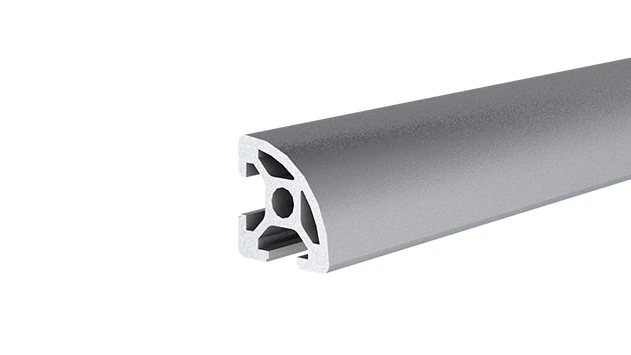
2020R is a 2.00 x 2.00CM fractional 20 series square extrusion T-slot profile with four open T-slots, two side with 2.00cm face, the other side with round face. The profile has align-a-grooves to assist in aligning connecting profiles.
Walk into any modern manufacturing facility, workshop, or even a DIY enthusiast's garage, and you'll likely spot a familiar sight: sleek, modular structures built from aluminum profiles. These unassuming pieces of metal are the unsung heroes of efficiency, quietly holding together workbenches, assembly lines, material racks, and more. Among the countless profiles available, one stands out for its balance of size, strength, and versatility: the 2020r EU Standard Aluminum Profile. If you've ever wondered what makes this profile a go-to choice for engineers, workshop managers, and lean system designers, you're in the right place. Let's dive into what it is, its key specs, why compliance matters, and how it fits into the bigger picture of modern manufacturing.
So, What Exactly Is a 2020r EU Standard Aluminum Profile?
First things first: let's break down the name. "2020" is straightforward—it refers to the profile's cross-sectional dimensions, measuring 20 millimeters by 20 millimeters. That compact size makes it ideal for projects where space is at a premium but strength can't be compromised. Now, the "r" in 2020r? That's a subtle but important detail. In EU standard profiles, "r" typically denotes "rounded edges." Unlike some profiles with sharp, 90-degree corners, the 2020r features gently curved edges, which isn't just about aesthetics. Those rounded edges reduce the risk of cuts or scrapes during assembly, making it safer to handle—especially in busy workshops where workers are moving quickly. It's a small design choice that adds up to big improvements in day-to-day usability.
But the "EU Standard" part is what really sets this profile apart. In Europe, aluminum profiles for industrial use are governed by strict standards to ensure consistency, safety, and quality. These standards cover everything from the alloy used to the tolerances of the T-slots (those handy grooves along the sides that let you attach accessories). When a profile is labeled "EU Standard," it means it's been manufactured to meet these rigorous guidelines, so you can trust that it will work seamlessly with other EU-standard components. For businesses operating in Europe or exporting to EU markets, this compliance isn't just a nice-to-have—it's often a legal requirement.
Key Specifications: The Nuts and Bolts of 2020r
To truly understand why the 2020r is so widely used, let's get into the technical details. These specs might sound dry, but they're the reason this profile can tackle everything from lightweight shelving to heavy-duty workbenches.
1. Cross-Section and Dimensions
As we mentioned, the 2020r has a square cross-section of 20mm x 20mm. But there's more to it than just width and height. The wall thickness of the profile is another critical factor. Most 2020r profiles have a wall thickness of 1.2mm to 2.0mm, with 1.5mm being a common sweet spot. Why does this matter? Thicker walls mean more strength, but they also add weight and cost. The 1.5mm thickness strikes a balance: it's sturdy enough to support tools, materials, or even small machinery on a workbench, but light enough to keep the overall structure easy to move or reconfigure if needed.
Then there are the T-slots. These are the longitudinal grooves that run along each side of the profile, and they're what make aluminum profiles so modular. In 2020r EU standard profiles, the T-slots typically have a width of 6mm or 8mm, with a depth that allows for standard M5 or M6 bolts to fit snugly. This uniformity means you can mix and match aluminum profile accessories—like brackets, hinges, or end caps—from different suppliers, knowing they'll slot right into those T-slots without any hassle.
2. Material: The Alloy Behind the Strength
Not all aluminum is created equal. The 2020r EU Standard profile is almost always made from 6063-T5 aluminum alloy, and for good reason. 6063 is a heat-treatable alloy known for its excellent extrudability (meaning it can be shaped into complex profiles with tight tolerances) and corrosion resistance. When heat-treated to the T5 temper, it gains a good balance of strength and ductility—strong enough to handle static loads (like a shelf full of parts) but not so brittle that it cracks under minor impacts. This alloy is also lightweight, which is a huge plus when building structures that might need to be moved, like portable workbenches or mobile material racks.
3. Tolerances: Why Precision Matters
Imagine trying to build a shelf where one profile is 20.5mm wide and another is 19.8mm—nothing would line up, and the whole structure would wobble. That's where tolerances come in. EU standards (specifically EN 755-2, which covers tolerances for aluminum extrusions) set strict limits on how much a profile can deviate from its nominal dimensions. For the 2020r, the width and height tolerances are typically ±0.2mm, and the straightness tolerance is around 0.5mm per meter. These tight tolerances ensure that when you order 10 pieces of 2020r, they'll all be nearly identical, making assembly smooth and the final structure stable.
4. Surface Treatment: More Than Just Shine
You've probably noticed that aluminum profiles come in different finishes—matte silver, black, even bright gold. But surface treatment is about more than looks. The most common finish for 2020r profiles is anodizing, a process that creates a protective oxide layer on the aluminum's surface. Anodized profiles are more resistant to scratches, corrosion, and fading, which is essential in environments where profiles might be exposed to oils, chemicals, or humidity (think automotive workshops or food processing plants). Some 2020r profiles also come with powder coating, a durable paint-like finish that adds color and extra protection. Both options are compliant with EU standards for environmental safety, meaning they don't contain harmful substances like lead or cadmium.
To summarize these specs, let's put them in a table for clarity:
| Specification | 2020r EU Standard Details | Relevant EU Standard |
|---|---|---|
| Cross-Section Dimensions | 20mm x 20mm, rounded edges (r ≈ 1.5mm) | EN 755-9 (Extruded profiles for general engineering) |
| Wall Thickness | 1.2mm – 2.0mm (common: 1.5mm) | EN 755-2 (Tolerances for extruded profiles) |
| Alloy & Temper | 6063-T5 aluminum alloy | EN 573-3 (Chemical composition of aluminum alloys) |
| T-Slot Size | 6mm or 8mm width (standard for M5/M6 fasteners) | EN 10255 (T-slots for industrial profiles) |
| Surface Treatment | Anodized (20-30μm thickness) or powder-coated | EN 12373-6 (Anodizing) / EN 13438 (Powder coating) |
| Straightness Tolerance | ≤0.5mm per meter length | EN 755-2 |

Compliance: Why EU Standards Aren't Just Red Tape
At this point, you might be thinking, "Do I really need to care about EU standards if I'm not in Europe?" The short answer: yes, if you want a reliable, safe, and future-proof product. Compliance with EU standards isn't just about following rules—it's about ensuring that the profile you're using is fit for purpose, won't fail unexpectedly, and won't harm people or the environment. Let's break down the key compliance areas:
1. CE Marking: A Stamp of Approval
In the EU, most industrial products must carry the CE mark, indicating they meet the essential health, safety, and environmental requirements set out in EU directives. For aluminum profiles like the 2020r, this means complying with the Construction Products Regulation (CPR), which covers everything from mechanical strength to fire resistance. To earn the CE mark, manufacturers must conduct rigorous testing—for example, testing the profile's load-bearing capacity or verifying that its surface treatment doesn't contain restricted chemicals. When you see that CE mark on a 2020r profile, you can trust that it's been independently checked and meets those baseline safety standards.
2. RoHS and REACH: Keeping Chemicals in Check
EU regulations like RoHS (Restriction of Hazardous Substances) and REACH (Registration, Evaluation, Authorization, and Restriction of Chemicals) are all about protecting human health and the environment. RoHS restricts the use of 10 hazardous substances (like lead, mercury, and cadmium) in electrical and electronic equipment, but it also applies to components like aluminum profiles used in those systems. REACH, on the other hand, ensures that chemicals used in products are safe for humans and the planet by requiring manufacturers to register and report on the substances they use. A 2020r EU Standard profile that's compliant with RoHS and REACH won't leach harmful chemicals over time, making it safe to use in sensitive environments like laboratories or medical device manufacturing facilities.
3. Environmental Impact: Sustainability Matters
Modern manufacturing isn't just about making products—it's about making them responsibly. EU standards also emphasize sustainability, and aluminum profiles are inherently eco-friendly. Aluminum is 100% recyclable, and recycling it uses just 5% of the energy required to produce new aluminum from raw ore. Many EU-standard profile manufacturers also use renewable energy in their extrusion processes and minimize waste by recycling scrap aluminum. Choosing a 2020r EU Standard profile isn't just good for your workshop—it's a small step toward reducing your carbon footprint, which is increasingly important for businesses looking to meet sustainability goals or satisfy eco-conscious customers.
Where Does the 2020r Fit In? Real-World Applications
Enough with the specs—let's talk about how the 2020r actually gets used. Its compact size, rounded edges, and compliance make it a jack-of-all-trades in industrial settings. Here are a few common applications where you'll find it hard at work:
1. Workbenches: The Heart of the Workshop
Walk into any workshop, and the workbench is where the magic happens. Whether it's assembling small parts, testing electronics, or packing orders, a good workbench needs to be sturdy, customizable, and easy to adjust. The 2020r profile is perfect for building workbenches because its 20x20mm size keeps the frame lightweight but strong enough to support a plywood or aluminum top. Add some aluminum profile accessories—like adjustable feet, tool holders, or monitor mounts—and you've got a workbench tailored to your exact needs. The rounded edges are a bonus here, too: no more nicking your knuckles when reaching for a tool on the edge of the bench.
2. Lean Systems: Streamlining Manufacturing
Lean manufacturing is all about eliminating waste and improving efficiency, and the 2020r profile is a lean system designer's best friend. Its modularity means you can build custom structures that adapt to your workflow, not the other way around. For example, a lean cell might use 2020r to create flow racks (to keep parts moving smoothly), pick-to-light systems (with brackets for LED indicators), or even small conveyors (using roller track accessories). Because the profile is lightweight, these structures can be reconfigured quickly if your production line changes—no need to buy all-new equipment. It's a cost-effective way to keep your operations agile, which is key in today's fast-paced manufacturing world.
3. Material Racks and Storage Solutions
Storing parts, tools, and supplies efficiently is half the battle in a busy facility. The 2020r profile shines here, too. Its 20x20mm size is ideal for building small to medium-sized racks—think shelving for screws, nuts, and bolts, or bins for finished products. Pair it with accessories like shelf brackets, dividers, or label holders, and you've got a storage system that's organized, easy to access, and scalable. Need to add a shelf? Just cut a few more 2020r lengths, bolt them in with corner codes, and you're done. No need for welding or complex tools—even someone with basic DIY skills can assemble it.
4. Prototyping and Custom Machinery
Engineers and designers love the 2020r for prototyping because it's quick to assemble and modify. Whether you're testing a new assembly line concept or building a one-off machine, the profile's T-slots let you attach sensors, motors, or brackets in minutes. And since it's EU-standard, you can trust that the prototype's dimensions will match the final production version, reducing the risk of costly redesigns later. It's like using digital building blocks, but in real life—fast, flexible, and reliable.
Aluminum Profile Accessories: The Perfect Partners for 2020r
A profile is only as good as the accessories that go with it, and the 2020r has a whole ecosystem of EU-standard aluminum profile accessories designed to make assembly a breeze. Here are a few must-haves:
- Corner Codes: These small, L-shaped brackets slide into the T-slots to join two profiles at 90 degrees. They're adjustable, so you can tweak the angle slightly if needed, and they come in materials like aluminum or zinc-plated steel for extra strength.
- End Caps: No one wants sharp, unfinished ends on their profiles. End caps snap into the ends of the 2020r, covering the raw aluminum and adding a clean, professional look. They also prevent dust and debris from getting inside the profile.
- Adjustable Feet: Uneven floors? No problem. Adjustable feet screw into the bottom of the profile, letting you level your workbench or rack with a quick twist. Some even have rubber soles to prevent slipping.
- T-Slot Nuts and Bolts: These are the workhorses of profile assembly. T-slot nuts slide into the grooves, and bolts thread into them to attach accessories. They come in different sizes (M5, M6) to match the T-slot width of the 2020r.
- Hinges and Locks: Need a fold-down shelf or a door on your storage rack? Hinges designed for 2020r profiles let you add moving parts, while locks keep sensitive tools or materials secure.
The best part? All these accessories are designed to work together seamlessly, thanks to EU standards. You can mix and match brands, and everything will fit—no more guessing if a bracket from Supplier A will work with a nut from Supplier B. It's this interoperability that makes the 2020r such a versatile choice.
Why Choose 2020r Over Other Profiles?
With so many aluminum profiles out there—2020 (sharp edges), 3030 (30x30mm), 4040 (40x40mm), to name a few—why pick the 2020r? It all comes down to balance. The 2020r hits a sweet spot between size, strength, and cost that other profiles can't match. Let's compare:
vs. 2020 (Sharp Edges): The 2020r's rounded edges make it safer and more comfortable to handle, which is a big deal in high-traffic areas. If you're building something that people will interact with daily (like a workbench), the "r" is worth the small premium.
vs. 3030 or 4040 Profiles: Larger profiles like 3030 or 4040 are stronger, but they're also heavier and more expensive. Unless you're supporting very heavy loads (like a shelf full of metal blocks), the 2020r is more than strong enough—and it won't weigh down your structure or blow your budget.
vs. Non-EU Standard Profiles: Non-standard profiles might be cheaper upfront, but they often have looser tolerances, inconsistent T-slot sizes, or lower-quality alloys. This can lead to wobbly structures, that don't fit, or profiles that bend under stress. In the long run, the reliability of an EU-standard profile like the 2020r saves time, money, and headaches.
Wrapping Up: Why the 2020r Matters
At the end of the day, the 2020r EU Standard Aluminum Profile is more than just a piece of metal. It's a building block for efficiency, safety, and sustainability in modern manufacturing. Its 20x20mm size, rounded edges, and strict compliance with EU standards make it versatile enough to handle everything from workbenches to lean systems, while its ecosystem of aluminum profile accessories ensures it can adapt to whatever your workshop throws at it. Whether you're a small business owner building your first workbench or a large manufacturer streamlining your production line, the 2020r offers the kind of reliability and flexibility that's hard to find in other profiles.
So the next time you walk through a workshop and spot those sleek, silver frames holding everything together, take a closer look—chances are, you're looking at a 2020r. And now, you'll know exactly why it's there: because when it comes to building better, safer, and more efficient spaces, the details matter. And the 2020r? It's all about the details.