- Company Articles
- Industry articles
- Industry standards
- What Is 2040 EU Standard Aluminum Profile? Key Definitions and Specifications

What Is 2040 EU Standard Aluminum Profile? Key Definitions and Specifications
Related Product
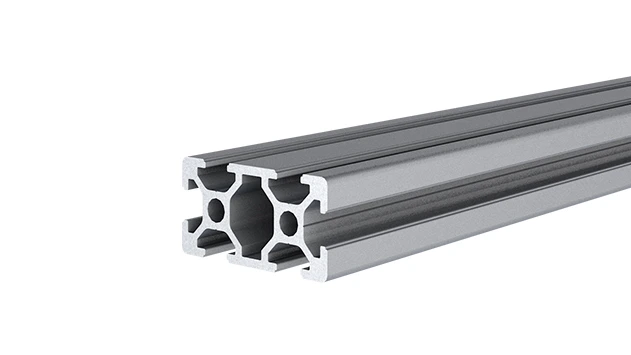
2040 EU Standard Aluminum Profile
2040 is a 2.00 x 4.00CM fractional 20 series square extrusion T-slot profile with four open T-slots, two side with 2.00cm face, the other side with 4.00cm face. The profile has align-a-grooves to assist in aligning connecting profiles.
If you've ever walked through a manufacturing plant, visited a workshop, or even peeked into a DIY enthusiast's garage, you've probably seen those sleek, modular metal structures holding tools, supporting conveyor belts, or forming the frame of a workbench. Chances are, many of those structures were built using aluminum profiles—and if they were designed to European standards, there's a good chance you encountered the 2040 EU Standard Aluminum Profile . But what exactly is it? Why is it so popular? And how does it fit into the bigger picture of industrial and commercial design? Let's dive in and unpack everything you need to know about this versatile building block.
Defining the 2040 EU Standard Aluminum Profile
At its core, the 2040 EU Standard Aluminum Profile is a specific type of aluminum extrusion profile —a product made by pushing heated aluminum alloy through a die to create a consistent, cross-sectional shape. The "2040" in its name refers to its dimensions: 20 millimeters in width and 40 millimeters in height (or vice versa, depending on orientation). The "EU Standard" part means it adheres to strict European manufacturing and quality guidelines, ensuring compatibility, durability, and safety across applications.
But it's not just a simple rectangle. What makes this profile (and others like it) so useful is its T-slot design. Running along its length are grooves (or "slots") that allow for easy attachment of accessories—think brackets, panels, casters, or even other profiles. These slots turn a basic piece of metal into a modular system, letting you build, modify, and expand structures with minimal hassle. If you've ever wished you could rearrange a workstation or add a shelf without drilling holes or welding, you'll appreciate why T-slot profiles have become a go-to in industries ranging from automotive to electronics.
Key Specifications: Breaking Down the Details
To truly understand the 2040 EU Standard Aluminum Profile, let's look at its specs. These details might seem technical, but they're what make it reliable and versatile. Here's a breakdown of the most important specifications:
| Specification | Details | Why It Matters |
|---|---|---|
| Dimensions | 20mm (width) x 40mm (height); length typically 2-6 meters (custom lengths available) | The 20x40 ratio strikes a balance between strength and compactness, ideal for medium-load applications like workbenches or light conveyor frames. |
| Material | Aluminum alloy (most commonly 6063-T5 or 6061-T6) | 6063-T5 offers excellent corrosion resistance and machinability; 6061-T6 adds higher strength for heavier loads. |
| Wall Thickness | 1.2mm to 2.0mm (varies by manufacturer, but 1.5mm is standard) | Thicker walls increase load capacity; thinner walls reduce weight for portable structures. |
| T-Slot Configuration | 2 slots (one on each 40mm side) with slot width of 6mm or 8mm (EU standard: 6mm) | Consistent slot size ensures compatibility with EU-standard aluminum profile accessories like bolts, nuts, and brackets. |
| Surface Treatment | Anodized (clear, black, or silver) or powder-coated (custom colors) | Anodizing adds a protective oxide layer, preventing rust and wear; powder coating offers color options and extra durability. |
| Load Capacity | Vertical: up to 200kg/m; Horizontal (span 1m): up to 50kg (varies by wall thickness) | Determines if the profile can support shelves, tools, or machinery without bending or warping. |
| Tolerance | ±0.1mm for dimensions, ±0.5° for straightness | Tight tolerances ensure profiles fit together seamlessly, critical for modular builds. |
You might be thinking, "Why does wall thickness matter so much?" Let's say you're building a workbench for a lean system —a setup designed to minimize waste and maximize efficiency. A 1.5mm wall profile would work great for holding tools and small parts, but if you need to mount a heavy drill press, you'd opt for 2.0mm to avoid sagging over time. It's all about matching the profile to the job.

From Raw Aluminum to Finished Profile: The Extrusion Process
Ever wondered how these profiles are made? The process, called extrusion, is a bit like squeezing toothpaste out of a tube—though on a much larger, more precise scale. Here's a simplified look:
1. Melting and Casting: Raw aluminum ingots are heated to around 500°C (932°F) until they're malleable. They're then cast into billets (cylindrical blocks) that fit into extrusion presses.
2. Extrusion: A billet is loaded into a press, where a hydraulic ram pushes it through a steel die. The die has a 20x40 T-slot shape, so as the aluminum flows through, it takes on that exact cross-section. Imagine pressing playdough through a cookie cutter—same idea, just with molten metal and way more force.
3. Cooling and Aging: The extruded profile is cooled rapidly with water to set its shape. It's then "aged" (heated at a lower temperature for several hours) to strengthen the aluminum alloy—this is why you'll see "T5" or "T6" in the material specs (T5 = air-cooled, T6 = water-quenched).
4. Surface Treatment: Finally, the profile is cut to length, and its surface is treated (anodized or powder-coated) to protect against corrosion and enhance appearance.
This process is efficient, cost-effective, and allows for consistent quality—key reasons why aluminum extrusion profiles dominate modular design.
Design Features That Make It a Workhorse
Beyond its specs, the 2040 EU Standard Aluminum Profile has design features that set it apart. Let's highlight a few:
T-Slots for Versatility: As mentioned, the T-slots are the star here. They let you slide in bolts, nuts, or special connectors without drilling. Need to add a shelf? Just insert a bracket into the slot and tighten a screw. Want to reposition a light? Loosen the nut, move it, and retighten. It's like building with giant, industrial Legos.
Lightweight but Strong: Aluminum is about 1/3 the weight of steel, making profiles easy to handle and install. But don't let the lightness fool you—thanks to the alloy and extrusion process, a 2040 profile can support significant weight. For example, a 1-meter length with 1.5mm walls can hold around 50kg horizontally, which is more than enough for most workbench tools or material racks.
Corrosion Resistance: Aluminum naturally forms a protective oxide layer, but anodizing (a common surface treatment) thickens this layer, making the profile resistant to rust, chemicals, and weather. This is why you'll see it in factories with high humidity or even outdoor applications like trade show booths.
Compatibility: EU standards mean profiles from different manufacturers work together. A 2040 profile from Company A will fit with a bracket from Company B, as long as both follow the standard. This interchangeability saves time and money—no need to stick to one brand.
Accessories: The Cherry on Top of Modularity
A profile is only as good as the accessories that go with it. Aluminum profile accessories turn a single 2040 piece into a fully functional system. Here are some must-know accessories, including a few tailored specifically for the 2040 profile:
2040 Aluminum Profile End Cap: These small, often plastic or rubber caps snap onto the ends of the profile, covering sharp edges (safety first!) and preventing dust, debris, or moisture from getting inside the T-slots. They come in colors like black, white, or gray to match the profile's finish.
Connectors: Need to join two profiles at a 90° angle? Use a corner bracket. Want to extend a profile straight? A straight connector. There are even 45° connectors, T-joints, and cross-joints for complex builds. Most slide into the T-slots and tighten with a hex key—no welding required.
Panels and Plates: Attach plywood, acrylic, or metal panels to the profile using panel mounts, turning it into a workbench top, machine guard, or storage cabinet door.
Casters: Add wheels to the bottom of a profile frame, and you've got a mobile workstation or cart. Casters with brakes keep things steady when you need them to stay put.
Slots and Nuts: T-slot nuts (also called "drop-in nuts") fit into the slots and allow you to attach bolts from the outside. They're reusable, so you can reposition them as your needs change.
The beauty of these accessories is that they're designed to work with the 2040 profile's T-slots, so you don't need special tools or skills to use them. It's DIY-friendly, even for beginners.
Real-World Applications: Where You'll Find 2040 Profiles
Now that we know what it is and how it works, let's talk about where the 2040 EU Standard Aluminum Profile shines. Its size and strength make it perfect for medium-duty tasks—here are some common uses:
Lean System Workstations: In manufacturing, lean system principles focus on reducing waste and improving workflow. 2040 profiles are ideal for building custom workstations where tools, parts, and assembly areas are organized for efficiency. Add a pegboard, a shelf for bins, and a light, and you've got a workstation that adapts as production needs change.
Conveyor Frames: Light to medium-weight conveyors (think moving small parts or packages) often use 2040 profiles as their frame. The T-slots make it easy to mount rollers, guides, or sensors along the length.
Material Racks and Shelving: Need a rack to hold boxes, tools, or raw materials? Build it with 2040 profiles. Adjust the shelf height by moving the brackets in the T-slots—no need to drill new holes if you switch to taller boxes.
Retail Displays: Stores use these profiles to create custom shelving, product stands, or checkout counters. They're sleek, modern, and easy to reconfigure for seasonal displays.
DIY Projects: Hobbyists love 2040 profiles for everything from 3D printer enclosures to garage storage systems. Their modularity means you can start small and expand later—great for those who like to tinker.
Even in unexpected places: I once saw a coffee shop use 2040 profiles to build a custom condiment bar, with slots holding napkin holders and syrup dispensers. It was functional, easy to clean, and had that industrial-chic vibe customers love.
Why Choose 2040 Over Other Profiles?
Aluminum profiles come in all sizes—2020, 3030, 4040, 4080, etc. So why pick 2040? It all comes down to balance. Let's compare:
2020 Profile (20x20mm): Smaller and lighter, great for lightweight projects like 3D printer frames or small shelves. But it can't handle as much weight as 2040.
3030 Profile (30x30mm): Stronger than 2040 but bulkier. Better for heavier loads, but overkill if you don't need the extra strength.
4040 Profile (40x40mm): The "big brother" of 2040, with higher load capacity. Ideal for heavy machinery frames or large workbenches. But it's heavier and takes up more space.
The 2040 profile hits the sweet spot for many applications: it's strong enough for most medium-duty tasks but not so large that it wastes space or adds unnecessary weight. If you're building something that needs to be sturdy but flexible—like a lean system workstation or a mobile cart—2040 is often the best choice.
The Benefits: Why Industries Love It
To wrap up, let's summarize why the 2040 EU Standard Aluminum Profile has become a staple in so many industries:
Cost-Effective: Extrusion is an efficient manufacturing process, so profiles are affordable, especially in bulk. Plus, their modularity means you can reuse them when you redesign a space—no need to buy new materials.
Time-Saving: Building with profiles and accessories is faster than welding or drilling. A basic workstation can be assembled in hours, not days.
Durable: Aluminum resists corrosion, and the anodized finish adds years of life. Even in busy factories, these profiles hold up to daily wear and tear.
Sustainable: Aluminum is 100% recyclable, and many manufacturers use recycled materials in production. It's a greener choice than steel or plastic in many cases.
Customizable: With T-slots and a wide range of accessories, you can build almost anything. No two 2040-based projects have to look the same—adaptability is built in.
Final Thoughts: Is 2040 Right for You?
Whether you're a manufacturer setting up a lean system, a small business owner building retail displays, or a DIYer tackling a garage organization project, the 2040 EU Standard Aluminum Profile offers a winning combination of strength, versatility, and ease of use. Its T-slot design, compatibility with accessories like the 2040 aluminum profile end cap , and adherence to EU standards make it a reliable choice for anyone who values flexibility and durability.
So the next time you see a sleek, modular structure in a workshop or factory, take a closer look—chances are, it's built with 2040 profiles. And who knows? Maybe you'll be inspired to build something with them yourself. After all, with a little creativity and the right accessories, the possibilities are nearly endless.