- Company Articles
- Industry articles
- Industry standards
- What is 3030a EU Standard Aluminum Profile? Key Features & Applications Explained

What is 3030a EU Standard Aluminum Profile? Key Features & Applications Explained
Related Product
3030A EU Standard Aluminum Profile
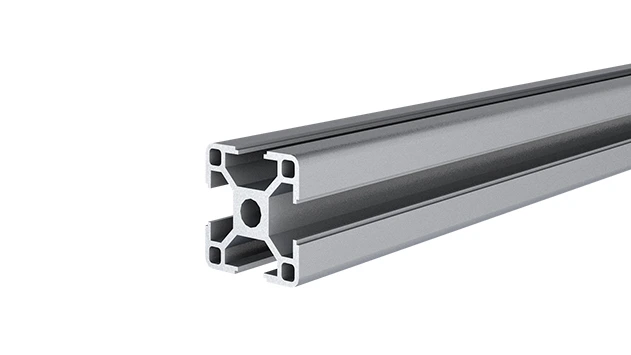
3030 is a 3.00 x 3.00CM fractional 30 series square extrusion T-slot profile with four open T-slots, each side with 3.00cm face. The profile has align-a-grooves to assist in aligning connecting profiles.
If you've ever walked through a modern factory, a busy workshop, or even a well-organized lab, you've probably seen them—sleek, modular structures that seem to adapt effortlessly to whatever task they're assigned. From workbenches that hold heavy machinery to material racks that keep inventory flowing smoothly, these structures often share a common building block: aluminum profiles. And among the most versatile and widely used of these is the 3030a EU Standard Aluminum Profile. But what exactly is it? Why does it carry the "EU Standard" label? And how can it transform the way you build, organize, or optimize your workspace? Let's dive in and unpack everything you need to know.
What is 3030a EU Standard Aluminum Profile?
At its core, the 3030a EU Standard Aluminum Profile is a precision-engineered extrusion made from high-grade aluminum alloy, designed to meet strict European union (EU) standards for quality, safety, and performance. The "3030" in its name refers to its cross-sectional dimensions: 30mm in width and 30mm in height, making it a square-profile extrusion. The "a" typically denotes a specific variation in its design—often related to the number, size, or placement of T-slots (those handy grooves running along its length that make assembly a breeze). The "EU Standard" tag isn't just a marketing label; it means the profile has undergone rigorous testing to ensure consistency in dimensions, material strength, corrosion resistance, and environmental compliance—critical factors for businesses operating in regulated industries or looking for long-term reliability.
Unlike generic aluminum extrusions, which might vary in quality or fit from batch to batch, the 3030a EU Standard profile is manufactured using state-of-the-art extrusion processes. This ensures every piece has uniform wall thickness, precise T-slot dimensions, and a smooth surface finish. Whether you're ordering 10 pieces or 1,000, you can trust that each profile will fit together seamlessly—a level of consistency that saves time, reduces waste, and eliminates the frustration of mismatched parts.
Key Features of 3030a EU Standard Aluminum Profile
What sets the 3030a EU Standard Aluminum Profile apart from other building materials? Let's break down its most standout features:
1. Premium Material Composition
The 3030a profile is typically crafted from 6063-T5 aluminum alloy, a popular choice for extrusions thanks to its winning combination of strength, lightness, and corrosion resistance. This alloy undergoes heat treatment (the "T5" designation) to enhance its mechanical properties, resulting in a profile that can handle moderate to heavy loads without bending or warping. Unlike steel, which rusts easily, aluminum naturally forms a protective oxide layer, making the 3030a ideal for use in humid environments, cleanrooms, or even outdoor settings (with proper maintenance). And because it's aluminum, it's significantly lighter than steel—so you can build sturdy structures that are still easy to reposition if your workflow changes.
2. Versatile T-Slot Design
If there's one feature that makes aluminum profiles a favorite among engineers, builders, and DIY enthusiasts, it's the T-slot. The 3030a EU Standard profile typically has two or more T-slots running along each of its four sides (though the exact number and size can vary by manufacturer). These slots act like built-in "tracks" that accept a wide range of aluminum profile accessories—think brackets, connectors, handles, panels, and even wheels. The beauty of this design? You don't need drills, welders, or special tools to assemble or modify structures. Simply slide a T-nut into the slot, tighten a bolt, and you're done. Need to add a shelf to a workbench? Swap out a connector to reangle a material rack? The T-slot system lets you make changes in minutes, not hours—perfect for lean manufacturing setups where flexibility is key.
3. Compatibility with a Universe of Accessories
A profile is only as good as the accessories it works with, and the 3030a EU Standard doesn't disappoint. Because it adheres to EU sizing standards, it plays well with a vast ecosystem of aluminum profile accessories—from simple corner brackets and end caps to more specialized parts like hinges, locks, and cable management clips. Need to mount a plywood panel to your workbench? Use panel mounts designed for 30mm T-slots. Want to add casters to make a material rack mobile? There are caster brackets specifically engineered to fit the 3030a's slots. This compatibility means you're never limited by "one-size-fits-none" solutions; instead, you can mix and match parts to create exactly what you need, whether it's a basic shelving unit or a complex automated conveyor frame.
4. Precision and Consistency
In manufacturing, even a 1mm discrepancy can throw off an entire assembly line. That's why the EU Standard matters so much for the 3030a profile. Every extrusion is measured and inspected to ensure its dimensions are within tight tolerances—so when you order a 30mm x 30mm profile, you get exactly that, not 29.8mm or 30.2mm. This precision extends to the T-slots, too: their width, depth, and spacing are standardized, so accessories from different suppliers will still fit together. Imagine building a flow rack where each shelf must align perfectly to keep products sliding smoothly—with non-standard profiles, you might spend hours shimming and adjusting to fix misalignments. With the 3030a EU Standard, those headaches disappear. Every piece fits, every connection is secure, and every structure performs as intended.
5. Lightweight Yet Surprisingly Strong
Aluminum is known for being lightweight, but the 3030a EU Standard profile takes it a step further by balancing low weight with impressive strength. Thanks to its alloy composition and extrusion design, it can support significant loads without adding unnecessary bulk. For example, a single 3030a profile (depending on wall thickness) can easily hold 50-100kg when used as a vertical support in a workbench. Compare that to steel, which would be heavier and harder to maneuver, or plastic, which might warp under similar loads. This strength-to-weight ratio makes the 3030a ideal for applications where mobility and durability are both priorities—like turnover trolleys that need to be pushed around a factory floor or workbenches that might need to be repositioned as production needs change.

Applications: Where Does the 3030a EU Standard Profile Shine?
The 3030a EU Standard Aluminum Profile isn't a one-trick pony. Its versatility and reliability make it a go-to choice across industries. Let's look at some of the most common ways it's used:
Workbenches: The Backbone of Productivity
Walk into any assembly line, electronics workshop, or lab, and you'll likely find workbenches built with 3030a profiles. Why? Because they're customizable, durable, and easy to adapt. Need a workbench with a solid top for manual assembly? Mount a plywood or aluminum honeycomb panel to the 3030a frame using T-slot panel mounts. Want to add a shelf for tools underneath? Attach brackets to the side slots. Even specialized workbenches—like ESD (electrostatic discharge) workstations for handling sensitive electronics—can be built using 3030a profiles, with ESD-safe accessories (like grounding clips) integrated directly into the T-slots. The result? A workbench that grows with your needs, not one that becomes obsolete when you upgrade your equipment.
Material Racks and Flow Racks: Keeping Inventory Moving
In lean manufacturing, "flow" is everything—materials should move from storage to production with minimal effort and no bottlenecks. That's where 3030a profiles excel in building material racks and flow racks. A flow rack, for example, uses inclined shelves with roller tracks to let products slide forward as items are removed (think of a grocery store shelf where cans roll toward the front). The 3030a's strength ensures the rack can support heavy loads of boxes or parts, while its T-slots make it easy to adjust shelf heights or add dividers to separate different items. Even simple shelving units benefit from the profile's modularity: need to add a layer? Just cut a few more 3030a lengths, connect them with corner brackets, and you're done. No need to buy a whole new rack—just expand the one you have.
Conveyor Systems: Smooth, Reliable Transport
Conveyors are the arteries of many production lines, moving parts from one station to the next. Building a conveyor frame that's sturdy enough to support the weight of the belt or roller track, yet lightweight enough to integrate into tight spaces, is no small feat. The 3030a EU Standard profile rises to the challenge. Its rigidity ensures the conveyor stays aligned (no sagging mid-run), while its T-slots make mounting roller tracks, motors, or guide rails a breeze. For example, roller track placon mounts (specialized brackets for attaching roller tracks to profiles) fit perfectly into the 3030a's T-slots, creating a secure connection that can handle the constant motion of products sliding over rollers. And if you need to reconfigure the conveyor's path? Just disassemble the 3030a frame, rearrange the profiles, and reassemble—no welding or cutting required.
Custom Machinery Frames: Building the Tools You Need
Not every workspace needs off-the-shelf equipment. Sometimes, you need a custom machine—maybe a test rig for prototypes, a packaging station tailored to your product, or a small assembly line for a niche process. The 3030a EU Standard profile is a dream for building these custom frames. Its strength allows it to support motors, sensors, and moving parts, while its modularity lets you iterate quickly. Want to add a guard rail around a machine? Attach aluminum side guards using T-slot brackets. Need to mount a control panel? Use a panel holder designed for 30mm slots. Even complex shapes—like angled frames or multi-level structures—are easy to build with 3030a profiles and angle brackets (like 90° or 45° aluminum profile connectors). The best part? If your machine design changes (and it will), you can reuse the profiles to build something new—no waste, just creativity.
Lean System Setups: Streamlining Workflows
Lean manufacturing is all about eliminating waste—whether it's time, space, or materials. The 3030a EU Standard profile aligns perfectly with this philosophy. Its modularity means you can build exactly what you need, no more (no wasted materials) and no less (no inefficient workarounds). For example, a lean pipe workbench (though traditionally made with steel pipes) can be upgraded with 3030a profiles for a lighter, more durable setup. Or a turnover trolley—used to move parts between stations—can be built with 3030a frames and casters, making it easy to push and simple to repair if a wheel breaks (just swap out the caster bracket). Even small changes, like adding a tool holder to a workbench using T-slot accessories, reduce the time workers spend searching for tools—waste eliminated, productivity boosted.
3030a vs. Other Profiles: Why Choose the EU Standard?
With so many aluminum profiles on the market—2020, 4040, non-standard "3030" knockoffs—why stick with the 3030a EU Standard? Let's break down the advantages:
| Feature | 3030a EU Standard | Non-Standard 3030 Profiles | Smaller Profiles (e.g., 2020 EU) | Larger Profiles (e.g., 4040 EU) |
|---|---|---|---|---|
| Dimensions | Consistent 30mm x 30mm (±0.1mm tolerance) | Often vary (e.g., 29.5mm or 30.5mm) | 20mm x 20mm (lighter, less load capacity) | 40mm x 40mm (heavier, higher load capacity) |
| Accessory Compatibility | Works with all EU-standard 30mm T-slot accessories | May require custom or "one-off" accessories | Limited to smaller accessories; lower weight capacity | Compatible with larger accessories, but bulkier |
| Strength-to-Weight Ratio | Excellent (supports ~50-100kg per vertical section) | Inconsistent (may sag under heavy loads) | Good for light loads (~20-30kg per section) | Very strong (~150-200kg per section), but heavier |
| Cost-Effectiveness | Mid-range; higher upfront cost, but lower long-term waste | Cheaper upfront, but higher replacement/repair costs | Lower cost, but limited to light-duty use | Higher cost; overkill for small to medium loads |
In short, the 3030a EU Standard strikes a sweet spot: it's strong enough for most medium-duty applications, lightweight enough to be mobile, and compatible with a huge range of accessories. And because it's standardized, you avoid the headaches of mismatched parts or weak spots in your structures—saving time and money in the long run.
How to Choose the Right 3030a Profile for Your Project
Not all 3030a EU Standard profiles are identical—even within the "3030a" category, there are variations (like wall thickness, number of T-slots, or surface finish). To pick the right one for your project, ask yourself a few key questions:
What's the maximum load it needs to support? If you're building a workbench for heavy tools, opt for a profile with thicker walls (e.g., 2.0mm vs. 1.5mm). If it's a lightweight shelving unit for small parts, a thinner wall might be sufficient.
Will it be used indoors or outdoors? Most 3030a profiles have a natural anodized finish that resists corrosion, but if you're using it outdoors or in a humid environment, look for profiles with additional coatings (like powder coating) for extra protection.
What accessories do you need? Check that the profile's T-slot size (usually M5 or M6) matches the bolts and nuts on your accessories. If you're using specialized parts (like heavy-duty hinges or locks), confirm they're designed for 30mm EU-standard slots.
Is mobility important? If you're building a trolley or movable workbench, pair the 3030a profile with lightweight accessories (like aluminum honeycomb panels instead of plywood) to keep the total weight manageable.
Conclusion: Why the 3030a EU Standard Aluminum Profile Matters
At the end of the day, the 3030a EU Standard Aluminum Profile is more than just a piece of metal—it's a building block for efficiency, flexibility, and innovation. Its combination of strength, versatility, and compatibility with aluminum profile accessories makes it a favorite in industries ranging from manufacturing and logistics to robotics and research. Whether you're setting up a small workshop or scaling a large production line, it offers a level of adaptability that traditional materials (like steel or wood) can't match. And because it adheres to EU standards, you can trust that every profile you buy will perform consistently, project after project.
So the next time you're looking to build, upgrade, or optimize your workspace, remember: the right foundation makes all the difference. And for many, that foundation starts with the 3030a EU Standard Aluminum Profile—strong enough to support your goals, flexible enough to grow with your needs, and reliable enough to last for years to come.