- Company Articles
- Industry articles
- Industry standards
- What is 4040A EU Standard Aluminum Profile? Definition & Core Specifications

What is 4040A EU Standard Aluminum Profile? Definition & Core Specifications
Related Product
4040A EU Standard Aluminum Profile
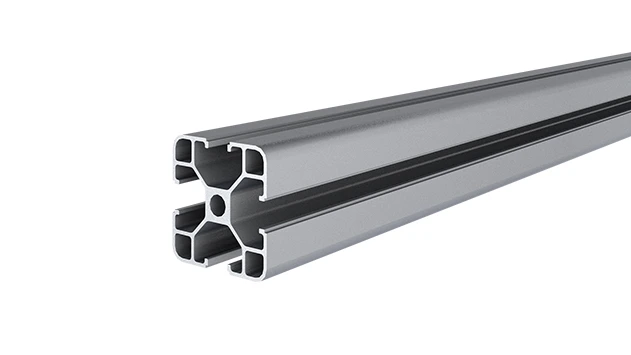
4040A is a 4.00x4.00 CM fractional 40 series square extrusion T-slot profile with four open T-slots, each side with 4.00cm face.
Introduction: The Backbone of Modern Industrial Design
Walk into any manufacturing plant, workshop, or even a tech startup's prototyping lab, and you'll likely spot a common thread: sturdy, modular structures that seem to adapt effortlessly to their surroundings. From workbenches holding precision tools to material racks organizing components, these setups often owe their flexibility to one unsung hero: the aluminum extrusion profile. Among the countless profiles available, one stands out for its balance of strength, versatility, and compliance with global standards: the 4040A EU Standard Aluminum Profile .
Whether you're a small business owner setting up your first production line, a facility manager optimizing workflow for a lean system, or a hobbyist building a custom workbench, understanding what makes the 4040A profile unique can save you time, money, and headaches. In this guide, we'll dive deep into its definition, core specifications, and why it's become a go-to choice for engineers, designers, and makers across Europe and beyond.
What Exactly is 4040A EU Standard Aluminum Profile?
Let's start with the basics. An aluminum extrusion profile is created by pushing heated aluminum billet through a die, shaping it into a consistent cross-section. This process allows for intricate designs, making aluminum profiles ideal for everything from structural supports to lightweight frames. The "4040A" in its name isn't just a random code—it tells you exactly what to expect.
The first two numbers, "40," refer to the profile's width and height, both measuring 40mm. Unlike irregularly shaped profiles, the 4040A is square (or nearly square), with symmetrical dimensions that simplify assembly. The "A" denotes a specific variation within the 4040 series, often indicating details like wall thickness, slot design, or compatibility with accessories. Finally, "EU Standard" means it adheres to strict European norms for quality, safety, and interoperability—more on that later.
Think of it as the Swiss Army knife of industrial profiles: not too big to be cumbersome, not too small to lack strength, and designed to work seamlessly with a wide range of aluminum profile accessories . Whether you need to build a heavy-duty material rack or a lightweight workbench, the 4040A provides a reliable foundation.

Core Specifications: Breaking Down the Details
To truly appreciate the 4040A profile, let's break down its key specifications. These details aren't just technicalities—they determine how the profile performs in real-world applications, from load-bearing capacity to ease of assembly.
Key Dimensions & Tolerances
At its core, the 4040A is defined by its 40mm x 40mm cross-section, but there's more to it. The wall thickness, for example, typically ranges from 1.5mm to 3mm, depending on the manufacturer and intended use. Thicker walls boost strength (great for heavy machinery workbenches), while thinner walls reduce weight (ideal for mobile carts). EU standards mandate tight tolerances here—usually ±0.3mm for width/height and ±0.1mm for wall thickness—to ensure parts from different suppliers fit together perfectly.
Material Composition & Mechanical Properties
Most 4040A profiles are made from 6063-T5 aluminum alloy, a popular choice for extrusions. Why? 6063 aluminum offers a winning combo of strength, corrosion resistance, and machinability. After extrusion, the profile undergoes heat treatment (T5 tempering), which hardens the material without making it brittle. This results in a tensile strength of around 180-220 MPa and a yield strength of 110-160 MPa—numbers that translate to the ability to support hundreds of kilograms without bending or warping.
Surface Treatments
You've probably noticed aluminum profiles come in different finishes, and the 4040A is no exception. Common treatments include anodizing (creating a protective oxide layer that's both durable and aesthetically pleasing), powder coating (for color customization and extra corrosion resistance), or simply mill finish (raw, uncoated aluminum, often used when weight is critical). EU standards require surface treatments to meet specific adhesion and corrosion resistance tests—for example, anodized layers must be at least 10μm thick to qualify for outdoor use.
Slot Design: The Secret to Modularity
One of the 4040A's most useful features is its T-slot design. Running along its length, these slots allow for quick attachment of accessories like brackets, shelves, and handles without drilling or welding. EU standards specify slot dimensions (typically 8mm or 10mm wide) and placement (centered on each face) to ensure compatibility with universal accessories. This modularity is why the 4040A is a favorite for lean systems—you can reconfigure your setup in hours, not days.
Core Specifications at a Glance
| Feature | 4040A Specification | EU Standard Reference |
|---|---|---|
| Width x Height | 40mm x 40mm (±0.3mm tolerance) | EN 755-9 |
| Wall Thickness | 1.5mm – 3mm (±0.1mm tolerance) | EN 755-2 |
| Material Alloy | 6063-T5 aluminum | EN 573-3 |
| Tensile Strength | 180 – 220 MPa | EN ISO 6892-1 |
| Surface Treatment | Anodized (≥10μm), powder coated, or mill finish | EN 12373-6 |
| T-Slot Dimensions | 8mm or 10mm width, centered on each face | EN 6060 |
Why EU Standards Matter: More Than Just a Stamp
You might be wondering: Why pay extra attention to "EU Standard" profiles? Can't any 40mm aluminum profile work? The short answer is no—and here's why.
European standards (EN norms) are developed by industry experts to ensure consistency, safety, and quality. For example, EN 755-9 specifies dimensional tolerances for extruded profiles, ensuring that a 4040A from a German supplier fits perfectly with accessories from a Polish manufacturer. EN 12373-6 sets corrosion resistance standards, so you know your profile won't degrade in humid factory environments. And EN ISO 6892-1 guarantees mechanical properties, so you can trust the profile to support the loads it's rated for.
Compliance also opens doors for businesses. If you're exporting products to Europe, using EU-standard profiles simplifies regulatory approval. Even locally, customers often prioritize EU-compliant components, knowing they're backed by rigorous testing.
Applications: Where the 4040A Shines
Now that we understand the specs, let's look at how the 4040A is used in the real world. Its versatility makes it a staple in industries ranging from automotive to aerospace, but here are a few common applications:
Workbenches: The Heart of the Workshop
A well-built workbench needs to be sturdy, customizable, and easy to modify. The 4040A excels here. Pair it with a plywood or aluminum honeycomb top, add a few shelves using angle brackets, and you've got a bench that can support power tools, assembly jigs, or even small machinery. Its T-slots let you mount accessories like tool holders or LED lights without drilling, so you can tailor the bench to your workflow.
Lean Systems: Streamlining Production
Lean manufacturing is all about eliminating waste and optimizing flow. The 4040A's modularity makes it perfect for building lean system components like flow racks, conveyor supports, and kanban boards. Need to reconfigure your assembly line to accommodate a new product? Simply loosen the brackets, adjust the profiles, and you're done—no need for welding or custom fabrication.
Material Racks & Carts: Organizing Chaos
From warehouses to labs, keeping materials organized is key to efficiency. The 4040A's strength allows it to support heavy loads, making it ideal for multi-tiered material racks. Add casters (another common accessory) and you've got a mobile cart that can transport parts across the factory floor. Its square shape ensures stability, even when loaded with awkwardly shaped items.
Prototyping & Custom Projects
Beyond industrial use, the 4040A is a favorite among makers and DIY enthusiasts. Its modularity lets you prototype everything from 3D printer enclosures to robotics frames. Since it's lightweight compared to steel but still strong, it's easy to work with—no need for heavy machinery to cut or drill.
Aluminum Profile Accessories: Making the 4040A Even More Versatile
A profile is only as good as the accessories that bring it to life. The 4040A's T-slot design works with a vast ecosystem of aluminum profile accessories , turning a simple extrusion into a fully functional system. Here are some must-know accessories:
- Connectors: These join profiles at angles (90°, 45°, 135°) or in straight lines. Common types include corner brackets, T-connectors, and 3-way joints, all designed to slide into T-slots and secure with bolts.
- End Caps: Simple but essential, these cover the ends of profiles to prevent sharp edges and keep out dust. They come in plastic (for lightweight use) or aluminum (for durability).
- Slot Nuts & Bolts: The unsung heroes of assembly, slot nuts slide into T-slots and lock in place, allowing you to attach accessories without nuts showing on the outside.
- Panels & Covers: Plexiglass, plywood, or aluminum panels can be mounted to profiles using brackets, creating enclosures for machinery or privacy screens in workspaces.
- Casters: Add mobility to carts and workbenches with lockable casters, which attach via mounting plates that fit into T-slots.
The best part? Most accessories are universal across EU-standard profiles, so you can mix and match brands without compatibility issues. This interchangeability is a big reason the 4040A is so popular—it grows with your needs.
Why Choose 4040A Over Other Profiles?
With so many aluminum profiles available—3030, 2020, 4080, to name a few—why opt for the 4040A? Here's what sets it apart:
Balance of size and strength: The 40mm x 40mm size hits a sweet spot. It's larger than 3030 profiles (which can feel flimsy for heavy use) but smaller than 4080 (which may be overkill for lightweight projects). This makes it ideal for medium-duty applications, the most common in workshops and factories.
Cost-effectiveness: While larger profiles like 4080 offer more strength, they also cost more and add unnecessary weight. The 4040A gives you the strength you need at a price that won't break the bank—especially when buying in bulk.
Widespread availability: Because it's a EU standard, the 4040A is produced by hundreds of suppliers across Europe and beyond. This means easy access to profiles and accessories, even for small orders.
Future-proofing: As your needs grow, the 4040A can scale with you. Need to add a second shelf to your workbench? Just buy a few more brackets. Want to upgrade to a heavier load capacity? Switch to a thicker-wall version—same profile, same accessories.
Common Misconceptions: Separating Fact from Fiction
Even with its popularity, there are a few myths surrounding the 4040A. Let's debunk them:
Myth 1: "All 4040 profiles are the same." Not true. The "A" in 4040A denotes specific features (like slot size or wall thickness) that vary between manufacturers. Always check the datasheet to ensure compatibility with your accessories.
Myth 2: "Thicker walls are always better." Thicker walls do mean more strength, but they also add weight and cost. For most applications, 2mm wall thickness is sufficient—only opt for 3mm if you're supporting extremely heavy loads.
Myth 3: "EU standard profiles are overpriced." While they may cost slightly more than non-standard profiles, the peace of mind (knowing they meet safety and quality standards) and long-term savings (fewer replacements, easier repairs) make them worth the investment.
Future Trends: What's Next for the 4040A?
As manufacturing evolves, so too do aluminum profiles. Here are a few trends shaping the future of the 4040A:
Sustainability: With a growing focus on eco-friendly manufacturing, suppliers are increasingly using recycled aluminum in profiles. The 4040A's extrusion process is already energy-efficient, and recycled aluminum reduces its carbon footprint even further.
Smart Integration: Imagine T-slots with built-in channels for wiring, or profiles embedded with sensors to monitor load stress. While still niche, these innovations could make the 4040A a key component in smart factories.
Custom Finishes: Beyond anodizing and powder coating, we're seeing demand for specialized finishes like anti-microbial coatings (for medical facilities) or conductive coatings (for electronics manufacturing). The 4040A's versatility makes it easy to adapt to these needs.
Conclusion: The 4040A—A Foundation for Innovation
The 4040A EU Standard Aluminum Profile isn't just a piece of metal—it's a building block for innovation. Its combination of strength, modularity, and compliance with EU standards makes it indispensable for anyone looking to build durable, adaptable systems. Whether you're setting up a small workshop or scaling a factory, the 4040A offers the flexibility to grow with your needs, backed by the reliability of European quality.
So the next time you walk into a well-organized workspace, take a closer look at the structures around you. Chances are, you'll spot the 4040A hard at work—quietly supporting the ideas, products, and processes that drive modern industry.