- Company Articles
- Industry articles
- Industry standards
- What is 4040B EU Standard Aluminum Profile? Definition & Key Features

What is 4040B EU Standard Aluminum Profile? Definition & Key Features
Related Product
4040B EU Standard Aluminum Profile
4040B is a 4.00x4.00 CM fractional 40 series square extrusion T-slot profile with four open T-slots, each side with 4.00cm face. The profile has align-a-grooves to assist in aligning connecting profiles.
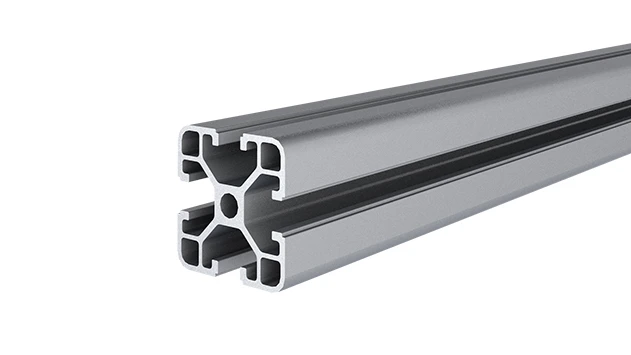
Walk into any modern factory, warehouse, or even a well-organized workshop, and you'll likely spot a silent workhorse holding everything together: aluminum profiles. These unassuming metal structures are the backbone of countless industrial setups, from assembly lines to storage racks, and they play a pivotal role in creating flexible, efficient workspaces. Among the many types of aluminum profiles available, one stands out for its versatility and reliability: the 4040B EU Standard Aluminum Profile. If you've ever wondered what makes this profile a go-to choice for engineers, designers, and manufacturers, you're in the right place. Let's dive into what it is, why it matters, and the key features that set it apart.
Defining the 4040B EU Standard Aluminum Profile
First things first: let's break down the name. The term "4040B EU Standard Aluminum Profile" might sound technical, but it's actually a straightforward description of the product. Let's unpack it step by step.
The "4040" refers to the profile's cross-sectional dimensions: 40 millimeters in width and 40 millimeters in height. That means if you were to slice the profile perpendicular to its length, you'd get a square (or near-square) shape measuring 40x40mm. This size strikes a balance between strength and versatility, making it suitable for a wide range of applications—strong enough to support heavy loads but not so bulky that it limits design flexibility.
The "B" in 4040B indicates that this is a specific variant within the 4040 series of EU standard profiles. EU standards, set by organizations like the European Committee for Standardization (CEN), ensure consistency in dimensions, material quality, and performance across products. Within the 4040 series, you'll find other variants (like 4040A, 4040C, etc.), each with slight differences in design—such as the number of T-slots, wall thickness, or slot dimensions—to cater to specific needs. The "B" variant is particularly popular for its balanced design, making it a jack-of-all-trades in industrial and commercial settings.
Finally, "Aluminum Profile" confirms that this is an extruded aluminum product. Aluminum extrusion is a manufacturing process where raw aluminum alloy is heated and pushed through a die to create long, uniform shapes. This process allows for intricate designs—like the T-slots that run along the length of the profile—which are essential for attaching accessories and components. Extrusion also ensures high precision and consistency, so every 4040B profile you buy will match the last, right down to the millimeter.
Key Features of the 4040B EU Standard Aluminum Profile
What makes the 4040B profile so widely used? Let's explore its key features, from material quality to design details, that make it a standout choice for engineers and designers.
1. Precision Engineering and Consistent Dimensions
EU standards are all about consistency, and the 4040B profile takes this seriously. Every 4040B profile is extruded to meet strict dimensional tolerances, meaning the 40x40mm cross-section, wall thickness, and slot dimensions are nearly identical across all units. Why does this matter? Imagine building a workbench where one profile is 39.8mm wide and another is 40.2mm—suddenly, the accessories (like brackets or connectors) might not fit, and the structure could be wobbly. With 4040B, you can trust that every piece will work together seamlessly, saving time and frustration during assembly.
The precision also extends to straightness. A warped or bent profile can throw off an entire project, but 4040B profiles are manufactured to maintain straightness over their length (which can range from 1 meter up to 6 meters or more, depending on the supplier). This straightness ensures that structures built with 4040B are stable and visually uniform—no leaning racks or lopsided workbenches here.
2. High-Quality Aluminum Alloy
Not all aluminum is created equal, and the 4040B profile relies on a high-grade aluminum alloy to deliver strength, durability, and corrosion resistance. The most common alloy used is 6063-T5, a heat-treated aluminum-magnesium-silicon alloy known for its excellent extrudability and mechanical properties. Here's why this matters:
- Strength-to-Weight Ratio: Aluminum is already lightweight, but 6063-T5 balances lightness with strength. A 4040B profile can support significant loads (often hundreds of kilograms per meter, depending on the application) without adding unnecessary weight to the structure. This is crucial for mobile setups, like carts or temporary workstations, where portability is key.
- Corrosion Resistance: Aluminum naturally forms a thin oxide layer that protects it from rust, but 6063-T5 enhances this resistance. This makes the 4040B profile suitable for use in damp environments (like warehouses with high humidity) or even outdoor settings, where exposure to rain or moisture could damage other materials like steel.
- Machinability: While the extrusion process creates the basic shape, 4040B profiles are easy to cut, drill, or modify on-site if needed. This flexibility allows designers to adapt the profile to unique project requirements without specialized equipment.
3. T-Slot Design for Easy Accessorization
If there's one feature that makes aluminum profiles like the 4040B indispensable, it's the T-slots. These are long, narrow channels that run the entire length of the profile, typically along each of the four sides (though some variants may have fewer). The T-shape of the slots allows for easy attachment of accessories using T-nuts, bolts, or specialized connectors—no welding or drilling required (in most cases).
For example, if you want to add a shelf to a 4040B-based rack, you can slide a T-nut into the slot, position the shelf bracket over the nut, and tighten a bolt. It's that simple. This design turns the 4040B into a modular building block, allowing you to reconfigure structures as needs change. Need to add a new shelf? Just loosen the bolts, adjust the brackets, and retighten. Want to move a workbench? Disassemble the profile sections and reassemble them elsewhere. This modularity is a cornerstone of modern lean system principles, where minimizing waste and maximizing adaptability are key.
The T-slots in 4040B profiles are also standardized, meaning they work with a wide range of aluminum profile accessories . From end caps (like the 4040 aluminum profile end cap , which covers the open ends of the profile to prevent dust buildup and improve safety) to angle brackets, hinges, and even panels, there's an accessory for nearly every need. This ecosystem of accessories is what truly unlocks the 4040B's potential, making it more than just a metal bar—it's a foundation for endless configurations.
4. Versatile Surface Treatments
While the raw aluminum finish of the 4040B profile is corrosion-resistant, many suppliers offer surface treatments to enhance its appearance, durability, or functionality. The most common treatments include:
- Anodizing: This electrochemical process thickens the natural oxide layer on the aluminum surface, making it harder, more scratch-resistant, and more resistant to corrosion. Anodized 4040B profiles often have a matte or satin finish in colors like silver, black, or gold, adding a professional look to workspaces.
- Powder Coating: A dry powder is electrostatically applied to the profile and then cured under heat, forming a tough, durable finish. Powder coating offers a wider range of colors and textures (matte, glossy, textured) and can be used to match brand colors or improve visibility in industrial settings.
- Mill Finish: This is the natural finish straight from the extrusion process—uncoated, with a smooth but slightly dull appearance. It's the most cost-effective option and works well for internal structures where appearance isn't a priority.
The ability to choose a surface treatment means the 4040B profile can adapt to both functional and aesthetic needs, whether you're building a utilitarian storage rack or a customer-facing display in a retail space.
5. Cost-Effective and Sustainable
Aluminum is a sustainable material—highly recyclable, with no loss of quality during the recycling process. For businesses focused on reducing their environmental footprint, the 4040B profile aligns with green initiatives. Additionally, aluminum's durability means structures built with 4040B have a long lifespan, reducing the need for frequent replacements and minimizing waste.
From a cost perspective, while aluminum profiles may have a higher upfront cost than some materials (like steel), their lightweight nature reduces shipping and installation costs. Their modularity also means you can repurpose them for new projects, getting more value out of your initial investment. Over time, the 4040B profile often proves to be more cost-effective than cheaper, less durable alternatives.

How 4040B Fits into Modern Industrial and Commercial Applications
The 4040B EU Standard Aluminum Profile isn't just a theoretical success—it's a practical solution used in countless real-world applications. Let's take a look at some of the most common ways it's put to work:
Workbenches and Assembly Stations
In manufacturing facilities, assembly lines rely on sturdy, flexible workbenches. The 4040B profile is a favorite here because it can be configured to any height, width, or depth, with T-slots for attaching tools, shelves, lighting, or even ESD (electrostatic discharge) mats for sensitive electronics assembly. Add a 4040 aluminum profile end cap to the edges, and you've got a clean, safe workspace that can adapt as production needs change.
Material Racks and Storage Systems
Warehouses and distribution centers use 4040B profiles to build custom storage racks, shelving units, and flow racks. The profile's strength allows it to support heavy boxes, pallets, or raw materials, while its modularity means racks can be adjusted to fit different item sizes. T-slots make it easy to add dividers, labels, or even roller tracks for sliding bins, improving organization and efficiency.
Machine Guards and Safety Barriers
Safety is a top priority in industrial settings, and the 4040B profile is ideal for building machine guards, safety barriers, or partition walls. Its rigidity ensures barriers stay in place, while its lightweight nature makes installation and repositioning easy. Panels (like polycarbonate or wire mesh) can be attached via T-slots to create see-through guards that protect workers without blocking visibility.
Lean Manufacturing Setups
Lean manufacturing focuses on eliminating waste and streamlining processes, and the 4040B profile is a natural fit for this philosophy. Its modular design allows for quick reconfiguration of workstations, assembly lines, or material flow systems as processes are optimized. For example, a production line might start with a basic 4040B workbench, then add a conveyor system (using 4040B as the frame) as demand increases, or reposition shelves to reduce worker movement. This flexibility helps businesses adapt to changing needs without overinvesting in new equipment.
Comparing 4040B to Other EU Standard Aluminum Profiles
To truly appreciate the 4040B profile, it helps to see how it stacks up against other popular EU standard aluminum profiles. Let's compare it to three common alternatives: 4040A, 4040C, and 4080A (an 80mm tall profile).
| Profile Type | Cross-Section (mm) | Wall Thickness (mm) | Weight per Meter (kg) | Number of T-Slots | Key Applications |
|---|---|---|---|---|---|
| 4040B EU Standard | 40x40 | 2.0–2.5 | 1.8–2.2 | 4 (one per side) | Workbenches, material racks, machine guards, lean manufacturing setups |
| 4040A EU Standard | 40x40 | 1.5–2.0 | 1.4–1.8 | 4 (one per side) | Light-duty shelving, display units, temporary structures |
| 4040C EU Standard | 40x40 | 3.0–3.5 | 2.5–3.0 | 4 (one per side, wider slots) | Heavy-duty racks, industrial machinery frames, load-bearing structures |
| 4080A EU Standard | 40x80 | 2.0–2.5 | 3.0–3.5 | 6 (two on each 80mm side, one on each 40mm side) | Large workbenches, conveyor frames, tall storage racks |
As the table shows, the 4040B profile sits in the middle of the pack in terms of weight and wall thickness, making it versatile enough for most applications without being overkill. The 4040A is lighter and better for light-duty tasks, while the 4040C is heavier and stronger for heavy loads. The 4080A, with its larger cross-section, is ideal for taller structures but lacks the 4040B's compactness.
The key takeaway? The 4040B profile's balance of strength, weight, and design makes it the most versatile option for businesses that need a single profile to handle multiple tasks—from building workbenches to supporting conveyor systems.
Choosing the Right 4040B Profile for Your Project
Now that you understand what the 4040B EU Standard Aluminum Profile is and what it offers, how do you choose the right one for your project? Here are a few factors to consider:
1. Load Requirements
Start by calculating the maximum load your structure will need to support. If you're building a shelf for lightweight components, a standard 4040B (with 2.0mm wall thickness) should suffice. For heavier loads (like industrial machinery), you might opt for a thicker-walled variant or reinforce the structure with additional profiles.
2. Accessories and Compatibility
Consider the accessories you'll need to attach to the profile—brackets, shelves, panels, etc. Ensure the T-slot dimensions (width and depth) of the 4040B profile match the accessories you plan to use. Most EU standard accessories are designed to fit common slot sizes, but it's always worth double-checking with your supplier.
3. Surface Treatment
Think about the environment where the profile will be used. If it will be exposed to moisture or heavy use, anodized or powder-coated finishes offer better durability. If appearance matters (e.g., in a retail setting), a colored powder coat might be the way to go.
4. Supplier Reliability
Not all 4040B profiles are created equal, and the quality can vary between suppliers. Look for suppliers who adhere strictly to EU standards, provide material certifications (like alloy composition and heat treatment), and offer consistent dimensional tolerances. A reliable supplier will also have a wide range of accessories in stock, making it easier to source everything you need for your project.
Final Thoughts: Why the 4040B Profile Stands Out
The 4040B EU Standard Aluminum Profile is more than just a piece of metal—it's a building block for innovation. Its precise dimensions, high-quality alloy, modular T-slot design, and versatility make it a favorite among engineers, designers, and business owners looking to create efficient, adaptable workspaces. Whether you're building a simple workbench, a complex assembly line, or a custom storage system, the 4040B profile delivers the strength, flexibility, and reliability needed to get the job done.
In a world where adaptability is key to success, the 4040B profile empowers businesses to evolve without being held back by rigid, one-size-fits-all equipment. It's a testament to the power of good design—simple, functional, and built to last. So the next time you walk through a well-organized factory or a sleek retail space, take a closer look—chances are, the 4040B profile is quietly holding it all together.