- Company Articles
- Industry articles
- Industry standards
- What Is 4040C EU Standard Aluminum Profile? Definition & Key Characteristics

What Is 4040C EU Standard Aluminum Profile? Definition & Key Characteristics
Related Product
4040C EU Standard Aluminum Profile
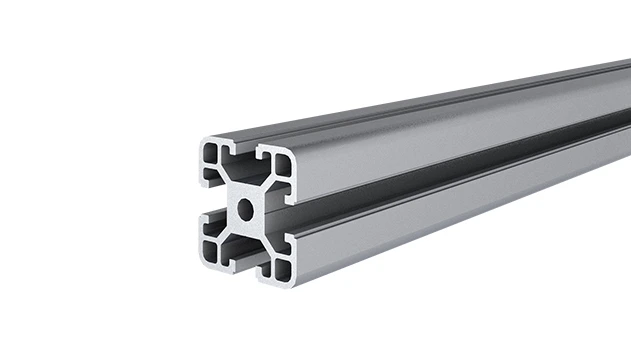
4040C is a 4.00x4.00 CM fractional 40 series square extrusion T-slot profile with four open T-slots, each side with 4.00cm face. The profile has align-a-grooves to assist in aligning connecting profiles.
If you've ever stepped into a modern workshop, a manufacturing facility, or even a DIY enthusiast's garage, you've likely encountered the unsung hero of modular construction: aluminum profiles. These sleek, versatile frames form the backbone of workbenches, shelving units, conveyor systems, and countless other structures. Among the most popular and widely used is the 4040C EU Standard Aluminum Profile—a workhorse that balances strength, flexibility, and precision. But what exactly is it, and why has it become a staple in industries ranging from automotive to electronics? Let's dive in and unpack everything you need to know about this essential building block.
Defining the 4040C EU Standard Aluminum Profile
First things first: let's break down the name. The "4040C" isn't just a random code—it tells you exactly what you're dealing with. Let's start with the basics: aluminum extrusion profile . This term refers to how the profile is made: heated aluminum alloy is forced through a custom die, shaping it into a consistent cross-section. It's like squeezing toothpaste through a tube, but with engineering precision, resulting in a strong, lightweight product with uniform dimensions.
Now, the "EU Standard" part. This means the profile adheres to strict European union guidelines (specifically DIN EN 755, the standard for aluminum and aluminum alloy extruded profiles). These standards ensure consistency in dimensions, material quality, and performance across manufacturers, so you can mix and match parts from different suppliers without compatibility issues. It's like buying Lego bricks—you know they'll fit together, no matter which box they came from.
Next, "4040." This refers to the cross-sectional dimensions: 40mm in width and 40mm in height. It's part of the 40x40mm profile family, a middleweight option that's neither too bulky nor too flimsy, making it ideal for a wide range of applications. Finally, the "C" denotes a specific variant within the 4040 series. While exact specs can vary slightly by manufacturer, the "C" typically indicates a unique T-slot configuration or wall thickness that sets it apart from other 4040 variants like the 4040A or 4040B. Think of it as the "all-rounder" of the 4040 family—designed to balance load capacity, versatility, and cost.
Quick Tip: If you're shopping for 4040C profiles, always check for the EU standard certification. Look for markings like "DIN EN 755" or "EU Standard" to ensure you're getting a product that meets strict quality and dimensional standards. This is especially important if you're using the profile in load-bearing applications like workbenches or material racks.
Key Characteristics of the 4040C EU Standard Aluminum Profile
What makes the 4040C stand out? Let's explore its defining features, from material composition to design nuances, and why they matter in real-world use.
1. Precise Dimensions and Uniformity
Thanks to EU standards, the 4040C profile boasts incredibly tight tolerances. The cross-section is a near-perfect 40mm x 40mm square, with wall thickness typically ranging from 1.5mm to 2.0mm (depending on the manufacturer's specs). This uniformity is critical because it ensures that when you connect two profiles—whether with brackets, hinges, or other aluminum profile accessories —they align perfectly. No gaps, no wobbles, just a snug, secure fit.
For example, if you're building a workbench, you'll need vertical supports (legs) and horizontal beams (the frame). With the 4040C's consistent dimensions, you can trust that each leg will stand straight, and each beam will attach flush, resulting in a stable surface that won't rock or sag over time.
2. High-Quality Aluminum Alloy
The 4040C is typically made from 6063-T5 aluminum alloy, a popular choice for extrusions. Why 6063-T5? Let's break it down: 6063 is an aluminum-magnesium-silicon alloy known for its excellent extrudability (meaning it flows smoothly through the die, creating sharp, precise shapes) and good corrosion resistance. The "T5" refers to the heat treatment process—artificially aging the alloy to enhance strength without sacrificing ductility. The result? A profile that's lightweight (about 2.7g/cm³, much lighter than steel) but surprisingly strong, with a tensile strength of around 180-200 MPa. That's strong enough to support heavy tools on a workbench or stacks of materials on a shelf, but light enough to move and assemble without heavy machinery.
3. T-Slot Design: The Secret to Versatility
If there's one feature that makes aluminum profiles like the 4040C indispensable, it's the T-slot. Run your finger along the length of the profile, and you'll notice grooves (slots) along each of the four sides. These slots are shaped like a "T," with a narrow opening leading to a wider channel inside. Why does this matter? Because it lets you attach aluminum profile accessories —like brackets, shelves, handles, or even lighting—without drilling holes or welding. Simply slide a T-nut into the slot, tighten a bolt, and you're done. Need to reposition a shelf? Loosen the bolt, slide it, and retighten. It's modularity at its finest.
The 4040C typically has two T-slots per side (though some variants have three), spaced evenly to maximize flexibility. Slot width is usually 8mm or 10mm, which works with standard T-nuts and bolts. This design transforms the profile from a static frame into a customizable platform—perfect for everything from a simple workbench to a complex automated machine enclosure.
4. Durable Surface Treatments
Aluminum naturally forms a thin oxide layer that resists corrosion, but manufacturers often enhance this with additional surface treatments. The 4040C is commonly anodized—an electrochemical process that thickens the oxide layer, making it more resistant to scratches, wear, and rust. Anodized profiles have a matte, silver finish that's both professional-looking and easy to clean. Some variants also come powder-coated in colors like black, blue, or gray, adding a decorative touch while providing extra protection. Whether you're using the profile in a dusty workshop or a humid factory, these treatments ensure it stands the test of time.
5. Impressive Load Capacity
Don't let its lightweight fool you—the 4040C can handle serious weight. While exact load capacity depends on factors like wall thickness and length, a typical 4040C profile with a 2.0mm wall can support around 80-120 kg per linear meter when used horizontally (with proper supports). Vertically, it can handle even more, making it ideal for legs on workbenches or uprights in shelving units. For example, a 1.5m long 4040C beam, supported at both ends, can easily hold a 50kg toolbox on top without bending. This balance of strength and weight is why it's a favorite for both industrial and DIY projects.

How Does the 4040C Compare to Other Aluminum Profiles?
To truly appreciate the 4040C, it helps to see how it stacks up against other common profiles. Let's compare it to similar options in the 40x40 family and a larger profile, the 4080A, to highlight its unique strengths.
| Profile Type | Cross-Section (WxH) | Wall Thickness (mm) | Slot Width (mm) | Max Horizontal Load (kg/m)* | Best For |
|---|---|---|---|---|---|
| 4040C EU Standard | 40mm x 40mm | 1.5-2.0 | 8-10 | 80-120 | Workbenches, small shelving, machine frames |
| 4040A EU Standard | 40mm x 40mm | 1.0-1.5 | 6-8 | 50-80 | Light-duty structures, display racks |
| 4040B EU Standard | 40mm x 40mm | 2.0-3.0 | 10-12 | 120-160 | Heavy shelving, industrial workstations |
| 4080A EU Standard | 40mm x 80mm | 2.0-3.0 | 10-12 | 180-250 | Large conveyor systems, heavy machinery |
*Note: Load capacities are approximate and based on horizontal use with uniform support. Always consult manufacturer specs for your specific application.
As you can see, the 4040C hits the sweet spot between the lightweight 4040A and the heavy-duty 4040B. It's strong enough for most medium-duty tasks but not so bulky that it adds unnecessary weight or cost. For example, if you're building a workbench, the 4040C provides enough strength to support tools and materials without overkill, keeping your project affordable and manageable.
Practical Applications: Where the 4040C Shines
The 4040C's versatility makes it a go-to choice across industries. Here are some of the most common ways it's used:
1. Workbenches and Workstations
Walk into any modern workshop, and you'll likely find workbenches framed with 4040C profiles. Why? Because they're easy to customize. Need a bench with a wooden top? Attach it using T-slot brackets. Want to add a shelf underneath? Slide in some angle brackets and a plywood board. Even accessories like tool hooks, power strips, or LED task lights can be mounted directly to the T-slots. The result is a workstation tailored to your needs, whether you're assembling electronics, woodworking, or doing mechanical repairs. And if your needs change? Just reconfigure the accessories—no need to build a new bench.
2. Material Racks and Shelving
From warehouses to home garages, the 4040C is ideal for building shelving units. Its load capacity means it can hold boxes of parts, tools, or inventory without bending, while the T-slots make it easy to adjust shelf heights as needed. Pair it with aluminum profile accessories like shelf brackets or wire mesh panels, and you've got a durable, modular storage solution. Some manufacturers even sell pre-designed kits, but the real beauty is in DIY customization—you can build a rack that fits your space perfectly, whether it's a narrow closet or a wide warehouse aisle.
3. Conveyor Systems and Production Lines
In manufacturing, time is money, and conveyor systems keep production moving. The 4040C is often used to frame these systems, supporting rollers, belts, or guides. Its lightweight nature keeps the overall system easy to install and maintain, while its strength ensures it can handle the constant motion of products being transported. For example, a small conveyor for moving circuit boards might use 4040C profiles as side rails, with plastic rollers attached via T-slot brackets. The modular design also makes it easy to extend or modify the conveyor as production needs grow.
4. Machine Frames and Enclosures
From 3D printers to CNC machines, many small to medium-sized machines rely on 4040C profiles for their frames. The profiles provide a rigid base that minimizes vibration, ensuring precision during operation. Enclosures built with 4040C can be fitted with acrylic panels (using T-slot hinges) to protect operators from moving parts, while T-slots allow for easy access to controls or maintenance hatches. It's a cost-effective alternative to custom steel frames, especially for prototyping or small-batch production.
5. Retail Displays and Trade Show Booths
Retailers and exhibitors love the 4040C for its sleek look and portability. It's easy to build custom display racks, shelving, or booth backdrops that can be disassembled, transported, and reassembled in minutes. Anodized silver or powder-coated black profiles give displays a modern, professional appearance, while T-slots let you attach signage, product hooks, or lighting. Whether you're showcasing clothing in a store or launching a new product at a trade show, the 4040C helps you create a standout display without the hassle of permanent construction.
Pro Insight: When designing with 4040C profiles, always factor in "overhang"—the distance a shelf or beam extends beyond its supports. Even strong profiles can bend if overhang is too long. As a rule of thumb, keep overhangs under 30% of the supported length. For example, a 1m beam supported at both ends should have overhangs no longer than 30cm on either side.
Choosing the Right Aluminum Profile Accessories for 4040C
A profile is only as good as the accessories that bring it to life. Here are the must-have aluminum profile accessories to pair with your 4040C:
- T-Nuts and Bolts: The foundation of T-slot connections. Choose stainless steel for corrosion resistance.
- Angle Brackets: For joining profiles at 90-degree angles (e.g., bench legs to frame).
- Shelf Brackets: Support shelves, tables, or other flat surfaces.
- End Caps: Cover exposed ends of profiles to prevent cuts and give a finished look.
- Hinges: Attach doors or fold-down surfaces (great for enclosures or foldable workbenches).
- Leveling Feet: Adjust height and stabilize frames on uneven floors.
Most accessories are designed to work with EU standard profiles, so you can mix and match from different brands. Just double-check slot width (8mm vs. 10mm) to ensure compatibility. Investing in quality accessories is worth it—cheap brackets or nuts can bend or strip, compromising the strength of your structure.
Why the 4040C EU Standard Aluminum Profile Stands Out
In a market flooded with aluminum profiles, the 4040C EU Standard stands out for one simple reason: it's a problem-solver. It balances strength and weight, precision and flexibility, cost and quality. Whether you're a manufacturer building production lines, a small business owner setting up a workshop, or a DIYer tackling a home project, it offers the modularity to adapt to your needs without sacrificing performance.
Its adherence to EU standards means you can trust its dimensions and quality, while the T-slot design turns every project into a customizable adventure. Pair it with the right aluminum profile accessories , and you're not just building a structure—you're building a solution that can grow and change with you.
So the next time you see a sleek workbench or a sturdy shelving unit, take a closer look. Chances are, it's built with 4040C profiles—quietly working behind the scenes to make modern, flexible construction possible. And who knows? Maybe your next project will be too.