- Company Articles
- Industry articles
- Industry standards
- What is 4040D EU Standard Aluminum Profile? Definition & Core Specifications

What is 4040D EU Standard Aluminum Profile? Definition & Core Specifications
Related Product
4040D EU Standard Aluminum Profile
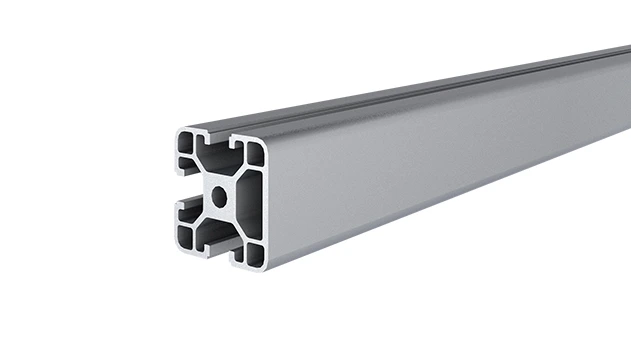
4040D is a 4.00x4.00 CM fractional 40 series square extrusion T-slot profile with two side open T-slots, two side with closed face, each side with 4.00cm face. The profile has align-a-grooves to assist in aligning connecting profiles.
Introduction: The Backbone of Modern Manufacturing
Walk into any thriving factory, warehouse, or workshop today, and you'll notice a common thread weaving through their operations: sleek, modular structures that seem to adapt effortlessly to the task at hand. From workbenches where intricate assemblies take shape to material racks that keep inventory organized, these structures aren't just random pieces of metal—they're often built with aluminum profiles, the unsung heroes of industrial efficiency. Among these, the 4040D EU Standard Aluminum Profile stands out as a versatile, reliable workhorse. But what exactly is it? Why has it become a go-to choice for engineers, plant managers, and lean system enthusiasts alike? In this article, we'll unpack everything you need to know about this essential component, from its definition and specs to its real-world applications and why it matters in today's fast-paced manufacturing landscape.
Defining the 4040D EU Standard Aluminum Profile
Let's start with the basics. The term "4040D EU Standard Aluminum Profile" might sound technical, but break it down, and it's surprisingly straightforward. The "4040" refers to its cross-sectional dimensions: 40 millimeters in width and 40 millimeters in height, forming a square or rectangular shape (depending on slot design). The "D" is part of a classification system within the EU standard series, which includes variants like 4040A, 4040B, 4040C, and so on. Each letter denotes subtle differences in design—think slot configuration, wall thickness, or number of mounting grooves—tailored to specific use cases. What ties them all together? Compliance with EU standards, which ensure strict consistency in quality, dimensional accuracy, and performance across manufacturers.
At its core, this profile is an extruded aluminum bar. Extrusion is a manufacturing process where aluminum alloy is pushed through a die to create a specific cross-sectional shape—think of it like squeezing toothpaste through a tube, but with metal. This process allows for complex, precise designs that would be hard to achieve with other methods, like casting or machining. The result? A lightweight yet strong profile that's ready to be assembled into almost any structure you can imagine, without the need for welding or heavy tools.

Core Specifications: The Details That Matter
To truly understand the 4040D profile, you need to look at its specs. These details aren't just numbers on a page—they determine how strong it is, what accessories it works with, and where it can be used. Let's break them down in the table below:
| Specification | Details | Why It Matters |
|---|---|---|
| Dimensions | 40mm (width) x 40mm (height) | Consistent sizing ensures compatibility with standard accessories and easy integration into existing systems. |
| Material Grade | 6063-T5 Aluminum Alloy | 6063 is prized for its excellent extrudability (easy to shape into complex profiles) and good strength-to-weight ratio. T5 tempering (artificial aging) enhances hardness and stability. |
| Wall Thickness | Typically 1.5mm – 2.5mm (varies by manufacturer) | Thicker walls boost load capacity (critical for heavy-duty racks), while thinner walls save weight (ideal for mobile structures like trolleys). |
| Weight per Meter | Approx. 1.2kg – 1.8kg (depending on wall thickness) | Lightweight enough for manual handling during assembly but heavy enough to provide stability in fixed structures. |
| Slot Design | Typically 2-4 T-slots (8mm x 10mm common) | T-slots allow accessories (connectors, brackets, shelves) to slide in and lock securely, enabling tool-free adjustments and customization. |
| Surface Treatment | Anodized (natural, silver, or colored options) | Anodizing creates a protective oxide layer, boosting corrosion resistance—essential for humid environments or outdoor use. It also improves scratch resistance and aesthetics. |
| Load Capacity | Up to 300kg/m (when properly supported horizontally) | Enough to handle heavy tools, machinery parts, or stacked inventory without bending or warping over time. |
These specs make the 4040D profile a jack-of-all-trades. Need a sturdy workbench for assembling car parts? Its load capacity has you covered. Building a lightweight trolley to move electronics across the factory floor? Its low weight and modularity shine. And because it's EU standard, you don't have to worry about compatibility—accessories from different suppliers will fit, saving you time and headaches.
Key Features: What Makes the 4040D Profile Stand Out?
Beyond the specs, the 4040D profile boasts features that make it indispensable in modern manufacturing. Let's dive into the most impactful ones:
1. Modularity: Build, Adapt, Repeat
Imagine setting up a production line for a new product. With traditional steel structures, you'd need welders, cutting torches, and a fixed design—if your needs change later, you'd have to start from scratch. Not with the 4040D profile. Thanks to its T-slots and compatible aluminum profile accessories (like 90° aluminum profile connectors or 45° aluminum profile connectors), you can assemble structures in hours, not days. Need to add a shelf to a workbench? Slide a bracket into the slot and tighten a bolt. Want to reconfigure a material rack to hold larger parts? Unbolt the joints, adjust the profile lengths, and reattach. This flexibility is a game-changer for businesses that need to pivot quickly—like a small manufacturer shifting from making medical devices to consumer electronics.
2. Lightweight Yet Strong
Aluminum is about one-third the weight of steel, but the 4040D profile doesn't skimp on strength. The 6063-T5 alloy, combined with the extruded shape (which distributes stress evenly), gives it the rigidity to support heavy loads. For example, a horizontally mounted 4040D profile, properly braced, can easily hold a 200kg tool chest without sagging. This strength-to-weight ratio makes it perfect for mobile applications too—think turnover trolleys that glide across the factory floor, loaded with parts, but are light enough for a single operator to move.
3. Corrosion Resistance: Built to Last
Factories are tough environments—humidity, oils, chemicals, and even occasional spills can take a toll on metal. But the 4040D profile's anodized surface acts as a barrier, preventing rust and corrosion. Unlike steel, which needs painting or coating to survive, anodized aluminum maintains its integrity for years, even in damp warehouses or outdoor loading docks. This durability reduces maintenance costs and extends the lifespan of your structures, making it a cost-effective choice in the long run.
4. Aesthetic Appeal: More Than Just Function
Let's face it—workspaces matter. A clean, organized environment boosts morale and productivity. The 4040D profile's sleek, silver anodized finish (or optional colored variants like black or blue) adds a professional touch to any facility. Unlike rough, painted steel, it resists scratches and dents, keeping your workspace looking neat even after years of use. This might seem like a small detail, but for customer-facing areas (like demo labs or factory tours), it makes a big impression.
Real-World Applications: Where 4040D Profiles Shine
The 4040D profile isn't just a theoretical solution—it's a practical tool used in countless industries. Here are some of the most common ways it's put to work:
Workbenches: The Heart of the Workshop
Walk into any assembly line, and you'll find workbenches built with 4040D profiles. These aren't your average tables. They're customized to the task: an electronics workshop might have a workbench with ESD mats (to protect sensitive components), built-in LED lighting, and tool holders mounted directly to the profile slots. A mechanic's workbench could include a vice, parts bins, and a shelf for manuals—all attached via brackets that slide into the T-slots. The best part? If an operator needs the bench higher or lower, you can adjust the legs (using aluminum foot bases) in minutes.
Lean Systems: Streamlining Workflows
Lean manufacturing is all about eliminating waste, and the 4040D profile is a natural fit here. Lean systems rely on efficient material flow, visual management, and ergonomic workstations—areas where this profile excels. For example, a "kanban" material rack (used to signal when inventory needs restocking) can be built with 4040D profiles and fitted with dividers to separate parts. Conveyor systems, too, often use these profiles as frames, ensuring products move smoothly from one station to the next. By reducing clutter and keeping tools/parts within arm's reach, the 4040D profile helps teams cut down on unnecessary movement—saving time and energy.
Material Racks and Storage Solutions
Storing inventory can be a headache, especially when parts come in different shapes and sizes. 4040D profiles solve this by letting you build custom material racks. Need to store small boxes? Add shelves with dividers. Have long, cylindrical parts? Create a rack with horizontal bars. For heavy items like engine components, reinforce the structure with gusset alp 4040 brackets to distribute weight. These racks are also easy to label (using slot-mounted signs) and can be expanded as your inventory grows—no need to buy a whole new system.
Machine Guards and Safety Barriers
Safety is non-negotiable in manufacturing, and the 4040D profile is ideal for building machine guards. Its strength ensures guards can withstand accidental impacts, while its lightweight design makes them easy to remove for maintenance (with quick-release fasteners). You can even add polycarbonate panels to the profiles to create see-through barriers, so operators can monitor machines without exposing themselves to moving parts.
4040D vs. Other 4040 EU Standard Profiles: What's the Difference?
The EU standard 4040 series includes several variants (A, B, C, D, E, F, R)—how do you know which one to choose? Let's focus on how the 4040D compares to its siblings:
4040A/B/C: These are often entry-level profiles with thinner walls (1.0mm – 1.5mm) and fewer T-slots (sometimes 2 slots instead of 4). They're great for light-duty tasks like shelving or display stands but may not hold up to heavy loads.
4040D: The sweet spot for most industrial uses. It typically has 4 T-slots (one on each side) and a wall thickness of 1.5mm – 2.0mm, balancing strength and weight. It's compatible with the widest range of accessories, making it the most versatile option.
4040E/F/R: These are specialized variants. For example, 4040R has rounded edges (safer for high-traffic areas), while 4040F might have extra-deep slots for heavy-duty connectors. They're ideal for niche applications but overkill for general use.
In short, if you need a profile that can handle everything from workbenches to material racks without being too heavy or expensive, the 4040D is your best bet.
Aluminum Profile Accessories: The Perfect Partners
A 4040D profile is only as good as the accessories it pairs with. Here are the must-have ones to unlock its full potential:
Connectors: Holding It All Together
Connectors are the glue of modular structures. The 90° aluminum profile connector is the most common—used to join two profiles at a right angle (like the corner of a workbench). For angled joints (e.g., a sloped roof on a machine guard), 45° aluminum profile connectors work best. There are also three-way connectors (for T-junctions) and sliding connectors (which let profiles move relative to each other, useful for adjustable shelves).
End Caps: Safety and Finish
Raw aluminum profile ends can be sharp, so 4040 aluminum profile end caps are a must. These plastic or rubber caps snap onto the ends, preventing cuts and giving structures a clean look. They also keep dust and debris out of the T-slots, ensuring accessories slide smoothly later.
Gussets: Adding Strength Where It Counts
For heavy-load applications (like a material rack holding 500kg of parts), gusset alp 4040 brackets add critical reinforcement. These triangular plates bolt onto corners, distributing weight and preventing the structure from wobbling or collapsing.
Casters: Making It Mobile
Want to move a workbench or trolley? Add casters (and caster accessories) to the base profiles. Locking casters keep the structure stationary when needed, while swivel casters make it easy to maneuver around tight corners.
Why Choose EU Standard? The Assurance of Quality
With so many aluminum profiles on the market, why opt for the EU standard 4040D? Here's the bottom line: consistency and quality. EU standards (like DIN 69051) set strict rules for everything from material composition to slot dimensions. This means a 4040D profile from a supplier in Germany will fit perfectly with accessories from a supplier in Poland—no guesswork, no mismatched parts. This interoperability saves time and reduces costs, especially for businesses that source components globally.
EU-standard profiles also undergo rigorous testing. They're checked for straightness (to ensure structures don't warp), surface finish (to resist corrosion), and load-bearing capacity (to guarantee safety). When you buy a 4040D profile with the EU mark, you're not just getting a piece of aluminum—you're getting peace of mind.
Conclusion: The 4040D Profile—Your Key to Flexible, Efficient Manufacturing
The 4040D EU Standard Aluminum Profile might not grab headlines, but it's the backbone of countless successful manufacturing operations. Its blend of modularity, strength, and versatility makes it the ideal choice for building everything from simple workbenches to complex lean systems. Whether you're a small workshop looking to upgrade your workspace or a large manufacturer streamlining your production line, this profile offers a cost-effective, adaptable solution that grows with your needs.
And when paired with the right aluminum profile accessories—connectors, end caps, gussets—there's no limit to what you can build. So the next time you walk through a factory and admire how smoothly everything runs, take a closer look at those silver structures—chances are, they're built on the reliability of the 4040D EU Standard Aluminum Profile.