- Company Articles
- Industry articles
- Industry standards
- What is 4040E EU Standard Aluminum Profile? Key Definitions & Specifications

What is 4040E EU Standard Aluminum Profile? Key Definitions & Specifications
Related Product
4040E EU Standard Aluminum Profile
4040E is a 4.00x4.00 CM fractional 40 series square extrusion T-slot profile with two side open T-slots, two side with closed face, each side with 4.00cm face. The profile has align-a-grooves to assist in aligning connecting profiles.
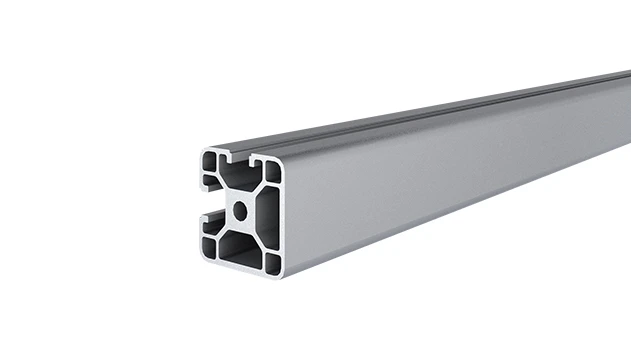
Walk into any modern factory, workshop, or even a tech startup's prototyping lab, and you'll likely spot a common building block silently powering efficiency: aluminum profiles. These unassuming metal structures are the unsung heroes of modular design, forming everything from workbenches to conveyor systems. Among the countless profiles available, one stands out for its versatility and reliability in industrial settings: the 4040E EU Standard Aluminum Profile . But what exactly is it, and why does it matter in the world of manufacturing and lean systems? Let's dive in.
Starting with the Basics: What is an Aluminum Extrusion Profile?
Before we zero in on the 4040E, let's clarify what an aluminum extrusion profile is. Simply put, it's a length of aluminum shaped into a specific cross-section using a process called extrusion. Imagine pushing a soft clay through a cookie cutter—extrusion works similarly, but with heated aluminum billets forced through a die to create consistent, complex shapes. This method allows for precision, repeatability, and the creation of lightweight yet strong structures.
Aluminum extrusion profiles are prized for their unique combination of properties: they're lightweight (about 1/3 the weight of steel), corrosion-resistant, and infinitely customizable. Their modular nature—thanks to features like T-slots—means they can be easily assembled, disassembled, and reconfigured using simple tools, making them ideal for lean manufacturing systems that prioritize flexibility and waste reduction.
Decoding the 4040E: What Do Those Numbers and Letters Mean?
The name "4040E" might look like a random code, but it's actually a clear descriptor of the profile's design and standards. Let's break it down:
- 4040 : This refers to the profile's cross-sectional dimensions. In millimeters, it measures 40mm by 40mm—so it's a square profile, 4 centimeters on each side. This size strikes a perfect balance: compact enough for tight spaces but robust enough to support significant weight.
- E : The "E" denotes that this profile follows a specific series or design within EU (European union) standards. EU-standard profiles adhere to strict guidelines for dimensions, tolerances, and material quality, ensuring compatibility across different manufacturers and systems. The "E" might also indicate details like T-slot placement or wall thickness, though exact definitions can vary slightly by supplier.
- EU Standard : Compliance with EU standards means the 4040E meets rigorous safety, quality, and performance criteria. This is critical for businesses operating in Europe or exporting to EU markets, as non-compliant components could lead to delays, fines, or safety risks.
In short, the 4040E is a 40x40mm square aluminum extrusion profile designed to EU specifications—engineered for consistency, compatibility, and reliability.

Key Specifications: The Nitty-Gritty of 4040E Profiles
To truly understand the 4040E, we need to look at its technical specifications. These details determine how it performs in real-world applications, from supporting a heavy workbench to forming the frame of a conveyor system. Below is a breakdown of the most important specs, organized for clarity:
| Parameter | Specification | Notes |
|---|---|---|
| Cross-Sectional Dimensions | 40mm (width) x 40mm (height) | Outer dimensions; inner dimensions vary based on wall thickness. |
| Wall Thickness | 1.5mm – 3mm (common: 2mm) | Thicker walls increase strength but add weight. 2mm is standard for most industrial uses. |
| Weight per Meter | 1.8kg – 2.5kg | Depends on wall thickness; 2mm walls typically weigh ~2.1kg/m. |
| Alloy Grade | 6063-T5 | Most common alloy for extrusions; offers excellent corrosion resistance and formability. |
| Temper | T5 (Artificially Aged) | Heat-treated to enhance strength while maintaining ductility. |
| Surface Treatment | Anodized (clear, silver, or colored); powder-coated | Anodizing improves corrosion resistance and wear; powder-coating adds color and durability. |
| T-Slot Dimensions | 8mm (width) x 10mm (depth) (common) | T-slots allow insertion of bolts, nuts, and accessories for assembly. |
| Maximum Static Load Capacity | Up to 500kg per linear meter (when properly supported) | Load capacity decreases with longer spans; always consult supplier for exact figures. |
| Length | Standard: 2.5m, 3m, 4m; customizable up to 6m | Longer lengths may require special shipping arrangements. |
| End Cap Compatibility | 4040E aluminum profile end cap | EU-standard end caps snap or screw into place to cover sharp edges and prevent debris buildup. |
Note: Specifications may vary slightly by manufacturer. Always verify details with your supplier, especially for critical applications.
Why These Specs Matter
Let's take a closer look at a few key specs and why they're important. For example, the alloy grade (6063-T5) is no accident. 6063 aluminum is known for its excellent extrudability—meaning it can be shaped into complex profiles with tight tolerances—while the T5 temper (artificial aging) gives it a good balance of strength and flexibility. This makes the 4040E strong enough to support heavy tools on a workbench but not so brittle that it cracks under impact.
T-slot dimensions are another critical detail. Most 4040E profiles have T-slots running along their length (usually two per side), which are designed to accept standard bolts, nuts, and connectors. A common T-slot size is 8mm wide and 10mm deep, which works with M6 or M8 bolts—standard fasteners in industrial settings. This compatibility ensures you can mix and match accessories from different suppliers without worrying about fit issues.
Surface treatment, like anodizing, isn't just about aesthetics. Anodized aluminum forms a protective oxide layer that resists rust and wear, making the 4040E suitable for use in damp environments (like food processing plants) or areas with frequent handling (like assembly lines). Powder-coating, on the other hand, adds color (common options: silver, black, blue) and an extra layer of protection, which is useful for high-visibility applications or where scratch resistance is key.
Applications: Where 4040E Profiles Shine
The 4040E's versatility is its greatest strength. Its size, strength, and compatibility make it a go-to choice for a wide range of industrial and commercial applications. Let's explore some of the most common uses:
1. Aluminum Workbenches
One of the most visible uses of 4040E profiles is in aluminum workbench construction. A typical workbench frame might use 4040E profiles for the legs, rails, and cross-braces, paired with a top made of plywood, MDF, or aluminum. The T-slots allow for easy attachment of accessories: tool holders, LED lights, power strips, or even small shelves. For example, a electronics assembly workbench might have 4040E legs with caster wheels (for mobility) and side brackets for holding soldering irons or cable management clips.
What makes the 4040E ideal here? Its 40x40mm size provides enough stability to support a 100kg+ load (like a heavy CNC machine) while keeping the bench lightweight enough to move (with casters). Plus, if you need to reconfigure the workbench later—adding a shelf or widening the top—you can simply loosen the bolts, adjust the profiles, and re-tighten. No welding, no cutting, no hassle.
2. Lean Manufacturing Systems
Lean manufacturing is all about minimizing waste and maximizing efficiency, and the 4040E is a favorite tool for lean system designers. It's used to build material racks, flow racks, and pick-to-light systems that keep inventory organized and accessible. For instance, a 4040E material rack might have adjustable shelves (using T-slot brackets) that can be repositioned as inventory needs change. This flexibility reduces the need to buy new racks when product sizes or volumes shift—saving time and money.
4040E profiles also play a role in conveyor systems, where they form the frame or guide rails for roller tracks. In a warehouse, a gravity-fed roller conveyor might use 4040E profiles as side rails, with plastic or steel rollers mounted in the T-slots. The profile's rigidity ensures the conveyor stays aligned, even when loaded with heavy boxes, while its lightweight design keeps the overall system easy to install and maintain.
3. Industrial Machinery Frames
Small to medium-sized machines—like 3D printers, laser cutters, or packaging equipment—often use 4040E profiles for their frames. The profile's strength-to-weight ratio means the machine is sturdy enough to minimize vibration (critical for precision tasks) but not so heavy that it's hard to transport or install. For example, a desktop CNC router might have a 4040E frame with aluminum panels attached via T-slot nuts, creating a rigid enclosure that protects operators and reduces noise.
4. Retail and Display Fixtures
Beyond industrial settings, 4040E profiles are popping up in retail stores and trade shows. Their clean, modern look and modularity make them perfect for custom display shelves, product stands, or pop-up booths. A clothing store might use 4040E profiles to build a flexible rack system that can be adjusted for different garment lengths, while a tech company could use them to create a trade show booth with interchangeable signage and demo stations.
The Role of Aluminum Profile Accessories
A 4040E profile is just a length of aluminum on its own—it's the aluminum profile accessories that turn it into a functional system. These small but mighty components are the glue that holds modular designs together, allowing you to connect, support, and customize your 4040E setup. Let's look at a few essential accessories:
- End Caps : The 4040E aluminum profile end cap is a simple but crucial accessory. These plastic or metal caps snap or screw into the ends of the profile, covering sharp edges (for safety) and preventing dust, debris, or moisture from entering the hollow interior. They're available in colors to match the profile (e.g., silver, black) and are often sold in bulk by suppliers.
- Connectors : Connectors join two or more profiles at angles (90°, 45°, 135°, etc.) or in straight lines. Common types include corner brackets, T-connectors, and 3-way joints. Most connectors use bolts or set screws that tighten into the T-slots, creating a secure, tool-free connection (though some heavy-duty applications may require drilling).
- Brackets and Supports : These accessories add functionality, like shelf brackets (for mounting shelves to vertical profiles), angle brackets (for reinforcing corners), or feet (for leveling a workbench on uneven floors). Some brackets even have built-in slots for attaching tools or cables.
- T-Slot Nuts and Bolts : These are the workhorses of profile assembly. T-slot nuts slide into the T-slots and lock in place when a bolt is tightened, allowing you to attach accessories without drilling holes. They come in various sizes (M6, M8) to match different T-slot widths.
The beauty of these accessories is that they're designed to work seamlessly with 4040E profiles. A reputable supplier will offer a full range of compatible parts, ensuring you can build almost anything with just a few basic components.
Choosing the Right Lean System Supplier for 4040E Profiles
Not all 4040E profiles are created equal. To get the most out of your investment, it's critical to choose a reliable lean system supplier —one that understands the nuances of EU-standard profiles and can provide the quality, support, and accessories you need. Here are a few things to look for:
1. Compliance with EU Standards
First and foremost, ensure the supplier's 4040E profiles are certified to EU standards. Ask for documentation like test reports or certificates of conformity (CoC) to verify compliance. This is especially important if you're using the profiles in regulated industries (e.g., medical devices, automotive) or exporting products to the EU.
2. Range of Accessories
A good supplier should offer more than just profiles—they should stock a full line of aluminum profile accessories, including end caps, connectors, brackets, and fasteners. This saves you time and hassle, as you can source all your components from one place, ensuring compatibility and reducing shipping costs.
3. Technical Support
Even experienced engineers sometimes need help designing a system with 4040E profiles. Look for a supplier that offers technical support, whether through phone, email, or online resources (like assembly guides or CAD models). Some suppliers even provide custom design services, helping you optimize your setup for your specific needs.
4. Quality Control
Quality matters. Ask about the supplier's quality control processes: Do they inspect profiles for straightness, dimensional accuracy, and surface defects? Do they test load capacities or material composition? A supplier that stands behind its products will be happy to share this information.
In short, a reliable lean system supplier is more than a vendor—they're a partner in your success, helping you build efficient, durable systems that meet your unique needs.
Why 4040E Profiles Are Here to Stay
The 4040E EU Standard Aluminum Profile has earned its place as a staple in industrial design for one simple reason: it solves real problems. Its modularity reduces waste, its compliance with EU standards ensures reliability, and its versatility makes it adaptable to almost any application. As manufacturing continues to evolve—with trends like automation, customization, and sustainability driving change—the 4040E will only become more valuable.
Think about it: In a world where businesses need to pivot quickly (whether to meet new customer demands or adapt to supply chain shifts), the ability to reconfigure a workbench, rack, or machine frame in hours instead of weeks is a game-changer. The 4040E makes that possible. It's not just a piece of aluminum—it's a tool for innovation.
Conclusion: The Backbone of Modern Manufacturing
So, what is the 4040E EU Standard Aluminum Profile? It's a 40x40mm square aluminum extrusion profile designed to EU specifications, engineered for strength, versatility, and compatibility. It's the backbone of workbenches, lean systems, and machinery frames in factories, workshops, and businesses worldwide. Paired with aluminum profile accessories like end caps and connectors, it becomes a building block for endless possibilities.
Whether you're building a simple workbench or a complex conveyor system, the 4040E offers the reliability and flexibility you need to succeed. And with the right lean system supplier by your side, you can be confident that your 4040E-based projects will meet the highest standards of quality and performance.
In the end, the 4040E is more than a profile—it's a testament to the power of modular design. It proves that sometimes, the most innovative solutions are the ones that let you build, adapt, and grow—one T-slot at a time.