- Company Articles
- Industry articles
- Industry standards
- What Is 4040F EU Standard Aluminum Profile? Definition & Core Specifications

What Is 4040F EU Standard Aluminum Profile? Definition & Core Specifications
Related Product
4040F EU Standard Aluminum Profile
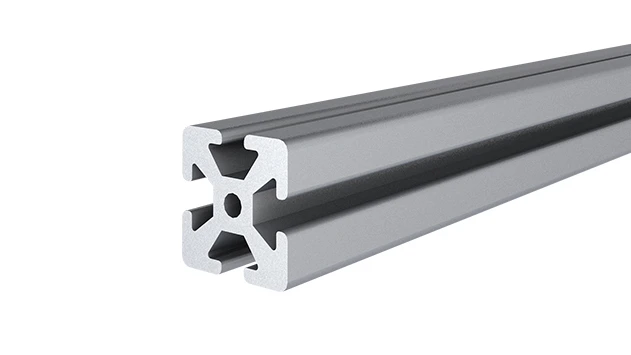
4040F is a 4.00x4.00 CM fractional 40 series square extrusion T-slot profile with four side open T-slots, each side with 4.00cm face. The profile has align-a-grooves to assist in aligning connecting profiles.
Introduction: The Backbone of Modern Manufacturing
Walk into any factory, workshop, or even a modern office, and you'll likely spot aluminum profiles holding things together—from workbenches and material racks to conveyor systems and machine guards. These unassuming metal structures are the unsung heroes of efficient, flexible design. Among the hundreds of aluminum profile types available, one stands out for its balance of strength, versatility, and compliance with strict quality standards: the 4040F EU Standard Aluminum Profile. Whether you're building a lean production line, a custom workbench, or a modular storage system, understanding what 4040F is and how it works can save you time, money, and headaches down the line. Let's dive in.
Defining the 4040F EU Standard Aluminum Profile
First things first: let's break down the name. "4040F EU Standard Aluminum Profile" might sound like a mouthful, but each part tells you something crucial about the product.
Aluminum Profile : At its core, this is an aluminum extrusion profile—a long, continuous shape created by forcing heated aluminum through a die. Extrusion allows for complex cross-sectional designs, making profiles adaptable to specific needs. Unlike solid aluminum bars, profiles are lightweight yet strong, thanks to their hollow, structured design.
4040 : This refers to the profile's cross-sectional dimensions: 40mm in width and 40mm in height. Think of it as a square (or near-square) tube, with standardized measurements that ensure compatibility across systems.
F : The "F" denotes a specific variant within the 4040 EU standard family. EU standards (EN 755, for example) outline strict guidelines for aluminum profiles, including dimensions, tolerances, and material properties. Within the 4040 series, letters like A, B, E, and F indicate subtle but important design differences—things like wall thickness, slot size, or web (internal support) placement. The "F" variant is known for its balanced design, making it a go-to for general-purpose applications.
EU Standard : Compliance with EU standards means this profile meets rigorous quality and safety requirements. For manufacturers and builders, this translates to reliability: you can trust that a 4040F profile from one supplier will fit seamlessly with aluminum profile accessories (like connectors or end caps) from another, as long as they also follow EU norms.

Core Specifications: What Makes 4040F Tick?
To truly understand 4040F, let's get into the nitty-gritty of its specs. These details might seem technical, but they're what determine whether the profile will work for your project.
1. Dimensions: Precision in Every Millimeter
The 4040F's 40mm x 40mm cross-section is just the starting point. Let's zoom in:
- Wall Thickness : Typically 1.5mm to 2mm. This sweet spot balances weight and strength—thick enough to support loads but thin enough to keep the profile lightweight. For reference, heavier-duty profiles (like some 4040A variants) might have 3mm walls, but they're overkill for most non-industrial uses.
- Slots : Most 4040F profiles have four slots (one on each side), each around 8mm wide and 10mm deep. These slots are where the magic happens: they let you attach aluminum profile accessories like brackets, end caps, and panels without drilling. The slot edges are rounded to prevent damage to fasteners and make assembly smoother.
- Webs and Ribs : Inside the profile, thin internal walls (webs) connect the outer surfaces, adding rigidity without extra weight. 4040F's web placement is optimized for even load distribution—important if you're building something like a workbench that needs to handle downward pressure.
2. Material: The Right Alloy for the Job
4040F profiles are almost always made from 6063 aluminum alloy , often in the T5 or T6 temper (heat-treated for strength). Here's why 6063 is the go-to:
- Extrudability : 6063 flows smoothly through extrusion dies, making it ideal for complex profiles with slots and webs.
- Strength-to-Weight Ratio : It's not the strongest aluminum alloy (that would be 6061), but it's strong enough for most applications while remaining lightweight.
- Corrosion Resistance : A natural oxide layer forms on 6063, protecting it from rust. This makes it suitable for indoor and mild outdoor use.
- Aesthetics : It takes surface treatments like anodizing well, resulting in a clean, professional finish.
3. Surface Treatment: Protection and Polish
Raw aluminum is prone to scratches and oxidation, so 4040F profiles undergo surface treatments:
- Anodizing : The most common treatment. Anodizing involves submerging the profile in an electrolyte bath and passing an electric current through it, thickening the natural oxide layer. This makes the surface harder, more scratch-resistant, and available in colors like silver, black, or gold. Anodized finishes are matte and durable—perfect for industrial settings.
- Powder Coating : For a wider color range or a glossy finish, powder coating is an option. Dry powder is electrostatically applied, then baked to form a hard, even layer. It's great for applications where appearance matters, like retail displays or office furniture.
- Mill Finish : The bare minimum—just the surface left after extrusion. It's cheaper but lacks the protection of anodizing or powder coating, so it's rarely used for finished products.
4. Mechanical Properties: Strength You Can Rely On
Numbers matter here. For 6063-T5 aluminum (the most common temper for 4040F):
- Tensile Strength : ~180 MPa (megapascals). This is the maximum stress the profile can handle before breaking. For context, a 1-meter length of 4040F can typically support a static load of 50-100kg (depending on supports), which is more than enough for a workbench or light shelving.
- Yield Strength : ~110 MPa. This is the stress at which the profile will start to deform permanently. You want this to be high enough that normal use won't bend or warp the profile.
- Elongation : ~8%. This measures how much the profile can stretch before breaking. A little flexibility is good—it means the profile can absorb minor impacts without snapping.
5. Tolerances: Precision Matters
EU standards enforce tight tolerances to ensure compatibility. For 4040F:
- Cross-Sectional Dimensions : Width and height are typically within ±0.3mm of 40mm. This ensures that when you connect two profiles with a bracket, they line up perfectly.
- Straightness : A 3-meter length will have less than 1mm of bowing. No one wants a wobbly workbench!
- Slot Position : Slots are centered on each side, within ±0.2mm. This is critical for aluminum profile accessories like sliding brackets, which rely on precise slot alignment.
How 4040F Fits Into Real-World Applications
Enough specs—let's talk about how people actually use 4040F. Its versatility makes it a staple in industries from manufacturing to DIY workshops. Here are a few common applications:
1. Workbenches: Sturdy, Customizable, and Adaptable
A workbench is often the heart of a workshop, and 4040F is a favorite for building them. Here's why:
- Stability : The 40mm x 40mm frame provides a solid base, even when loaded with tools or materials.
- Customization : With slots on all sides, you can add shelves, tool hooks, or lighting by simply clamping on aluminum profile accessories. Need a larger surface? Connect two profiles end-to-end. Want to lower the height? Swap out legs for shorter 4040F sections.
- Lightweight : Compared to steel workbenches, 4040F benches are easier to move (if you add casters) but still strong enough for most tasks.
Example: A mechanic might build a 4040F workbench with a plywood top, adding a side rack for wrenches and a bottom shelf for parts bins—all attached via T-slot nuts and bolts through the profile's slots.
2. Lean Systems: Streamlining Production
Lean manufacturing is all about reducing waste and improving flow—and 4040F is a key tool here. Lean systems often require modular, reconfigurable structures, and 4040F delivers:
- Material Racks : Build racks to hold raw materials or finished products, with adjustable shelves to fit different sizes. The lightweight design means racks can be moved as production lines change.
- Flow Stations : Use 4040F to frame workstations where parts move from one step to the next. Pair it with roller track (another common aluminum accessory) to create gravity-fed lanes for components, reducing manual handling.
- Assembly Lines : Construct modular frames for conveyor belts or robotic arms. If a product design changes, you can quickly reconfigure the line by adding or removing 4040F sections.
Example: A electronics factory might use 4040F to build a lean system where circuit boards move along roller tracks between soldering, testing, and packaging stations. If demand spikes, they can add more track sections without rebuilding the entire line.
3. Retail Displays: Sleek and Modular
Retailers love 4040F for displays because it's both functional and aesthetically pleasing. Anodized silver or black finishes give a modern look, while the modular design lets stores update displays seasonally:
- Shelving Units : Build adjustable shelves for clothing, electronics, or cosmetics. Slots make it easy to add hooks, signage, or product dividers.
- Pop-Up Stands : Lightweight enough to transport but sturdy enough for trade shows or temporary promotions. Disassemble and reuse them for different events.
How 4040F Compares to Other 4040 EU Profiles
You might be wondering, "Why choose 4040F over other 4040 variants like A, B, or E?" Let's break down the differences with a quick comparison. The table below highlights key specs for common 4040 EU standard profiles:
| Profile Type | Width x Height (mm) | Wall Thickness (mm) | Slot Width (mm) | Weight (kg/m) | Best For |
|---|---|---|---|---|---|
| 4040A | 40 x 40 | 3.0 | 10 | 2.8 | Heavy loads (machinery frames, industrial shelving) |
| 4040B | 40 x 40 | 2.0 | 8 | 1.9 | Medium-duty applications (retail displays, conveyor frames) |
| 4040E | 40 x 40 | 1.5 | 6 | 1.4 | Lightweight, low-load uses (small shelves, DIY projects) |
| 4040F | 40 x 40 | 1.8 | 8 | 1.7 | General-purpose (workbenches, lean systems, modular racks) |
Key Takeaway : 4040F hits the "goldilocks zone" between the heavy-duty 4040A (overkill for most) and the lightweight 4040E (too weak for some loads). Its 1.8mm walls and 8mm slots make it versatile enough for workbenches, lean systems, and displays, without being unnecessarily heavy or expensive.
Why Choose 4040F? The Benefits in a Nutshell
Still on the fence? Here's a quick recap of why 4040F is a top choice for so many:
- EU Standard Compliance : No guessing if parts will fit—4040F works with any EU-standard aluminum profile accessories, from any supplier.
- Balanced Strength and Weight : Strong enough for most tasks, light enough to handle easily.
- Easy to Assemble : No welding or drilling required—just use T-slot nuts, bolts, and brackets to connect profiles and accessories.
- Cost-Effective : Cheaper than 4040A (due to thinner walls) but more durable than 4040E, giving you more bang for your buck.
- Customizable : Slots let you add, remove, or reposition components as your needs change—no need to rebuild from scratch.
Final Thoughts: Is 4040F Right for Your Project?
At the end of the day, the best aluminum profile depends on your specific needs. If you're building a heavy machine frame, 4040A might be better. If you're making a small shelf for your garage, 4040E could suffice. But for most people—whether you're a manufacturer setting up a lean system, a DIYer building a workbench, or a retailer designing displays—4040F is the sweet spot.
Its EU standard compliance ensures reliability, its balanced specs offer versatility, and its compatibility with aluminum profile accessories makes it endlessly adaptable. So the next time you're planning a project that needs a strong, lightweight, and customizable frame, give 4040F a closer look. Chances are, it will fit right in.