- Company Articles
- Industry articles
- Industry standards
- What Is 4080B EU Standard Aluminum Profile? A Comprehensive Guide

What Is 4080B EU Standard Aluminum Profile? A Comprehensive Guide
Related Product
4080B EU Standard Aluminum Profile
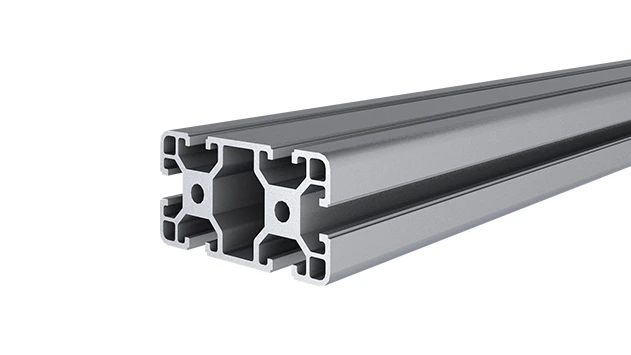
4080B is a 4.00x8.00 CM fractional 40 series square extrusion T-slot profile with two side open T-slots, each side with 4.00cm face, two side with 8.00cm face. The profile has align-a-grooves to assist in aligning connecting profiles.
In the world of manufacturing, warehousing, and industrial design, the right tools and components can make all the difference between a chaotic workspace and a streamlined, efficient operation. Among the unsung heroes of this transformation are aluminum profiles—versatile, durable, and endlessly adaptable building blocks that form the backbone of everything from workbenches to material racks. Today, we're diving deep into one specific profile that has become a staple in European and global industries alike: the 4080B EU Standard Aluminum Profile. Whether you're a small business owner looking to upgrade your production line, a warehouse manager aiming to optimize material flow, or simply someone curious about the engineering behind efficient workspaces, this guide will walk you through what makes the 4080B profile unique, how it's made, where it's used, and why it might just be the solution you've been searching for.
Defining the 4080B EU Standard Aluminum Profile
Let's start with the basics: What exactly is the 4080B EU Standard Aluminum Profile? At its core, it's a type of aluminum extrusion profile —a long, rigid structure formed by pushing heated aluminum through a die to create a specific cross-sectional shape. The "4080B" in its name isn't arbitrary; it's a code that tells us two critical things about its dimensions. The first number, "40," refers to the profile's width (40 millimeters), while the second, "80," denotes its height (80 millimeters). The "B" indicates a specific design variant within the 40x80mm category, often distinguishing it by features like T-slot placement, wall thickness, or edge details that align with EU manufacturing standards.
But what sets the "EU Standard" apart? European standards for aluminum profiles, such as those outlined by organizations like DIN (Deutsches Institut für Normung) or EN (European Norm), prioritize precision, safety, and compatibility. This means the 4080B profile isn't just a random piece of metal; it's engineered to meet strict tolerances for straightness, strength, and dimensional consistency. For businesses operating in Europe or exporting to EU markets, compliance with these standards isn't just a bonus—it's often a requirement, ensuring that components from different suppliers can work together seamlessly.
To visualize this, think of the 4080B profile as a heavy-duty, modular "Lego brick" for adults. Its cross-section typically features T-slots—longitudinal grooves running the length of the profile—that allow for easy attachment of accessories like brackets, panels, or shelves without the need for welding or drilling. This T-slot design is what makes aluminum profiles so versatile, and the 4080B, with its balanced 40x80mm dimensions, strikes a sweet spot between load-bearing capacity and flexibility.
From Raw Aluminum to Finished Profile: The Extrusion Process
To truly appreciate the 4080B profile, it helps to understand how it's made. The journey begins with raw aluminum, usually in the form of billets—cylindrical blocks of aluminum alloy. These billets are heated to around 450–500°C (842–932°F), a temperature that softens the metal without melting it, making it malleable enough to shape. Once heated, the billet is placed into an extrusion press, where a hydraulic ram pushes it through a custom die. The die, a steel tool with a 40x80mm cross-sectional opening (matching the 4080B's shape), acts like a mold, forcing the aluminum to take on the precise dimensions and T-slot pattern of the final profile.
After extrusion, the hot profile is cooled rapidly—often with water or air—to set its shape. It then undergoes a process called "aging," where it's heated again at a lower temperature (around 120–180°C) for several hours. This step strengthens the aluminum by encouraging the formation of small, stable particles within the metal structure, boosting its tensile strength and durability. Finally, the profile is cut to standard lengths (typically 2–6 meters, though custom lengths are available), surface-treated (more on that later), and inspected for quality to ensure it meets EU standards for straightness, dimensional accuracy, and finish.
What makes this process so remarkable is its efficiency. Extrusion allows for complex cross-sectional shapes to be produced in one continuous piece, reducing the need for assembly and minimizing waste. For the 4080B profile, this means each unit is consistent—no two pieces will differ significantly in strength or dimensions—making it reliable for large-scale projects where uniformity is key.

Key Features of the 4080B EU Standard Aluminum Profile
Now that we know how it's made, let's break down the features that make the 4080B profile a favorite among engineers and facility managers. These attributes aren't just technical specs—they're the reasons it solves real-world problems in industrial settings.
1. Dimensions and T-Slot Design
The 40x80mm cross-section is intentionally balanced: wide enough to provide stability when used as a vertical support (like a workbench leg) and tall enough to offer ample surface area for attaching accessories. The T-slots, usually located along the profile's faces and sometimes its edges, are the real workhorses here. These slots—typically 8mm or 10mm wide—accept bolts, nuts, and specialized connectors, allowing users to attach shelves, panels, or other profiles at any point along the length. Unlike fixed shelving or welded structures, this means you can reconfigure your setup in minutes, adapting to new projects or changing workflow needs without rebuilding from scratch.
2. Material Strength and Load Capacity
Most 4080B profiles are made from 6000-series aluminum alloys (often 6063 or 6061), known for their excellent combination of strength, corrosion resistance, and machinability. Thanks to the extrusion and aging processes, the 4080B can handle impressive loads: a single 2-meter length, when used as a vertical support, can typically bear 200–400kg (440–880 lbs) without bending, depending on the wall thickness (usually 1.5–3mm for EU standard profiles). This makes it ideal for heavy-duty applications like workbenches, where tools, materials, and even workers might rest on the surface, or material racks storing bulky components.
3. Surface Finishes
EU standard profiles often come with a few finish options, each suited to different environments:
-
Mill finish:
The natural surface after extrusion, with a slightly matte, silver appearance. Economical and suitable for indoor use where aesthetics are less critical.
-
Anodized finish:
An electrochemical process that creates a hard, protective oxide layer on the aluminum's surface. Anodized 4080B profiles are more resistant to scratches, corrosion, and fading, making them ideal for outdoor use or environments with moisture (like food processing facilities). They're also available in colors (black, silver, blue) for applications where visual coordination matters.
-
Powder-coated finish:
A layer of colored powder applied electrostatically and baked on, offering vibrant colors and extra corrosion resistance. Popular in settings where branding or workplace organization (e.g., color-coding zones) is important.
4. Compatibility with EU Standards
Perhaps most importantly, the "EU Standard" label ensures compatibility. Whether you're buying from a supplier in Germany, Italy, or Poland, a 4080B profile will fit with aluminum profile accessories (connectors, brackets, hinges) from other EU-compliant manufacturers. This interoperability is a game-changer for businesses that source components from multiple suppliers or need to replace parts quickly—no more worrying about mismatched sizes or proprietary fittings.
| Specification | Details |
|---|---|
| Cross-Section Dimensions | 40mm (width) x 80mm (height) |
| Wall Thickness | 1.5mm – 3.0mm (varies by supplier) |
| T-Slot Size | 8mm or 10mm (standard for EU profiles) |
| Tensile Strength | ≥ 200 MPa (after aging) |
| Standard Lengths | 2m, 3m, 4m, 6m (custom lengths available) |
| Finish Options | Mill, anodized (clear/silver), powder-coated (various colors) |
Practical Applications: Where the 4080B Profile Shines
The 4080B's versatility means it's used across industries, but let's look at some of the most common—and impactful—applications. These examples show how it transforms abstract specs into tangible solutions for real businesses.
1. Industrial Workbenches
Walk into any modern factory or workshop, and you're likely to find workbenches built with 4080B profiles. Why? Because they need to be sturdy enough to support heavy tools (drills, saws, assembly equipment) while remaining flexible enough to add accessories like LED task lights, tool holders, or ESD (electrostatic discharge) mats. A typical setup might use 4080B profiles for the legs and frame, with a plywood or aluminum honeycomb panel for the work surface. T-slots along the frame allow workers to attach bins for parts storage or adjustable shelves at exactly the height they need, reducing and improving ergonomics.
2. Material Racks and Storage Systems
Warehouses and distribution centers thrive on organization, and 4080B profiles are perfect for building custom material racks. For example, a "Material Rack B (3 row and 3 floor)" (a common industrial design) might use 4080B as vertical supports and horizontal beams, with shelves made of plywood or metal mesh. The T-slots make it easy to adjust shelf heights as inventory changes—no more wasting space with fixed shelves that are too tall for small boxes or too short for large components. In automotive or electronics manufacturing, where parts come in all shapes and sizes, this adaptability is invaluable.
3. Conveyor and Material Handling Systems
Efficient material flow is the heartbeat of production lines, and the 4080B profile plays a key role here, often paired with components like aluminum guide rail A . Aluminum guide rails are used to guide products along conveyor belts or roller tracks, ensuring they move smoothly and stay aligned. The 4080B provides the rigid frame for these systems: imagine a roller track mounted to 4080B side rails, with aluminum guide rail A along the edges to keep boxes or parts from slipping off. In assembly lines, this setup reduces manual lifting, speeds up production, and minimizes errors—all while being easy to reconfigure if the product line changes.
4. Machine Guards and Safety Barriers
Safety is non-negotiable in industrial settings, and 4080B profiles are often used to build machine guards or safety barriers around equipment. Their strength ensures the barrier can withstand accidental impacts, while their lightweight nature makes them easy to install and reposition. Panels of polycarbonate (clear plastic) or metal mesh can be attached to the T-slots, creating a protective barrier that still allows workers to see the machine in operation. In food processing plants, anodized 4080B profiles are especially popular because they're easy to clean and resistant to corrosion from water or cleaning chemicals.
5. Retail and Display Fixtures
It's not just industrial settings—4080B profiles have made their way into retail, too. Pop-up shops, trade show booths, and in-store displays often use them for their sleek look and quick assembly. A clothing store might build a custom rack with 4080B uprights and adjustable crossbars, allowing them to change the display layout weekly. Anodized silver or black finishes give these fixtures a modern, professional appearance, proving that functionality doesn't have to sacrifice style.
Aluminum Profile Accessories: The Perfect Partners for 4080B
A profile is only as good as the accessories that bring it to life, and the 4080B works with a wide range of aluminum profile accessories designed to extend its functionality. Let's highlight a few key ones, including the aforementioned aluminum guide rail A, to see how they enhance the profile's versatility.
Connectors: The Glue That Holds It All Together
Connectors are the unsung heroes of aluminum profile systems, allowing you to join 4080B profiles at angles, extend lengths, or attach accessories. Common types include:
-
90° angle connectors:
Used to join two profiles at a right angle (e.g., a workbench leg to a horizontal frame).
-
T-connectors:
Attach a perpendicular profile to the middle of another (e.g., adding a shelf support to a vertical upright).
-
Flange connectors:
Bolt directly to the end of a profile, allowing it to be mounted to walls, floors, or other surfaces.
Most connectors use bolts that fit into the T-slots, meaning no drilling or welding is needed—just tighten the bolt, and the connection is secure.
Aluminum Guide Rail A: Guiding the Way in Material Flow
Aluminum guide rail A is a prime example of how accessories solve specific problems. Designed to be mounted along 4080B profiles (usually via T-slot bolts), these rails have a raised edge that guides products—like boxes, totes, or components—along conveyor systems or roller tracks. Imagine a production line where small electronic parts need to move from one workstation to the next: aluminum guide rail A, attached to 4080B side rails, ensures the parts stay on track, preventing jams and reducing downtime. They're often made from anodized aluminum for smoothness and durability, and their low friction surface means products glide easily, even with minimal manual push.
Panels and Shelves: Adding Functionality to Frames
Once the frame is built with 4080B profiles, panels and shelves turn it into a usable structure. Options include:
-
Aluminum honeycomb panels:
Lightweight but strong, ideal for workbench surfaces or machine guards.
-
Polycarbonate panels:
Transparent and impact-resistant, perfect for safety barriers where visibility is key.
-
Wire mesh panels:
Breathable and easy to clean, used in material racks or storage systems where air circulation matters (e.g., storing electronics that need ventilation).
Casters and Leveling Feet: Mobility and Stability
For mobile structures (like workbenches or tool carts), casters (wheels) attached to the 4080B legs make movement easy. Heavy-duty swivel casters with brakes allow the cart to be positioned precisely and locked in place. For stationary setups, leveling feet (adjustable threaded feet) ensure the structure is stable on uneven floors, preventing wobbling and extending the life of the profile by reducing stress on joints.
Why Choose 4080B? The Benefits for Your Business
By now, you might be wondering: With so many aluminum profiles on the market, why opt for the 4080B? Let's break down the benefits that make it a smart investment for businesses of all sizes.
1. Unmatched Versatility
Whether you need a heavy-duty workbench, a lightweight display, or a custom conveyor frame, the 4080B adapts. Its balanced dimensions and T-slot design mean it can play multiple roles in the same workspace, reducing the need to stock different profile sizes. A small manufacturer, for example, might use the same 4080B profiles to build a assembly station, a parts rack, and a packing table—simplifying inventory and lowering costs.
2. Durability That Lasts
Aluminum is naturally resistant to corrosion, and with anodized or powder-coated finishes, the 4080B can withstand years of heavy use in harsh environments—from humid warehouses to dusty factories. Unlike steel, it won't rust, and unlike wood, it won't warp or rot. This longevity means fewer replacements over time, saving money in the long run.
3. Easy to Assemble and Reconfigure
Welding is time-consuming, messy, and requires skilled labor. The 4080B's T-slot system eliminates that. With basic hand tools (a hex key, wrench, and level), anyone can assemble a sturdy structure in hours—not days. And when your needs change? Simply loosen the bolts, reposition the profiles or accessories, and retighten. This agility is a lifesaver for businesses that grow quickly or frequently update their processes.
4. Lightweight Yet Strong
Aluminum is about one-third the weight of steel, making the 4080B easier to transport, handle, and install. This is especially important for large projects or mobile structures (like tool carts). Yet, as we discussed earlier, it doesn't sacrifice strength—its load capacity rivals that of many steel profiles, making it a great alternative for applications where weight is a concern (e.g., overhead racks or mobile workstations).
5. Cost-Effective in the Long Run
While aluminum profiles can have a higher upfront cost than wood or basic steel, their durability, reusability, and low maintenance make them more cost-effective over time. A wood workbench might need to be replaced every 2–3 years; a 4080B workbench could last a decade or more. Plus, when you reconfigure it instead of replacing it, you save on materials and labor costs. For businesses focused on sustainability, aluminum is also 100% recyclable, aligning with eco-friendly practices and potentially reducing waste disposal fees.
How to Choose the Right 4080B Profile and Supplier
Not all 4080B profiles are created equal, and choosing the right supplier is just as important as selecting the profile itself. Here are key factors to consider:
1. Verify EU Standard Compliance
Ensure the supplier explicitly states compliance with EU standards (e.g., DIN 69051 or EN 755). Ask for certificates or test reports confirming dimensional accuracy, material composition, and load capacity. Non-compliant profiles may have inconsistent dimensions or weaker materials, leading to unstable structures or compatibility issues with accessories.
2. Assess Material Quality
Look for profiles made from high-quality aluminum alloys (6063 or 6061 are industry standards). Ask about the wall thickness—thicker walls (2–3mm) are better for heavy loads, while thinner walls (1.5mm) may suffice for lighter applications. Avoid profiles with visible defects like dents, scratches, or uneven finishes, as these can indicate poor manufacturing practices.
3. Check Accessory Availability
A good supplier should offer a wide range of aluminum profile accessories (connectors, guide rails, panels) that are compatible with their 4080B profiles. This saves you time and money, as you can source everything from one place and ensure compatibility. If you need a specific accessory like aluminum guide rail A, confirm the supplier stocks it or can order it quickly.
4. Customization Options
Does the supplier offer custom lengths, finishes, or hole punching? If your project requires non-standard sizes or specific colors, a supplier with in-house customization capabilities can streamline the process. For example, if you need 4080B profiles cut to 4.5-meter lengths instead of the standard 6 meters, a supplier with a cutting service can deliver exactly what you need, reducing waste.
5. Customer Support and Technical Assistance
Even experienced buyers can run into questions. A supplier with knowledgeable customer support can help you select the right profile thickness, recommend accessories, or troubleshoot assembly issues. Look for suppliers that offer design tools, CAD files, or assembly guides to assist with your project.
6. Compare Pricing and Lead Times
While cost shouldn't be the only factor, it's important to compare prices from multiple suppliers. Be wary of unusually low prices—they may indicate subpar quality. Also, ask about lead times, especially if you need the profiles quickly. Many EU suppliers can deliver within 1–2 weeks for standard lengths, but custom orders may take longer.
Caring for Your 4080B Profile: Maintenance Tips
With proper care, your 4080B profiles will last for years. Here's how to keep them in top shape:
1. Cleaning
For mill or anodized finishes, wipe down profiles regularly with a soft cloth and mild detergent (avoid abrasive cleaners, which can scratch the surface). For powder-coated finishes, use a damp cloth to remove dust and debris. In corrosive environments (e.g., near saltwater or chemicals), rinse with clean water and dry thoroughly to prevent buildup.
2. Inspect Connections
Over time, bolts and connectors can loosen due to vibration (common in manufacturing settings). Periodically check T-slot bolts and tighten them with a hex key if needed. This prevents wobbling and ensures the structure remains stable.
3. Protect Against Impact
Aluminum is strong but can dent if hit with heavy objects. Use corner guards or bumpers on workbench corners or material rack edges in high-traffic areas. This is especially important in warehouses with forklifts or pallet jacks.
4. Store Properly When Not in Use
If storing extra profiles, keep them in a dry, covered area to prevent dust buildup and corrosion. Stack them horizontally on a flat surface (using supports to prevent bending) or hang them vertically to save space.
Conclusion: The 4080B Profile—A Foundation for Efficiency
The 4080B EU Standard Aluminum Profile is more than just a piece of metal; it's a building block for efficiency, adaptability, and innovation. From its precise extrusion process to its versatile T-slot design, from industrial workbenches to retail displays, it solves problems by putting control in the hands of users—allowing them to build, modify, and grow without being limited by rigid, one-size-fits-all solutions.
Whether you're a small business owner looking to upgrade your workspace or a large manufacturer streamlining production lines, the 4080B profile, paired with the right aluminum profile accessories like aluminum guide rail A, offers a balance of strength, flexibility, and durability that's hard to match. By choosing a reputable, EU-compliant supplier and investing in quality, you're not just buying a profile—you're investing in a system that will adapt and grow with your business for years to come.
In a world where change is constant, the 4080B profile is a constant you can rely on. It's a testament to the power of smart design—simple, functional, and ready to tackle whatever your workspace throws at it.