- Company Articles
- Industry articles
- Industry standards
- What is the Lifespan of 2020 EU Standard Aluminum Profile in Industrial Environments?

What is the Lifespan of 2020 EU Standard Aluminum Profile in Industrial Environments?
Related Product
2020 EU Standard Aluminum Profile
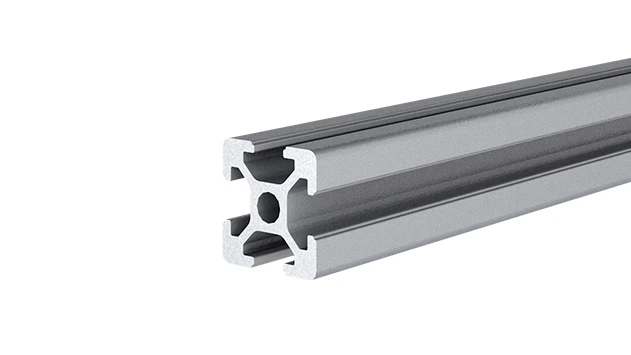
2020 is a 2.00 x 2.00CM fractional 20 series square extrusion T-slot profile with four open T-slots, one on each 2.00 face. The profile has align-a-grooves to assist in aligning connecting profiles.
Walk through any modern manufacturing facility, and you'll likely spot sleek, silver structures holding tools, transporting components, or forming the backbone of workstations. Chances are, many of these structures are built from 2020 EU standard aluminum extrusion profiles—a yet critical part of industrial infrastructure. But how long can you expect these profiles to last in the harsh, fast-paced world of factories and production lines? Let's dive into the factors that shape their lifespan, the role of quality materials and accessories, and why investing in EU-standard components pays off over time.
Understanding the 2020 EU Standard Aluminum Extrusion Profile
First, let's clarify what "2020 EU standard aluminum profile" actually means. The "2020" refers to the profile's cross-sectional dimensions: 20mm in width and 20mm in height, making it a compact yet versatile choice for light to medium-duty industrial applications. The "EU standard" label, however, is where the real value lies. EU standards for aluminum extrusion profiles (often defined by EN 755 or similar norms) set strict benchmarks for material composition, dimensional accuracy, mechanical strength, and corrosion resistance. These aren't just arbitrary rules—they're designed to ensure consistency, safety, and reliability across industries, from automotive assembly to electronics manufacturing.
Unlike generic, uncertified aluminum profiles, the 2020 EU standard variant undergoes rigorous testing. For example, its alloy composition is typically specified (most commonly 6063-T6, a heat-treated aluminum-magnesium-silicon alloy) to balance strength, ductility, and workability. The extrusion process itself, which shapes the aluminum into its characteristic T-slot design, is monitored to ensure uniform wall thickness and structural integrity. This attention to detail isn't just about meeting a label—it's the foundation for a longer, more predictable lifespan.
Key Factors That Determine Lifespan in Industrial Settings
The lifespan of a 2020 EU standard aluminum extrusion profile isn't a fixed number; it's a result of how four critical factors interact: material quality, environmental conditions, usage patterns, and maintenance. Let's break each down.
1. Material Quality: The Alloy and Extrusion Difference
At the heart of every durable aluminum profile is its material. EU standards demand high-purity aluminum alloys with controlled amounts of alloying elements (like magnesium and silicon in 6063-T6). This isn't just about strength—these alloys form a natural oxide layer when exposed to air, acting as a built-in barrier against corrosion. For industrial environments, where even small amounts of moisture or chemicals can cause damage, this inherent protection is a game-changer.
The extrusion process, too, plays a role. EU-standard profiles are extruded under precise temperature and pressure conditions, resulting in a uniform grain structure that resists fatigue. This means the profile can withstand repeated stress—like the constant loading and unloading of components on a workbench—without developing micro-cracks that shorten lifespan. In contrast, poorly extruded profiles may have weak points or inconsistent thickness, leading to premature failure.
2. Environmental Conditions: Battling the Industrial Elements
Industrial environments are tough on equipment. Factories often have fluctuating temperatures, high humidity, exposure to oils, coolants, or cleaning agents, and even fine metal dust. How does the 2020 EU standard profile hold up? Let's start with corrosion: thanks to its alloy composition and often additional treatments (like anodizing, a EU-standard option that thickens the oxide layer), the profile resists rust and pitting far better than steel. Even in humid environments—common in food processing or pharmaceutical plants—you'll rarely see the flaking or discoloration that plagues uncoated metals.
Chemicals are another concern. While aluminum isn't immune to strong acids or alkalis, most industrial fluids (like machine oils or mild detergents) won't eat through the oxide layer. And when paired with aluminum profile accessories like rubber strips or plastic end caps, the profile's T-slots (a signature feature for attaching components) stay sealed, preventing debris buildup that could trap moisture and accelerate wear.
3. Usage Patterns: Load, Movement, and Stress
How you use the profile matters just as much as what it's made of. A 2020 EU standard profile used as a static shelf bracket holding 5kg of parts will last longer than one used as a dynamic conveyor rail supporting 20kg of sliding components 100 times a day. EU standards specify load limits—for example, a 20x20mm profile might safely support 15-20kg per linear meter under static conditions—but exceeding these limits, even occasionally, can lead to bending or metal fatigue over time.
Movement is another factor. Profiles in lean systems, where modular workstations or material racks are reconfigured regularly, rely on aluminum profile accessories like connectors and hinges to stay stable. If these accessories are poorly fitted or over-tightened, they can create stress points on the profile, weakening it. Conversely, using the right accessories—designed to distribute load evenly—keeps the profile's structure intact for years.
4. Maintenance: Small Habits, Big Impact
Even the best materials need care. Luckily, maintaining 2020 EU standard aluminum profiles is straightforward. A quick wipe-down with a damp cloth every few weeks removes dust and oils that can attract corrosive particles. Checking aluminum profile accessories—like tightening loose connectors or replacing worn aluminum profile rubber strips—prevents minor issues from becoming major problems. For example, a cracked rubber strip in a T-slot might seem trivial, but it can let water seep in, leading to hidden corrosion. Spending 10 minutes a month on inspection can add years to the profile's life.

The Role of Aluminum Profile Accessories in Longevity
You can't talk about the lifespan of aluminum profiles without mentioning their accessories. Aluminum profile accessories—things like connectors, end caps, rubber strips, and hinges—are the unsung heroes that keep the system working smoothly. Think of them as the profile's "support crew": they reduce friction, distribute load, seal out debris, and prevent metal-on-metal contact that causes wear.
Take aluminum profile rubber strip, for instance. These flexible strips fit into the profile's T-slots, acting as a buffer when attaching components like shelves or panels. Without them, metal brackets would scrape against the slot edges every time they're adjusted, creating grooves that weaken the profile. Rubber strips also dampen vibrations—critical in factories with heavy machinery—and prevent small parts from falling into the slots and jamming the system. Over time, a worn rubber strip is easy (and cheap) to replace, but skipping that replacement can lead to costly profile damage down the line.
Connectors are another example. EU-standard profiles use accessories like 90° angle brackets or T-joints made from high-strength aluminum or steel, designed to lock into the T-slots with minimal stress. Using off-brand, ill-fitting connectors (common in non-standard setups) can create uneven pressure, bending the profile's walls. But with genuine aluminum profile accessories, the load spreads evenly, keeping the profile straight and strong.
Real-World Lifespan: What Do Factories Actually Experience?
So, after all this, how long can you realistically expect a 2020 EU standard aluminum extrusion profile to last in an industrial environment? The answer, based on industry feedback and case studies, is surprisingly consistent: 10-15 years with average use and maintenance. In low-stress applications—like static shelving in a climate-controlled electronics plant—they've been known to last 20+ years. In high-stress setups—like dynamic conveyor rails in automotive assembly—10 years is more typical, but even then, the profiles often only need accessory replacements, not full replacement.
Consider a case study from a German automotive parts manufacturer. They installed 2020 EU standard profiles in their lean system workstations back in 2010. Today, 13 years later, the profiles themselves are still structurally sound; the only replacements have been worn rubber strips and a few corroded caster wheels (accessories, not the profiles). The plant manager noted, "We clean the profiles monthly and check the connectors quarterly. They've outlasted the wooden workbenches we used to have, which needed replacing every 5 years."
Compare that to a factory using non-standard 20x20mm profiles. A U.S.-based electronics assembler reported profiles warping after just 3 years of light use, with visible corrosion in T-slots where moisture trapped debris. The difference? The non-standard profiles lacked the EU-mandated alloy purity and anodized coating, and the accessories were cheap plastic that cracked, leaving the slots exposed.
| Scenario | Environment | Maintenance | Expected Lifespan |
|---|---|---|---|
| Static shelving (5kg/linear meter) | Climate-controlled factory, low humidity | Quarterly cleaning, annual accessory check | 15-20 years |
| Dynamic conveyor rail (10kg sliding load, 50 cycles/day) | Moderate humidity, occasional oil exposure | Monthly cleaning, bi-annual accessory replacement | 10-12 years |
| Lean system workstation (reconfigured 2-3x/year) | High-moisture food processing plant | Weekly cleaning, quarterly connector tightening | 8-10 years |
| Non-standard 20x20mm profile (same use as above) | Any industrial environment | Same maintenance | 3-5 years |
Maximizing Lifespan: Practical Tips for Factory Managers
Want to get the most out of your 2020 EU standard aluminum profiles? Here are actionable steps to extend their lifespan:
- Stick to EU standards: Always verify certification (look for EN 755 compliance) when buying profiles. Cheap, non-standard options might save money upfront but cost more in replacements.
- Match accessories to the profile: Use only aluminum profile accessories designed for 2020 EU standard profiles. Ill-fitting parts cause stress and wear.
- Don't overload: Check EU load charts and err on the side of caution. If you need to support more weight, upgrade to a larger profile (like 30x30mm) instead of pushing the 2020 beyond its limits.
- Seal the slots: Install aluminum profile rubber strips in unused T-slots to keep out dust and moisture. replace them when they crack or harden.
- Train your team: Teach workers to handle profiles carefully—avoid dropping heavy objects on them, and don't use them as makeshift levers or steps.
Conclusion: Investing in Longevity for Leaner, More Efficient Operations
The lifespan of a 2020 EU standard aluminum extrusion profile in industrial environments isn't just a number—it's a reflection of smart engineering, quality materials, and proactive care. When you choose EU-standard profiles, you're not just buying metal; you're investing in a system designed to grow with your needs, resist the harsh realities of factory life, and minimize downtime.
With average lifespans of 10-15 years (and even longer with proper maintenance), these profiles outlast cheaper alternatives by a factor of 3-4. And when paired with durable aluminum profile accessories like rubber strips and connectors, they become the backbone of efficient lean systems, reducing waste and keeping production lines moving.
So the next time you walk through your factory, take a closer look at those silver profiles holding up workstations or guiding components. They might not scream for attention, but their quiet durability is what keeps your operations running—day in, day out, for years to come.