- Company Articles
- Industry articles
- Industry standards
- What Is the Standard Load Capacity of a Flat Swivel Castor Wheel?

What Is the Standard Load Capacity of a Flat Swivel Castor Wheel?
Related Product
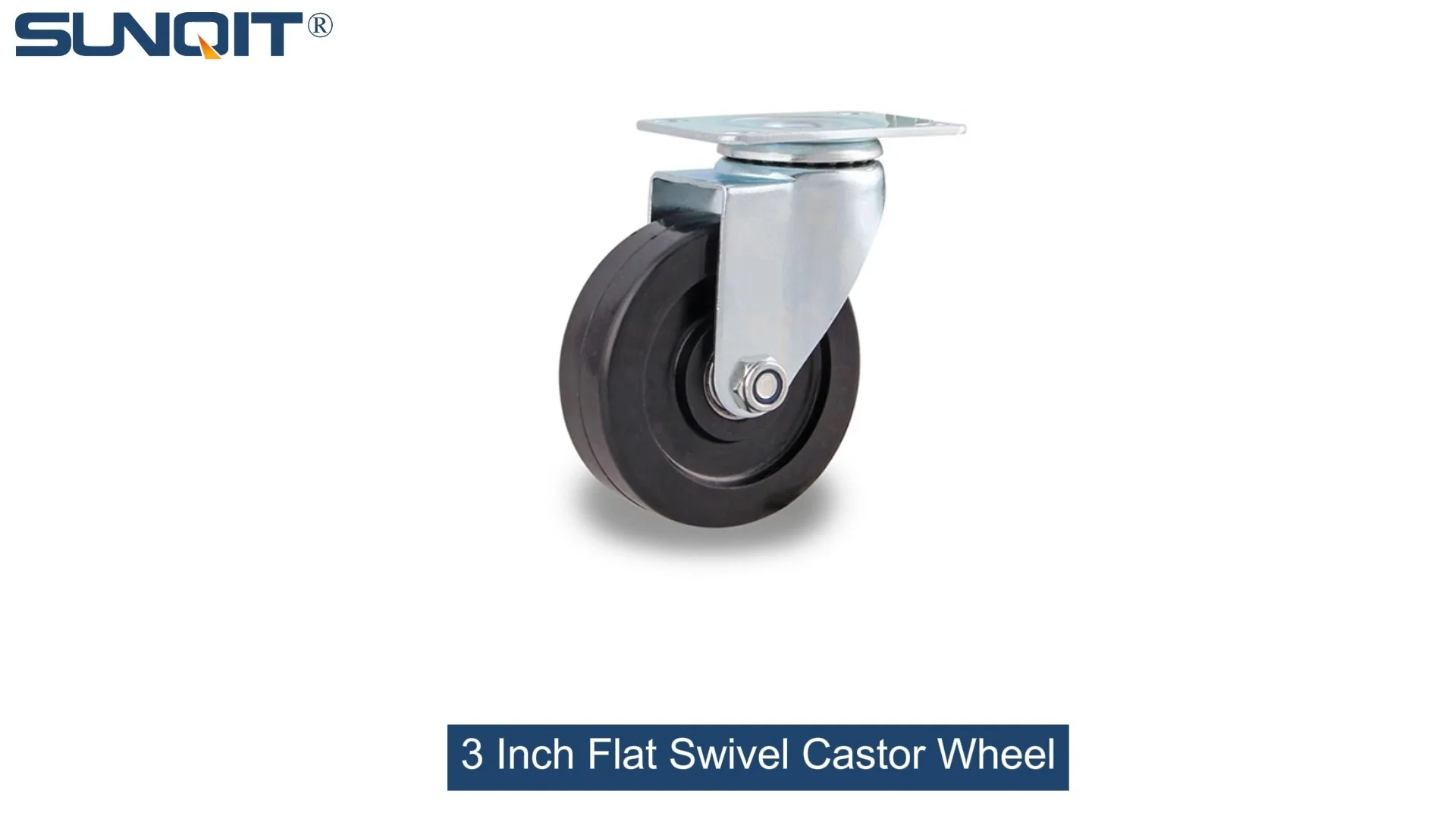
Flat Swivel Castor Wheel
Chair Casters Ball Bearing Wheels Rubber Base. Resistant to abrasion, impact and corrosion. Heavy payload can hold 70-90Kgs per pcs,which can make it works at a stable and smooth status.
If you've ever pushed a heavy cart across a warehouse floor, rearranged a workbench in your garage, or even moved a loaded shelving unit in a workshop, you've probably relied on castor wheels to make the job easier. But have you ever stopped to wonder what makes some castors handle heavy loads effortlessly while others wobble or fail under pressure? The answer often comes down to one critical factor: load capacity. And when it comes to versatile, maneuverable mobility, flat swivel castor wheels are among the most common choices—but their performance hinges entirely on whether their load capacity matches your needs. In this guide, we'll break down what standard load capacity means for flat swivel castor wheels, the factors that influence it, and how to choose the right one for everything from workbenches to industrial trolleys.
First Things First: What Are Flat Swivel Castor Wheels?
Before diving into load capacity, let's get clear on what a flat swivel castor wheel actually is. Unlike fixed castors, which only roll forward and backward, swivel castors have a rotating mechanism (usually a raceway or bearing) that allows the wheel to turn 360 degrees. This makes them ideal for equipment that needs to be maneuvered in tight spaces—think hospital beds, shopping carts, or the workbench in your garage.
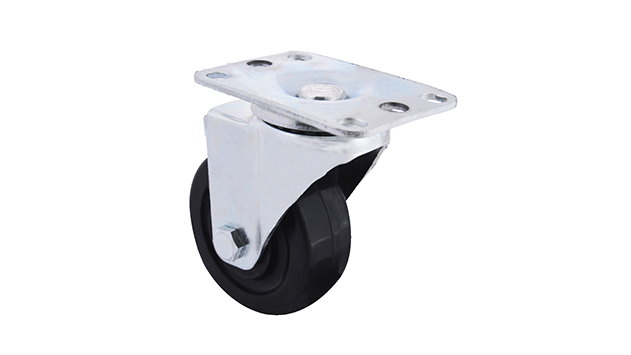
A "flat" swivel castor refers to the mounting style: the wheel assembly is attached to a flat plate (called a mounting plate), which is then bolted or welded to the bottom of the equipment. This flat design distributes weight evenly and provides stability, making it a popular choice for heavy-duty applications. And if you've ever seen a castor with a small lever that locks the wheel in place, that's a flat swivel castor wheel with brake —a safety feature that prevents unintended movement, though it doesn't affect the load capacity itself.
What Exactly Is "Load Capacity," Anyway?
Load capacity is the maximum weight a single castor wheel can safely support without failing, deforming, or losing functionality. But here's the thing: it's not a one-size-fits-all number. Manufacturers test castors under two conditions to determine this:
- Static load capacity: The weight the castor can hold when the equipment is stationary. This is usually higher than dynamic load capacity because standing still puts less stress on the wheel and swivel mechanism.
- Dynamic load capacity: The weight the castor can handle when the equipment is moving. This accounts for the added stress of rolling, turning, and potential impacts (like hitting a small bump on the floor).
For most everyday uses—like a workbench or a tool cart—you'll want to focus on dynamic load capacity, since the equipment will likely be moved regularly. But if you're using castors for something that stays put most of the time (say, a storage rack that only gets shifted once a month), static load capacity might be more relevant.
Pro tip: Never assume a castor's load capacity is "close enough." Underestimating the weight can lead to bent axles, cracked mounting plates, or wheels that lock up—all of which can damage your equipment or even cause accidents.
5 Key Factors That Shape a Flat Swivel Castor's Load Capacity
Load capacity isn't just a random number stamped on a box. It's determined by a mix of design choices and materials. Let's break down the biggest factors:
1. Wheel Material: Rubber vs. Polyurethane vs. Nylon
The material of the wheel itself plays a huge role. Softer materials like rubber or polyurethane (PU) are great for protecting floors and absorbing shocks, but they can compress under heavy loads, reducing capacity. Harder materials like nylon or steel, on the other hand, are stiffer and can handle more weight—though they're noisier and may scratch floors.
Example: A 5-inch rubber wheel might have a dynamic load capacity of 300 lbs, while a 5-inch nylon wheel of the same design could handle 500 lbs.
2. Wheel Diameter: Bigger Isn't Always Better, But It Helps
Generally, larger wheels have higher load capacities. Why? A bigger wheel distributes the weight over a larger surface area, reducing pressure on the floor and the wheel itself. For example, a 2-inch wheel might max out at 150 lbs, while an 8-inch wheel of the same material could support 1,200 lbs or more.
But there's a catch: larger wheels are harder to swivel in tight spaces. So if you need to maneuver a workbench around a crowded workshop, you might opt for 4-6 inch wheels over 8-inchers, even if they have a slightly lower capacity.
3. Bearing Type: Smooth Rolls Mean Less Stress
The bearings inside the wheel hub help reduce friction as the wheel turns. Poor-quality bearings can cause the wheel to drag, increasing stress and lowering the effective load capacity. Common bearing types include:
- Ball bearings: Good for light to medium loads; affordable and easy to replace.
- Roller bearings: Better for heavy loads, as they distribute weight across more contact points.
- Precision bearings: Found in high-end casters; designed for smooth movement under extreme weights.
Think of it like this: A castor with cheap ball bearings might start to seize up when loaded to 300 lbs, even if the wheel itself is rated for 400 lbs.
4. Mounting Plate Strength: The "Backbone" of the Castor
The flat mounting plate is what connects the castor to your equipment. If the plate is thin or made of weak metal, it can bend or crack under heavy loads—even if the wheel and bearings are strong enough. Look for mounting plates made of steel (preferably 1/4-inch thick or more) for heavy-duty use.
Fun fact: Many caster accessories —like reinforced mounting plates or extra-strong bolts—are designed to boost the overall load capacity of a castor system.
5. Environment: It's Not Just About Weight
Where you use the castor matters, too. High temperatures can soften rubber or polyurethane wheels, reducing their load capacity. Rough or uneven floors (like concrete with cracks) put extra stress on wheels, while wet or oily surfaces can cause slipping, which strains the swivel mechanism.
For example, a castor rated for 500 lbs in a climate-controlled warehouse might only handle 400 lbs in a hot, humid factory—or 350 lbs on a gravel driveway.

Standard Load Capacity Ranges: A Quick Reference
While load capacities vary by brand and design, there are general ranges you can expect for flat swivel castor wheels. The table below breaks down common sizes, materials, and their typical dynamic load capacities (remember: static capacity is usually 20-30% higher).
| Wheel Diameter (Inches) | Common Materials | Typical Dynamic Load Capacity (Lbs) | Best For |
|---|---|---|---|
| 2-3 | Rubber, Polyurethane | 100-250 | Light shelving, small toolboxes, office chairs |
| 4-5 | Polyurethane, Nylon | 300-600 | Workbenches, medium tool carts, restaurant equipment |
| 6-7 | Nylon, Steel | 700-1,200 | Heavy workbenches, industrial trolleys, vending machines |
| 8+ | Steel, Cast Iron | 1,500-3,000+ | Forklifts (attachments), large machinery, shipping containers |
*These are general guidelines. Always check the manufacturer's specs for exact numbers—some high-performance 5-inch polyurethane casters, for example, can handle 800 lbs or more.

How to Calculate the Right Load Capacity for Your Equipment
Choosing the right castor isn't just about picking a wheel with a high load capacity—it's about matching it to your specific needs. Here's a simple 3-step process to figure out what you need:
Step 1: Calculate the Total Weight of Your Equipment (Plus Load)
Add up the weight of the equipment itself, plus the maximum weight it will carry. For example, if you have a workbench that weighs 200 lbs, and you typically load it with 300 lbs of tools and materials, your total weight is 500 lbs.
Step 2: Divide by the Number of Castors
Most equipment uses 4 castors (one at each corner). So, 500 lbs ÷ 4 castors = 125 lbs per castor. But wait—this is just the minimum. You should always add a safety margin.
Step 3: Add a Safety Margin (Critical!)
Never rely on the "exact" number. Equipment often gets overloaded accidentally (that extra 50 lbs of tools you forgot about), and uneven weight distribution (like leaning on one corner of the workbench) can put more stress on individual castors. A good rule of thumb: multiply the per-castor weight by 1.5 (a 50% safety margin).
Using our example: 125 lbs x 1.5 = 187.5 lbs per castor. So you'd want castors with a dynamic load capacity of at least 200 lbs each.
Pro tip: If your equipment has 3 castors (less common), use a 200% safety margin—uneven weight distribution is more likely with an odd number.
Real-World Scenarios: When Load Capacity Matters Most
Let's put this all into context with a few examples. These are common situations where choosing the wrong castor load capacity leads to headaches (or worse).
Scenario 1: The Overworked Workbench
Mark, a hobby woodworker, builds a custom workbench for his garage. He estimates it will hold 300 lbs of tools and lumber, so he buys 4-inch polyurethane castors rated for 200 lbs each (total capacity: 800 lbs). But over time, he adds a 150-lb bandsaw, a 100-lb drill press, and stacks 200 lbs of lumber on top. Total weight? 750 lbs.
At first, the castors seem fine. But one day, as Mark rolls the workbench to sweep underneath, he hits a small crack in the concrete. The front-left castor, already strained, bends at the mounting plate, causing the workbench to tip. The bandsaw slides off, damaging the floor and the tool.
What went wrong? Mark forgot the safety margin. His per-castor weight was 750 lbs ÷ 4 = 187.5 lbs, but he didn't account for uneven weight (the bandsaw was on one end) or the impact of rolling over the crack. A 5-inch nylon castor with a 350-lb capacity would have handled the load easily.
Scenario 2: The Busy Restaurant Kitchen
A restaurant buys a food prep cart with 3-inch rubber castors (rated for 150 lbs each) to move ingredients between stations. During dinner rush, the cart is loaded with 500 lbs of meat, veggies, and pots—way more than the 600-lb total capacity (150 lbs x 4). The castors start to squeak, and the wheels flatten slightly under the weight. Within a month, the rubber wheels are cracked, and the cart is impossible to push.
Solution: Upgrading to 5-inch polyurethane castors (rated for 400 lbs each) gives a total capacity of 1,600 lbs—plenty for the rush, and the polyurethane wheels stand up to frequent cleaning with hot water and sanitizer.
Maintaining Load Capacity: Keep Your Castors Rolling Strong
Even the best castors won't last if you neglect them. Proper maintenance preserves their load capacity and extends their lifespan. Here's how:
1. Clean the Wheels Regularly
Dirt, hair, and debris can get stuck in the wheel bearings or between the wheel and the mounting plate, causing friction. Use a stiff brush or compressed air to clean them weekly (more often if you're in a dusty environment, like a workshop).
2. Lubricate the Swivel Mechanism and Bearings
Every 3-6 months, apply a dry lubricant (like silicone spray) to the swivel raceway and wheel bearings. Avoid oil-based lubricants—they attract dirt. This keeps the castor turning smoothly, reducing stress on the components.
3. Inspect for Wear and Tear
Check the wheels for cracks, flat spots, or uneven wear (a sign of misalignment). Look at the mounting plate for bends or loose bolts. If a caster wheel is worn, replace it immediately—don't wait for it to fail.
4. Tighten Loose Parts
Vibration from rolling can loosen bolts and nuts. Every month, tighten the mounting plate bolts and any nuts on the wheel axle. This prevents the castor from shifting, which can strain the wheel and reduce load capacity.
Wrapping Up: It's All About Safety and Reliability
At the end of the day, understanding the standard load capacity of a flat swivel castor wheel isn't just about picking a number—it's about keeping your equipment, your workspace, and yourself safe. Whether you're outfitting a workbench, a warehouse cart, or a medical device, taking the time to calculate your needs, choose quality materials, and maintain your castors will save you from costly repairs, downtime, and accidents.
Remember: A castor is only as strong as its weakest link—so pay attention to the wheel material, diameter, bearings, and mounting plate. And when in doubt, always go higher than you think you need. Your back (and your tools) will thank you.