- Company Articles
- Industry articles
- Industry standards
- What Makes 2040 EU Standard Aluminum Profile Ideal for Custom Lean Solutions?

What Makes 2040 EU Standard Aluminum Profile Ideal for Custom Lean Solutions?
Related Product
2040 EU Standard Aluminum Profile
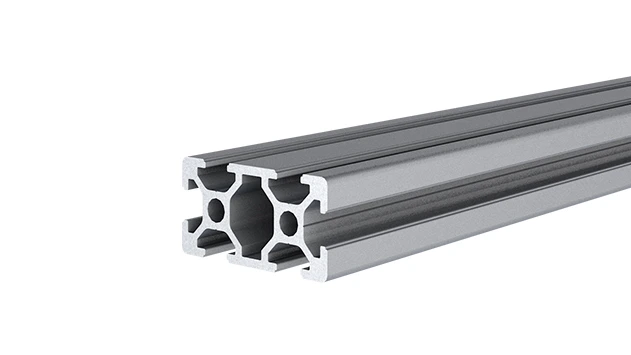
2040 is a 2.00 x 4.00CM fractional 20 series square extrusion T-slot profile with four open T-slots, two side with 2.00cm face, the other side with 4.00cm face. The profile has align-a-grooves to assist in aligning connecting profiles.
Walk into any modern manufacturing facility, warehouse, or assembly line, and you'll notice a quiet revolution happening. The rigid, one-size-fits-all workstations of the past are disappearing, replaced by sleek, adaptable setups that seem to breathe with the rhythm of production. Behind this transformation? Lean solutions—systems designed to eliminate waste, streamline workflows, and keep pace with the ever-shifting demands of today's market. And at the heart of many of these solutions lies an unsung hero: the 2040 EU standard aluminum profile.
If you've ever wondered how factories reconfigure their lines overnight for a new product, or how small businesses scale their operations without breaking the bank, chances are this unassuming aluminum extrusion has played a role. But what exactly makes the 2040 EU standard aluminum profile so special? Why not another material, or a different size? In this article, we'll dive deep into the world of lean manufacturing, explore the unique benefits of this specific aluminum profile, and uncover why it's become the go-to choice for engineers, plant managers, and entrepreneurs looking to build custom lean solutions that grow with their needs.
The Heartbeat of Modern Manufacturing: Why Lean Solutions Matter More Than Ever
Before we get into the nitty-gritty of aluminum profiles, let's take a step back. What is a "lean solution," and why has it become the gold standard for efficiency? At its core, lean manufacturing is about one thing: creating more value with less waste. That means cutting down on unnecessary movement, reducing idle time, minimizing excess inventory, and ensuring every square foot of your workspace works as hard as your team does.
In today's fast-paced market, where consumer preferences change overnight and competitors are always nipping at your heels, rigidity is a death sentence. A factory that takes weeks to retool for a new product, or a warehouse where workers spend hours hunting for tools, simply can't keep up. Lean solutions solve this by prioritizing flexibility. They're designed to be modular—built from components that can be easily rearranged, added to, or repurposed as needs evolve. Think of it like building with Lego blocks instead of pouring concrete: if you want to change the shape, you don't start from scratch—you just move the pieces.
But here's the catch: not all building blocks are created equal. To build a truly effective lean system, you need components that are strong enough to handle daily wear and tear, lightweight enough to make reconfiguration easy, and compatible enough to work with a wide range of accessories. And that's where the 2040 EU standard aluminum profile enters the picture.
What Exactly Is 2040 EU Standard Aluminum Profile? Breaking Down the Basics
Let's start with the name: "2040 EU standard aluminum profile." It sounds technical, but it's actually pretty straightforward. The numbers "2040" refer to its dimensions: 20 millimeters in width and 40 millimeters in height. Unlike some other materials, aluminum profiles are created through a process called extrusion, where heated aluminum is pushed through a die to form a specific cross-sectional shape. This gives the 2040 profile its signature T-slot design—a series of grooves along its length that act like built-in attachment points for accessories, panels, and other components.
Then there's the "EU standard" part. This isn't just a marketing buzzword. EU standards (officially known as EN standards) are (yán gé de—strict) guidelines that ensure products meet consistent quality, safety, and performance criteria across Europe and beyond. For aluminum profiles, this means precise tolerances (so every piece fits together perfectly), high-grade aluminum alloys (for strength and corrosion resistance), and compliance with environmental regulations (like restrictions on harmful substances). When you buy a 2040 EU standard aluminum profile, you're not just buying a piece of metal—you're buying peace of mind that it will perform as expected, day in and day out.
But why 20mm x 40mm? Why not 10mm x 30mm, or 30mm x 60mm? The answer lies in balance. At 20x40mm, this profile strikes a sweet spot between strength and versatility. It's compact enough to fit into tight workspaces (think small assembly cells or benchtop setups) but robust enough to support medium-duty loads—like workbenches, material racks, or light conveyor systems. The T-slot design, which runs along both the 20mm and 40mm faces, means you can attach accessories from multiple angles, opening up endless possibilities for customization. Whether you need to mount a tool holder on one side, a panel on the other, or a roller track along the top, the 2040 profile has you covered.

5 Key Reasons 2040 EU Standard Aluminum Profile Is Perfect for Custom Lean Solutions
Now that we know what it is, let's explore why the 2040 EU standard aluminum profile has become the backbone of custom lean solutions. From flexibility to cost-effectiveness, these five advantages set it apart from other materials and make it a favorite among lean practitioners.
1. Unmatched Flexibility: Build, Rebuild, and Adapt in Minutes
The number one rule of lean manufacturing is "adapt or die." Production lines change, product sizes shift, and workflows evolve—and your equipment needs to keep up. The 2040 aluminum profile excels here because it's inherently modular. Thanks to its T-slot design and compatibility with a wide range of aluminum profile accessories (think brackets, connectors, end caps, and hinges), you can assemble a workstation in the morning and reconfigure it into a material rack by afternoon—no welding, no drilling, no specialized tools required.
Imagine this scenario: You run a small electronics assembly shop, and you've just landed a contract for a new gadget that's slightly larger than your current products. Your existing workbench is too narrow, and the material rack doesn't fit the new component bins. With traditional steel workbenches, you'd be looking at buying new equipment or hiring a welder to modify what you have—both costly and time-consuming. With 2040 aluminum profiles? You simply loosen a few bolts, add longer profile sections to the bench legs, swap out the shelf brackets on the rack, and you're ready to go. It's like having a workshop that can rearrange itself to fit your needs.
2. Strength Without the Bulk: Lightweight but Built to Last
Aluminum has long been prized for its strength-to-weight ratio, and the 2040 profile is no exception. Despite being lightweight (around 0.8-1.2 kg per meter, depending on wall thickness), it's surprisingly strong. The extrusion process aligns the aluminum's grain structure, making it resistant to bending and warping under load. This means you can build sturdy workbenches that support heavy tools, flow racks that hold boxes of components, or even small conveyor systems—all without the heft of steel.
Why does this matter for lean solutions? Because lightweight equipment is easier to move. If you need to shift a workstation from one side of the factory to another, you don't need a forklift—two people can lift it (or add casters for even more mobility). This reduces downtime during reconfigurations and makes it easier to experiment with new layouts. Plus, aluminum's natural corrosion resistance means it holds up in harsh environments—whether your facility is humid, dusty, or exposed to occasional spills. Unlike steel, it won't rust, so your lean system will look and perform like new for years.
3. A Universe of Accessories: Mix, Match, and Customize to Your Heart's Content
A profile is only as good as the accessories it works with—and the 2040 EU standard aluminum profile has a veritable ecosystem of add-ons. From simple corner brackets and T-slot nuts to specialized components like aluminum honeycomb panels, roller tracks, and even LED light strips, the right accessories turn a basic aluminum extrusion into a fully functional lean system.
Take workbenches, for example. With 2040 profiles, you can add a pegboard on one side for tools, a shelf below for storage, a power strip along the back, and even a monitor arm for digital work instructions—all without drilling a single hole. Need to organize small parts? Attach a set of plastic bins using panel mounts. Want to make the bench height-adjustable? Swap out fixed legs for telescoping ones with locking levers. The possibilities are nearly endless, and because most accessories are standardized (thanks to the EU standard), you can mix and match parts from different suppliers without compatibility issues.
4. Cost-Effective in the Long Run: Invest Once, Adapt Forever
Let's be honest: Aluminum isn't the cheapest material upfront. You can buy steel angle iron for a fraction of the cost of 2040 aluminum profiles. But lean manufacturing is about total cost, not just initial price. When you factor in installation, maintenance, and reconfiguration costs, the 2040 profile quickly becomes the more economical choice.
Steel requires welding, painting, and regular rust treatment—all ongoing expenses. If you need to change your setup, you're often stuck with scrap metal. Aluminum, on the other hand, requires no painting, resists corrosion, and can be disassembled and reused indefinitely. That initial investment in 2040 profiles and accessories? It pays off every time you reconfigure your workspace, launch a new product, or expand your operation. It's not just a purchase—it's a long-term asset.
5. Sustainability: Green Manufacturing That's Good for the Planet (and Your Brand)
In an era where consumers and investors alike care deeply about sustainability, the 2040 aluminum profile offers an eco-friendly edge. Aluminum is 100% recyclable, and recycling it uses just 5% of the energy required to produce new aluminum. This means that even if you eventually retire a lean system built with 2040 profiles, the materials won't end up in a landfill—they'll be melted down and turned into new products.
But sustainability isn't just about recycling. The lightweight nature of aluminum also reduces transportation costs and carbon emissions when shipping components. And because 2040 profiles are so easy to reconfigure, you'll produce less waste from discarded equipment. For companies looking to reduce their environmental footprint (and market themselves as green leaders), this is a huge win.
2040 vs. the Rest: How It Stacks Up Against Other Profiles and Materials
You might be thinking, "Okay, 2040 sounds great, but what about other aluminum profiles? There's the 2020, 3030, 4040… why not one of those?" It's a fair question. Let's compare the 2040 EU standard aluminum profile to some common alternatives to see why it's often the best choice for custom lean solutions.
| Profile Type | Dimensions (mm) | Best For | Limitations for Lean Solutions |
|---|---|---|---|
| 2020 EU Standard | 20x20 | Light-duty applications (small shelves, sign holders) | Too narrow for mounting larger panels or heavy accessories; limited load capacity. |
| 3030 EU Standard | 30x30 | Medium-duty frames, machine guards | Bulkier than 2040, making it less ideal for tight workspaces; heavier, harder to reconfigure frequently. |
| 4040 EU Standard | 40x40 | Heavy-duty workbenches, industrial machinery | Overkill for most lean applications; adds unnecessary weight and cost for tasks the 2040 handles easily. |
| Steel Angle Iron | Varies (e.g., 25x25, 50x50) | Fixed, heavy-duty structures | Requires welding; rusts easily; hard to reconfigure; much heavier than aluminum. |
| 2040 EU Standard | 20x40 | Custom workbenches, flow racks, material carts, assembly cells | Balances strength, weight, and size; ideal for medium-duty, flexible lean solutions. |
As the table shows, the 2040 profile hits a sweet spot. It's wider than the 2020, so it can support larger panels and more accessories, but not as bulky as the 3030 or 4040. This makes it perfect for the most common lean applications: workbenches that need to hold tools and components, flow racks that guide materials through the production line, and material carts that workers can push around with ease. It's not too much, not too little—just right.
Real-World Applications: How Companies Are Using 2040 Profiles to Transform Their Workspaces
To really understand the power of the 2040 EU standard aluminum profile, let's look at some real-world examples of how businesses are using it to build custom lean solutions.
Case Study 1: A Small Electronics Manufacturer's Assembly Line Makeover
A mid-sized electronics company was struggling with bottlenecks in their smartphone assembly line. Workers were constantly reaching across the bench for tools, and the fixed conveyor system couldn't keep up with sudden spikes in demand. Their solution? A custom assembly cell built with 2040 aluminum profiles.
They used 2040 profiles to create a U-shaped workstation with adjustable height (thanks to telescoping legs and locking levers). Along the inner edge, they mounted aluminum guide rails and roller tracks to feed components directly to each worker, reducing reach time by 40%. On the outer edge, they added tool holders, power strips, and a small shelf for completed units. Because the entire setup was on casters (another aluminum profile accessory), they could push the cell out of the way during deep cleaning or reconfigure the layout for different phone models. The result? A 25% increase in daily production and happier workers who no longer wasted time searching for tools.
Case Study 2: A Warehouse's Material Handling Revolution
A third-party logistics (3PL) warehouse was dealing with inefficient picking routes and damaged inventory due to clunky, fixed shelving. They needed a way to organize small parts bins near packing stations but didn't have space for permanent racks. Enter 2040 aluminum profiles and flow racks.
The warehouse team built modular flow racks using 2040 profiles as the frame, with plastic roller track guide rails (yellow and grey, to color-code different product lines) mounted at a slight angle. Bins of parts slide down the rollers as the front bin is emptied, ensuring workers always have easy access. The racks were mounted on casters, so they could be wheeled to different packing stations based on daily order volumes. When a new client with larger bins came on board, they simply added taller profile sections and longer roller tracks—no new racks needed. Damaged inventory dropped by 30%, and picking time decreased by 15%.
Why "EU Standard" Matters: Quality, Compatibility, and Peace of Mind
We've mentioned the "EU standard" a few times, but it's worth emphasizing why this certification is so important. When you buy a 2040 EU standard aluminum profile, you're not just getting a piece of aluminum—you're getting a product that meets strict quality control standards set by the European Committee for Standardization (CEN).
What does that mean in practice? For one, precise dimensions. EU-standard profiles have tight tolerances, so a 2040 profile from one supplier will fit perfectly with accessories from another. No more guessing if a bracket will slide into the T-slot or if a connector will line up with the holes. This interoperability is a game-changer for custom lean solutions, where you might mix and match components from different vendors to get exactly what you need.
EU standards also ensure the aluminum used is of high quality—free from impurities that could weaken the profile. And because these standards are recognized globally, you can source 2040 profiles from suppliers around the world and trust they'll perform consistently. For companies with international operations, this is invaluable—you can design a lean system in Germany, build it in China, and expand it in the U.S., all using the same reliable components.
Getting Started: Building Your First Custom Lean Solution with 2040 Profiles
Ready to dive in and build your own lean solution with 2040 EU standard aluminum profiles? Here's a quick guide to getting started:
1. Define your needs. What problem are you trying to solve? Is it a workstation that needs to be height-adjustable? A flow rack for materials? A mobile cart for transporting tools? Sketch out your design, noting dimensions, load requirements, and any accessories you'll need (casters, panels, roller tracks, etc.).
2. Choose your profile and accessories. For most medium-duty applications, the 2040 EU standard profile is a safe bet. Look for suppliers that offer a range of aluminum profile accessories, like brackets, T-slot nuts, end caps, and panels. Don't forget small parts like bolts and washers—stainless steel is best for durability.
3. Start small and iterate. You don't have to build your entire lean system at once. Start with one workstation or rack, test it out, and make adjustments before scaling up. This way, you'll learn what works for your team and avoid costly mistakes.
4. Invest in basic tools. You won't need much—just a hex key set (to tighten T-slot nuts), a tape measure, a level, and maybe a rubber mallet to tap profiles into place. No welding or heavy machinery required!
Conclusion: The 2040 EU Standard Aluminum Profile—Your Lean Solution's Best Friend
In the world of lean manufacturing, where flexibility, efficiency, and adaptability are everything, the 2040 EU standard aluminum profile stands out as a true workhorse. It's not the flashiest piece of equipment in your factory, but it's the one that makes everything else possible—turning static workspaces into dynamic, evolving systems that grow with your business.
From its unmatched flexibility and strength-to-weight ratio to its compatibility with a universe of accessories and commitment to sustainability, the 2040 profile checks all the boxes for custom lean solutions. It's why small businesses and Fortune 500 companies alike are turning to it to build workbenches, flow racks, assembly cells, and more—all without the cost, waste, or rigidity of traditional materials.
So whether you're a plant manager looking to streamline production, an entrepreneur building your first workshop, or a lean consultant searching for the perfect component to recommend to clients, remember this: the right building blocks make all the difference. And when it comes to building lean solutions that last, the 2040 EU standard aluminum profile isn't just a building block—it's the foundation of efficiency.