- Company Articles
- Industry articles
- Industry standards
- What Makes 3030 National Standard Profile A a Top Choice for Lean Workbenches?

What Makes 3030 National Standard Profile A a Top Choice for Lean Workbenches?
Related Product
3030 National Standard Profile A
Workbench, production line, logistic rack, warehouse rack Industry: Manufacturer workshop, Automobile, Electronic, Assembling, logistic
Introduction: The Heart of Your Workshop Starts with the Right Bench
Walk into any manufacturing facility, electronics assembly line, or small workshop, and you'll notice a common workhorse: the workbench. It's where ideas turn into products, where technicians spend hours assembling components, and where the rhythm of production truly comes to life. But not all workbenches are created equal. In the world of lean manufacturing—where efficiency, flexibility, and waste reduction are king—the choice of materials for your workbench can make or break your workflow. That's where the 3030 National Standard Profile A comes in. If you've ever wondered what sets a high-performing lean workbench apart from a run-of-the-mill table, the answer often lies in the aluminum extrusion profile that forms its backbone. Let's dive into why this unassuming 30x30mm aluminum profile has become a go-to for workshops aiming to streamline operations and build a truly lean system.
First Things First: What Exactly Is 3030 National Standard Profile A?
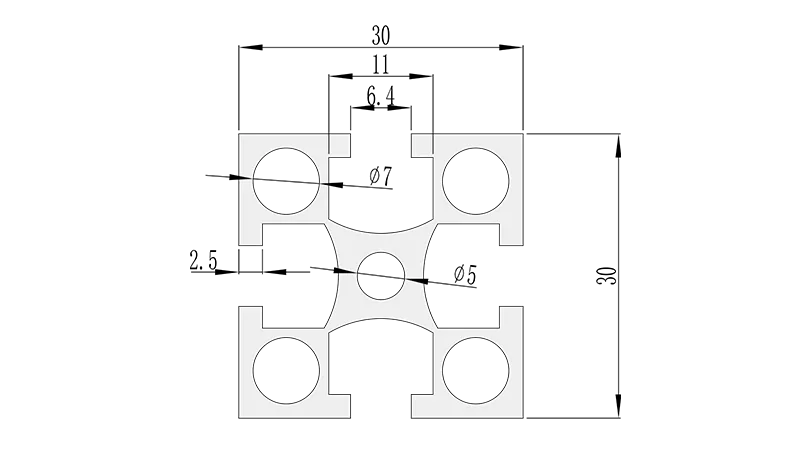
Before we jump into its benefits, let's get clear on what the 3030 National Standard Profile A is. At its core, it's a type of aluminum extrusion profile—meaning it's shaped by pushing molten aluminum through a die to create a consistent, precise cross-section. The "3030" refers to its dimensions: 30 millimeters in width and 30 millimeters in height, forming a square tube. The "National Standard" tag ensures it meets specific manufacturing and quality benchmarks, so you know you're getting a product that's consistent, reliable, and compatible with other standard components.
But it's not just a metal tube. The magic is in the details: most 3030 National Standard Profile A options feature a T-slot design along their length. These slots are like built-in rails that let you attach accessories—think shelves, tool holders, lights, or even monitors—without drilling holes or welding. This might sound simple, but in the context of building a lean workbench, that T-slot becomes a gateway to endless customization.
Made from high-grade aluminum, the profile is lightweight yet surprisingly strong. It's often treated with an anodized finish, which gives it a smooth, corrosion-resistant surface that stands up to daily wear, spills, and even the occasional bump from a heavy toolbox. And because it's aluminum, it's easy to handle during assembly—no need for heavy machinery to move pieces around—yet tough enough to support the demands of a busy workshop.
Key Features of 3030 National Standard Profile A: Why It Stands Out
Let's break down the features that make this profile a star in the world of lean workbenches. It's not just about size; it's about how those features align with the needs of modern workshops.
1. The Perfect Strength-to-Weight Ratio
Aluminum is known for being lightweight, but the 3030 National Standard Profile A takes it a step further. Despite its slim 30x30mm frame, it can handle impressive weight loads—often up to 150-200 kg per linear meter, depending on the wall thickness. That means you can load it up with tools, components, and even heavy equipment without worrying about bending or warping. For a lean workbench, this is critical: you need a surface that stays stable under pressure but doesn't add unnecessary bulk to your workspace. 2. T-Slot Design: Your Workshop's Swiss Army Knife
The T-slots are where the profile really shines. These grooves run along the length of the profile, allowing you to slide in nuts, bolts, and aluminum profile accessories like brackets, hinges, or even casters. Want to add a shelf above your workbench? Screw a bracket into the T-slot. Need to mount a lamp for better visibility? Slide in a clamp. This flexibility means your workbench isn't a fixed piece of furniture—it's a dynamic tool that adapts to your needs. No more drilling holes in the wrong place or struggling with permanent fixtures. 3. Compatibility with a World of Accessories
What good is a T-slot if there's nothing to put in it? The 3030 National Standard Profile A is part of a larger ecosystem of aluminum profile accessories. From corner brackets and end caps to adjustable feet and cable management clips, there's a (pèijiàn—accessory) for almost every need. This compatibility is a huge win for lean systems: instead of buying a (quánxīn—brand new) workbench when your workflow changes, you can simply swap out accessories to reconfigure the existing one. 4. Durability That Lasts Through the Grind
Workshops are tough environments. Spills, scratches, and constant use can take a toll on equipment. But the anodized finish of the 3030 profile acts like a shield. It resists rust, corrosion, and even minor dents, keeping your workbench looking (and functioning) like new for years. Unlike wood, which can warp or rot, or steel, which is heavy and prone to rust, aluminum holds up in humid, dusty, or messy conditions—perfect for busy shops. 5. Precision Engineering for a Snug Fit
When building a workbench, the last thing you want is wobbly joints or misaligned surfaces. The 3030 National Standard Profile A is extruded with tight tolerances, meaning every piece fits together precisely. This precision ensures that when you assemble your workbench, it's stable, level, and built to last. No more shimming wobbly legs or dealing with gaps between components—just a solid, reliable surface you can trust.
Aluminum is known for being lightweight, but the 3030 National Standard Profile A takes it a step further. Despite its slim 30x30mm frame, it can handle impressive weight loads—often up to 150-200 kg per linear meter, depending on the wall thickness. That means you can load it up with tools, components, and even heavy equipment without worrying about bending or warping. For a lean workbench, this is critical: you need a surface that stays stable under pressure but doesn't add unnecessary bulk to your workspace. 2. T-Slot Design: Your Workshop's Swiss Army Knife
The T-slots are where the profile really shines. These grooves run along the length of the profile, allowing you to slide in nuts, bolts, and aluminum profile accessories like brackets, hinges, or even casters. Want to add a shelf above your workbench? Screw a bracket into the T-slot. Need to mount a lamp for better visibility? Slide in a clamp. This flexibility means your workbench isn't a fixed piece of furniture—it's a dynamic tool that adapts to your needs. No more drilling holes in the wrong place or struggling with permanent fixtures. 3. Compatibility with a World of Accessories
What good is a T-slot if there's nothing to put in it? The 3030 National Standard Profile A is part of a larger ecosystem of aluminum profile accessories. From corner brackets and end caps to adjustable feet and cable management clips, there's a (pèijiàn—accessory) for almost every need. This compatibility is a huge win for lean systems: instead of buying a (quánxīn—brand new) workbench when your workflow changes, you can simply swap out accessories to reconfigure the existing one. 4. Durability That Lasts Through the Grind
Workshops are tough environments. Spills, scratches, and constant use can take a toll on equipment. But the anodized finish of the 3030 profile acts like a shield. It resists rust, corrosion, and even minor dents, keeping your workbench looking (and functioning) like new for years. Unlike wood, which can warp or rot, or steel, which is heavy and prone to rust, aluminum holds up in humid, dusty, or messy conditions—perfect for busy shops. 5. Precision Engineering for a Snug Fit
When building a workbench, the last thing you want is wobbly joints or misaligned surfaces. The 3030 National Standard Profile A is extruded with tight tolerances, meaning every piece fits together precisely. This precision ensures that when you assemble your workbench, it's stable, level, and built to last. No more shimming wobbly legs or dealing with gaps between components—just a solid, reliable surface you can trust.
Why 3030 National Standard Profile A is a Match Made in Heaven for Lean Workbenches
Lean manufacturing is all about eliminating waste—whether that's wasted time, wasted space, or wasted resources. A lean workbench should support these goals, not hinder them. Here's how the 3030 profile aligns with lean principles:
Modularity: Build, Break Down, and Rebuild—No Waste
Traditional workbenches are often one-and-done: once you build them, they're fixed. If your needs change—say, you start assembling larger components or need more storage—you either live with the old bench or throw it away and buy a new one. That's wasteful. With 3030 National Standard Profile A, your workbench is modular. You can take it apart, add or remove sections, and reassemble it in a new configuration. Need a longer bench? Add another profile section. Want to split it into two smaller benches for a new workflow? Disassemble and rebuild. This modularity cuts down on waste and saves money in the long run. Adaptability: Grow with Your Business
Small workshops often start with basic needs, but as they grow, so do their requirements. Maybe you begin with a simple work surface, then add a shelf, then a tool rail, then a monitor arm for digital work instructions. The 3030 profile grows with you. Its compatibility with aluminum profile accessories means you can add features as you need them, without overinvesting in a fully loaded bench upfront. This "pay-as-you-grow" approach is lean at its finest: you only spend on what you need, when you need it. Ergonomics: Keep Your Team Comfortable and Productive
Lean isn't just about efficiency—it's about people. A workbench that's too low, too high, or cluttered can lead to fatigue, mistakes, and even injuries. The 3030 profile makes ergonomic adjustments a breeze. With adjustable feet (another handy aluminum profile accessory), you can raise or lower the bench to match the height of your team members. Add a keyboard tray or a footrest using T-slot brackets, and suddenly your workbench is tailored to the people using it. Happier, more comfortable workers are more productive—and that's a win for your lean system. Space Optimization: Make Every Inch Count
In a lean workshop, space is precious. The 3030 profile's slim design means you can build a workbench that fits your space, not the other way around. Need a bench that tucks into a corner? Its modularity lets you design a custom shape. Want to add vertical storage to free up floor space? Attach shelves or racks using T-slots. Even better, if you need to rearrange your workshop layout, the lightweight profile is easy to move—no need for a forklift or a team of people. Cost-Effectiveness: Invest Once, Benefit for Years
At first glance, aluminum profiles might seem pricier than wood or basic steel. But think long-term. A wooden bench might cost less upfront, but it'll warp, scratch, or rot within a few years, forcing you to replace it. Steel is durable but heavy and hard to modify. The 3030 National Standard Profile A, though, is a one-time investment. Its durability means it lasts decades, and its modularity means you can reconfigure it instead of replacing it. When you factor in lower replacement costs and reduced downtime from reconfigurations, it's often the most cost-effective choice for a lean workbench.
Traditional workbenches are often one-and-done: once you build them, they're fixed. If your needs change—say, you start assembling larger components or need more storage—you either live with the old bench or throw it away and buy a new one. That's wasteful. With 3030 National Standard Profile A, your workbench is modular. You can take it apart, add or remove sections, and reassemble it in a new configuration. Need a longer bench? Add another profile section. Want to split it into two smaller benches for a new workflow? Disassemble and rebuild. This modularity cuts down on waste and saves money in the long run. Adaptability: Grow with Your Business
Small workshops often start with basic needs, but as they grow, so do their requirements. Maybe you begin with a simple work surface, then add a shelf, then a tool rail, then a monitor arm for digital work instructions. The 3030 profile grows with you. Its compatibility with aluminum profile accessories means you can add features as you need them, without overinvesting in a fully loaded bench upfront. This "pay-as-you-grow" approach is lean at its finest: you only spend on what you need, when you need it. Ergonomics: Keep Your Team Comfortable and Productive
Lean isn't just about efficiency—it's about people. A workbench that's too low, too high, or cluttered can lead to fatigue, mistakes, and even injuries. The 3030 profile makes ergonomic adjustments a breeze. With adjustable feet (another handy aluminum profile accessory), you can raise or lower the bench to match the height of your team members. Add a keyboard tray or a footrest using T-slot brackets, and suddenly your workbench is tailored to the people using it. Happier, more comfortable workers are more productive—and that's a win for your lean system. Space Optimization: Make Every Inch Count
In a lean workshop, space is precious. The 3030 profile's slim design means you can build a workbench that fits your space, not the other way around. Need a bench that tucks into a corner? Its modularity lets you design a custom shape. Want to add vertical storage to free up floor space? Attach shelves or racks using T-slots. Even better, if you need to rearrange your workshop layout, the lightweight profile is easy to move—no need for a forklift or a team of people. Cost-Effectiveness: Invest Once, Benefit for Years
At first glance, aluminum profiles might seem pricier than wood or basic steel. But think long-term. A wooden bench might cost less upfront, but it'll warp, scratch, or rot within a few years, forcing you to replace it. Steel is durable but heavy and hard to modify. The 3030 National Standard Profile A, though, is a one-time investment. Its durability means it lasts decades, and its modularity means you can reconfigure it instead of replacing it. When you factor in lower replacement costs and reduced downtime from reconfigurations, it's often the most cost-effective choice for a lean workbench.
How Does It Compare to Other Profiles? Let's Take a Look
You might be wondering: with so many aluminum extrusion profiles out there—like the smaller 2020 or the larger 4040—why choose 3030 National Standard Profile A? The answer depends on your needs, but for most lean workbenches, 3030 hits the sweet spot. Let's compare it to a few common alternatives:
As the table shows, the 3030 National Standard Profile A strikes a balance between strength, weight, and versatility that's hard to beat for lean workbenches. It's strong enough for most workshop tasks without being overkill, lightweight enough to move and modify, and compatible with the accessories you need to build a truly lean system. Unless you're supporting industrial-scale machinery, the 3030 profile is often the Goldilocks choice—not too small, not too big, just right.
| Profile Type | Dimensions (WxH) | Typical Load Capacity | Weight (per meter) | Best For | Limitations for Lean Workbenches |
|---|---|---|---|---|---|
| 2020 National Standard Profile | 20x20mm | 50-100 kg/m | 0.8-1.2 kg | Light-duty tasks, small shelves, hobby projects | Too narrow for most workbench surfaces; limited load capacity |
| 3030 National Standard Profile A | 30x30mm | 150–200 kg/m | 1.5–2.0 kg | Medium to heavy-duty workbenches, assembly lines, general workshop use | None for most applications; balances strength, weight, and flexibility |
| 4040 National Standard Profile | 40x40mm | 250–300 kg/m | 2.5–3.0 kg | Heavy machinery bases, industrial workbenches with extreme loads | Overkill for most workshops; adds unnecessary weight and cost |
| Wooden Workbench (Pine/Particleboard) | Varies | 100–150 kg (depends on thickness) | 10–20 kg (per meter of bench) | Budget setups, temporary workspaces | Prone to warping, rot, and damage; not modular or reconfigurable |
Case Study: How a Small Electronics Manufacturer Boosted Efficiency with 3030 Profile Workbenches
Let's put this into real-world context. Take "TechCraft," a small electronics assembly company with 15 employees. Before switching to 3030 National Standard Profile A workbenches, they used basic wooden tables with fixed shelves. Their workflow was clunky: tools were scattered, components got lost, and reconfiguring the line for new products took days (and often required buying new tables).
Then, they partnered with a local lean system supplier to rebuild their workbenches using 3030 profiles. Here's what changed:
-
Faster Reconfigurations:
When they launched a new product line, they reconfigured their existing workbenches in hours instead of days by adding T-slot shelves and tool holders. No more waiting for new furniture.
-
Reduced Waste:
By adding vertical storage via T-slot racks, they freed up 30% of their floor space, eliminating the need for extra storage cabinets.
-
Happier Team:
Adjustable feet let each technician set their bench height, reducing complaints of back pain. Tool holders mounted via T-slots kept tools within arm's reach, cutting down on time spent searching for supplies.
-
Lower Costs:
Over two years, they avoided buying 5 new wooden tables (saving ~$2,000) and reduced downtime from reconfigurations by 80%.
"It's like night and day," said TechCraft's operations manager. "The 3030 profile workbenches didn't just improve our space—they made our whole process leaner. We're faster, more flexible, and our team loves working with them."
Choosing the Right Supplier: Why It Matters for Your Lean Workbench
You've decided on the 3030 National Standard Profile A—great! But to get the most out of it, you need a reliable lean system supplier. Not all suppliers are created equal, and the wrong one can leave you with subpar profiles, mismatched accessories, or slow delivery times. Here's what to look for:
Quality First:
Ensure the supplier uses high-grade aluminum and follows national standards for extrusion. Poor-quality profiles might have uneven T-slots, weak walls, or inconsistent finishes—all of which can ruin your workbench's stability and durability.
Accessory Selection:
A good supplier should offer a wide range of aluminum profile accessories. You don't want to buy profiles from one company and accessories from another, only to find they don't fit. Look for suppliers that stock brackets, nuts, end caps, and other essentials.
Technical Support:
Building a custom lean workbench can be tricky. A supplier with knowledgeable staff can help you design your bench, choose the right accessories, and troubleshoot issues. Avoid suppliers that just sell parts—look for partners who understand lean principles and can guide you.
Consistency and Availability:
If you need to expand or repair your workbench later, you'll want to buy the same profile. A reliable supplier will have consistent stock and won't discontinue profiles without warning.
Value, Not Just Price:
The cheapest supplier might save you money upfront, but if their profiles are low-quality or their accessories are limited, you'll pay more in the long run. Balance cost with quality and service.
Conclusion: Your Lean Workbench Deserves the Best—And That's 3030 National Standard Profile A
At the end of the day, a lean workbench is more than just a place to work—it's the foundation of your workflow. It impacts how efficiently your team operates, how quickly you adapt to change, and even how satisfied your employees are. The 3030 National Standard Profile A isn't just a material; it's a tool that brings lean principles to life. Its strength, modularity, and compatibility with aluminum profile accessories make it the top choice for workshops that refuse to settle for "good enough."
Whether you're a small startup or a large manufacturer, investing in a 3030 profile workbench is an investment in your team, your efficiency, and your bottom line. It's durable enough to last decades, flexible enough to grow with your business, and smart enough to keep waste out of your workflow.
So, the next time you're building or upgrading your workbench, remember: the right profile makes all the difference. And for lean workbenches, that profile is the 3030 National Standard Profile A. Your workshop (and your team) will thank you.