- Company Articles
- Industry articles
- Industry standards
- What Makes 4040A EU Standard Aluminum Profile Ideal for Medical Equipment Frames?

What Makes 4040A EU Standard Aluminum Profile Ideal for Medical Equipment Frames?
Related Product
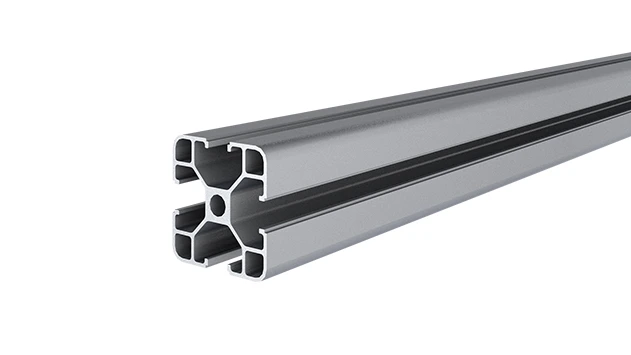
4040A EU Standard Aluminum Profile
4040A is a 4.00x4.00 CM fractional 40 series square extrusion T-slot profile with four open T-slots, each side with 4.00cm face.
In the fast-paced world of healthcare, where precision and reliability can mean the difference between life and death, the equipment that powers medical facilities is more than just tools—it's the backbone of patient care. From the sleek workbenches in pathology labs to the sturdy frames supporting MRI machines, every component plays a critical role. But what often goes unnoticed, yet is indispensable, is the structural framework holding these systems together. Enter the 4040A EU standard aluminum extrusion profile: a unsung hero in medical equipment design that combines strength, versatility, and sterility to meet the unique demands of healthcare environments. Let's dive into why this specific aluminum profile has become the go-to choice for engineers and manufacturers crafting medical equipment frames.
Aluminum Extrusion Profile: The Material Advantage in Medical Settings
Before we zoom in on the 4040A, it's worth understanding why aluminum extrusion profile itself is a standout material for medical applications. Unlike steel, which is heavy and prone to rust, or plastic, which lacks structural integrity, aluminum brings a rare blend of benefits that align perfectly with healthcare needs.
First, aluminum is inherently lightweight. This might not sound like a big deal until you consider that medical equipment—whether it's a mobile ultrasound cart or a stationary surgical workbench—often needs to be moved, adjusted, or reconfigured. A lighter frame reduces strain on healthcare staff, making daily tasks like repositioning a lab workstation or transporting a medication cart across a hospital floor safer and more efficient. Yet, despite its lightness, aluminum boasts an impressive strength-to-weight ratio. This means the 4040A can support heavy loads—think monitors, pumps, or even small imaging devices—without bending or warping over time.
Then there's corrosion resistance. In medical environments, where surfaces are sanitized multiple times daily with harsh disinfectants, and moisture from steam or spills is common, rust and degradation are constant threats. Aluminum's natural oxide layer acts as a protective barrier, preventing corrosion even after years of exposure to these conditions. This isn't just about longevity; it's about safety. A corroded frame could harbor bacteria in cracks or compromise the stability of sensitive equipment—risks no healthcare facility can afford.
Finally, aluminum is non-magnetic and non-conductive, two properties that are critical in spaces with advanced medical technology. MRI machines, for example, rely on powerful magnets; using magnetic materials in their frames could interfere with imaging accuracy. Aluminum's neutrality here ensures equipment functions as intended, while its non-conductive nature adds an extra layer of safety when working with electrical components.
The 4040A Difference: Why This EU Standard Profile Stands Apart
Not all aluminum profiles are created equal. The 4040A EU standard aluminum profile, with its 40mm x 40mm cross-section, is engineered to strike a precise balance between size, strength, and adaptability—qualities that make it uniquely suited for medical equipment frames. Let's break down what sets it apart.
Dimensions That Deliver: The 40x40 Sweet Spot
The 40mm x 40mm dimensions of the 4040A are no accident. Smaller profiles, like the 2020 or 3030, are excellent for lightweight applications (think small shelving or desktop organizers) but lack the load-bearing capacity needed for heavy medical equipment. Larger profiles, such as the 4080, offer more strength but can be overkill—adding unnecessary weight and bulk that hinder mobility and flexibility. The 4040A hits the "Goldilocks zone": sturdy enough to support 150-200 kg/m (depending on configuration) while remaining compact enough to integrate into tight spaces, like the cramped quarters of an operating room or a busy lab.
| Profile Type | Cross-Section (mm) | Approx. Load Capacity (kg/m) | Key Medical Applications |
|---|---|---|---|
| 2020 EU Standard | 20x20 | 40-60 | Small shelving, cable management trays |
| 3030A EU Standard | 30x30 | 80-120 | Lightweight carts, minor lab fixtures |
| 4040A EU Standard | 40x40 | 150-200 | Workbenches, equipment frames, mobile medical carts |
| 4080 EU Standard | 40x80 | 250-300 | Heavy-duty MRI/CT machine bases (rarely needed for most equipment) |
Precision Engineering: The EU Standard Seal of Quality
What does "EU standard" really mean for the 4040A? It's a guarantee of consistency and safety. Manufactured to comply with EN 755 (the European standard for aluminum extrusions), the 4040A undergoes rigorous testing for dimensional accuracy, mechanical strength, and surface quality. This isn't just about meeting a checklist—it's about ensuring that every piece of 4040A profile performs the same, whether it's used in a hospital in Berlin or a clinic in Barcelona. For medical equipment manufacturers, this consistency is invaluable: it reduces design risks, simplifies assembly, and ensures that frames meet global safety certifications, like ISO 13485 (medical device quality management).
Surface finish is another EU standard highlight. The 4040A's extrusion process results in a smooth, uniform surface free of burrs or crevices—critical for maintaining sterility. In medical settings, even tiny gaps can harbor bacteria, making cleaning a nightmare. The 4040A's sleek design eliminates these hiding spots, allowing for quick wipe-downs with disinfectants or even autoclaving in some cases, without compromising the material.

Design Flexibility: Aluminum Profile Accessories and Customization
Medical equipment isn't one-size-fits-all. A workbench in a research lab might need adjustable shelves and cable management, while a mobile medication cart requires locking casters and secure storage. The 4040A's true power lies in its ability to adapt to these unique needs, thanks to its T-slot design and compatibility with a wide range of aluminum profile accessories.
The T-slot—those grooves running along the length of the profile—is a game-changer. It allows for quick, tool-free attachment of accessories like brackets, panels, and shelves. Need to add a side rail to a lab workbench to prevent samples from sliding off? Just slide a 90° aluminum profile connector into the T-slot and tighten a screw. Want to route cables neatly through a machine frame? Use T-slot rubber seal covers to hide wires, reducing clutter and tripping hazards. This modularity means manufacturers can design frames that grow and change with a facility's needs, rather than building rigid, one-and-done structures.
Common accessories that pair seamlessly with the 4040A include end caps (to smooth sharp edges and prevent dust buildup), hinges (for foldable components like workbench extensions), and leveling feet (to stabilize frames on uneven hospital floors). Even specialized parts, like aluminum honeycomb panels for lightweight work surfaces or caster wheels for mobility, integrate effortlessly. For example, an aluminum workbench used in a blood testing lab might combine 4040A frames with a honeycomb panel top (easy to clean and lightweight) and locking casters (so it can be moved to different testing stations). This level of customization is nearly impossible with traditional materials like welded steel, which require cutting and re-welding to modify.
Perhaps most importantly, this flexibility speeds up production. In healthcare, where new equipment is often needed on tight deadlines (e.g., during a pandemic or facility expansion), the ability to assemble frames quickly using pre-engineered accessories can save weeks of lead time. It also reduces costs: instead of designing custom parts for every project, manufacturers can leverage off-the-shelf accessories, passing savings on to healthcare providers.
Lean System Integration: Efficiency in Healthcare Workflows
Modern healthcare thrives on efficiency, and lean system principles—focused on reducing waste and streamlining processes—have become integral to hospital and lab operations. The 4040A plays a quiet but vital role in supporting these lean initiatives, making workflows smoother and more productive.
Take, for example, a busy emergency room. Nurses and doctors need quick access to tools, medications, and patient records. A mobile cart built with 4040A frames can be customized to hold exactly what's needed—drawers for supplies, a slot for a tablet, and a waste bin—all within arm's reach. Because the cart is lightweight (thanks to aluminum) and maneuverable (with caster accessories), staff spend less time fetching items and more time with patients. When protocols change (e.g., new tools are added), the cart can be reconfigured in hours, not days, by swapping out accessories—no need to replace the entire frame.
In labs, lean systems emphasize minimizing movement and maximizing organization. A 4040A-based material rack with adjustable shelves can be tailored to store reagents, samples, and equipment in a logical order, reducing the time technicians spend searching for items. The rack's modular design also means it can expand as the lab grows, avoiding the waste of buying new storage solutions every few years.
Even in long-term planning, the 4040A supports lean goals. Its durability means frames last decades, reducing the need for frequent replacements. And because aluminum is 100% recyclable, when a frame finally reaches the end of its life, it can be melted down and repurposed—aligning with healthcare's growing focus on sustainability and reducing carbon footprints.
Real-World Impact: 4040A in Action
To truly appreciate the 4040A's value, let's look at how it's used in real medical settings:
Pathology Lab Workstations
A large urban hospital's pathology lab relies on 4040A frames for its testing workbenches. Each bench is equipped with adjustable shelves (using T-slot brackets), integrated LED lighting (wired through T-slot cable management), and a stainless steel top (secured with aluminum profile fixings). The frames support heavy microscopes and centrifuges while remaining lightweight enough for the lab's annual deep cleaning, where benches are moved to sanitize the floors underneath. The smooth aluminum surfaces resist chemical spills from stains and reagents, ensuring the lab stays compliant with sterility standards.
Mobile Ultrasound Carts
A pediatric clinic uses 4040A-based carts to transport ultrasound machines between exam rooms. The carts feature lockable casters (for stability during exams), a fold-down writing surface (attached with aluminum hinges), and a storage compartment for gel and wipes. Because children's needs vary, the carts are easily reconfigured—lowering the ultrasound monitor for a toddler or raising it for a teenager—without tools. The aluminum frame's lightweight design means nurses can move the carts effortlessly, even through narrow clinic corridors.
Pharmacy Medication Racks
A community pharmacy uses 4040A frames for its medication storage racks. The racks are divided into color-coded sections (using plastic roller track guide rails in yellow and grey) to separate prescription drugs by category. The T-slot design allows for quick adjustments when new medications are added, and the corrosion-resistant aluminum ensures the racks remain safe even in the pharmacy's humid environment (where air conditioning prevents drug degradation). The racks' modularity also made it easy to expand storage when the pharmacy added a compounding lab last year.
Conclusion: More Than a Profile—A Partner in Patient Care
The 4040A EU standard aluminum profile may not be the most glamorous part of medical equipment, but its impact on healthcare is undeniable. By combining aluminum extrusion profile's inherent benefits—lightweight strength, corrosion resistance, and sterility—with a design that prioritizes flexibility, compliance, and efficiency, it has become the backbone of modern medical equipment frames. From bustling hospitals to quiet research labs, it supports the tools that save lives, streamline workflows, and adapt to the ever-changing needs of healthcare.
For manufacturers, it's a reliable, cost-effective solution that simplifies design and speeds up production. For healthcare providers, it's a durable, low-maintenance investment that grows with their facilities. And for patients, it's the unseen stability behind the equipment that ensures accurate diagnoses, safe treatments, and better outcomes.
In the end, the 4040A isn't just a piece of metal—it's a testament to how thoughtful engineering can elevate an entire industry. And in healthcare, where every detail matters, that's something worth celebrating.